
REVIEW · DHARAVI SLUM TOURS
Dharavi slum tour in Mumbai by Female tour guides of the slum
Book on Viator →Operated by Magical Mumbai Tours · Bookable on Viator
Dharavi feels like real Mumbai, not a set. I like that you’re walking with female guides who live in Dharavi, and that the tour focuses on work, daily routines, and community life instead of drama. One consideration: the explanations can move fast, and some areas can feel loud or even a bit tight underfoot and in narrow lanes.
Guides I saw highlighted by name include Pooja, Sneha, Varsha, Anu, Veena, and Anushka—and the common thread is clear: you get first-hand context from people who know the neighborhood from the inside. If you want a longer, more personal cultural moment, look for the option that includes lunch with a local family.
In This Review
- Key reasons this Dharavi slum tour works
- Dharavi Through Female Resident Guides
- The 2-hour Dharavi walk: what you’ll actually do and notice
- The short add-on stop: Magical Mumbai Tours for about 20 minutes
- Price reality check: $9.49 is the headline, but here’s the value math
- Getting there: the Mahim meeting point and what traffic can do
- Pace, listening, and comfort tips that matter in real life
- Lunch with a local family: worth choosing if you want depth
- Who this Dharavi tour is best for
- Should you book this Dharavi slum tour?
- FAQ
- How long is the Dharavi slum tour?
- Where is the meeting point?
- Is lunch included?
- What’s included in the tour price?
- Is pickup available?
- What should I wear or bring?
- Is there free cancellation?
Key reasons this Dharavi slum tour works
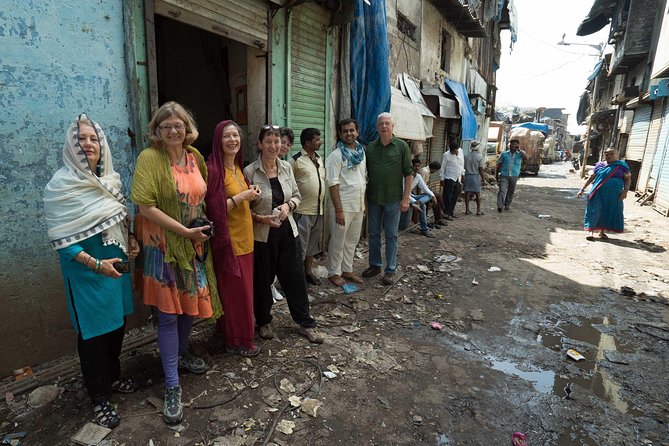
- Female resident guides with real neighborhood perspective
- A calm, down-to-earth approach that avoids voyeurism
- You see thriving industries and daily life, not just poverty headlines
- Optional lunch with local families for deeper context
- Two hours on Dharavi streets, plus a short extra add-on stop
Dharavi Through Female Resident Guides
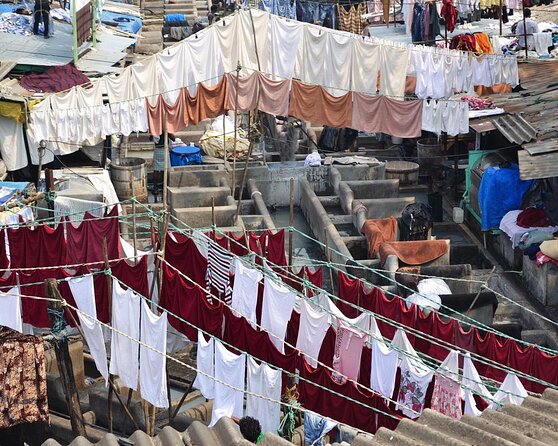
This tour’s main strength is who’s holding the conversation. Instead of an outsider-style script, you’re hearing from women who live with the same challenges and routines as their neighbors. That changes the tone fast. It’s less about shock, and more about understanding how people build stability where they can.
Names like Pooja, Sneha, Varsha, Anu, Veena, and Anushka show up again and again in the guide spotlight. In plain terms: you’re more likely to get practical answers to practical questions. You can ask about work, schooling, local services, and community rules—and you’re doing it with someone who can point at what they’re describing.
Also, this is a walking tour. You’ll see the neighborhood’s texture: shops, small workshops, and the way streets funnel people through the day. That’s what makes Dharavi more than a single “view.” It’s a living place with many layers.
You can also read our reviews of more tours and experiences in Mumbai.



The 2-hour Dharavi walk: what you’ll actually do and notice
Your main time goes to Dharavi itself. Plan on about 2 hours focused on the local area, with the Dharavi Slum Tour admission included.
Here’s what you can expect as you move:
- Guided street-level context: You won’t just pass by scenes; your guide is expected to explain what’s happening and why. The big theme is how daily life functions around work and community support.
- Work and industry, up close: A recurring point is seeing the industries that operate inside Dharavi—those tight little spaces where people earn their living. In quieter moments, you’ll understand how much effort goes into making those operations run.
- A mix of gratitude and realism: The best versions of this tour are described as not over-dramatized. You’ll see hardship, but also how people talk about dignity, routines, and belonging. One of the most useful shifts is learning that residents often describe life there as manageable and community-centered, not only as loss.
Two practical considerations matter here:
- Sound levels can be an issue. Some parts can be noisy from nearby factories/workshops. If you’re planning to ask lots of questions, keep in mind the audio environment.
- The pace can feel quick. In fast English delivery, it can be hard to process everything at once. This isn’t a reason to skip the tour; it’s just a reason to be ready to ask for clarification. If something’s not clicking, stop your guide and ask again. That’s how you get the most value.
If you’re sensitive to cramped passages, go in with realistic expectations. Some lanes are narrow and can feel dark or enclosed compared to open streets. You can still do the tour, but it’s good to mentally prepare.
The short add-on stop: Magical Mumbai Tours for about 20 minutes
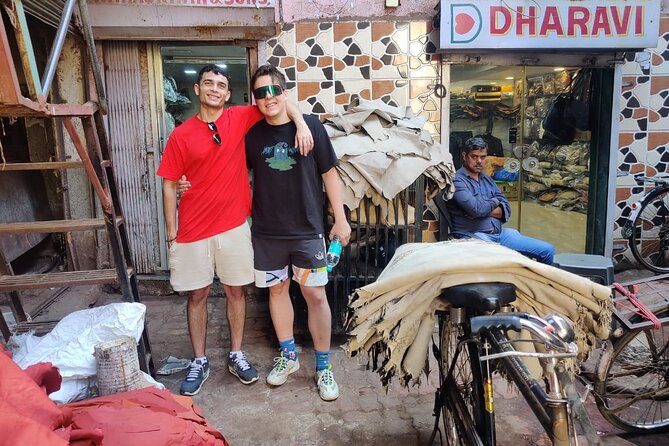
After the Dharavi portion, you’ll have a 20-minute stop tied to Magical Mumbai Tours, listed with a free admission ticket.
The practical way to think about this: it’s a short extra window rather than a second full attraction. For you, that means:
- You’ll likely get an additional Mumbai context piece without the time-cost of another long detour.
- It can help break up the emotional weight of Dharavi by giving your brain something new to hold for a moment.
Because the time is brief, I’d treat this stop as a bonus. Your main takeaway still comes from how the guide reads the neighborhood to you during the Dharavi walk.
Price reality check: $9.49 is the headline, but here’s the value math

At $9.49 per person, this is one of the lowest-priced formats in Mumbai for a guided, resident-led walk. The cost is low enough that it’s easy to feel skeptical—so let’s do the useful comparison inside the details you’re given.
What you get that’s directly tied to your comfort and the quality of the experience:
- Local guide from Dharavi
- Bottled water
- Admission ticket included for the Dharavi portion
- Free admission for that short second stop
- Mobile ticket, plus pickup options and multiple start times are available
What’s not included:
- Food and drinks (unless you add the lunch option)
- Personal expenses
There’s also a trust element. One of the guides’ explanations you’ll hear during the tour includes the idea that a portion of the tour fee supports community projects, including support for orphans and local needs. You don’t need to treat that claim as a receipt—but it does point to why this kind of resident-led model can feel more grounded than a generic “look and leave” tour.
Bottom line: at this price, you’re paying primarily for access to a local narrator and a structured route. If you’re the type who asks questions and wants context, it’s a strong value. If you’re hoping for a fancy transport-and-ticket bundle, you’ll likely want to add pickup or lunch, depending on your schedule.
Getting there: the Mahim meeting point and what traffic can do
Your meeting point is at Third Wave Coffee, Tip Road, Unit no. 58, Ground, Ram Mahal, Senapati Bapat Marg, Marinagar Colony, Station, Mahim, Mumbai, Maharashtra 400016.
Two things to plan around:
- Near public transportation: That’s helpful. You can usually get to the meeting area without a private car.
- Pickup can add time: If you choose hotel pickup/return, traffic can be a real time sink. One account highlighted that it can take about an hour each way depending on where you’re staying, especially from South Mumbai.
If you want the smoothest experience, I’d aim for meeting point logistics you can control. Use pickup if it truly saves you stress, not just because it sounds convenient. And if you do pickup, build a little buffer into your day.





Pace, listening, and comfort tips that matter in real life
This tour is not a quiet museum walk. It’s a real neighborhood. That affects comfort and communication.
From what’s been shared by guests:
- English is strong, but delivery can be fast. One person noted that the guide’s explanations came so quickly it was hard to absorb. If that happens to you, slow it down: ask a follow-up question, request a clearer explanation, or ask what to prioritize seeing next.
- Noise can compete with your ears. Factories/work areas can drown out parts of the narration. Keep your ears open for the moments where your guide pauses near quieter spots.
- Walking shoes are a must. You’re moving around for about 2 hours. Comfortable, grippy shoes will save your feet.
Also, this activity is stated as having a minimum age of 3 years, and you can generally participate as most travelers can. It’s still wise to consider physical comfort if you’re traveling with small kids or mobility limits, since it’s a walking experience through dense areas.
Lunch with a local family: worth choosing if you want depth
Lunch isn’t automatically included. The offering includes the ability to choose tours with or without transportation, and it also says lunch with local families is available as an option.
If you’re deciding whether to add it, here’s the practical value:
- You’re not just seeing a place—you’re getting a structured social context.
- It can shift your understanding from visual observation to everyday hospitality, routines, and how conversations flow between neighbors.
In at least one experience you may see a lighter cultural moment during the meal setting—garba-style participation has been mentioned as something that can happen if the moment fits. I wouldn’t count on a specific activity, but I would count on the general idea: lunch can humanize what you learned on the street.
If you do add lunch, remember that food and drinks are not listed as included by default. You’ll want to confirm what that package covers and how long your day will run.
Who this Dharavi tour is best for

This works especially well if you:
- Want a resident-led perspective rather than a staged sightseeing version
- Prefer a calm, respectful tone over sensational shock
- Like asking questions and learning how local work and community systems function
- Can handle city street conditions—noise, movement, and uneven moments
It’s less ideal if you:
- Need long pauses and slow pacing to process information
- Are sensitive to narrow lanes and enclosed-feeling passages
- Want a tour that’s mostly photo stops with minimal conversation
Also, it’s a great “one real neighborhood” choice if you’re already doing other Mumbai highlights and you want one experience that changes how you see the city.
Should you book this Dharavi slum tour?
If you want an experience that gives you context fast, this is a smart booking. The female resident-guided format, the emphasis on dignity and everyday function, and the strong guide reputation make it one of the more meaningful ways to understand Dharavi without turning it into a spectacle.
Book it if:
- You’re curious and willing to listen, even if the pace is brisk
- You want practical answers from people living the reality
- You’d consider adding the lunch option for a deeper cultural connection
Skip or rethink it if:
- You dislike walking tours through dense, noisy areas
- You need a slower explanation rhythm
- You’re looking for a luxury transport-heavy experience
FAQ
How long is the Dharavi slum tour?
The tour is listed at about 2 to 3 hours (with the Dharavi portion taking around 2 hours).
Where is the meeting point?
You’ll meet at Third Wave Coffee, Tip Road, Unit no. 58, Ground, Ram Mahal, Senapati Bapat Marg, Marinagar Colony, Station, Mahim, Mumbai, Maharashtra 400016, India.
Is lunch included?
Lunch is available as an option with local families, but food and drinks are not included by default.
What’s included in the tour price?
A local guide from Dharavi and bottled water are included, and the Dharavi portion includes an admission ticket. The short second stop is listed with a free admission ticket.
Is pickup available?
Pickup is offered, and you can also choose tours with or without transportation included. Alternate start times can be requested during booking.
What should I wear or bring?
Wear comfortable walking shoes. Bottled water is included, and you should consider that the tour requires good weather.
Is there free cancellation?
Yes. You can cancel up to 24 hours in advance for a full refund. If it’s canceled due to poor weather, you’ll be offered a different date or a full refund.