REVIEW · ELEPHANTA CAVES TOURS
Mumbai: Elephanta Caves Private Tour with Ferry Ride
Book on GetYourGuide →Operated by Binge Tours · Bookable on GetYourGuide
Elephanta caves start with a sea breeze, and this private tour makes the journey part of the show. I love the ferry ride and the way the Mumbai skyline stretches out across the Arabian Sea as you head toward Elephanta Island.
A live guide turns the cave complex into something you can actually picture, with clear explanations as you move from one temple space to the next. One possible drawback: on-the-ground details at the Gateway of India meeting point (and how any payments are handled) can be a little confusing, so I suggest confirming what’s already covered before you get on the boat.
In This Review
- Key Points Worth Knowing
- Gateway of India to Elephanta Island: the ferry view that sets the tone
- The toy train on Elephanta Island: a shortcut for your legs and your eyes
- Climbing up to the 5th-century cave complex
- The three caves: Hindu, Buddhist, and the Shiva Cave main event
- The Hindu cavern
- The Buddhist cave
- The Shiva Cave: where the scale and symbolism hit
- What the sculptures teach you as you walk inside
- The guide factor: where the tour’s best energy comes from
- Timing and flow: why this 5-hour plan works better than a rushed day
- Price and value: is $32 a fair deal for a private UNESCO day?
- Practical notes before you go (so the day stays smooth)
- Who should book this tour
- Should you book the Mumbai: Elephanta Caves private tour with ferry ride?
- FAQ
- Where do I meet the guide for the tour?
- What’s included in the price?
- How long is the tour?
- What languages are the guide and tour offered in?
- Is the tour private?
- What is the cancellation policy?
Key Points Worth Knowing
- Ferry-first sightseeing: you get skyline views before you even start walking the island
- Toy train loop: it’s a short, easy way to see more of Elephanta without wearing yourself out early
- UNESCO cave complex, guided well: you’ll visit three caves and get historical context in plain language
- Shiva Cave centerpiece: massive sculptures explain key ideas of Shiva through big visual storytelling
- Private format: your group stays together and you can ask questions along the way
Gateway of India to Elephanta Island: the ferry view that sets the tone

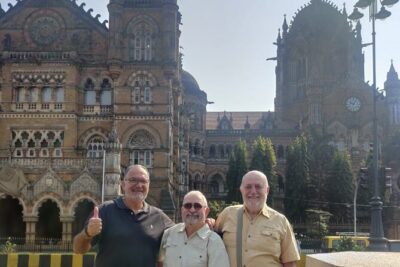
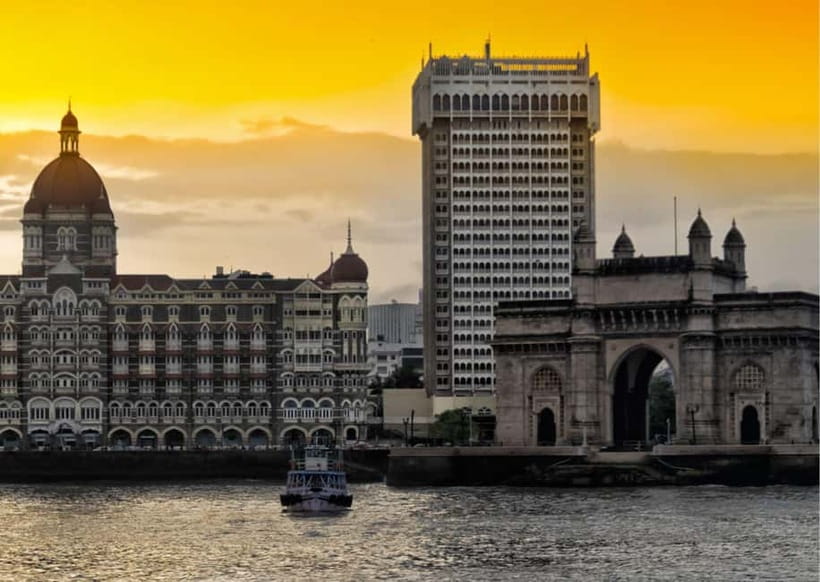
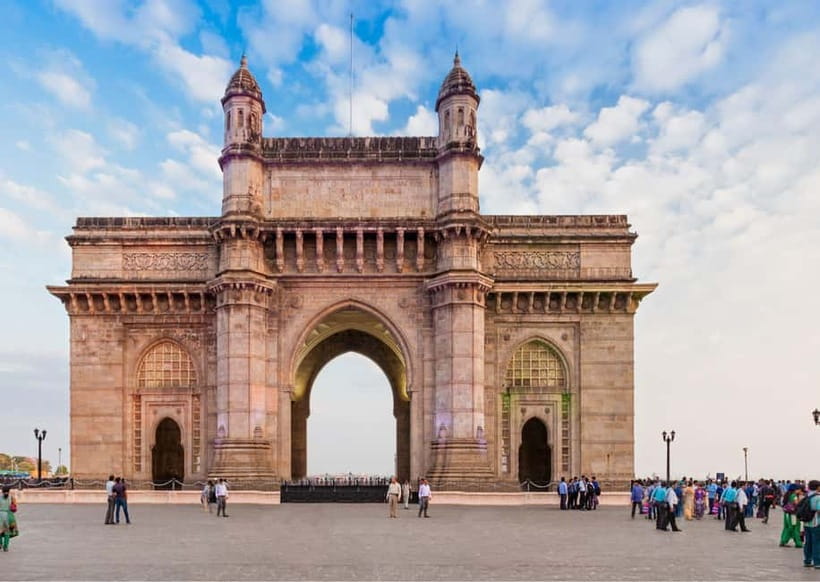
Most Elephanta trips fail or succeed in one place: the first minutes. Here, you meet at the Gateway of India by the waterfront, then head straight for the ferry. You’re not just commuting—you’re sightseeing from the water.
Once you’re on the Arabian Sea, you’ll see Mumbai differently. Instead of concrete streets and towers, you get clean lines, changing light, and a skyline that slowly rearranges itself as the boat moves. It’s the kind of view that helps you understand why people make the effort for Elephanta at all: the caves are important, but the approach is part of the mood.
This is also where the “private tour” matters. You’re not trying to match a crowd’s pace. You follow your guide’s timing, and you don’t lose the best viewing window while people argue about where to stand.
You can also read our reviews of more private tours in Mumbai


The toy train on Elephanta Island: a shortcut for your legs and your eyes
After you land on Elephanta Island, you don’t immediately plunge into stairs. You board a miniature train that runs along the pier area. It’s intentionally simple, but that’s the point. It gets you moving while letting you take in island scenery at an easy pace.
I like this setup because it changes how you experience the caves. If you start with a long walk and steep climb, the site can feel like one big workout. With the train, you build up the day’s context first—where you are, how the island is laid out, and what direction the cave complex is relative to where you’re dropped off.
You’ll hop off when the train stops, then walk a short distance toward the cave area. That last walk is usually manageable, but it still sets you up for the next phase: stepping into rock-cut spaces that are centuries old.
Climbing up to the 5th-century cave complex
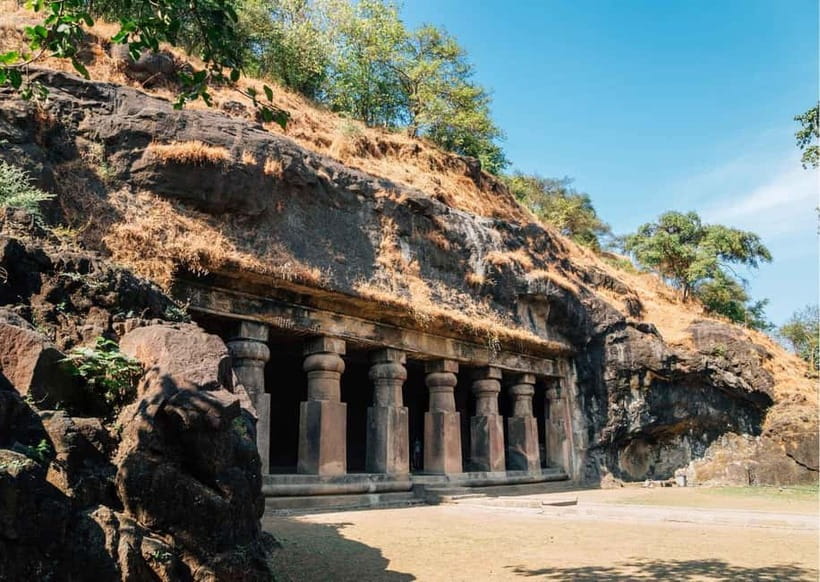
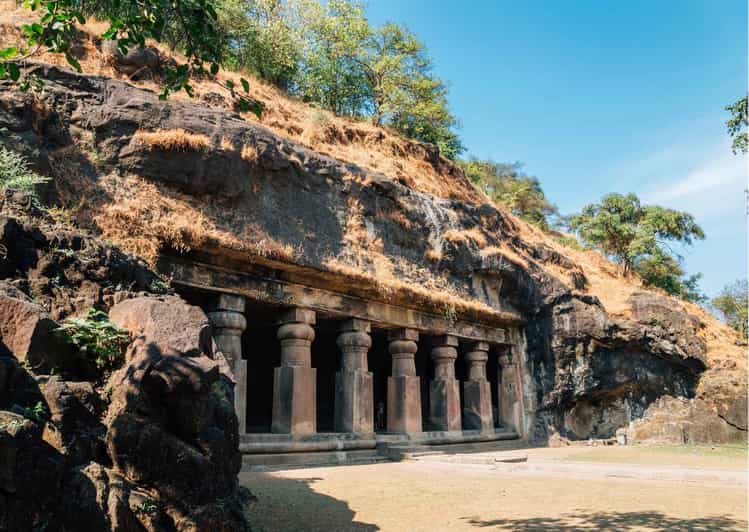
The cave complex is reached via a short series of stairs. This is not a “flat and easy” site, so plan for uneven steps and expect some climbing. Once you’re at the entrance area, you’ll feel the shift: from open sea air to shaded, carved stone.
The big win here is that you’re not wandering aimlessly. Your guide leads you to the cave spaces and helps you connect what you’re seeing with what it means. The caves date back to the 5th century, and that age matters because it explains the style and the symbolism you’ll notice once someone points it out.
You also get skip-the-line entry as part of the package. That’s worth it on busy days, because it buys you more time inside and less time stuck waiting to be processed.
The three caves: Hindu, Buddhist, and the Shiva Cave main event
The tour is structured around visiting three caves, and that sequence helps your brain sort what’s going on.
The Hindu cavern
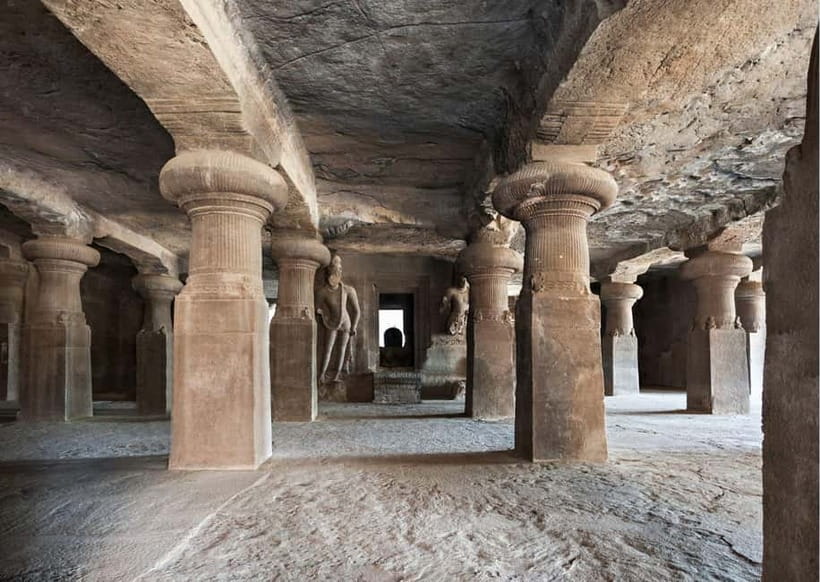
You start with a Hindu cave space. As you move through, you’ll learn how the carvings and temple design reflect the Hindu religious world in rock-cut form. Even if you’re not a scholar, the guide’s explanations help you read the cave like a story, not just a wall of figures.




The Buddhist cave
Next comes a Buddhist cave. This contrast is one of the reasons I think the tour works so well for a mix of interests. You’re not only seeing one tradition—you’re seeing how different religious ideas are represented within the same UNESCO-listed complex.
The Shiva Cave: where the scale and symbolism hit
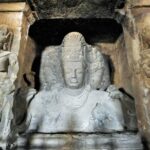
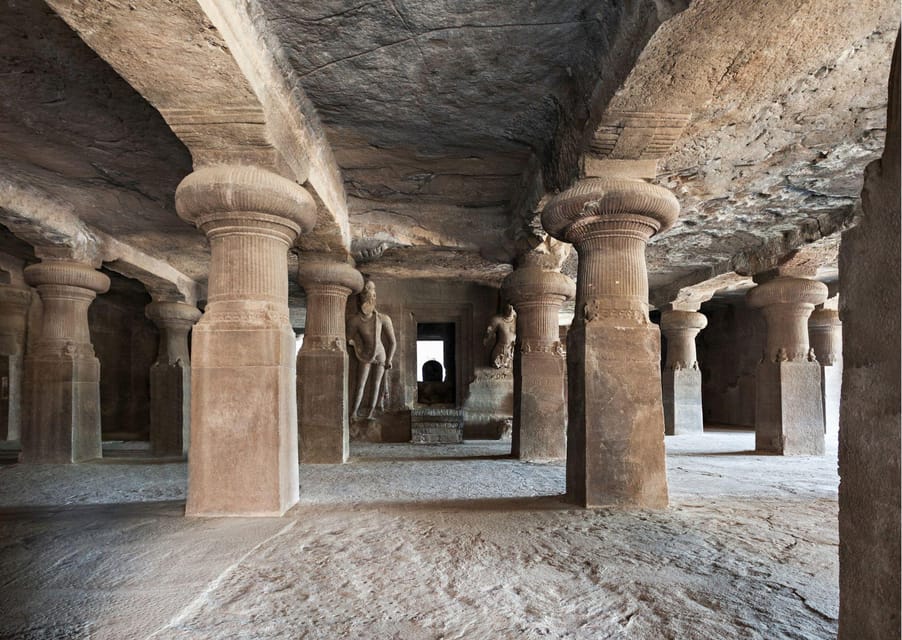
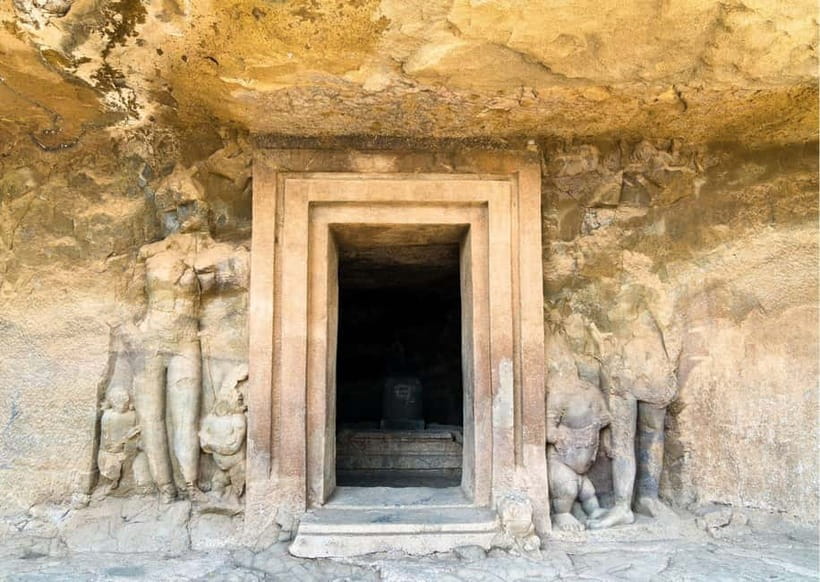
The main event is the Shiva Cave. This is where the tour earns its reputation, because the site focuses on Shiva with large-scale sculpture and temple layout.
As you enter, you’ll walk past huge sculptures of deities that represent major aspects of Shiva, including the destroyer, the preserver, and the creator. It’s not subtle. It’s meant to be understood through powerful visual messaging, and your guide will help you connect those forms to the meaning behind the art.
Once you’re inside, you can roam around the caves at your own pace, ask questions, and slow down for details that stand out once you know what to look for.
What the sculptures teach you as you walk inside

Elephanta can feel overwhelming if you treat it like a photo stop. The tour’s advantage is that it gives you a way to interpret the carvings while you’re still there.
As you walk, you’ll get facts about the UNESCO World Heritage site—how these caves fit into the broader cultural picture, why the carvings look the way they do, and how the iconography ties together across cave spaces. If you’ve ever stared at ancient stone and thought, I don’t know what I’m seeing, this is the fix.
In particular, the Shiva Cave’s figures (destroyer, preserver, creator) act like a roadmap. After your guide explains that central idea, the other details stop being random. You start noticing repeated themes and how the artwork communicates belief and order through form.
The guide factor: where the tour’s best energy comes from
This is a live-guided private tour with an English and Hindi guide. That matters more than people think, because cave art is full of visual cues that are hard to interpret without someone translating symbolism into something you can grasp quickly.
Guides such as Rajat and Rajit are specifically praised for clear, articulate explanations. Even without quoting anyone, that’s the kind of guide you want: someone who makes the site understandable instead of just reciting dates.
One practical tip: this is your moment to ask questions. If something feels confusing—like why a certain figure appears, how a temple space is organized, or what a detail means—ask. Your guide is there for exactly that.
Timing and flow: why this 5-hour plan works better than a rushed day
The whole experience runs about 5 hours. That’s a sweet spot for a half-day trip from Mumbai: long enough to get meaningful time in the caves, short enough that you’re not exhausted by the end.
The day’s flow also makes sense:
1) meet at Gateway of India
2) ferry ride with skyline views
3) toy train on Elephanta for easier island orientation
4) walk and stair climb to the cave complex
5) guided visit through three caves
6) ferry ride back to Mumbai
The return ferry keeps the day feeling complete, because you’re not just dropping you at a landmark and wishing you luck. You end with more sea views, then you handle the final leg back to your accommodation on your own.
Price and value: is $32 a fair deal for a private UNESCO day?
At $32 per person, this tour is priced like a budget-friendly way to do a serious cultural site with less hassle. Here’s why it can feel like good value:
- Return ferry ride is included, which is often the first cost and most annoying logistics item for independent plans
- Toy train ride and Elephanta Caves entry tickets are included
- Village entry tickets are included too
- You get a live guide for the cave portion, which is the part that turns “seeing” into “understanding”
What you should note is what isn’t included: no hotel transfer, and no food or drinks. That means the real cost for some people depends on how you’ll get to Gateway of India and whether you’ll need snacks during the day.
Still, if you’re starting from central Mumbai and you’re committed to visiting the caves, bundling ferry + entry + guide for this time window is usually a smarter buy than trying to piece it all together at the last minute.
Practical notes before you go (so the day stays smooth)
Elephanta is a walking-and-steps kind of place. For comfort, you’ll be happiest in shoes you trust on stairways and uneven stone. Bring a light layer if you’re sensitive to wind on the water. If you get motion sick easily, consider that the ferry crossing is part of the experience, not a minor detail.
Also, plan your expectations. This is a private group, but you’re still moving through a historic site, so you’ll want to keep a calm pace and let the guide lead.
One more smart move: contact your guide ahead of time (WhatsApp or local number). The meeting is at Gateway of India, and clear communication helps avoid the kind of confusion that can happen when arrival times shift or when you’re standing near a big landmark with many entrances.
Who should book this tour
This private Elephanta plan fits best if you want:
- a guided, structured visit through the cave complex (not a self-guided photo run)
- the convenience of included ferry and entry
- an easy start thanks to the toy train before cave stairs
- a half-day experience that doesn’t eat your whole day in Mumbai
If you’re traveling with mixed interests—some people into religious art, some into skyline views—this format gives something for everyone.
Should you book the Mumbai: Elephanta Caves private tour with ferry ride?
I’d book it if you value clear guidance and want the logistics handled. The biggest selling points are the ferry-to-caves flow, the toy train reset on the island, and the guided walk through three caves that turns symbolism into something you can follow.
Skip this if you want a totally independent plan with zero need for a schedule, or if you strongly prefer a completely flat site. For most people, though, this is a practical way to hit a UNESCO World Heritage destination without turning your day into a scavenger hunt.
FAQ
Where do I meet the guide for the tour?
You meet the guide at the Gateway of India near the waterfront.
What’s included in the price?
The tour includes a private tour and guide, return ferry ride, toy train ride, village entry tickets, and Elephanta Caves entry tickets.
How long is the tour?
The duration is 5 hours.
What languages are the guide and tour offered in?
The live tour guide is available in English and Hindi.
Is the tour private?
Yes, it’s a private group.
What is the cancellation policy?
You can cancel up to 24 hours in advance for a full refund.