REVIEW · KANHERI CAVES & PAGODA TOURS
Mumbai: Private tour for Kanheri Caves and Golden Pagoda
Book on GetYourGuide →Operated by Beautiful Bombay Tours · Bookable on GetYourGuide
Two sacred stops, one easy plan in Mumbai. This private tour strings together the Kanheri Caves and the Golden Vipassana Pagoda with an English-speaking guide, hotel pickup, and a ferry crossing.
I especially liked two things. First, the Kanheri setting and scale: 109 caves carved from a huge basalt rock outcrop in Sanjay Gandhi National Park. Second, the calmer parts of the complex, including meditation cells that make you think about monks’ day-to-day routine. Guides like Nikheil and Aryan helped connect the dots between carved rooms, statues, and the writings on the walls.
One drawback to plan for: if you go on weekends (or during bad monsoons), you can run into heavy crowding and slow travel on the park approach and the ferry ride.
In This Review
- Quick hits before you go
- How the day flows: pickup, Sanjay Gandhi Park, ferry, then Gorai
- Entering Kanheri Caves: 109 caves carved from one basalt wall
- The main hall you’ll remember: 7-meter Buddha, 34 pillars, and Avalokiteshwara
- Viharas and chaityas: seeing monk life and worship spaces
- Inscriptions in multiple scripts: why the wall text is the real time machine
- The Golden Vipassana Pagoda in Gorai: gold outside, relics inside
- Ferry rides and the local transport factor: plan for some friction
- Shoes, bags, and ID: your practical packing checklist
- Price and value: why this can be a smart $21 day
- Who should book this tour (and who might want a different plan)
- Should you book: my straight recommendation
- FAQ
- What is the duration of the tour?
- Where do I meet the guide?
- Is hotel pickup and drop-off included?
- Is the guide English speaking?
- Do I ride in an air-conditioned vehicle?
- Are entry tickets included?
- What transportation is used between Kanheri and the pagoda?
- How long is the Golden Vipassana Pagoda stop?
- What should I bring?
- Is there a baggage limit?
Quick hits before you go
- Kanheri’s carved world: 109 caves, with smaller monk resting caves (viharas) and larger worship caves (chaityas)
- The main hall details: a towering 7-meter Buddha figure plus 34 carved pillars
- Inscriptions you can actually use: around 100 inscriptions across scripts like Brahmi, Devanagri, Pallavi, and Sanskrit
- Golden Vipassana Pagoda in Gorai: gold exterior, Burmese-inspired design, and Gautama Buddha relics
- A ferry day: two short ferry rides plus possible extra local transport after the crossing
How the day flows: pickup, Sanjay Gandhi Park, ferry, then Gorai
This is built as a private, guided outing that mixes a land drive with a water crossing. You’ll get hotel pickup (pickup is optional, depending on your booking choice) and ride in an air-conditioned car toward Sanjay Gandhi National Park, where the Kanheri Caves sit.
Timing matters here. The drive to Kanheri is typically about 1 to 1.5 hours, depending on where your hotel is and traffic. At Kanheri, you’ll spend around 2.5 hours on a guided tour of the most significant caves, plus some time to wander on your own. Then you’ll take a ferry crossing (about 10 minutes) to Gorai for the Golden Vipassana Pagoda, tour the pagoda for about 1 hour, and finish with another ferry back (about 10 minutes).
One practical note: you meet your guide at the main entrance of Sanjay Gandhi National Park at the scheduled time. If your pickup option is included, you’ll be routed there smoothly, but it still helps to arrive ready to start when you’re told.
You can also read our reviews of more private tours in Mumbai
Entering Kanheri Caves: 109 caves carved from one basalt wall
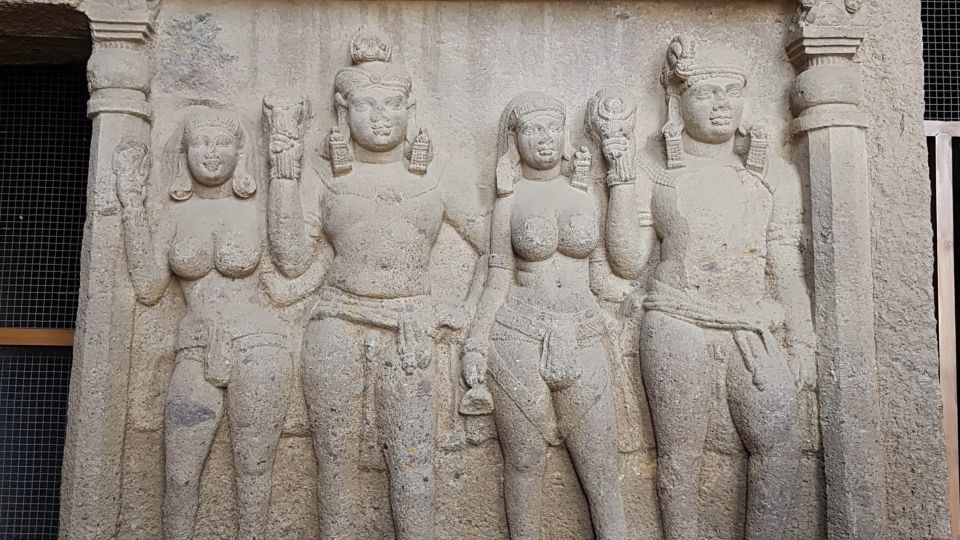
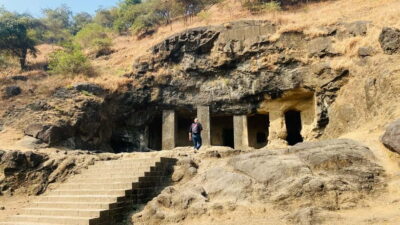
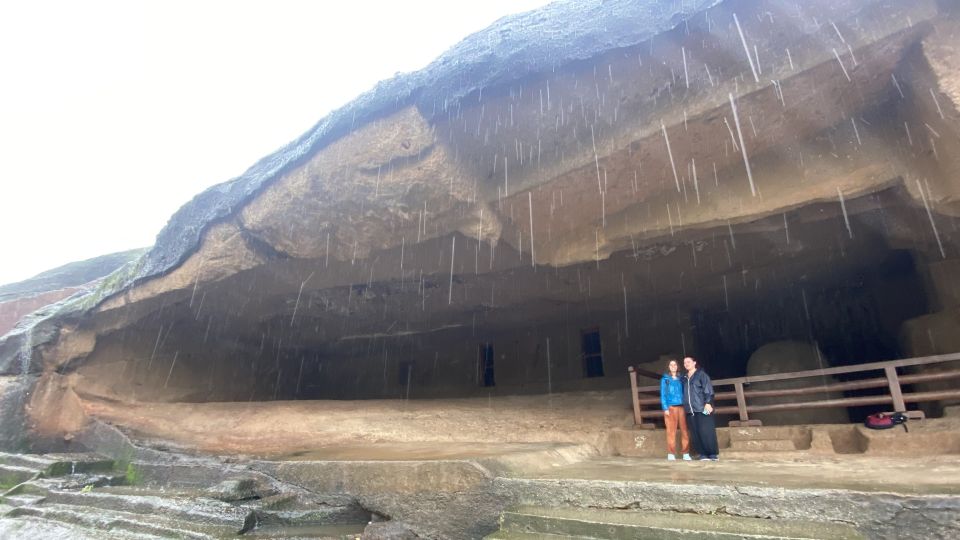
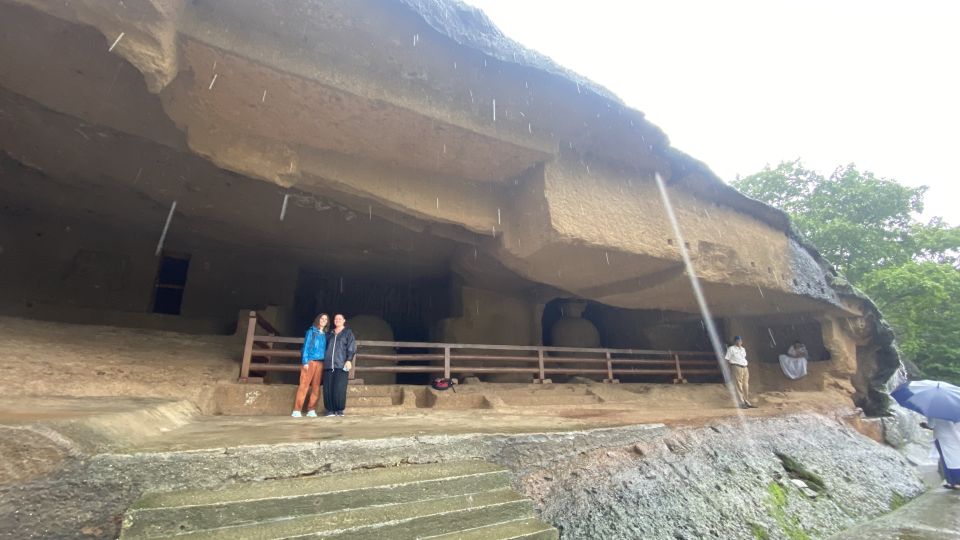
Kanheri Caves are inside Sanjay Gandhi National Park, and that alone changes the feel of a Mumbai day. You go from city motion into a protected, cave-shaped world carved directly out of rock.
The big fact to remember is scale. There are 109 caves carved into a massive basaltic rock outcrop. That number isn’t just trivia. It tells you the site wasn’t built as a quick stop. It was developed over a long period, with spaces serving different religious functions.
The guide-led structure helps you avoid the “I’m just walking caves” problem. You’ll follow a route that focuses on five of the most significant caves, with explanations as you go. After the guided portion, you get free time to wander and linger where the carvings catch your eye.
If you’re the type of traveler who likes to see the reason behind a place, this guided approach is the point. You’re not only looking at old stone. You’re learning how the caves were organized for worship and daily monk life.
The main hall you’ll remember: 7-meter Buddha, 34 pillars, and Avalokiteshwara
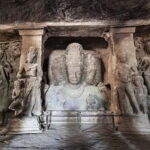
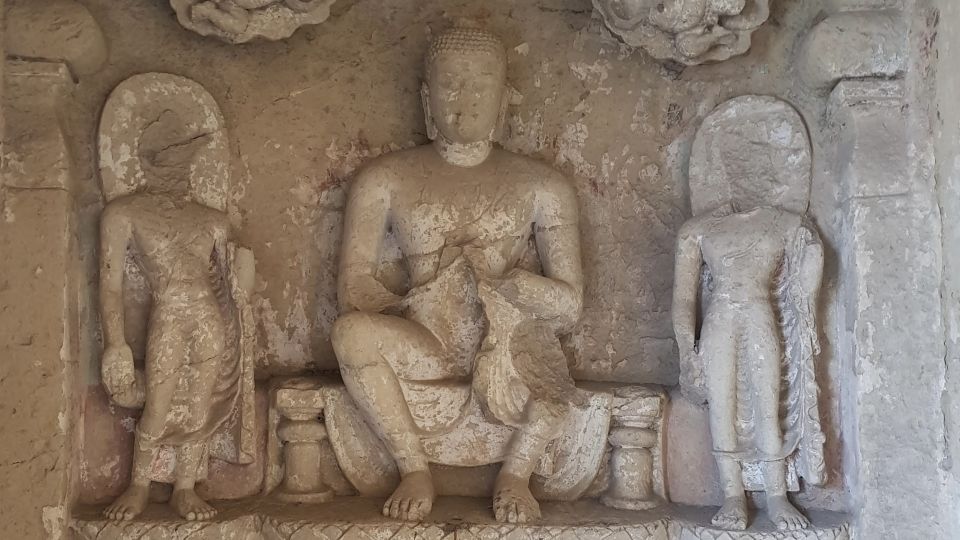
In the main hall, the visuals hit quickly. You’ll see a towering Buddha figure—about 7 meters high—surrounded by a colonnade of 34 carved pillars. Those pillars are more than decoration. They frame the central figure and help you picture how the space worked for worship.
Another standout is the eleven-headed Avalokiteshwara. It’s one of the clearest ways to understand that these caves weren’t plain storage rooms. The sculptural choices tell you what was important to the community using the site.
When you’re standing there, take a moment and look from the statue outward. The carvings and the layout encourage that shift. It’s a gentle reminder that sacred architecture often directs your attention, not just your feet.
Viharas and chaityas: seeing monk life and worship spaces
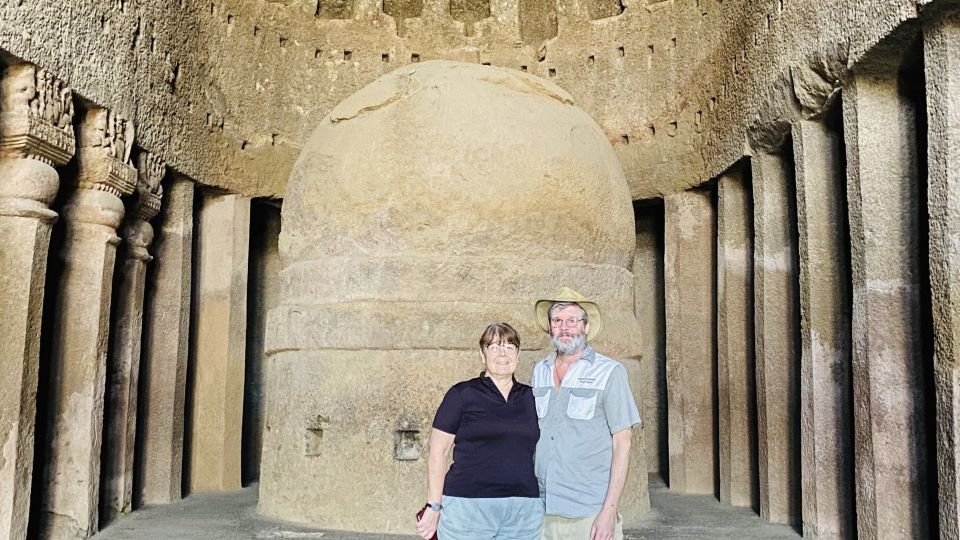
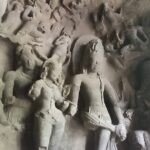
One of the best parts of Kanheri is the way the cave types reflect different needs. The smaller caves—called viharas—served as resting places for monks. The larger caves—chaityas—were used for worship and often include Buddhist sculpture.
This matters because it changes what you notice as you walk. In a resting cave, you tend to look for signs of everyday routine: structure, simplicity, and how a monk might move through the space. In a worship cave, you look for emphasis: the dramatic carvings, the framing of sacred figures, and the sense of gathering.
It also sets up the next highlight: the serene meditation cells. Those calmer rooms give you a feeling for how a religious life can be built around repetition, quiet, and study rather than constant spectacle.
Inscriptions in multiple scripts: why the wall text is the real time machine
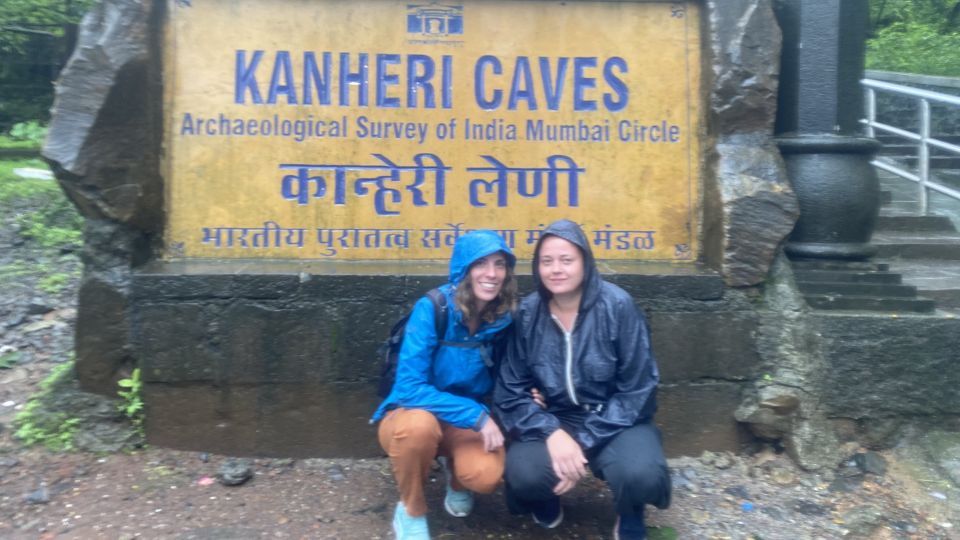
Kanheri isn’t only statues and rock chambers. It also has inscriptions across different scripts—around 100 inscriptions—in writing systems that include Brahmi, Devnagri, Pallavi, and Sanskrit.
For you, this is one of the most practical “why it matters” features. Inscriptions turn the caves from art objects into evidence. You’re seeing how people documented devotion, community identity, and language over time. Different scripts also hint that the site worked across cultures or at least across different phases of scholarship and religious practice.
If you’re traveling with a guide who explains what those inscriptions are, you’ll get more out of your time at Kanheri than if you just follow the crowd. It’s the difference between seeing writing and understanding why it’s there.



The Golden Vipassana Pagoda in Gorai: gold outside, relics inside
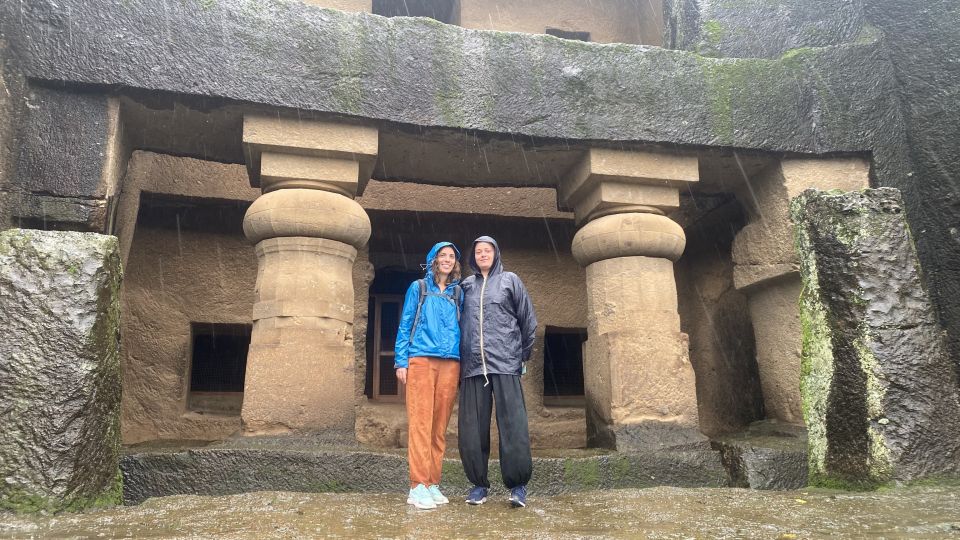
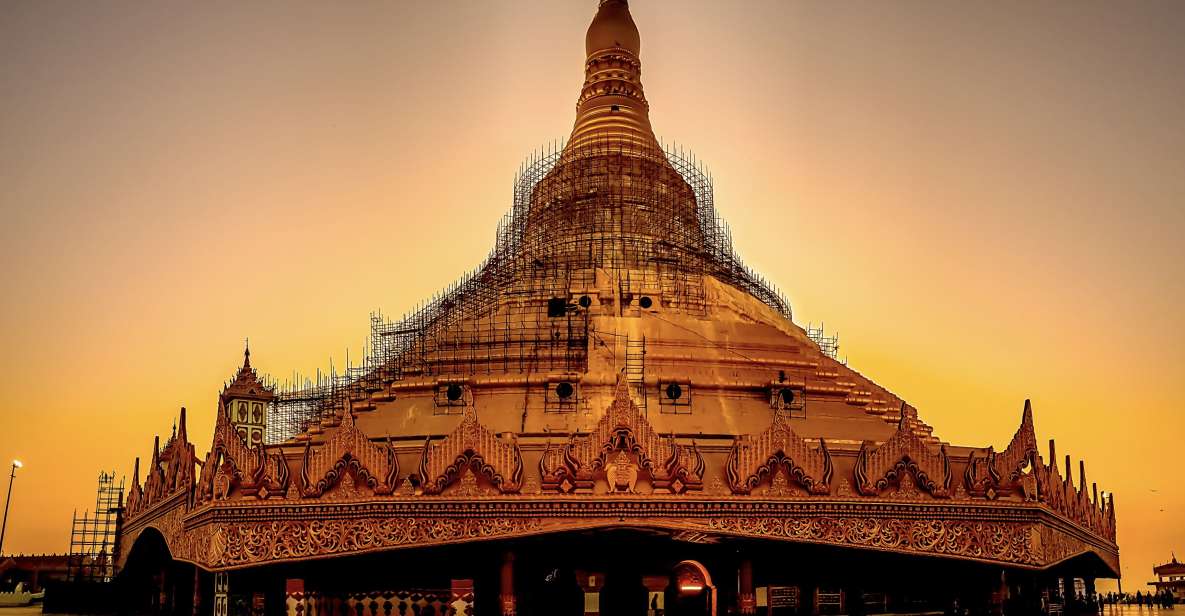
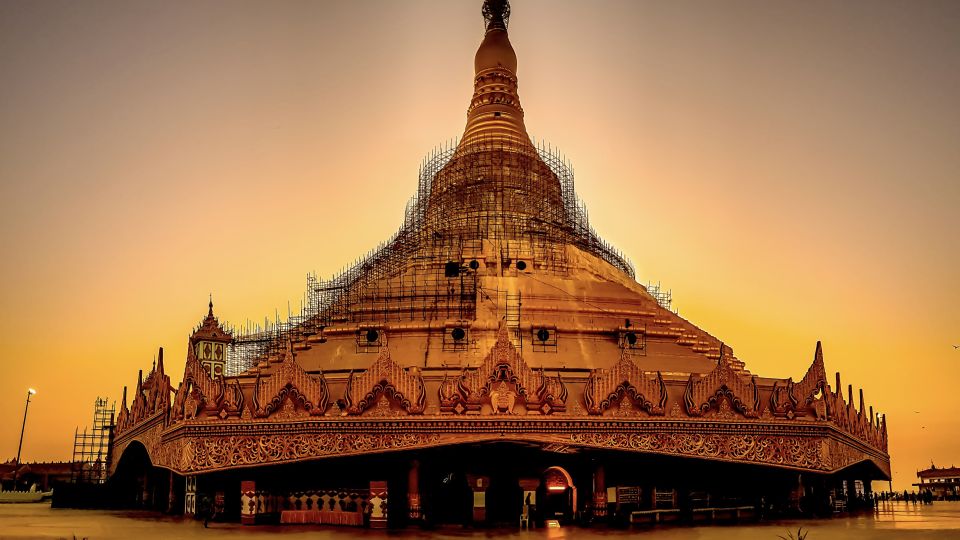
After Kanheri, the day shifts from cave stone to bright, reflective gold. The Golden Vipassana Pagoda is in Gorai, Mumbai, and the exterior is designed to catch sunlight so it shines brilliantly.
It’s not only a photo stop. The pagoda holds Gautama Buddha’s relics, which is why pilgrims and seekers visit. You’ll also notice the Burmese-inspired design. A very specific detail: it’s built without supporting pillars, which tells you the construction choices were ambitious and intentional.
Inside, the feeling is meant to be calm. You’re surrounded by greenery and you’ll have views of the Arabian Sea area when you’re in the right spots outside. The whole place is built as a symbolic escape from the city’s energy, using color, form, and open space to encourage quiet.
Ferry rides and the local transport factor: plan for some friction
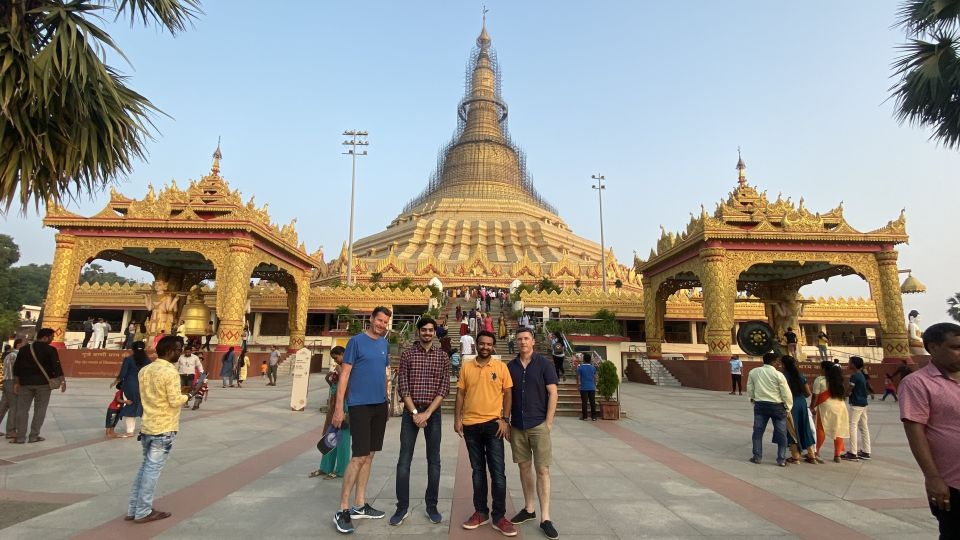
This tour includes a ferry ride of about 10 minutes each way. That’s part of the charm, because it breaks up the day and makes the Gorai section feel like you’ve left the main city grid.
Still, there’s a logistics reality to respect. On busier days, the ferry can be crowded, including pedestrians and lots of motorcycles. And once you reach the other side, you might need additional local transport (like a tuk-tuk) to reach the temple area, since the main car doesn’t go all the way there.
That’s why I’d keep two things in mind:
- Go with the expectation that the ferry day is not a quiet private boat ride.
- If you’re sensitive to crowding, try to avoid weekends, when access routes can get packed and moving around takes longer.
If you hit monsoon periods, you may also want to adjust expectations. Rain can add delays and make the day feel slower, especially around park access and crossing points.
Shoes, bags, and ID: your practical packing checklist
Kanheri is a walking-and-standing experience in a cave setting. Bring comfortable shoes. Even if you keep your pace easy, stone floors, steps, and uneven footing can make uncomfortable footwear a bad decision.
For documents, you’ll want to carry a passport or ID card. A passport copy is accepted. Don’t show up empty-handed.
There’s also a strict limit on what you bring in: no luggage or large bags. If you’re carrying a big daypack, keep it manageable. You’ll thank yourself later when you’re moving through park areas and crossings.
Price and value: why this can be a smart $21 day
At $21 per person, this isn’t a luxury tour, and it doesn’t pretend to be. The value comes from what’s packaged.
You get:
- hotel pickup and drop-off
- an English-speaking guide
- travel in an air-conditioned car
- a guided visit that targets the most important caves
- ferry transport between stops
- skip-the-ticket-line service
What you don’t get: entry tickets and food and drinks. That’s normal, but it means you should budget separately for park and site admissions once you arrive.
So is $21 worth it? For me, yes, because it removes the hardest parts of DIY planning. Getting from Mumbai to Sanjay Gandhi National Park, coordinating the cave route with clear context, and then handling the ferry logic to Gorai is exactly where guided help saves time and frustration. When you’re paying for a guide, you’re also paying for meaning.
Who should book this tour (and who might want a different plan)
I think this tour fits best if you want:
- a guided day that connects Buddhist art, architecture, and inscriptions
- two major spiritual sites without switching planners mid-day
- a private group format so the pacing can match your interests
You might want to reconsider if:
- you don’t handle crowds well, especially around ferry crossings and weekend park access
- you’re traveling with lots of luggage or large bags, since restrictions apply
- you prefer a fully unguided, do-it-at-your-own-pace visit (because the guide is a core part of the value)
Should you book: my straight recommendation
Book this tour if you want a focused, guided day that links Kanheri Caves’ carved Buddhist spaces and inscriptions to the Golden Vipassana Pagoda’s relics and striking design. The combination is what makes it work: cave history in Sanjay Gandhi National Park, then a golden, calmer spiritual stop in Gorai.
I’d especially book it on a weekday if you can. The practical reality is that weekends bring crowd slowdowns, and the ferry day becomes less peaceful. Also, wear your most comfortable shoes and travel light with no large bags.
If that sounds like your style, this is a solid way to get real substance out of a single Mumbai afternoon, with enough structure to make the carvings and the writing meaningful.
FAQ
What is the duration of the tour?
The tour duration ranges from 2.5 to 6 hours, depending on the starting time and how the day runs.
Where do I meet the guide?
Meet your guide at the main entrance of Sanjay Gandhi National Park at the scheduled time.
Is hotel pickup and drop-off included?
Yes. Hotel pickup and drop-off are included, though pickup is labeled as optional depending on your selected option.
Is the guide English speaking?
Yes. The guide is listed as English speaking.
Do I ride in an air-conditioned vehicle?
Yes. The tour includes travel in an air-conditioned car.
Are entry tickets included?
No. Entry tickets are not included.
What transportation is used between Kanheri and the pagoda?
You’ll take a ferry (about 10 minutes) and then another ferry back (about 10 minutes).
How long is the Golden Vipassana Pagoda stop?
The pagoda sightseeing time is listed as 1 hour.
What should I bring?
Bring a passport or ID card, and comfortable shoes. A passport copy is accepted.
Is there a baggage limit?
Yes. Luggage or large bags are not allowed.