REVIEW · DHARAVI SLUM TOURS
Dharavi Slum & Dhobi Ghat Mumbai: Private Guided Tour
Book on Viator →Operated by Explore Mumbai Tours · Bookable on Viator
Mumbai’s daily industry tells the real story. This private 3-hour tour pairs Mahalaxmi Dhobi Ghat with Dharavi’s small-scale businesses and clear, respectful explanations. The one thing to weigh is that it’s a hands-on walking experience, so plan for tight lanes and a lot going on around you.
I especially like how the guide-led format keeps the story grounded. In the guide names that come up most often—Priti, Shruti, Max, and Ruba—the theme is prompt help, friendly pacing, and time for your questions.
You start near Mahim at Third Wave Coffee, then finish at Dhobi Ghat so you can hop back to your hotel easily. The tour includes bottled water, train tickets, and a professional English-speaking guide, which makes the $17.57 price feel less like a ticket and more like a service.
In This Review
- Key things to know before you go
- Mahalaxmi Dhobi Ghat: What you’ll actually see in 15 minutes
- Dharavi slum tour: Looking past stereotypes to the working industries
- The private guided format (and why your guide matters most)
- Timing and route: How 3 hours can feel full (in a good way)
- Photography: Great shots, but keep it respectful
- Price and value: Is $17.57 a fair deal?
- Who should book this Dharavi and Dhobi Ghat tour?
- Should you book this private Dharavi and Dhobi Ghat tour?
- FAQ
- Where does the tour start and end?
- How long is the tour?
- Is this a private tour?
- Are admission tickets included?
- What’s included in the price?
- Can I cancel and get a refund?
Key things to know before you go
- Mahalaxmi Dhobi Ghat views without going inside: you’ll see the real workflow from a designated vantage point, not a quick drive-by.
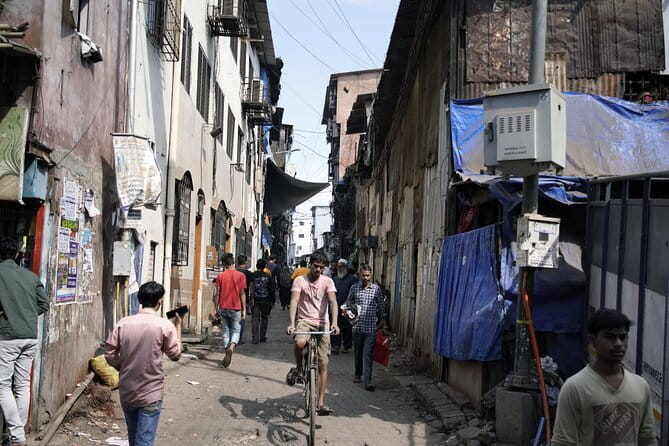
- Dharavi framed as an economy, not just a headline: you’ll hear how leatherwork, pottery, recycling, and textiles shape daily life.
- Local-led, ethics-first storytelling: the tone aims to dispel myths and focus on dignity and entrepreneurship.
- A private format for your group only: it’s built for small-group questions and slower, clearer explanations.
- Photography-friendly angles at the laundry: you get exclusive vantage points for the best shots.
- Short overall time (about 3 hours): it’s efficient, but you won’t see everything—think overview plus key details.
Mahalaxmi Dhobi Ghat: What you’ll actually see in 15 minutes
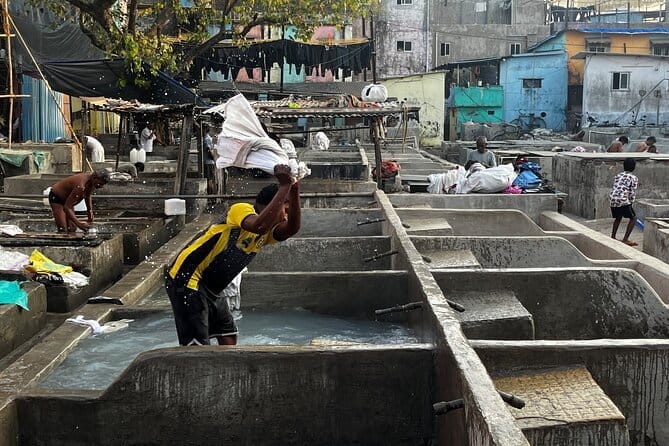
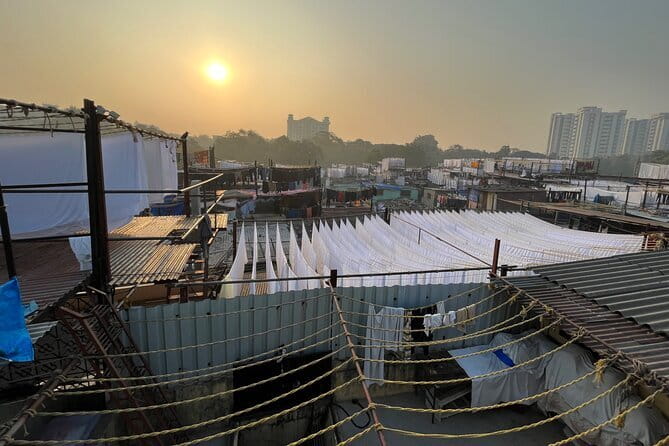
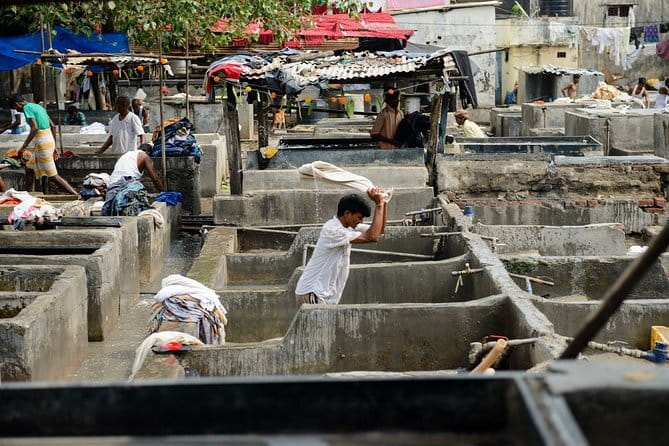
Dhobi Ghat is famous for a reason: it’s described as the world’s largest open-air laundry, where Mumbai’s dhobis have washed clothes manually for more than a century. When you arrive, your guide will explain how the system works day-to-day, from routine to scale—and who depends on it. This isn’t just a local curiosity; the laundry serves hotels, hospitals, and households across the city.
One smart detail: you won’t go inside. Instead, you’ll view Dhobi Ghat from a designated vantage point. That matters because it keeps things practical. You get a clear look at the organized chaos—clothes being washed, dried, and pressed—without turning the place into a free-for-all. It also helps you focus on understanding rather than rushing for access.
Photography is a big reason people book this stop. The tour is set up with exclusive vantage points for better pictures, which is helpful in a working environment where you can’t just wander around. If you’re the type who likes to capture motion and texture, this is your moment: water, lines, stacks, and hands at work.
The main drawback to consider is time. The Dhobi Ghat stop is about 15 minutes, which is enough for context and good views, but not enough for deep, slow observation of every process. If you love detail, treat this as your orientation stop. You’ll come away with a functioning mental map of how the laundry operates, then you can decide whether to linger later on your own.
You can also read our reviews of more guided tours in Mumbai

Dharavi slum tour: Looking past stereotypes to the working industries
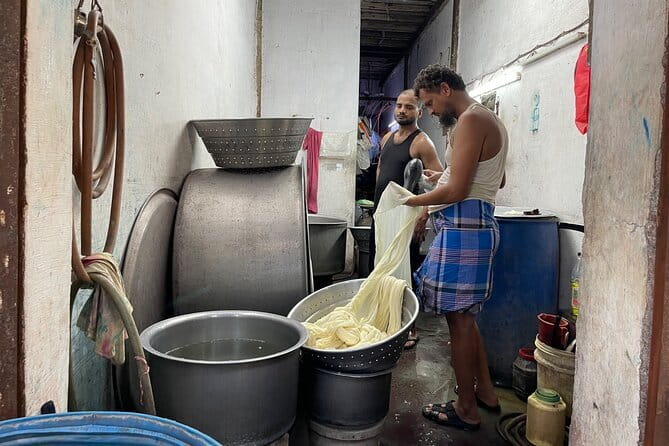
Dharavi gets talked about in extremes—either as a shock headline or as a magic-fix story. This tour steers you toward a more grounded angle: Dharavi as an economic hub made of small-scale industries run by real people.
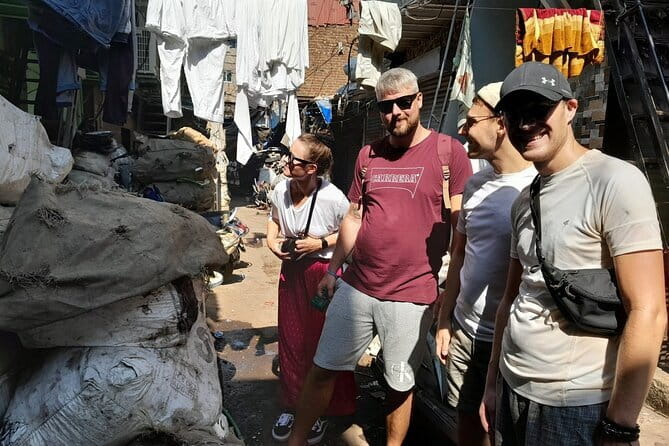
As you walk through the area with a local guide, you’ll see it described as more than a slum. The focus is on trades in action, including leatherwork, pottery workshops in Kumbharwada, and sophisticated plastic recycling units. Textile production also comes into the picture. That’s the key shift: you’re not only seeing buildings and lanes. You’re seeing a network of work that keeps goods moving and skills alive.
Your guide’s job here is important. They’re sharing stories about Dharavi’s history, economy, and community spirit, with an emphasis on resilience and entrepreneurship. That tone isn’t just a mood—it changes how you interpret what you’re seeing. When you understand what industries exist and why they matter, the lanes stop feeling like scenery and start feeling like a place where people solve problems every day.
You also get the element many people crave: interacting with locals and witnessing businesses in action. The tour’s framing is explicitly respectful and designed to avoid turning residents into props. Practically, that means your role is more thoughtful observer than spectator. You’ll get more out of it if you keep your questions human and your camera use considerate.
The trade-off is obvious: this part is walking through narrow lanes for about 2 hours. You’ll be close to everyday life, and it can feel intense because it’s not staged. If you prefer a slow, cushioned sightseeing day, this might feel like too much. If you want Mumbai’s real engine, this is where you’ll feel it.
The private guided format (and why your guide matters most)
A private tour sounds like a convenience add-on, but here it’s the backbone. You’re not being folded into a big bus group. It’s private for your group only, with an expert English-speaking guide who can pace the story based on your questions.
The guides named in the feedback show a pattern: they’re prompt, friendly, and genuinely helpful with questions. One highlight is how guides handle uncertainty at the start. Even when someone isn’t sure whether a slum tour is for them, a strong guide can quickly explain what you’ll learn and how to look in a respectful way.
That question-friendly style is a big deal in Dharavi, where outsiders often show up with stereotypes. When the guide can respond clearly, you’ll understand what you’re seeing instead of guessing. And when the guide is attentive to requests—asking what you want to focus on—you get a tour that feels made for your curiosity rather than a generic script.
In plain terms: you’ll remember the guide’s explanations long after the photos. The laundry visuals are striking, but the industries in Dharavi make more sense when a person on the ground explains how they connect to the wider city.
Timing and route: How 3 hours can feel full (in a good way)
This tour runs about 3 hours. The structure is simple and efficient: roughly 15 minutes at Dhobi Ghat, then about 2 hours walking in Dharavi, with transfer time in between.
That short overall duration is a value point. It’s long enough to get two major Mumbai experiences in one go—open-air laundry and neighborhood industry—but short enough that it doesn’t hijack your whole day. It’s a good choice if you want depth without adding another half-day commitment.
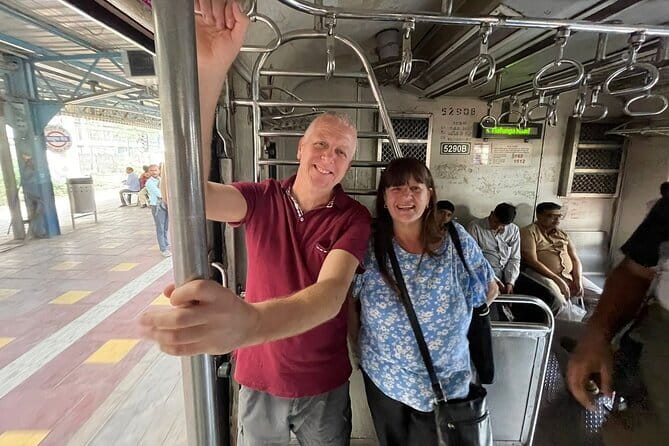
Logistics are also fairly straightforward. The start point is near public transportation at Third Wave Coffee on Senapati Bapat Marg in Mahim area. The tour ends at Dhobi Ghat in Lower Parel, where it’s easy to catch an Uber or take the train back.
You should also know what’s included so you don’t lose time sorting it out mid-day. Bottled water and train tickets are included, and the guide is professional and English-speaking. The overview also notes private AC transfers, and with the mix of train and transfers, the practical takeaway is this: you’re not doing all the navigation yourself.
What to consider: because you’re moving between neighborhoods and doing a walking segment, the day can feel brisk even though it’s only a few hours. If you’re sensitive to crowds, noise, or constant visual input, build in extra downtime before or after so your brain can decompress.
Photography: Great shots, but keep it respectful
The tour is specifically built to help you photograph Dhobi Ghat. You’ll have exclusive vantage points for the best views, and your guide can explain what you’re seeing so your photos aren’t just pretty—they’re accurate.
In Dharavi, photography is more delicate. The tour is designed around seeing and learning, with community and dignity as the central theme. That means your approach matters. Ask yourself before you shoot: am I documenting work and context, or am I turning someone’s daily life into a background? If you stick to respectful distance and focus on scenes of work, you’ll get better outcomes and feel better about what you captured.
If you’re someone who wants wide, scenic shots, Dhobi Ghat might tempt you to shoot fast and far. But don’t forget to slow down for texture and movement: the rhythm of drying and pressing is part of the story. Your guide can help you place yourself so you’re not constantly stepping into the flow.
You can also read our reviews of more private tours in Mumbai





Price and value: Is $17.57 a fair deal?
At $17.57 per person for a private guided experience lasting around 3 hours, the math mostly depends on what’s included. Here, the inclusion list is what makes the price feel reasonable: bottled water, train tickets, and a professional English-speaking guide.
Private tours often cost more because you’re paying for the guide and the time. In this case, you’re not just paying for someone to point and read. You’re paying for guided interpretation—especially important for Dharavi and Dhobi Ghat, where context changes everything.
Group discounts are also mentioned, which can help if you’re traveling with friends or family. Plus, the tour uses a mobile ticket system, which is one less thing to manage.
One thing to keep expectations aligned: this isn’t a long, slow documentary day. It’s an efficient experience with standout moments: Dhobi Ghat’s open-air workflow and Dharavi’s industries. If you want hours of wandering in multiple parts of Dharavi or a deeper stop at every workshop, you might want a longer format elsewhere. But for a first-time, respectful overview, the value is strong.
Who should book this Dharavi and Dhobi Ghat tour?
This works best for you if:
- You want to understand Mumbai through real work and daily systems, not just landmarks.
- You like guide-led context and you’re comfortable asking questions.
- You prefer a private setting with room to think and pause.
It’s also a good fit for travelers who want a respectful slum tour that focuses on enterprises—leatherwork, Kumbharwada pottery workshops, plastic recycling units, and textiles—rather than shock value.
I’d skip it if you:
- Strongly dislike walking for about 2 hours in narrow lanes.
- Want a mostly indoor, quiet schedule.
- Prefer very long stops over a tight 3-hour overview.
Should you book this private Dharavi and Dhobi Ghat tour?
If you want Mumbai’s daily life explained by someone who can answer questions clearly, I think it’s worth booking. The combination of Dhobi Ghat views from a proper vantage point plus Dharavi’s industries makes it feel like you actually learned something useful, not just looked at a place.
Book it if you’re curious about how industries function and you’re open to a respectful, ethics-first approach. Hold off if you need a calmer, less walking-heavy day. For the right traveler, this is one of those tours that gives you a smarter map of the city after it ends.
FAQ
Where does the tour start and end?
The tour starts at Third Wave Coffee Tip Road, Unit no.58, Ground, Ram Mahal, Senapati Bapat Marg, Marinagar Colony, Mahim, Mumbai, Maharashtra 400016, India. It ends at Dhobi Ghat, Shanti Nagar, Lower Parel, Mumbai, Maharashtra, India.
How long is the tour?
The tour duration is approximately 3 hours.
Is this a private tour?
Yes. It’s a private tour/activity, meaning only your group participates.
Are admission tickets included?
Admission tickets are listed as free for both Dhobi Ghat and Dharavi.
What’s included in the price?
The tour includes bottled water, train tickets, and a professional English-speaking guide.
Can I cancel and get a refund?
Yes. Free cancellation is available up to 24 hours in advance for a full refund. If you cancel less than 24 hours before the start time, the amount paid is not refunded.