REVIEW · MUMBAI
Sacred sites Mumbai tour: Hinduism, Christianity, Judaism & more
Book on Viator →Operated by No Footprints · Bookable on Viator
One tour. Five faiths. Real Mumbai momentum. This Sacred sites Mumbai tour is interesting because you move through working neighborhoods where belief shows up in daily life, not museum form. I like how it’s built as short, focused stops (around 20 minutes each), so you see a lot without burning the day. I also love the way the guide work centers on culture and practice, with guides like Twinkle Vora, Nimisha, Nishtha, and Nasreen getting praised for being warm and easy to ask questions. One drawback to keep in mind: site hours can be unpredictable, and if a place is closed when you arrive, you’ll have limited time to adjust.
You’re paying for more than a checklist. You’re getting private transportation for your group, a professional guide, and hotel pickup/drop-off, plus admission tickets that are listed as free for the stops. At about $93.78 per person for 3–4 hours, it can feel like a solid value if you want context fast and you’re short on time in Mumbai.
If you’re traveling solo or worried about navigating alone, this kind of guided religious route is also a confidence boost. Still, plan for moderate walking and time in traffic, and remember the tour does not run on Mumbai Marathon day.
In This Review
- Key highlights you’ll feel fast
- Why this Mumbai sacred-sites loop works in 3–4 hours
- Keneseth Eliyahoo Synagogue: Jewish Mumbai and continuity
- Nipponzan Myohoji Buddha Temple: a Japanese Buddhist thread
- Babulnath Temple: Lord Shiva, Hindu practice, and local rhythm
- St. Thomas Cathedral Mumbai: Christianity’s old roots in a city stop
- Haji Ali Mosque: an iconic sea-linked setting
- The guide makes or breaks a faith tour
- Price and what you’re actually paying for
- Logistics that affect your day (the stuff you’ll care about)
- Who should book this tour
- Should you book Sacred sites Mumbai tour?
Key highlights you’ll feel fast
- Multi-faith route in a single morning block, with about 20 minutes per sacred stop
- Hotel pickup and drop-off included (with possible extra cost for suburban pickups)
- Free admission tickets listed for each site on the route
- Private group with professional guidance, not a big cattle-call tour
- Iconic Mumbai landmarks like Haji Ali Mosque and St. Thomas Cathedral
- Guides are praised for respectful explanations and question-friendly pacing, with names like Nimisha and Twinkle Vora showing up in past experiences
Why this Mumbai sacred-sites loop works in 3–4 hours
Mumbai religious life is all around you, but it’s not always easy to read quickly. This tour gives you a guided path through five faith communities, each tied to a specific place you can actually stand inside and look at. The result is a fast education in how people worship, dress, greet, and keep traditions.
The timing is the trick. Five stops at roughly 20 minutes each means you get orientation at each site, then you move on while it’s still interesting. If you’re the type who gets tired by long museum days, this pacing tends to fit better than a slow crawl.
You also get practical comfort. The tour includes a driver, private transportation for your group, and hotel pickup and drop-off. If you’re staying in the center, that can save you from figuring out taxis and routing on your own.
You can also read our reviews of more tours and experiences in Mumbai.

Keneseth Eliyahoo Synagogue: Jewish Mumbai and continuity
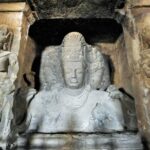
Your first stop is Keneseth Eliyahoo Synagogue, a Jewish place of worship where you learn about the Jewish community of Mumbai, their culture, and their history. Even if you only have a brief visit, starting here sets a tone: the tour isn’t only about big architecture, it’s about how a community lives inside its faith.
Expect a calm, respectful introduction. The tour lists admission as free, and the time on-site is short, so use it for basics: how worship works, what symbols mean, and how Jewish life has shaped parts of the city.
One practical consideration: religious buildings can have changing access based on local schedules. In past tours, there’s been an instance where the synagogue was closed at the time of arrival, and the guide tried hard to make the visit happen anyway. So bring a flexible mindset for “what if the door is locked.”
Nipponzan Myohoji Buddha Temple: a Japanese Buddhist thread
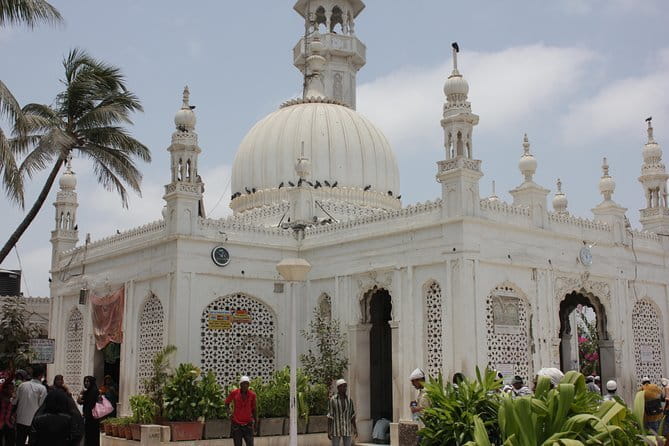
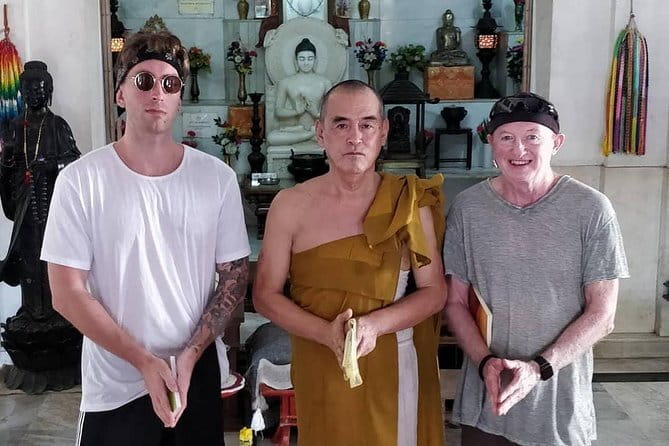
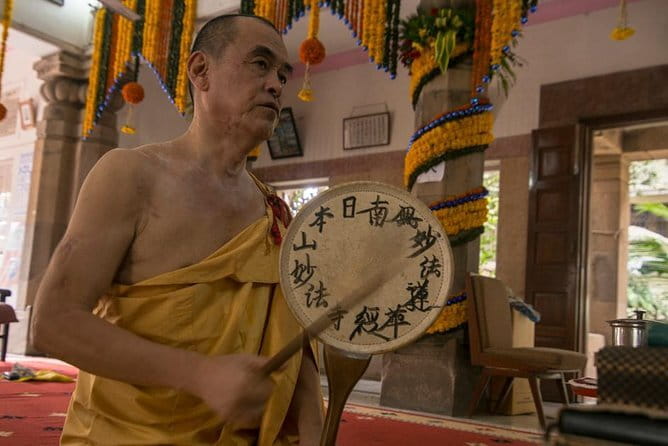
Next you’ll visit Nipponzan Myohoji Buddha Temple, described as a Japanese Buddhist temple in Mumbai. This stop is valuable because it shows that Mumbai Buddhism isn’t just one single story. You’re seeing how traditions can travel and take root in a new place.
Because your time is limited, focus on questions that help you read what you see. Ask what makes this temple Japanese Buddhist in character, and how the Buddhist community connects to daily practice in Mumbai.
Another good thing about this stop is tone. Buddhist sites often feel quieter and more reflective, and that can rebalance the energy before you jump into Hindu and Christian landmarks.
Babulnath Temple: Lord Shiva, Hindu practice, and local rhythm
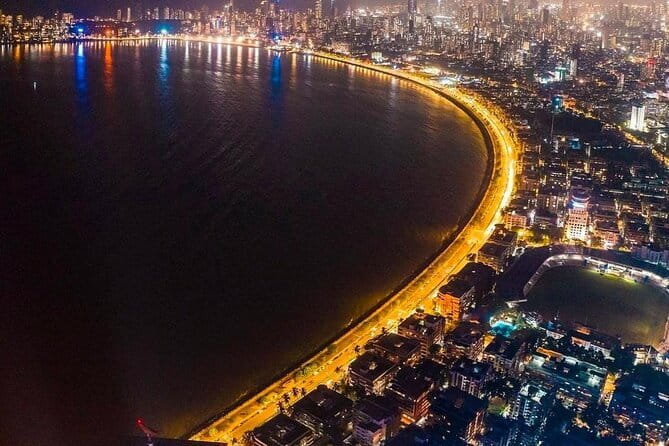
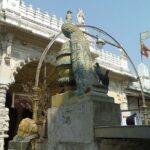
Then it’s Babulnath Temple, associated with Lord Shiva. This is where the tour leans into Hindu beliefs and city culture, giving you a guided walk-through of what you’re seeing and why it matters to Hindus in Mumbai.
What I like about hitting a Shiva temple mid-tour is that you can compare how each faith frames devotion. At a Hindu temple, you’ll likely notice how worship is tied to rituals and everyday religious life. The guide’s job is to translate the visible into the meaningful—what people are doing, how that fits belief, and what to watch for.
A quick heads-up: temples can be busy depending on time of day. You’ll have about 20 minutes, so if you want photos or a longer look, tell your guide early and don’t wait until the last minute.
St. Thomas Cathedral Mumbai: Christianity’s old roots in a city stop
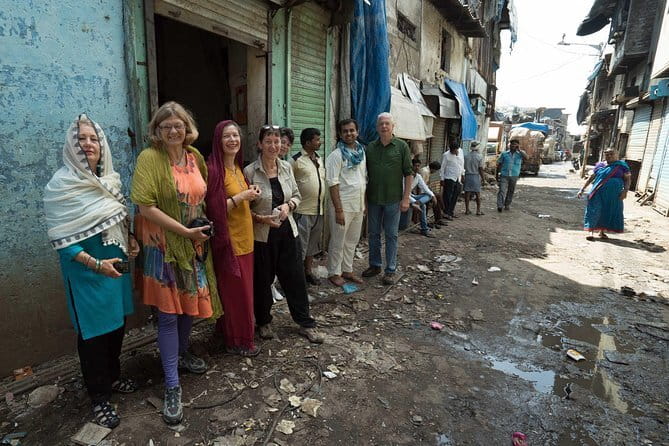
Your next landmark is St. Thomas Cathedral Mumbai, described as one of the oldest churches in town. This stop helps you connect Christianity in Mumbai to something older and established, not only modern denominations and buildings.
Again, your time is short, but that’s okay here. Churches can overwhelm you if you’re trying to read everything at once. The guide helps you focus on key elements of practice and how the religion is carried out in the city.
If you like learning through context, this is a good moment to ask: what makes this church historically important in Mumbai, and what does a service or visit typically look like here? Even without deep technical details, you’ll come away with a clearer sense of how Christianity fits the city’s religious mix.



Haji Ali Mosque: an iconic sea-linked setting

The final listed stop is Haji Ali Mosque, known as an iconic mosque visited by hundreds of people daily. The tour description highlights its dramatic setting, built almost amidst the Arabian Sea, and also notes that it’s primarily for Muslims but attracts visitors across communities and faiths.
This is one of those places where the setting matters as much as the faith. The approach and viewpoint can make you understand why people come even if they aren’t practicing the same tradition. In a short time, you’ll get a sense of what it means to gather at a landmark that belongs to more than one narrative.
Because it’s a high-visibility site, dress and behavior matter. Follow your guide’s instructions, keep your respect meter turned up, and remember you’re in a working place of worship even if it draws tourists.
The guide makes or breaks a faith tour
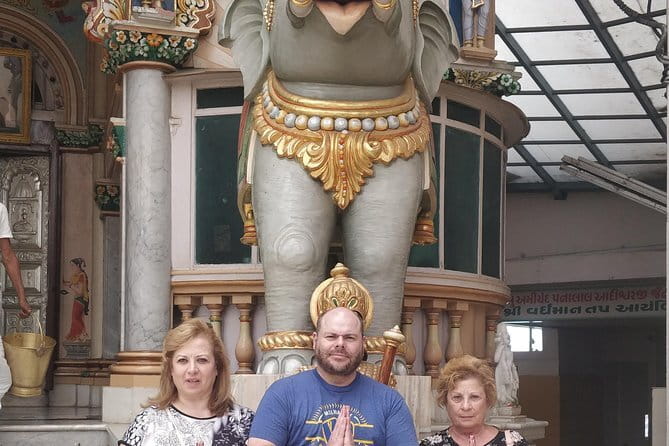
With a multi-faith route, the guide is the difference between seeing buildings and understanding people. Past experiences connected to this tour style highlight guides who are consistently described as friendly, supportive, and strong at answering questions without making you feel silly.
You’ll see names come up in past guides, including Nimisha, Nishtha, Nasreen, Naseem, Shruti, KP, Heer, and Twinkle Vora. The common theme in the praise is how they explain what you’re looking at, keep the tone respectful, and manage the pace so the group doesn’t feel rushed.
If you’re the kind of traveler who loves asking why, this tour fits you well. If you’re shy, it still works because the explanations are built into the stops. Either way, come prepared with one or two questions you genuinely care about, and you’ll get more out of every 20-minute segment.
Price and what you’re actually paying for
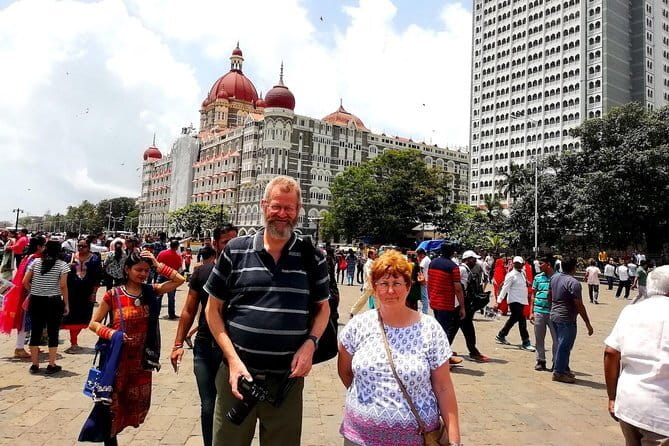
At $93.78 per person, this isn’t a budget “walk by yourself and hope” tour. You’re paying for a professional guide, driver, private transportation, and hotel pickup/drop-off. That adds real value in Mumbai, where hopping between distant neighborhoods can quietly eat your time.
Also, admission tickets for the stops are listed as free. That matters because religious sites often have unpredictable entry costs, and your wallet will thank you for having that portion handled. Add in the included fees and taxes, and you avoid a lot of small surprises.
The main cost caveat is pickup location. The tour notes possible additional transport cost if you need pickup from suburban Mumbai hotels. If you’re staying far out, it’s worth confirming your pickup point before you commit so you don’t get hit by an unexpected add-on.
Finally, keep an eye on timing. This is a short 3–4 hour experience, so it’s best if you want a guided overview rather than a deep, long-form study of one faith.
Logistics that affect your day (the stuff you’ll care about)
The tour is private for your group, so you’re not squeezed into someone else’s schedule. That usually means the guide can manage pace better and respond to your interests.
It’s also listed as a hop-on hop-off tour. With private transportation for your group, what that typically means in practice is you follow a structured route but with the ability to adapt to your needs within the time window. Don’t expect it to turn into freeform roaming; the stops still have a planned flow.
Weather matters. The tour requires good weather, and if it’s canceled for poor weather, you’ll be offered a different date or a full refund. So if you’re in Mumbai during a volatile period, keep your backup day in mind.
The route sequence is at the discretion of No Footprints and the guide on the ground. That’s normal for real-world traffic and openings. It also means you shouldn’t cling too tightly to exact timing between sites.
Who should book this tour
I’d book this if you want an efficient, respectful way to understand Mumbai through faiths, without doing a solo navigation experiment. It’s also a strong pick for first-time visitors who feel a little nervous about going into religious areas alone.
It’s especially suitable if you like guided explanations and want your questions answered in context. If you prefer to wander independently with no structure, you might find the 20-minute stop lengths a bit short.
It also suits people with moderate physical fitness. You’re not signing up for a hike, but you should be comfortable with walking and movement between nearby points of interest.
Should you book Sacred sites Mumbai tour?
Yes, if your priority is seeing key sacred places and getting a guided cultural read in just a few hours. The included pickup, private transport, and free listed admissions make it easier to justify the price, especially if you don’t want to spend your limited time in Mumbai sorting logistics.
Book it with a flexible mindset. Religious sites can have access limits, and the tour is weather-dependent. If you value slow, ultra-detailed time inside one single monument, you may prefer a longer, single-faith-focused experience.
If you want a practical “Mumbai through faith” snapshot that’s guided, respectful, and easy to fit into your schedule, this is a smart choice.