REVIEW · DHARAVI SLUM TOURS
Dharavi Slum Tour
Book on Viator →Operated by Reality Tours & Travel Pvt Ltd · Bookable on Viator
Dharavi isn’t what you expect. This 2.5-hour walking tour shows Mumbai’s Dharavi as a working neighborhood—textiles, recycling, and leather tanning—run by residents, with tour proceeds supporting education, health, and livelihood projects. You get a local English-speaking guide and the chance to learn what day-to-day industry looks like when you’re walking through it.
I especially like two things: first, the guided approach that focuses on how people organize work, trade, and community life in tight lanes; second, the clear payoff at the end, where the tour finishes at the operator’s Dharavi office with a cold drink and an explanation of how funds get reinvested locally. In the same spirit, the guide style you’ll see praised is respectful and flexible—people mention guides such as Rakesh and Leena for being good at handling questions and on-the-fly needs.
One consideration: no photography is permitted while you’re in the slum, and the lanes are not designed for casual sightseeing. If you’re hoping for lots of photos or a slow museum pace, this tour will feel different—and you’ll want modest clothes that cover shoulders and knees.
In This Review
- Key things to know before you go
- Why this Dharavi walk feels different in Mumbai
- Getting there: meeting point, train options, and no hotel pickup
- Stop 1: Inside Dharavi’s working lanes (2 hours of real-world industry)
- You see commerce at close range
- You get the “how” of livelihoods, not just the “what”
- You’ll experience the physical pace of the neighborhood
- Stop 2: Reality Tours and Travel (Dharavi) and the reinvestment moment
- What the textiles, recycling, and leather work mean (beyond the labels)
- Respect rules you can’t ignore: photos and dress code
- Price and value: why $20.40 can still feel like a bargain
- Who should book this Dharavi slum tour—and who might not
- Should you book the Dharavi Slum Tour?
- FAQ
- How long is the Dharavi Slum Tour?
- What does the tour cost?
- Where is the meeting point and where does the tour end?
- Is lunch included?
- Is photography allowed in Dharavi?
- What should I wear for the tour?
- Do I need hotel pickup and drop-off?
- Is there any escort or help after the tour ends?
- What is the cancellation policy?
Key things to know before you go
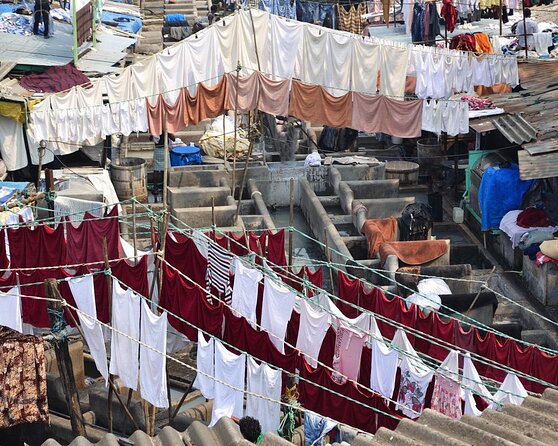
- Real working spaces, not staged stops: you’ll pass areas tied to recycling, textiles, pottery, and leather tanning.
- Local community center connection: you’ll see a community center funded by tour proceeds.
- A clear finish point: the tour ends at Reality Tours & Travel (Dharavi) with a cold drink.
- Built-in respect rules: photography is not allowed, and dress should be conservative.
- You stay mobile: there’s no hotel pickup, but it’s near public transportation, and train travel may be offered with your guide depending on your option.
Why this Dharavi walk feels different in Mumbai
Dharavi is often reduced to headlines and stereotypes. This tour nudges you past the usual script by taking you into a neighborhood where industry happens in plain sight, day after day, in narrow lanes where businesses and homes overlap.
What makes the experience click is the focus on agency. You’re not being asked to pity anyone or treat Dharavi like a problem to solve. Instead, the walk is built around what residents do—how work gets made, recycled, sold, and maintained—plus how community projects get funded through tour proceeds.
It’s also a good value choice if you want a real Mumbai contrast. For about $20.40, you get a guided visit, water or a cold drink, and the chance to connect the tour to tangible local support.
You can also read our reviews of more tours and experiences in Mumbai.


Getting there: meeting point, train options, and no hotel pickup
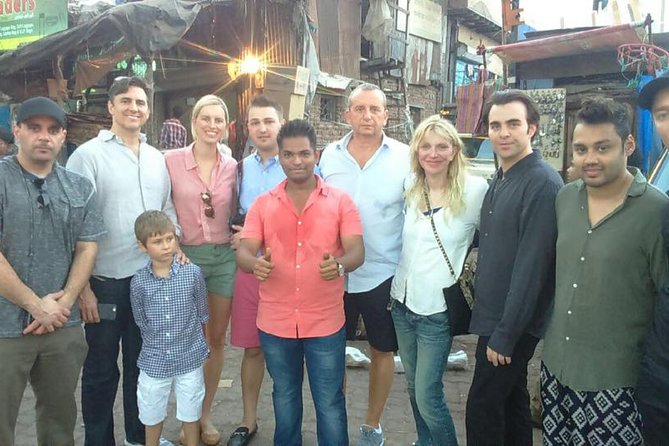
You’ll meet at Reality Tours & Travel (Dharavi), 60 Feet Road, Shahid Bhagat Singh Nagar, Kumbhar Wada, Dharavi, Mumbai, Maharashtra 400017, India. The tour also ends at the same place, so you’re not stuck wondering where you’ll land after the walk.
There’s no hotel pickup or drop-off. That’s normal for walking tours in Mumbai, but it matters for planning. You’ll want to line up public transport on your own schedule.
The operator notes two ways to handle transport: you can travel by train with your guide, or you can make your own way there if that option is selected. If you’re short on time or you like control, the self-arrival option can be easier. If you want help navigating, the train-with-your-guide option can reduce stress.
One more practical note: your ticket is mobile, and the tour is near public transportation. That combo is helpful when you’re working around Mumbai traffic and station crowds.
Stop 1: Inside Dharavi’s working lanes (2 hours of real-world industry)
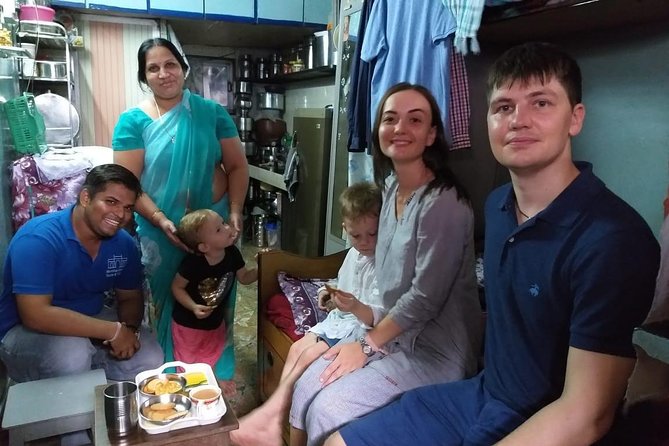
The first, main stop is the Dharavi walk itself—about 2 hours—where the tour covers several different pockets of activity. Think narrow lanes, small shops, and industrial work close to everyday life.
The tour description specifically calls out areas like the Recycling Area, a Rooftop Visit, Popaddom making, and Kumbhar Wada pottery colony. You’ll also hear how Dharavi functions as an industrial hub and home to nearly one million residents. That scale is hard to picture until you’re walking through it.
Here’s what I find valuable about this stop for your understanding of Mumbai:
You see commerce at close range
Instead of stopping at one viewpoint, the route is designed to show variety. Dharavi isn’t just one job type. You’ll get a sense of multiple trades linked to the larger city, which helps you see Dharavi as part of Mumbai’s economic machinery—not off to the side.
You get the “how” of livelihoods, not just the “what”
A good guide doesn’t only name places. They explain how businesses operate in dense spaces, where customers, materials, and workers are all moving through tight areas. That kind of practical framing makes your Mumbai mental map more accurate.




You’ll experience the physical pace of the neighborhood
A walking tour here is still walking. Narrow lanes mean slower steps and more attention to where people are moving. Comfortable shoes matter more than you think.
Possible drawback of the first stop: it’s not the kind of tour where you can half-watch from a distance. If you want lots of open-air viewpoints and wide streets, Dharavi isn’t that. But if you want a truthful look at how people work and live, it’s exactly the point.
Stop 2: Reality Tours and Travel (Dharavi) and the reinvestment moment
After the walk, the tour ends at the Reality Tours & Travel (Dharavi) office—about 20 minutes. You’ll get a soft drink there, and you’ll learn more about how tour funds get reinvested back into the community.
This part matters because it changes how you think about your money. Instead of paying for a photo and a story that ends when the tour ends, you’re directed to the idea of ongoing local support—education, health, and livelihood projects are specifically mentioned as areas your proceeds help.
The office stop also gives you a reset. Walking for 2+ hours can be tiring, and the cold drink plus a chance to ask questions makes it easier to process what you just saw.
Another helpful detail: after your tour, your guide helps you go wherever you want. If you want to return to Churchgate or catch a local train to another part of Mumbai, the guide will escort you to the train station. That escort is more valuable than it sounds, especially the first time you navigate Mumbai trains.
What the textiles, recycling, and leather work mean (beyond the labels)
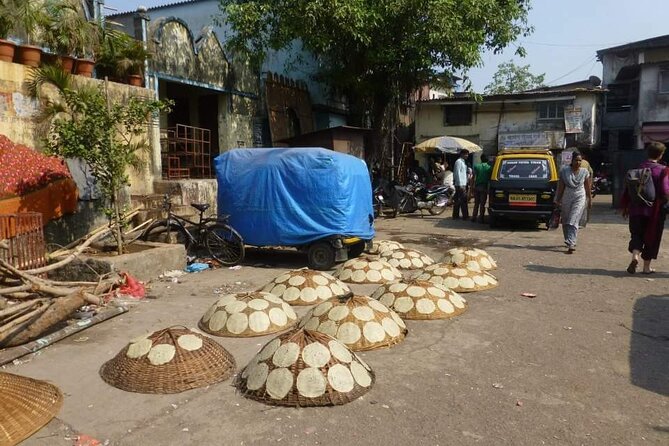
The tour description highlights industries such as textiles, recycling, and leather tanning. Even if you don’t know the technical process of each trade, you can still learn a lot from what’s around you.
Textiles and leather work are both labor-intensive. In a place like Dharavi—dense, resource-driven, and built around local know-how—those industries represent skills passed through families and workplaces, with supply chains and customers reaching beyond the neighborhood.
Recycling is the thread that helps you understand how a city’s waste becomes another city’s raw material. When you see recycling-focused work up close, it becomes easier to connect Mumbai’s day-to-day consumption with the labor happening inside Dharavi’s lanes.
And the Rooftop Visit is a reminder that the vertical space of a city shapes everything: where people live, where they work, and how they adapt. Even a short look up can change the way you visualize Dharavi’s layout.
If you’re the kind of traveler who likes connecting dots, this tour gives you plenty. It’s not just where people live—it’s how their neighborhood functions in the larger Mumbai ecosystem.
Respect rules you can’t ignore: photos and dress code
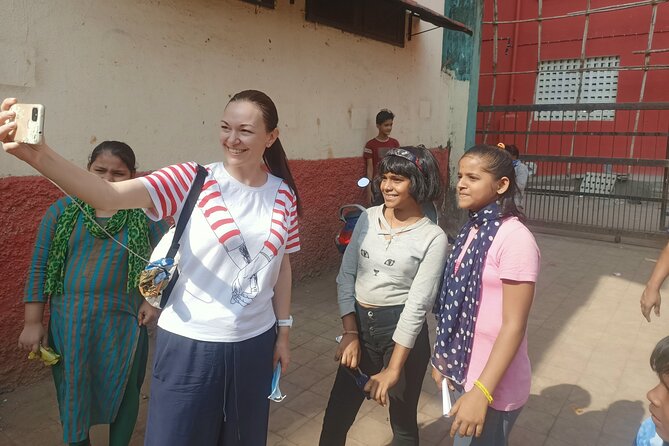
This is one of those tours where respect isn’t extra; it’s part of how the visit works.
- No photography is permitted while in the Dharavi slum. This is explicitly stated as a rule out of respect for residents.
- Dress codes are conservative throughout India. Modest, respectful clothing that covers shoulders and knees is required.
If you forget and show up in short sleeves and shorts, you might still manage the tour, but it can be uncomfortable and stressful. I’d rather you plan ahead: bring a light layer for shoulders, and wear trousers or a skirt that reaches the knees.
Also, with the no-photo rule, shift your goal. Don’t think about capturing evidence. Think about absorbing details: how people greet each other, how work is organized, how customers move through storefronts, and how your guide explains the neighborhood.
Price and value: why $20.40 can still feel like a bargain
$20.40 per person is low enough that you should ask what you’re getting. Here, you’re getting more than a walk in a different neighborhood.
You get:
- a local English-speaking guide
- water or a cold drink
- a structured route across multiple parts of Dharavi’s working areas
- a community connection at the end through the office and the reinvestment explanation
- lunch is optional at an additional price (so you’re not forced into a pricey add-on)
The value part is the matching of cost to outcome. In many cities, a guided walking tour can cost far more just for the guiding. Here, your ticket also ties into support for projects in education, health, and livelihood—so the trip has an outcome beyond your own photos and memories.
Group discounts are mentioned too, which can make it even better if you’re traveling with a friend or two.
Who should book this Dharavi slum tour—and who might not
I think this tour fits best if you want a different Mumbai angle and you’re okay with a neighborhood that’s active, crowded, and working.
You’ll likely enjoy it if you:
- like guided context over casual wandering
- care about how cities actually function at street level
- want to see recycling, pottery, and leather/tannery work as part of daily life
- appreciate tours that connect to community projects
You might want to skip or reconsider if you:
- hate restrictions like the no-photography rule
- need hotel pickup and a very low-effort logistics plan
- expect wide streets and big-city views
One more good sign: the tour says most travelers can participate, and it caps at a maximum of 99 travelers. That cap matters if you’re worried about being herded like cattle.
Should you book the Dharavi Slum Tour?
Yes, if your goal is understanding Mumbai as a living, working city. This is not a “look but don’t touch” kind of experience—it’s built around seeing how people earn a living and how community projects get supported through the money your tour generates.
Book it if you can follow the rules: modest dress, no photos, and ready-for-walking shoes. Plan to spend your energy on listening and observing rather than snapping pictures.
Skip it if you’re only interested in classic tourist sights or you need a camera-first experience. Dharavi demands a different mindset.
If you’re deciding between this and another neighborhood walk, I’d pick this one for the contrast alone. It gives you a Mumbai you can’t really appreciate from a bus window or a quick stop in a downtown district.
FAQ
How long is the Dharavi Slum Tour?
The tour is about 2 hours 30 minutes (approx.).
What does the tour cost?
It costs $20.40 per person.
Where is the meeting point and where does the tour end?
Both start and end are at Reality Tours and Travel (Dharavi), 60 Feet Road, Shahid Bhagat Singh Nagar, Kumbhar Wada, Dharavi, Mumbai, Maharashtra 400017, India.
Is lunch included?
Water and a cold drink are included. Lunch is optional and available at an additional price.
Is photography allowed in Dharavi?
No. Out of respect for residents, photography is not permitted while in the Dharavi slum.
What should I wear for the tour?
Dress conservatively. Clothing should be respectful and cover shoulders and knees.
Do I need hotel pickup and drop-off?
No. Hotel pickup and drop-off are not included. The meeting point is near public transportation, and the guide may travel by train with you depending on the selected option.
Is there any escort or help after the tour ends?
Yes. After the tour finishes at the office, your guide helps you go wherever you want. If you need to return to Churchgate or catch a local train, the guide will escort you to the train station.
What is the cancellation policy?
You can cancel for free up to 24 hours in advance for a full refund. If you cancel within 24 hours, the amount paid will not be refunded.