REVIEW · DHARAVI SLUM TOURS
Dhobi Ghat Laundry and Dharavi Slum Tour with Local Train
Book on GetYourGuide →Operated by India Trip Explore · Bookable on GetYourGuide
Dhobi Ghat hits your senses fast: clothes, water, and muscle power everywhere. This short Dhobi Ghat + Dharavi experience is fascinating because you see the world’s largest outdoor laundry in action, then you roll into Dharavi using a real Mumbai local train ride instead of a car-only transfer. What I like most is the hands-on feel of watching dhobis sort and handwash in open-air concrete troughs, and the way the guide points out practical details you’d miss on your own. One thing to consider is that it’s a close-up, working-neighborhood visit, so you should expect crowds, activity, and some sensory intensity.
The Dhobi Ghat portion is focused—photo stop, guided walk, and time to look closely—so you don’t feel rushed or stuck staring from one angle. After that, the local train segment gives you quick context for how Mumbai’s transportation actually moves people day to day, and it sets you up for the walking tour in Dharavi.
For the Dharavi part, I like that the tour is guided in a way that centers local knowledge. In one booking, the guide named Abhi was praised for clear, easy-to-understand English and for keeping the group safe in heavy traffic. Still, this isn’t a sightseeing-only stop; you’re there to observe daily work and community enterprise, so keep your expectations realistic and respectful.
In This Review
- Key points worth knowing before you go
- Dhobi Ghat Viewing Deck: where you start seeing the system
- Watching dhobis at work: handwashing, sorting, and drying rhythms
- Transition by local train: real movement through Mumbai
- Arriving in Dharavi: why a local walking guide changes everything
- Narrow lanes, workshops, and markets: what you’ll likely notice
- End point near Sai Multispeciality Hospital: plan your next move
- The $13 value: when this tour makes sense
- Should you book this Dhobi Ghat + Dharavi tour?
- FAQ
- Where does the tour start?
- How long is the tour?
- What happens at Dhobi Ghat during the tour?
- Do you include a train ride?
- How much time is spent in Dharavi?
- What language is the guide speaking?
- What’s included, and is food provided?
- Where does the tour end?
Key points worth knowing before you go
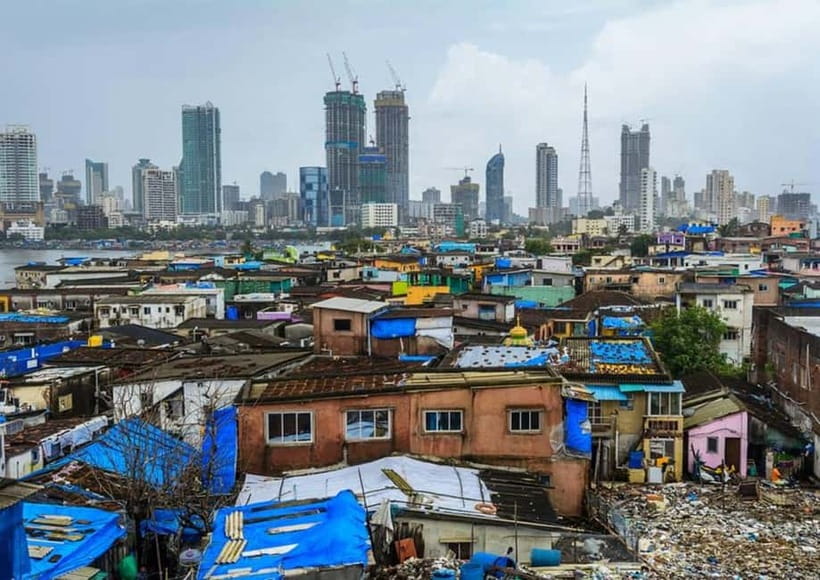
- Dhobi Ghat isn’t staged: you’re watching hundreds of washers work in open-air concrete troughs.
- The local train ride is short, but it’s a genuine taste of Mumbai’s commuter rhythm.
- Dharavi is best with a guide who can explain what you’re seeing in narrow lanes and workshops.
- The tour is 3 hours total, so it’s a good add-on when your Mumbai time is limited.
- You’ll have water included, but food isn’t—plan accordingly if you’re timing this around meals.
Dhobi Ghat Viewing Deck: where you start seeing the system

You begin at the Dhobi Ghat Viewing Deck, which is a smart starting point because it gets you oriented before you walk into the working area. From here, the scale becomes clear quickly. Dhobi Ghat is famous for being an outdoor laundry, and that matters because it changes what you notice: you’re not looking at a building full of machines, you’re watching a multi-step workflow happen in public.
The tour takes you through a guided visit that includes a photo stop and a guided walk (about 30 minutes). That timing is useful. It’s enough time to understand the basics—sorting, washing, drying, and ironing-related routines—without turning it into a long, tiring slog.
A practical bonus: the guide’s role is not just translation. Clear English guidance helps you connect what you’re seeing to how the laundry keeps running day and night. If you’ve ever wandered a busy market without knowing what to look for, you’ll appreciate the structure here.
You can also read our reviews of more tours and experiences in Mumbai.



Watching dhobis at work: handwashing, sorting, and drying rhythms
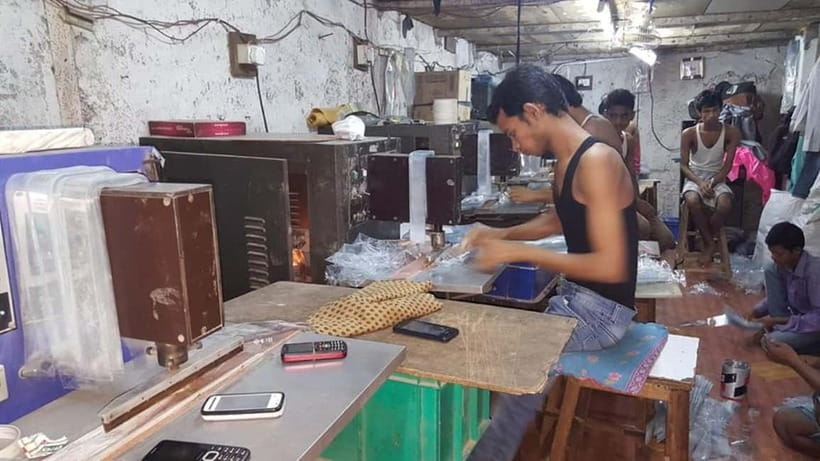
What makes Dhobi Ghat memorable is the choreography of the labor. You’ll see dhobis using open-air spaces and concrete troughs, washing by hand and continuing the work with drying and finishing steps. Even if you don’t know the first thing about laundry processes, the tour teaches you how the system flows—how clothes are sorted, how washing happens in the open, and how the work keeps going.
I like that the tour frames Dhobi Ghat as an operating system, not a photo-op. When the guide explains the sequence, the scene stops being just noise and becomes readable: you can follow how workers handle different parts of the process and how the workflow is organized to keep laundry moving.
This is also where you should practice the right kind of curiosity. You’re watching people earn a living, so keep your questions respectful and your cameras ready but not intrusive. If you want better photos, wait for natural gaps in the action rather than stepping too close.
Transition by local train: real movement through Mumbai
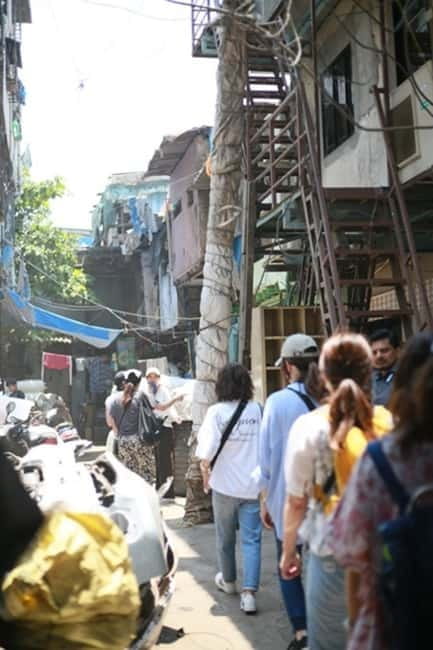
After Dhobi Ghat, you hop on the local train for a short ride (about 10 minutes). It’s one of the smartest parts of the experience because it avoids the common trap of seeing Mumbai only from the comfort of a private car.
A train ride—even a short one—does something subtle. It teaches your brain what Mumbai feels like on the move: the pace, the closeness, the way people share space, and the constant flow past markets and different urban textures. The tour route is described as passing by everyday life, plus large landmarks and areas that mix old and new.
If you’re the type who likes “how cities actually work,” you’ll get a payoff here. If you’re prone to feeling stressed in crowds, treat this as a heads-up: this is public transportation in action. You’ll be traveling with the group and guide, which helps, and in at least one booking the guide was noted for taking care of the group in heavy traffic conditions.
Arriving in Dharavi: why a local walking guide changes everything
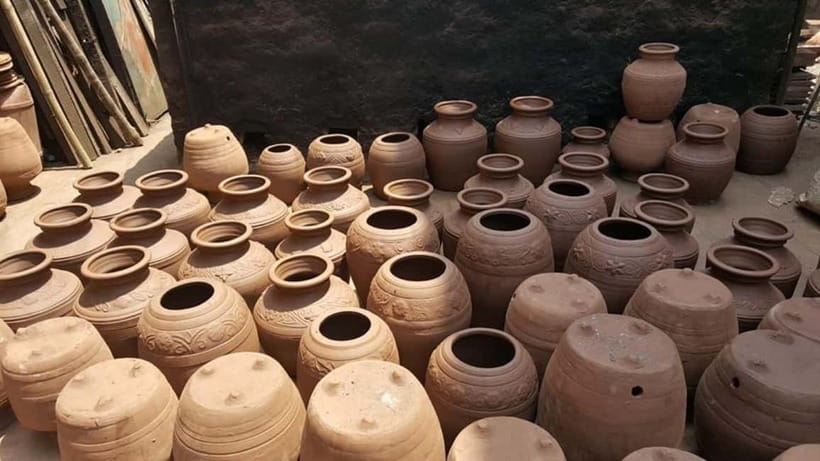
Once you reach Dharavi, the focus shifts from watching work happen to understanding how the community functions. The tour includes a photo stop and then a guided walking tour and sightseeing that lasts about 2 hours.
This is the part you shouldn’t skip if your goal is to challenge stereotypes. The tour is designed to help you see beyond a single headline image. A good walking guide matters because Dharavi’s streets aren’t built for quick, one-look tourism. Narrow alleyways, workshops, and street markets are the context, not the background.
What I like about this structure is the balance. You’re not just told information; you’re shown what that information looks like in real space—where businesses operate, how people move through daily life, and where different industries fit side by side.
And since the tour includes a local perspective, you’re more likely to understand the “why” behind what you’re seeing, not just the “what.” In one booking, the guide Abhi was praised for spotting small details that visitors usually overlook—exactly the kind of explanation that turns walking into learning.
Narrow lanes, workshops, and markets: what you’ll likely notice
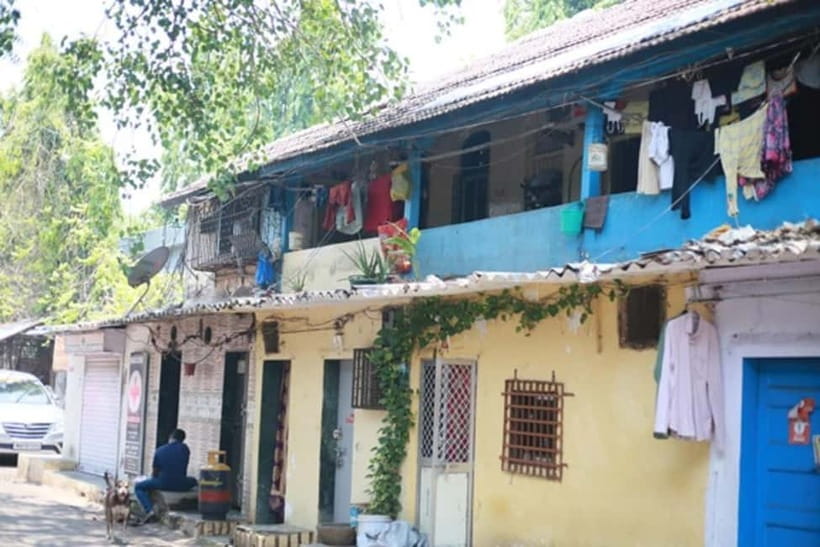
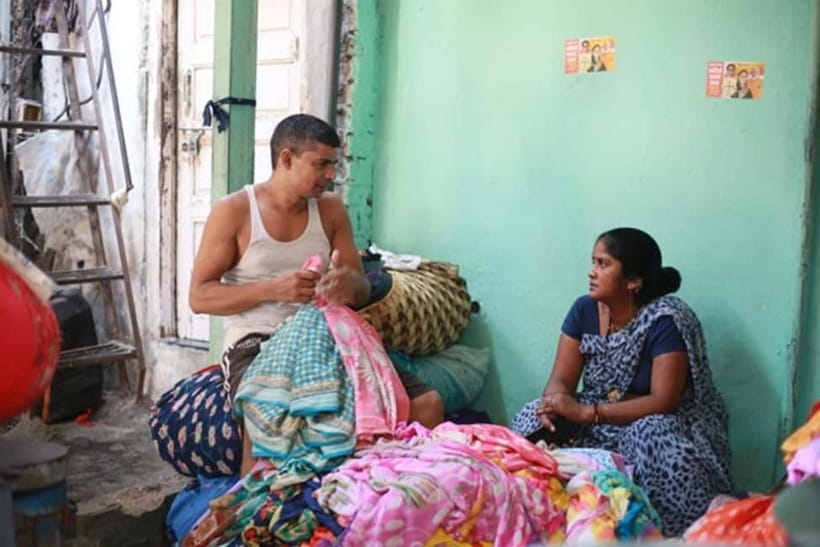
In Dharavi, expect a lot of motion and a lot of practical activity. The tour takes you through narrow alleyways and past workshops and vibrant street markets. “Vibrant” is the word people use often here, but the more useful way to think about it is this: you’ll see places where work is happening in tight spaces, where daily routines overlap with customer traffic, and where entrepreneurship is woven into the street.
You might also notice how the community’s resilience shows up in everyday decisions. The tour highlights creativity and business activity within the neighborhood—things like varied trades and industries living side by side. The point isn’t to romanticize or turn poverty into spectacle. It’s to show how people build practical systems and livelihoods in limited space.
Two tips to help you get the most out of the walk:
- Keep your pace steady. Don’t stop in the middle of foot-traffic areas—use the guide’s timing for photos or moments to look.
- Ask about what you’re seeing in terms of function. For example, what’s happening here? What’s the role of this workshop? Those questions usually lead to the clearest, most respectful answers.





End point near Sai Multispeciality Hospital: plan your next move
You finish at Sai Multispeciality Hospital & Research Centre. That’s helpful because it gives you a clear endpoint you can base your next plan on, instead of feeling “dropped” somewhere random.
Because the full experience is about 3 hours, it also fits into a busy day in Mumbai. It’s long enough to feel meaningful, short enough to combine with other neighborhoods if you schedule transport carefully.
One more practical thought: the tour includes water, but it does not include food. If you’re the type who gets cranky when meals get delayed, grab a light snack before you start or plan to eat right after you finish.
The $13 value: when this tour makes sense
At $13 per person for a 3-hour guided experience that includes entry tickets, a local train ride, travelling fees, water, and an English-speaking local guide, this is strong value—especially compared to tours that rely only on vehicle transfers.
Here’s what you’re really paying for:
- Access to the Dhobi Ghat area with guidance so you understand what you’re seeing.
- A local train ride that gives context for Mumbai’s everyday transportation.
- A guided walking tour in Dharavi that can help you interpret the streets instead of just watching them.
This is also a tour that feels “efficient.” You don’t spend hours in transit. You’re guided through the most important sections, then moved to the next segment while the explanations stay tied to what you can see in front of you.
Who should book?
- You want an experience that challenges assumptions through observation and explanations.
- You like local guidance that points out small details, not just big landmarks.
- You’re comfortable with a working neighborhood and prefer to learn through walking and watching rather than sitting in a van.
Who might want to reconsider?
- If you hate crowded public transport or get overwhelmed by sensory intensity, the train ride and dense streets may feel stressful.
- If you’re looking for a relaxed, low-footstep sightseeing day with minimal social interaction, this might not match your style.
Should you book this Dhobi Ghat + Dharavi tour?
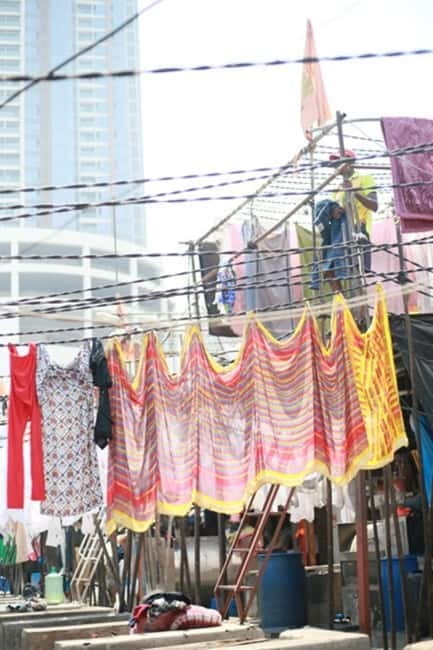
I’d book it if your goal is to understand Mumbai as people experience it, not just what postcards show. The combination of Dhobi Ghat’s hand-laundry workflow plus a local train ride plus a guided Dharavi walk is the kind of mix that makes the city feel real fast.
You’ll probably be happiest if you go in curious and respectful: focus on how the system works, ask thoughtful questions, and keep expectations grounded. Bring patience for crowds and activity, and plan your snacks since food isn’t included.
If that sounds like your travel style, this is a good pick—especially for the price and for the fact that the experience centers local explanation, like clear English guidance from Abhi-style hosts.
FAQ

Where does the tour start?
The tour starts at the Dhobi Ghat Viewing Deck.
How long is the tour?
The total duration is about 3 hours.
What happens at Dhobi Ghat during the tour?
You get a photo stop, a visit, a guided tour, and a walk for about 30 minutes.
Do you include a train ride?
Yes. You take a local train ride as part of the experience (about 10 minutes) and it’s included in the tour.
How much time is spent in Dharavi?
You spend about 2 hours in Dharavi for a photo stop, guided tour, sightseeing, and walking.
What language is the guide speaking?
The tour guide provides English language support.
What’s included, and is food provided?
Included: local English-speaking tour guide, entry tickets, travelling fees, local train ride, and water. Food and drinks are not included.
Where does the tour end?
The tour ends at Sai Multispeciality Hospital & Research Centre.