REVIEW · DHARAVI SLUM TOURS
Dharavi Tour and Family Lunch
Book on Viator →Operated by Reality Tours & Travel Pvt Ltd · Bookable on Viator
Dharavi doesn’t feel like a distant headline. This 3-hour educational walking tour in Mumbai takes you through the working side of Dharavi and the residential areas too, then finishes with a vegetarian meal with a local family. I also like that the experience is led by local guides (some guides you may meet include Rishi, Raj, Jadev/Javed, Shivi, and Shifa), so the stories stay grounded in real routines rather than tourist theory.
One possible drawback: it’s 3 hours of active walking through very tight, busy streets, and the subject matter can feel emotional. The tour also needs good weather, so you’ll want some flexibility in your schedule.
In This Review
- Key Things That Make This Tour Worth Your Time
- A 3-Hour Walk Through Dharavi’s Real-Money Economy
- Where Residential Life Changes the Story
- Guides Who Explain Without Turning It Into a Show
- What you can do to make the experience better
- The Festival Start: Why the Tour Opens Like This
- The Family Lunch: A Home-Cooked Vegetarian Reset
- Price and Value: What $29.50 Really Covers
- Getting There and Leaving After Lunch Without Stress
- Who This Tour Suits Best (and Who Might Want to Rethink It)
- Should You Book Dharavi Tour and Family Lunch?
- FAQ
- How long is the Dharavi Tour and Family Lunch?
- What does the tour cost?
- What’s included in the price?
- Is a ticket included for anything in the tour?
- Where does the tour start?
- Where does the tour end?
- Do I need to bring a paper ticket?
- What should I know about tipping?
- How big are the groups?
- What if the weather is bad?
- FAQ
- How do I cancel the tour?
- Is the tour near public transportation?
- What happens after lunch if I need help getting around?
- How soon will I get confirmation after booking?
- Can most people participate?
Key Things That Make This Tour Worth Your Time
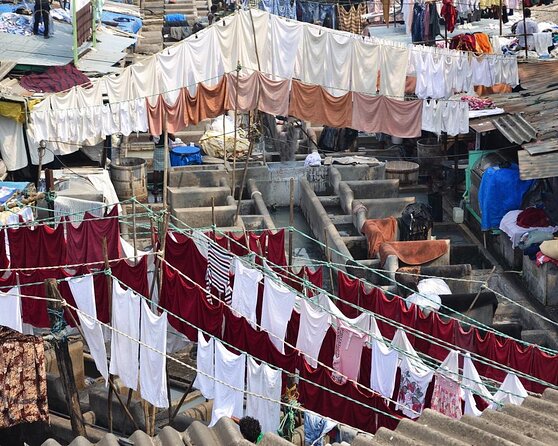
- A mix of work and home life: you see industries like recycling, pottery-making, embroidery, bakery work, soap making, leather tanning, and poppadom production, plus residential neighborhoods
- Religious variety in close quarters: temples, mosques, churches, and pagodas sit near each other in everyday life
- Family lunch that’s part of the deal: you walk to a nearby home for a home-cooked vegetarian meal, creating extra income for the household
- Guides who bring context and respect: the tone is educational and careful, with guides known for clear explanations and even humor (Raj and Rishi show up in multiple strong comments)
- Small group size: up to 25 people, which helps you hear your guide and stay aware of the pace
A 3-Hour Walk Through Dharavi’s Real-Money Economy
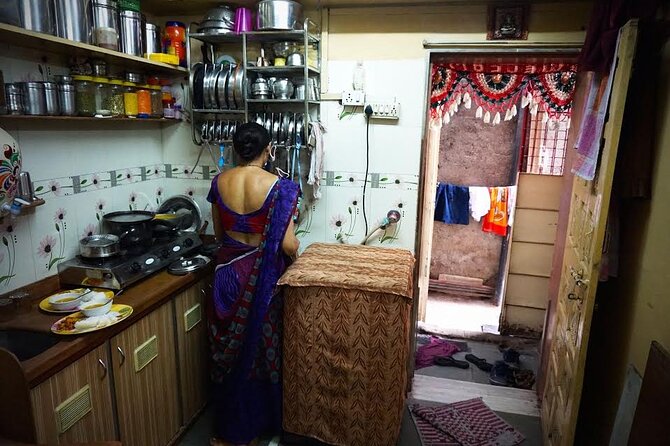
The tour starts inside Dharavi, with you joining a walk that shows day-to-day life and how locals celebrate a festival. That first segment matters. It helps you reset your brain from slum-as-spectacle to slum-as-community. You’re not just staring at poverty; you’re watching people run businesses, trade skills, and keep social rhythms going.
From there, expect the working streets to come into focus. The tour is built around the idea that Dharavi is a dense ecosystem of practical industries. You might see and discuss how recycling feeds materials into new products, how pottery-making turns raw forms into finished work, and how embroidery and other small-scale production support household income. You may also encounter food and soap-related activities such as bakery work, poppadom-making, and soap factory processes.
Then the tour layers in “how it all connects.” Watching multiple industries in one compact space is a fast lesson in Mumbai’s supply chains. It’s also a reminder that economic activity isn’t just big factories and office towers. In Dharavi, work can be workshop-level, hands-on, and deeply local.
What I’d personally watch for is your own mental shift. If you start the walk thinking you’ll “confirm” what you’ve heard, you’ll miss the point. The tour works best when you let the details change your perspective.
You can also read our reviews of more tours and experiences in Mumbai

Where Residential Life Changes the Story
A major strength here is that you don’t only stay in the business lanes. You also visit residential areas of Dharavi, where people live side by side after work. That is the part that often makes the biggest impression because it shows how routine life continues in narrow spaces.
You also get a clear sense of Dharavi as a microcosm of India. People come from across the country to live here, and you can feel that diversity in the built environment. The tour specifically points out religious variety—temples, mosques, churches, and pagodas—standing side by side as part of normal everyday navigation.
That detail is more than interesting architecture. It’s a practical way to understand how community cohesion works where space is limited. When you see different faith landmarks close together, it becomes easier to understand why locals build shared social structures instead of living in total isolation.
If you’re the kind of person who likes tours that change your assumptions, this is the section that tends to do it. If you prefer sightseeing that stays light and distant, the residential contrast can feel intense.
Guides Who Explain Without Turning It Into a Show
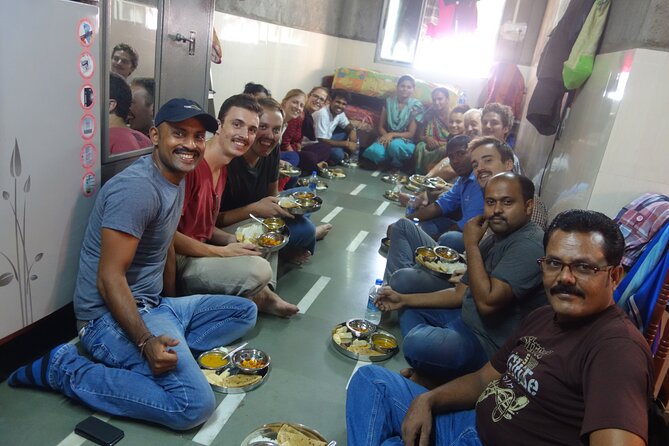
You’ll have an experienced local guide leading the walk. Based on guide names that show up repeatedly—Rishi, Jadev/Javed, Shivi, Raj, and Shifa—you can expect a style that leans on clear English explanations and respectful storytelling. A few comments also point out that guides often provide an initial framing of why the organization runs tours the way it does. That framing helps you understand what you’re supporting when you join.
One of the best parts is how the guides keep the tone human. Several notes mention that the community trusts the company, and that the walk feels safe and respectful rather than intrusive. That balance is important here. Dharavi is a place you should visit with care, not curiosity in the wrong direction.
Group size stays reasonable too. With a maximum of 25 people, you’re not swallowed by a crowd. You can ask questions, and your guide can steer the group with fewer disruptions.
What you can do to make the experience better
- Keep questions simple and respectful (how people work, how families manage daily life, how skills pass along)
- Stay aware of where you’re stepping and how close you are to everyday routes
- Don’t treat it like a photo safari. The story is about the place, not the spectacle
The Festival Start: Why the Tour Opens Like This
The tour begins with a walk through Dharavi that includes watching how locals celebrate a beloved festival. I like this choice because it’s a reminder that celebrations are not separate from work and housing. In many places, festival time still carries the same economic demands and daily movement.
It also gives you a visual anchor early on. Before you start comparing workshops—recycling, pottery, soap, tanning, poppadom production—you get a feel for the atmosphere and energy that people bring into their streets.
If you’re sensitive to crowds, you might want to mentally prepare for lively movement at the start. The benefit is that it makes the rest of the walk easier to interpret. You see the industries and neighborhoods as parts of one functioning community.




The Family Lunch: A Home-Cooked Vegetarian Reset
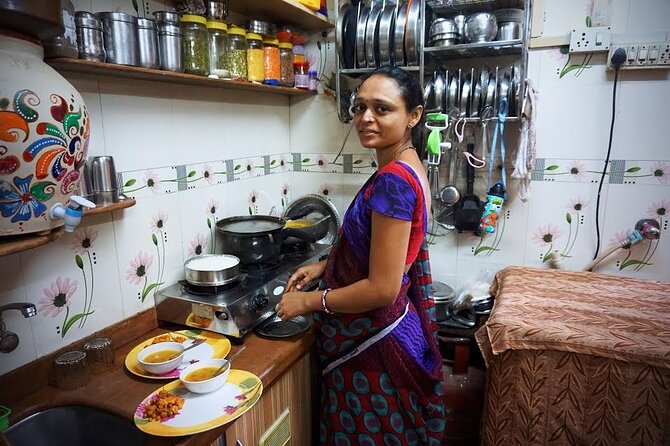
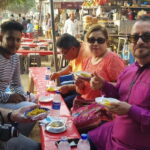
Near the end, the tour walks you to a nearby family home for lunch. It’s vegetarian, and it’s meant to give you more insight while also bringing some extra income to the household.
This is the part many people remember most because you’re not only learning from a guide. You’re also experiencing what a family meal feels like in a real home setting. Comments mention home-cooked thali as a standout meal, with food described as delicious. Others focus on the discussion at lunch, which suggests you’ll have a chance to connect, not just eat.
There’s also an underlying value piece. One review specifically notes that the company puts 80% of profit into an educational project in the slum. Even if you don’t focus on the percentage, the structure of the day is clear: your ticket is tied to learning and local support.
A practical tip: come hungry. Three hours of walking through an active neighborhood builds appetite fast. Also, if you’re someone who prefers your food travel to match your curiosity, this is a great pairing: you learn the community context, then you eat inside it.
Price and Value: What $29.50 Really Covers
At about $29.50 per person, this tour is priced as a short, guided, high-impact experience. Here’s what you’re getting for the money:
- A guided walking tour of Dharavi’s work and residential areas
- Lunch included (vegetarian meal with a local family)
- Experienced local guidance
- Admission ticket is free for the tour activity
- Mobile ticket use
- Group discounts
Not included is gratuity, which matters in many countries. If you want to avoid awkward math later, plan to budget a little extra for tipping your guide.
Where the value gets real is the “two-part” design. Many paid tours show you work or show you housing from outside. This one includes both the working streets and the family lunch, with the lunch functioning as a direct community support mechanism.
And because you’re in a max 25-person group, your money isn’t spread thin across a huge mass of bodies. Your guide’s attention still feels human-scale.
Getting There and Leaving After Lunch Without Stress
The meeting point is Reality Tours and Travel (Dharavi), at 60 Feet Road, Shahid Bhagat Singh Nagar, Kumbhar Wada, Dharavi, Mumbai, Maharashtra 400017, India.
The tour starts there and also ends there after lunch.
One helpful detail: after the family lunch, the guide can help with transport, such as arranging a taxi. If you want to catch a local train to another part of Mumbai, the guide will escort you to the station and help you get on the right train. That’s a practical service feature that can save time when you’re not yet confident with the city.
So if your plan is to hit Mumbai’s big sights after this, you’re not stuck wondering how to get out smoothly.
Who This Tour Suits Best (and Who Might Want to Rethink It)
This works especially well if you want an authentic Mumbai experience that mixes economy, daily life, and community context. It’s a strong choice for people who like walking tours with real stories, not just photo stops. It’s also a good fit if you enjoy eating as part of the cultural exchange, because the vegetarian family lunch is part of the heart of the day.
It may be a less comfortable choice if:
- you dislike dense crowds or short walking distances in active areas
- you’re emotionally sensitive to poverty and its daily implications
- you can’t be flexible with weather, since the tour requires good conditions
If you fall into the “curious but cautious” category, this tour is still worth a look. Just go in with respect and expectations aligned with a real neighborhood.
Should You Book Dharavi Tour and Family Lunch?
I’d book it if you want a guided look at Dharavi that treats people as partners in the story, not characters in a documentary. The combination of the work-and-home walk plus a vegetarian meal with a local family gives you a fuller picture than most short tours.
Also, I’d book it if you like guides who explain clearly and keep the experience respectful. Names like Rishi, Raj, Shivi, Jadev/Javed, and Shifa show up often in strong comments, which is a good sign of consistent guiding quality.
If you’re ready for an experience that’s equal parts education and emotion, this is one of the most memorable ways to understand Mumbai in a few hours.
FAQ
How long is the Dharavi Tour and Family Lunch?
It’s about 3 hours (approx.).
What does the tour cost?
The price is $29.50 per person.
What’s included in the price?
Lunch is included, and you’ll be with an experienced local guide.
Is a ticket included for anything in the tour?
Admission ticket is listed as free for the tour.
Where does the tour start?
The start point is Reality Tours and Travel (Dharavi), 60 Feet Road, Shahid Bhagat Singh Nagar, Kumbhar Wada, Dharavi, Mumbai, Maharashtra 400017, India.
Where does the tour end?
It ends back at the same Reality Tours and Travel location after lunch with the local family.
Do I need to bring a paper ticket?
No. The tour uses a mobile ticket.
What should I know about tipping?
Gratuity is not included.
How big are the groups?
The tour has a maximum of 25 travelers.
What if the weather is bad?
The experience requires good weather. If it’s canceled due to poor weather, you’ll be offered a different date or a full refund.
FAQ
How do I cancel the tour?
Free cancellation is available. You can cancel up to 24 hours in advance for a full refund.
Is the tour near public transportation?
Yes, it’s noted as near public transportation.
What happens after lunch if I need help getting around?
Your guide will help with transport such as a taxi. If you want a local train, the guide can escort you to the train station and help you get on the train.
How soon will I get confirmation after booking?
Confirmation will be received at the time of booking.
Can most people participate?
The information says most travelers can participate. If you have specific concerns, it’s smart to check with the provider before you go.