REVIEW · CITY TOURS
Mumbai City Tour with Option to Add Elephanta Caves
Book on GetYourGuide →Operated by Indian Golden Triangle tours · Bookable on GetYourGuide
Mumbai can feel like a moving puzzle. This tour helps you solve it fast, with a guide-led route that connects landmarks to stories you usually won’t find in standard sightseeing blurbs. You’ll cover British-era architecture, everyday street life, and several top viewpoints in one day, with a private feel and an English-speaking guide.
I like that the tour is built around a live guide who can answer questions and shape the day to your interests. I also like the mix of iconic sights (like the Gateway of India and UNESCO-listed CST) with hands-on, real-morning Mumbai moments such as Dhobi Ghat. One thing to consider: entrance fees are separate, and the list of stops includes multiple attractions, so you’ll want to budget for on-site tickets in addition to the $90 price.
In This Review
- Key things to know before you go
- Why a guided Mumbai day works (and where it saves time)
- The best opening stretch: Gateway of India to Marine Drive
- British-era power and prestige: University, Rajabai, High Court, and CST
- Cricket, markets, and everyday Mumbai details you’ll actually remember
- Mani Bhavan, Kamala Nehru Park, and the viewpoint moments
- Hanging Gardens and the Parsi Tower of Silence connection
- Dhobi Ghat: the most human stop on the route
- The Elephanta Caves add-on: when it’s worth your extra time
- Price and value: what $90 buys you, and what it doesn’t
- Who this Mumbai tour suits best
- Should you book this tour?
- FAQ
- How long is the Mumbai City Tour?
- What does the $90 per person price include?
- Are entrance fees included?
- Can I add the Elephanta Caves to this tour?
- What areas does the pickup cover?
- Is the tour private?
- What languages are the live guides available in?
- Does the tour help with ticket lines?
- What is the cancellation policy?
Key things to know before you go
- Pro English-speaking guide (plus Spanish and French) who explains what you’re seeing
- Private group setup with hotel pickup and drop-off in south Mumbai
- Skip-the-ticket-line for included admissions
- Dhobi Ghat laundry and other public-life stops, not just monuments
- Elephanta Caves add-on via a boat ride if you want extra time and scenes
- A lot of driving photos, plus a few short on-the-ground walks
Why a guided Mumbai day works (and where it saves time)
Mumbai is not a city where you want to wing it for a one-day plan. The streets are busy, landmarks are spread out, and many of the most famous buildings make more sense when someone puts them in context. With this tour, you’re not just collecting photos. You’re learning how the city’s British footprint shaped the urban plan and how newer Mumbai life now lives alongside those structures.
This is especially helpful for first-timers. You’ll get a route that strings major sights together logically, so you’re not wasting hours figuring out transport between distant neighborhoods. You’ll also get explanations as you go, instead of trying to reconstruct history after the fact with a map and a headache.
The private-group format matters too. It’s easier to ask questions, pause for photos, or adjust the rhythm when you’re not stuck in a huge crowd. And if you’re the kind of traveler who likes to understand why something was built, this tour is designed for you.
You can also read our reviews of more city tours in Mumbai



The best opening stretch: Gateway of India to Marine Drive
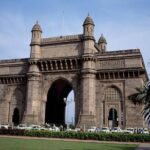
Most Mumbai city tours start big, and this one begins with the Gateway of India, built to welcome King George V and Queen Mary into India. Even if you’ve seen it in pictures, it hits differently in person—because it’s right at the water, and it instantly signals that this city has long been shaped by global routes and power centers.
From there, your day keeps moving through the grand, colonial-Mumbai look. You’ll pass by or visit several heavyweight landmarks, and you’ll also get quick moments that show modern Mumbai habits nearby.
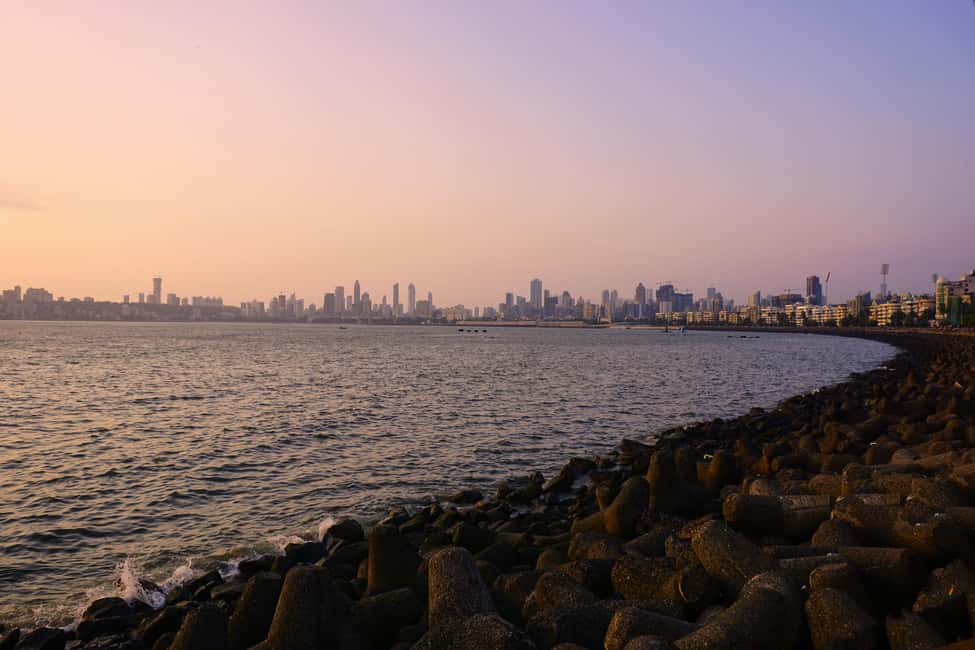
Then comes the drive past Marine Drive and Chowpatty Beach. Marine Drive is one of those locations where locals and visitors naturally slow down. The views from the road give you a sense of Mumbai’s shape—long coastlines, high-rises, and a city that feels engineered for constant motion. Chowpatty, meanwhile, is where you can picture daily life beyond the monuments.
If you like cities that mix drama with routine, this part of the day gives you that balance early.
British-era power and prestige: University, Rajabai, High Court, and CST
A big reason this tour feels worthwhile is that it doesn’t treat British-era architecture like a museum display. Instead, it links the buildings to institutions—education, law, administration, and transport—so you understand the why behind the style.
Here are some of the stops that usually become the anchors of the day:
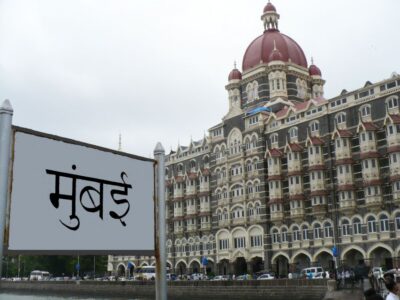
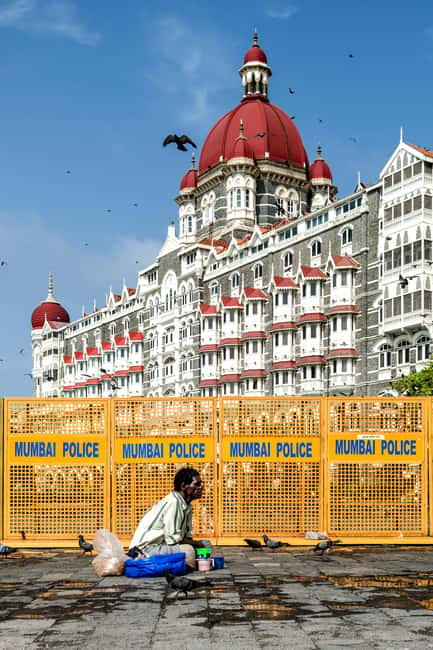
- Taj Mahal Palace Hotel (as a recognizable landmark on the route). Even if you’re not going inside, it’s a useful visual reference point for how the city markets itself and how tourism has historically intersected with colonial-era prestige.
- Mumbai University (with its British heritage, built in 1857). This is a reminder that the British impact wasn’t only about buildings; it was also about systems.
- Rajabai Clock Towers, often called the Big Ben of India. Clock towers are more than decoration—they signal authority, time discipline, and the institution’s public presence.
- Watson’s Hotel Ruins, tied to a story of Tata being refused entry there, leading to the creation of the Taj Mahal Hotel. This stop gives you a human-scale lesson: power and exclusion can directly influence city development.
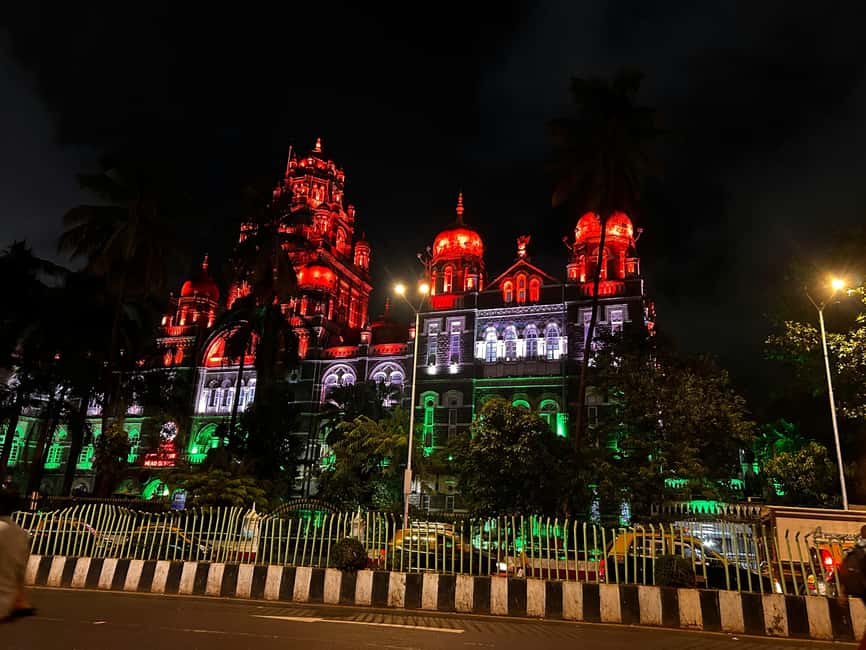
- Bombay High Court and the Municipality Building. These places look impressive because they were built to last and to project control.
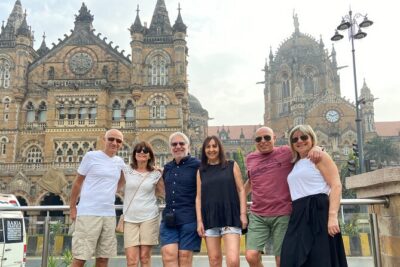
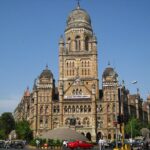
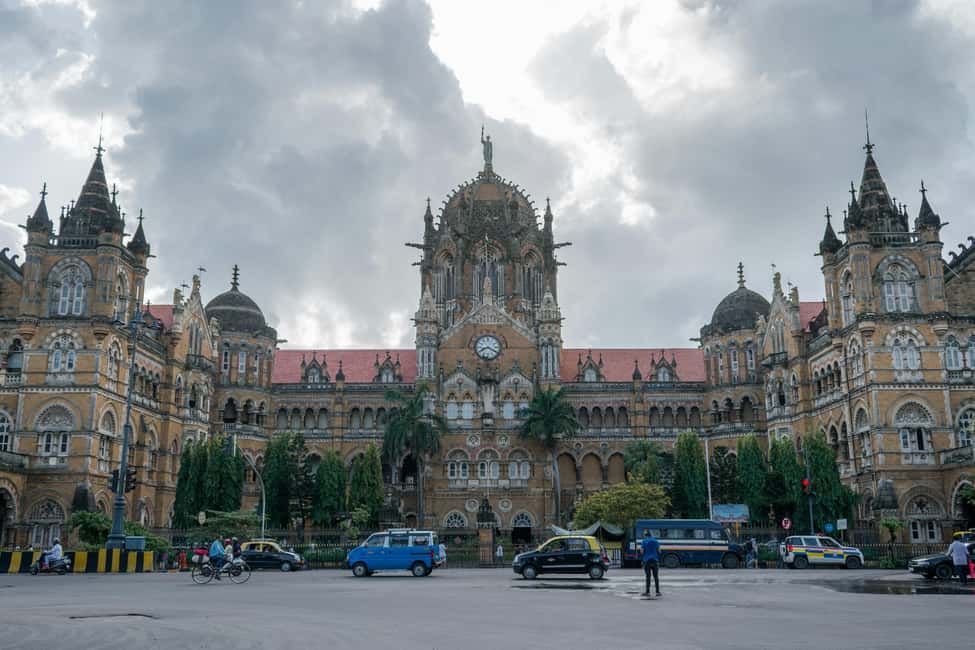
- Victoria Terminus Train Station (CST), a UNESCO World Heritage Site. This is one of those places where the architecture alone can justify the detour. And because it’s a working transport hub, it’s not frozen in time—you can feel the city using it.
One practical note: these are often exterior-focused or quick interior moments depending on the site flow and tickets. Still, because you’re doing multiple landmarks in a single day with an efficient route, you’re not spending your energy on logistics.
Cricket, markets, and everyday Mumbai details you’ll actually remember
Mumbai isn’t only monuments. This tour makes room for the kind of places that teach you how locals live with their city.
Oval Cricket Ground is included as the spot where the country’s most loved sport takes center stage. Even if you’re not a cricket fan, the stop helps you understand Mumbai’s emotional map. Cricket is a shared language here.
Then there are the areas and drives that give you the city texture:
- Flora Fountain and Hutatma Chowk (passed as you move through the colonial core)
- Telegraph Office and the India Post Office Building
- Kala Ghoda area (another useful reference point for the city’s historic style)
These stops matter because they break up the “big building” rhythm. You’ll start to recognize patterns: how the city’s older civic infrastructure clusters, how public squares function, and how traffic and foot life sit around grand facades.
If you enjoy photography, this stretch is great for street-level context shots: signage, facades, and the way people move through space.
Mani Bhavan, Kamala Nehru Park, and the viewpoint moments
By the time the tour reaches the Gandhi area, you shift from imperial institutions to independence-era memory.
Mani Bhavan (Gandhi Museum) is included, and it’s a meaningful stop for anyone who wants to connect Mumbai’s political role to the wider story of India’s independence. You’re not just seeing a structure. You’re seeing a place tied to a person and a turning point in the country’s narrative.
Next is Kamala Nehru Park, where you can get a skyline view. This is where you can step back and take in the city’s scale—high-rises, density, and a coastline that often shows up between buildings.
The park’s famous “Old Woman’s shoe” detail is also part of the appeal. It adds a quirky, memorable note to a day that can otherwise feel heavy with history and architecture. It’s a reminder that cities layer meaning in unexpected ways.
These viewpoint moments are also useful for your brain. After hours of landmarks, a skyline view helps you re-orient. You start to see Mumbai less as separate sites and more as one connected city.




Hanging Gardens and the Parsi Tower of Silence connection
Hanging Gardens are built on top of water tanks near the Tower of Silence, a Parsi burial place. This is one of those Mumbai stops where context changes everything.
The gardens themselves give you a break from constant street scenes. But the real value is the setting: the fact that the landscape, the water infrastructure, and religious practice connect in one space. Even without long stops, you’ll likely come away with a better understanding of how different communities shaped Mumbai’s physical layout.
If you like learning how cities solve practical problems—like water storage—while still creating public spaces, this part of the day is a good payoff.
Dhobi Ghat: the most human stop on the route
If there’s one stop that feels like a real Mumbai encounter, it’s Dhobi Ghat, the open-air laundry where clothes are washed in full view of the public. This is not an abstract cultural site. It’s work that’s happening in front of you.
I love that this tour includes it, because it balances the day’s grand architecture with a grounded, daily-life scene. You’ll see how the city functions on a level that doesn’t show up in postcards.
There’s also a practical side: this is the kind of stop where you’ll want to keep your expectations flexible. Depending on how crowded it is and how long your guide schedules for the moment, your experience may feel more like watching a living work zone than touring an attraction with ticket counters and tidy displays. That’s exactly why it’s memorable.
The Elephanta Caves add-on: when it’s worth your extra time
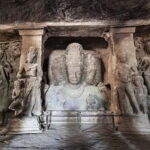
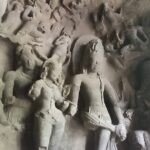
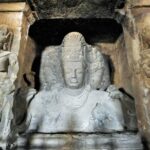
If you add Elephanta Caves, you’ll take a boat ride to reach the site. This is the option for you if you want more than city architecture and want a different type of sightseeing day: a change in scenery, plus a more focused attraction experience.
The value here is simple. A city tour already gives you Mumbai’s modern urban identity. Elephanta adds a deeper cultural and visual angle. You’re trading part of the day for travel time by water and for cave exploration, which can be a great swap if you’re the type who likes a “one big extra” beyond the city loop.
Just remember: the tour cost starts at $90, but entrance fees for attractions are not included (listed separately as INR 1600 per person). That means the add-on may increase your day’s total out-of-pocket cost, depending on what’s ticketed.
Price and value: what $90 buys you, and what it doesn’t
At $90 per person for a one-day guided route, what you’re paying for is not just transport. You’re paying for a guided structure that keeps you from wasting time between far-apart sights, plus a professional English-speaking guide to interpret everything while you’re there.
What you’re not paying for:
- Entrance fees to all site attractions (listed at INR 1600 PP)
- Food and drink
That’s a fair setup for a city like Mumbai. You can control your meals, and entrance fees are consistent and predictable rather than hidden in the base price. Still, go in with the full budget mindset: add the INR 1600 to your planning, and you’ll feel the day’s cost makes sense.
Also worth noting: the tour includes hotel pickup and drop-off in south Mumbai, an air-conditioned vehicle, and skip-the-ticket-line. Those are the kinds of details that make a short day feel smooth instead of rushed.
Who this Mumbai tour suits best
This is a great choice if:
- you’re on a tight schedule and want the major sights in a single day
- you like British-era architecture but want the context, not just the photos
- you want real Mumbai included (Dhobi Ghat, public-life scenes)
- you prefer a private-group experience where your guide can work with your interests
You might not love it if:
- you want lots of free time to wander without structure
- you hate moving from stop to stop and prefer slower pacing
- you’re very sensitive to added on-site costs, since entrance fees are separate
Should you book this tour?
I’d book it if you want a clean, guided way to see Mumbai’s most important landmarks without turning your day into a transport math problem. The strongest reason is the pairing: big-name monuments plus everyday scenes, explained by a guide style that focuses on making sense of what you’re looking at. The added bonus is that you can turn the day into more of a “caves and culture” trip by choosing Elephanta.
If your biggest goal is to return with sharp photos and zero confusion about what you’re seeing, this is built for that.
FAQ
How long is the Mumbai City Tour?
The tour is listed as a 1-day experience.
What does the $90 per person price include?
It includes a professional live guide, south Mumbai hotel pickup and drop-off, transport by air-conditioned vehicle, and (if you choose it) a boat ride to the Elephanta Caves.
Are entrance fees included?
No. Entrance fees to site attractions are listed separately as INR 1600 per person.
Can I add the Elephanta Caves to this tour?
Yes. There is an option to add Elephanta Caves, which includes a boat ride.
What areas does the pickup cover?
Hotel pickup and drop-off are provided for south Mumbai.
Is the tour private?
Yes. The group type is private group.
What languages are the live guides available in?
The tour offers English, Spanish, and French live guides.
Does the tour help with ticket lines?
Yes. It includes skip-the-ticket-line.
What is the cancellation policy?
Free cancellation is offered up to 24 hours in advance for a full refund.