REVIEW · MUMBAI
Mumbai Local – Best Seller from Mumbai Magic
Book on Viator →Operated by Mumbai Magic · Bookable on Viator
Local Mumbai feels possible after one guided route. This small-group tour uses public transport and a student guide to get you from the Gateway of India area to Mani Bhavan and then on to the Dhobi Ghat laundry scene, with free bottled water and snacks along the way. I like that the pace includes real navigation help, not just sightseeing, and that the stops are practical landmarks you can map onto the rest of your trip. One heads-up: the tour ends near Chhatrapati Shivaji Terminus Area, so plan how you’ll get to your next stop.
I also like the human factor. With a max of 10 travelers, you’re more likely to actually ask questions and get answers that fit your day. Guides such as Divya and Tanvi have led similar Mumbai Magic tours, and Parveen has been praised on the Mumbai Local format too, so you’re likely to get a guide who enjoys sharing what to notice and how to handle transit calmly.
In This Review
- Key points to know before you go
- Why this Mumbai Local route is great for first-timers
- Meeting at Gateway of India: what to expect in the first hour
- The South Mumbai walk: Regal Circle to Churchgate
- Mani Bhavan Gandhi Museum: a focused cultural stop
- Dhobi Ghat by train: why this stop hits differently
- Small-group energy: why the guide makes the difference
- Price and value: does $41.60 make sense?
- Logistics and timing: the bits that can trip you up
- Who should book this tour
- Should you book Mumbai Local with Mumbai Magic?
- FAQ
- How long is the Mumbai Local tour?
- Where does the tour start and end?
- What does the tour cost?
- How big is the group?
- Is the guide English-speaking?
- What is included in the price?
- What is not included?
- Can I cancel for a full refund?
Key points to know before you go
- Small-group limit (max 10): more personal attention while moving through busy areas
- Public transport included: bus and train help you learn the city’s rhythm fast
- Free bottled water + snacks: you stay comfortable during a full 4-hour run
- Mani Bhavan + Dhobi Ghat as anchors: culture stop, then a living everyday-world stop
- English-speaking student guide: built for understanding the how and why, not just the where
- Mobile ticket: less paper, easier check-in
Why this Mumbai Local route is great for first-timers
If it’s your first time in Mumbai, the hardest part is often not the sights. It’s figuring out how to move. This tour does the tricky part for you: it strings together big landmarks and then uses normal transit so you can copy the approach later.
You start in the Gateway of India area and spend time walking before you switch to local transportation. That mix matters. Walking gives you street-level orientation, while the bus and train legs show you how long distances can feel doable in a city that looks overwhelming from a map.
The itinerary also has a smart contrast. You go from major public landmarks (the kind of places you’ll see on every “must-see” list) to the Dhobi Ghat laundry system, where daily life is the show. That shift keeps the tour from feeling like a checklist.
You can also read our reviews of more tours and experiences in Mumbai.


Meeting at Gateway of India: what to expect in the first hour
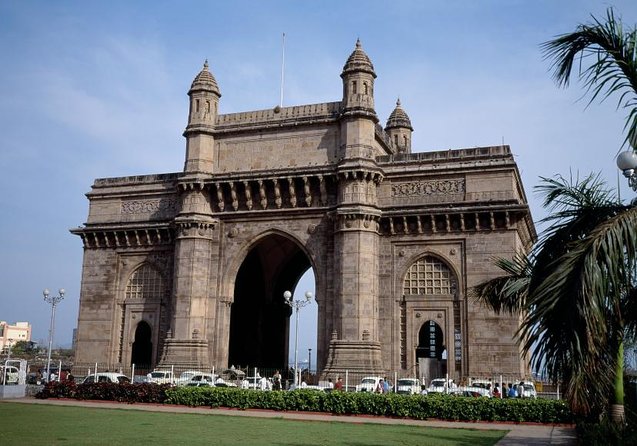
You’ll meet at the Gateway of India area (Apollo Bandar, Colaba). From there, you’ll do an on-foot portion that takes you through a cluster of well-known sights in South Mumbai.
A walk like this is not just for photos. It’s your “get your bearings” phase. You’ll cover ground, learn what route logic looks like, and pick up cues from your guide about what’s worth your attention as you go.
You’ll also have a simple comfort plan built in. Free bottled water and snacks are included, which helps if your morning (or afternoon) is a little chaotic. On a 4-hour outing, those small resets keep the energy up and stop you from turning the tour into a snack hunt.
The South Mumbai walk: Regal Circle to Churchgate
After Gateway of India, the route moves through stops including Regal Circle, Prince of Wales Museum, Kala Ghoda, Bombay University, High Court, Oval Maidan, and Churchgate.
Here’s the practical value of moving through this sequence with a guide:
- You see how the city links landmark clusters. These are big names, but you also get the sense of how they connect in real street patterns.
- You learn what to notice while you’re walking. Even if you’re not a “details person,” a guide can point out what’s easy to miss when you’re rushing.
- You practice staying oriented. Once you’ve walked this stretch, the rest of your trip feels less like darting around blind.
What can feel like a drawback is that this is still a walking portion. If you arrive with stiff legs or you’re used to slow pacing, you’ll want comfortable shoes and a realistic pace for your day. The upside is the total duration is only about 4 hours, and the tour structure keeps you moving with breaks built in via water and snacks.
Mani Bhavan Gandhi Museum: a focused cultural stop
After the initial walking segment, you’ll hop on a bus and continue to the Mani Bhavan Gandhi Museum, where entrances are included.
This stop works well for a couple reasons:
- It’s scheduled after you’ve already gotten outside orientation. You’re less likely to feel “lost” by the time you reach the museum.
- The tour doesn’t overload you. You get a museum visit as part of a moving route, not as a standalone marathon.
One consideration: your time here is part of the broader 4-hour flow. So if you love long museum browsing, you may want to plan a separate return visit later. For this tour, think of Mani Bhavan as an anchored cultural pause, not the full day’s cultural program.
Dhobi Ghat by train: why this stop hits differently
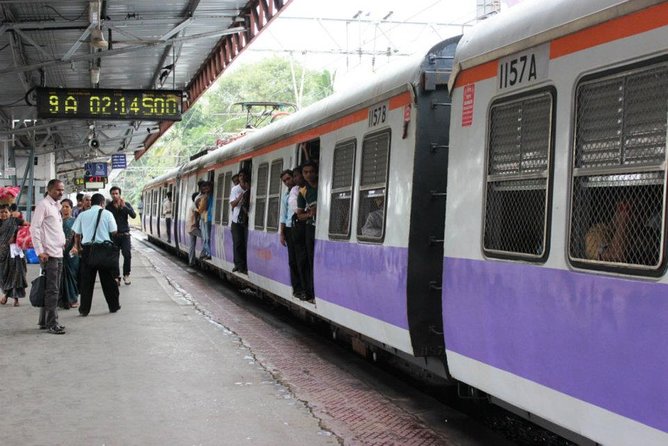
Next comes one of the most memorable parts: you take a train ride to Dhobi Ghat to see the world’s largest open-air laundry system.
This is where the tour turns from “sights” into “life.” Even if you’ve seen pictures, the scale and constant motion are what make this kind of place unforgettable. You’re not just looking at buildings. You’re seeing work happening—people, routines, and the everyday system of washing and drying on a huge open-air scale.
The fact that you reach Dhobi Ghat by train is key. It keeps the tour from feeling like you’re stuck in traffic or on a single road. It also models something useful for your future days in Mumbai: you can get across town without treating every journey like a long ordeal.
A practical note: open-air viewing can mean heat and sun exposure depending on the time of day. Wear what you can handle, keep your water handy, and use the included water breaks without waiting until you feel wiped out.




Small-group energy: why the guide makes the difference
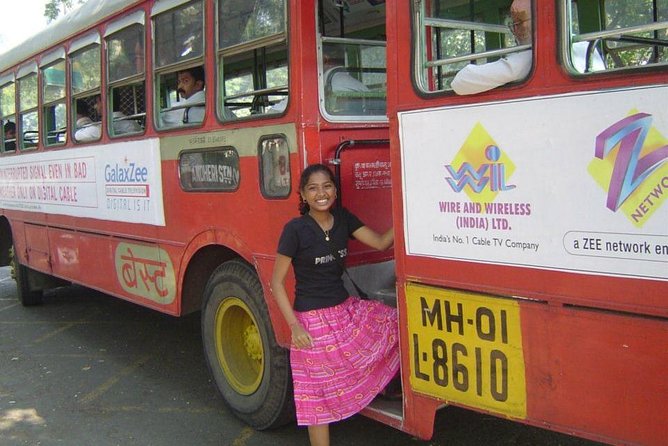
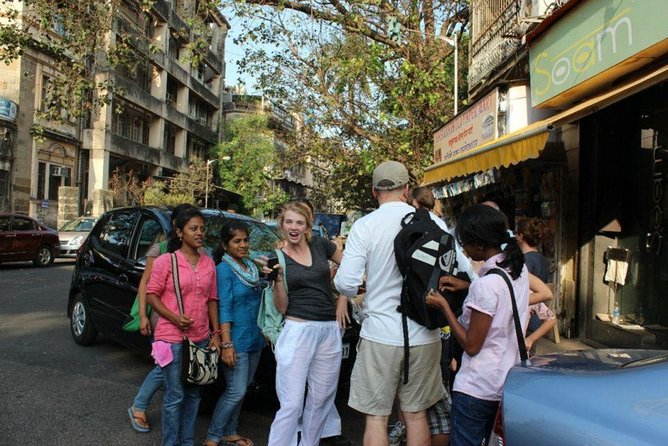
This tour is built around a student guide from a local non-profit with an English-speaking guide, and it caps at 10 travelers.
That small-group size is more than a comfort perk. It changes how the tour feels:
- You’re more likely to hear answers tailored to your route questions.
- You can get quick guidance on how to navigate your next step once the tour ends.
- You can keep up without feeling like you’re being dragged along.
The guides get praised for their enthusiasm and clarity in the broader Mumbai Magic lineup, including names such as Divya, Tanvi, and Parveen on Mumbai Local-style experiences. In practice, that usually means you’ll get guidance on what to look for and how to handle public transport without panicking.
Also, the tour includes public transportation, so you’re not just watching the city—you’re practicing moving like a local (with help).
Price and value: does $41.60 make sense?
At $41.60 per person for about 4 hours, this is not a “transport-free” sightseeing deal. The value is in what’s bundled:
Included:
- English-speaking guide
- Public transportation
- Entrances to Mani Bhavan
- Snacks
- Free bottled water
Not included:
- Transport to the meeting point
- Transport from the end point
So you’re paying for a guided day segment where transit costs and a key entrance are already handled. For Mumbai, that matters because figuring out local routes on your own can eat time and energy—especially if you’re jet-lagged or your day starts at a different hour than you expected.
And you’re booking a format that runs with a maximum of 10 people. When a tour includes transit and an entrance, that small-group limit often keeps the experience from turning into a rushed cattle-car.
One more detail that matters for value: it’s listed as a best seller and is commonly booked about 7 days in advance. If you want a specific day, don’t wait for the last-minute.
Logistics and timing: the bits that can trip you up
Here are the practical parts to plan, based on what the tour is set up to do:
Start and end points matter.
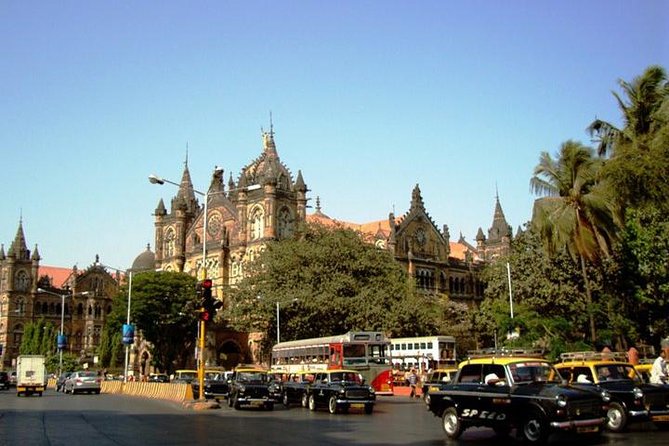
You start at Gateway of India (Apollo Bandar, Colaba) and end near Chhatrapati Shivaji Terminus Area, Fort. That means your follow-up plan should account for a different end location than your starting point. If you’ve got a hotel pickup plan, double-check it works from the Fort-side area.
You need to handle your own arrival and departure.
The tour doesn’t include transport to the meeting point or onward transport from the end point. That’s normal for city tours, but it’s worth factoring into your day. A simple strategy: map a low-stress way to get yourself to Gateway of India, and decide your post-tour route before you step off the train.
Expect a mix of walking and transit.
It’s about 4 hours, and the route uses walking plus bus plus train. If your body isn’t a fan of movement-packed itineraries, this is still manageable for many people, but comfort footwear is non-negotiable.
Who should book this tour
This works especially well if you:
- Are in Mumbai for a short time and want a guided route that helps you navigate afterward
- Like seeing major landmarks but also want a real-life stop like Dhobi Ghat
- Prefer a small group with time to ask questions
- Want public transport included so your “how do I get there” questions don’t swallow your day
It might not be ideal if you:
- Want a long museum linger time (this tour keeps you moving)
- Dislike train rides in general and would rather stay in one vehicle
- Need a start and end location that match a very specific hotel plan (since you’ll end in the Fort-side area)
Should you book Mumbai Local with Mumbai Magic?
Yes, if your goal is to understand Mumbai by doing it—walking a set route, then using bus and train with a student guide, and ending at Dhobi Ghat where daily work is the focus. The bundled value (guide, transit, Mani Bhavan entrances, snacks, water) makes it a strong deal for a first-orientation morning or afternoon.
Before you book, look at your day plan with fresh eyes. Because the tour ends near Chhatrapati Shivaji Terminus Area, it’s easiest when your next move fits that area. If you can set that up, this is one of the smartest ways to turn a confusing city into a series of doable steps.
FAQ
How long is the Mumbai Local tour?
It runs about 4 hours (approx.).
Where does the tour start and end?
It starts at Gateway of India (Apollo Bandar, Colaba) and ends near Chhatrapati Shivaji Terminus Area, Fort.
What does the tour cost?
The price is $41.60 per person.
How big is the group?
The tour has a maximum of 10 travelers, and the experience is designed for small-group attention.
Is the guide English-speaking?
Yes. The tour includes an English-speaking guide.
What is included in the price?
You get public transportation, entrances to Mani Bhavan, snacks, and free bottled water.
What is not included?
The price does not include transport to the meeting point or transport from the end point.
Can I cancel for a full refund?
Yes. You can cancel up to 24 hours in advance for a full refund, based on local time. If you cancel less than 24 hours before, the amount paid isn’t refunded.