REVIEW · MUMBAI CITY TOURS
Private Mumbai 25 sights in one tour as recommended by Gigi Hadid
Book on Viator →Operated by No Footprints · Bookable on Viator
One morning like this can save you a week. This private, 25-stop intro tour is a smart way to get your bearings fast in Mumbai, mixing major colonial landmarks with working-city scenes like Dhobi Ghat and the daily lunch system. I like that you ride in comfort in a private vehicle with hotel pickup and drop-off, and I really like the storytelling focus from a professional local guide (I’m especially glad to hear the guide Krupesh brings the history to life). One thing to consider: it’s a packed half-day route, and you’ll do plenty of short walks and quick photo stops, so bring decent stamina.
The best part is the pacing: you’re not stuck staring at a single monument for hours. You hop from the Gateway of India through Raj-era landmarks, art districts, railway cathedrals, and then into Gandhi and the laundry quarter—each stop gives you a different “Mumbai” angle without needing planning skills. A possible drawback is timing and day-of-week factors: some working scenes are described with limits (for example, dabbawalas at Churchgate are noted as shut on weekends), and the schedule may shift a bit with traffic.
In This Review
- Quick takeaways
- Why this 25-stop private tour works in Mumbai
- Price and value: what you actually get for $83.25
- Timing, comfort, and how to prepare for a smooth morning
- Stop-by-stop: what you’ll see and why it matters
- Gateway of India: your “starting frame” for Mumbai
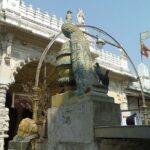
- Chhatrapati Shivaji Maharaj statue: the shift from empire to identity
- Drive past the landmark hotel with big-name guests
- Royal Mumbai Yacht Club: old wealth, tucked into the streets
- Maharashtra Police Headquarters: a building with layered origins
- Wellington Fountain: a small monument with a big name
- National Gallery of Modern Art: contemporary contrast
- A museum of Mumbai city: learn the city without over-stretching
- Kala Ghoda Art Precinct: street history through art and old stories
- An oldest-college stop with famous alumni
- David Sassoon Library and Reading Room: mechanical past to quiet reading present
- Mumbai’s university buildings: arches, identity, and the “Big Ben” effect
- Bombay High Court: German-castle styling and legal history
- Oval Maidan: cricket ground energy
- Churchgate Railway Station and dabbawalas: the city’s lunch logistics
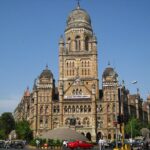
- Chhatrapati Shivaji Terminus (CST): architecture that runs like a machine
- Marine Drive: Mumbai’s sea-breeze pause
- Mani Bhavan Gandhi Museum: Gandhi’s Mumbai, not just statues
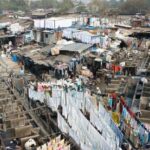
- Dhobi Ghat: open-air laundry and raw daily work
- Art Deco and cinema stops: Bollywood-era architecture and famous screens
- Wayside Inn turned Punjab Grill: food history tied to people
- Independence flag-raising place: a subtle but powerful site
- How the tour feels in real life: fast, but not chaotic
- Who should book (and who should think twice)
- Should you book this private Mumbai 25 sights tour?
- FAQ
- What is the duration of the tour?
- Where does the tour take place?
- What time does the tour start?
- Is pickup included?
- How much does it cost?
- What’s included in the price?
- What’s not included?
- Is the tour suitable for kids?
- What if weather is poor or the tour gets canceled?
Quick takeaways
- 25 sights in 3–4 hours: short, focused stops are designed for first-time orientation.
- Hotel pickup and drop-off: you reduce hassle and maximize sightseeing time.
- A guide who narrates, not just points: Krupesh-style storytelling is a big reason people recommend it.
- Big-city icons + everyday Mumbai: rail stations, courts, art precincts, and Dhobi Ghat all in one loop.
- Mostly free entries: many stops list free admission, so your money goes to access, not tickets.
- You need a weather-friendly day: the experience is described as requiring good weather.
Why this 25-stop private tour works in Mumbai
Mumbai is huge, traffic is real, and first-timers often waste time figuring out where to go next. This tour is built for the opposite problem: it’s a tight loop through the historic and “must-see” corridor, done in a private vehicle so you’re not bouncing between strangers and random drop-offs.
You’ll start with the Gateway of India and then move through landmark layers of the city: British-era public buildings, art and education districts (think Kala Ghoda), and architectural showpieces like Rajabai Clock Tower and Chhatrapati Shivaji Terminus. The route doesn’t treat Mumbai as just postcards. It also makes room for how the city runs—laundries, lunch delivery precision, and places connected to major figures.
If you’re the kind of traveler who wants a lot of context by lunchtime, this is the right format. It also helps if you’re not planning to return to every single spot on your own later.
You can also read our reviews of more private tours in Mumbai
Price and value: what you actually get for $83.25
At $83.25 per person for a 3–4 hour private guided experience, you’re paying for a few key things that add up in Mumbai:
- Private transport (instead of trains + taxis + walking your way into traffic stress).
- Hotel pickup and drop-off for a straightforward morning start.
- A professional guide who interprets what you’re looking at.
- A long list of sights—not just a couple of headline monuments.
- Most admissions are free, plus Mani Bhavan Gandhi Museum is included.
Where value can slip a little: pickup from suburban hotels may cost extra (not included), and you may want to budget for food and drinks since meals aren’t covered. If you travel with a language need beyond English, a language guide costs extra too.
Still, for a first visit, this tour often feels like buying time. You’re effectively paying to have someone else stitch the city together for you, while you focus on looking, listening, and snapping photos.
Timing, comfort, and how to prepare for a smooth morning
The tour starts at 9:30 am and is listed as 3–4 hours. It’s also noted that many people book ahead (on average, 67 days), which is a hint that the early part of the day matters for traffic and daylight.
Comfort-wise, you’re in a private car and you’ll have hotel pickup and drop-off. That matters because Mumbai’s “time cost” is often the road, not the sightseeing. You’ll still be doing short walks, but the plan is designed around quick pauses rather than long treks.
Practical prep I’d recommend:
- Wear shoes you can walk in for a few minutes at a time.
- Bring a hat/sunscreen. Even short stops add up.
- Carry water, since food and drinks aren’t included.
- If you’re visiting on a weekend, keep expectations flexible for working-lunch scenes described around Churchgate.
Also note: the sequence can be adjusted by the local guide based on traffic and on-the-ground decisions. That’s not a flaw. It’s how the route stays realistic.
Stop-by-stop: what you’ll see and why it matters
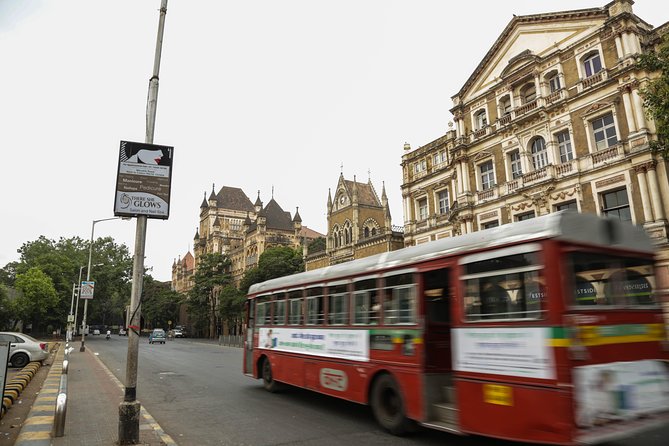
This is where the tour earns its name—25 stops that move you through colonial landmarks, public architecture, and everyday Mumbai.
Gateway of India: your “starting frame” for Mumbai
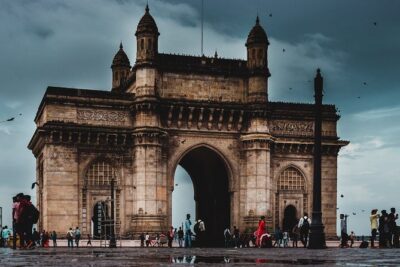
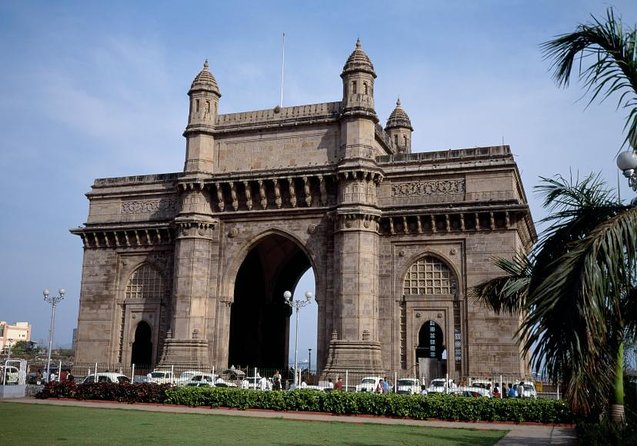
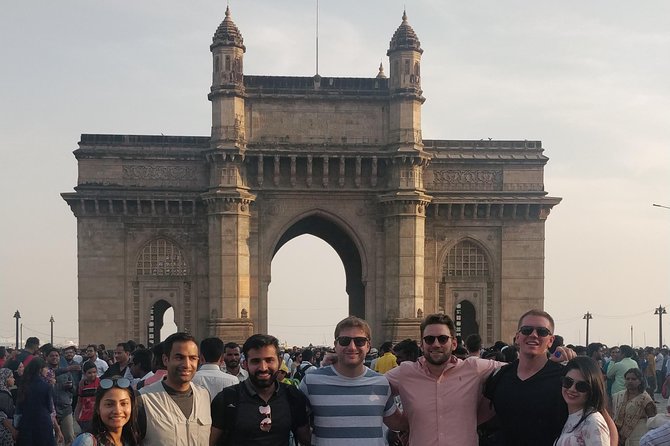
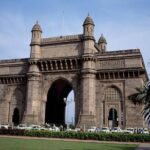
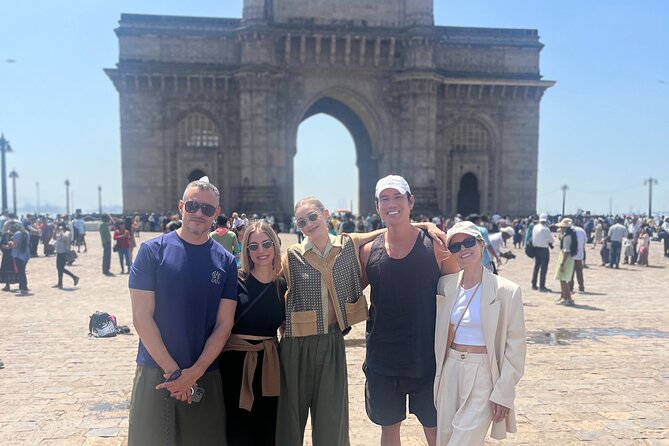
You begin at the Gateway of India, the famous victory arch associated with welcoming the British Queen. Even if you’ve seen photos, you’ll notice how the waterfront setting shapes the whole vibe. This is a good opener because it anchors the entire tour in the city’s older, maritime identity.


Chhatrapati Shivaji Maharaj statue: the shift from empire to identity
Next is the iconic statue of Chhatrapati Shivaji Maharaj, the Maratha king described here as a brave fighter against the Mughals. It’s an important cultural pivot point: you’re still in the historic center, but the story isn’t only colonial anymore.
Drive past the landmark hotel with big-name guests
You’ll drive past a well-known historic hotel that has hosted figures like Barack Obama and the Beatles. It’s a quick, visual stop—more about atmosphere than deep entry. I like these “drive-by context” moments because they show how old Mumbai buildings still orbit modern celebrity and power.
Royal Mumbai Yacht Club: old wealth, tucked into the streets
The Royal Mumbai Yacht Club appears next, described as built by John Adams and Charles Stevens and located between Charles and Adams Street. Even if you don’t go inside, you’ll get a sense of how the city’s elites historically used water-adjacent space.
Maharashtra Police Headquarters: a building with layered origins
At the Maharashtra Police Headquarters, the description connects the site to earlier uses: a graveyard at Mendham’s Point and an Alfred Sailors Club. It also references dexterous work attributed to John Lockwood Kipling. This is one of those stops that makes you look at a building and ask what else happened there before today.
Wellington Fountain: a small monument with a big name
The Wellington Fountain (Wellington Circle) commemorates Duke of Wellington, Sir Arthur Wellesley, connected here to the Battle of Waterloo. It’s a fast stop—mostly for a quick look and a sense of how empire marks public space.
National Gallery of Modern Art: contemporary contrast
You’ll visit the National Gallery of Modern Art, a government-run contemporary gallery. Even with limited time, it’s a useful contrast after colonial and civic architecture. Expect this to feel more modern and more reflective than the monument-heavy parts.
A museum of Mumbai city: learn the city without over-stretching
There’s also a stop described as visiting the iconic museum of Mumbai city. Because the specific museum name isn’t stated in the details you have, treat this as a “structured learning stop” where your guide will point you toward what’s most relevant for first-timers.
Kala Ghoda Art Precinct: street history through art and old stories
In the Kala Ghoda Art Precinct, you’ll hear stories tied to Sassoon and Jewish history, plus the Watson Hotel—highlighted here as the first iron cast building in the city and once linked with Mark Twain. This is one of the best zones for photos plus context because art districts in old cities often sit on top of old migrations and old commerce.
An oldest-college stop with famous alumni
You’ll also pass through the area of the oldest college in Mumbai, with alumni listed as Lokmanya Tilak, Naoroji, and Ambedkar, plus a note that it hosted the University of Mumbai while it was under construction. This is the kind of stop that quietly changes your understanding of Mumbai: it’s not only ports and power, it’s education and ideas too.
David Sassoon Library and Reading Room: mechanical past to quiet reading present
At the David Sassoon Library and Reading Room, you’re told it was once a mechanical institute and is now a library overlooking Kala Ghoda. The value here is simple: it’s a pause from big facades and an excuse to slow down and read the city through architecture.
Mumbai’s university buildings: arches, identity, and the “Big Ben” effect
The University of Mumbai Library stop focuses on the building’s beauty, especially its arches—worth your time even if you only glance inside the area you’re allowed to access.
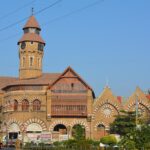
Then comes Rajabai Clock Tower, described as the Big Ben of Mumbai, built with a donation from Premchand Roychand. The tour notes it chimes old British tunes once every 15 minutes. If you catch it, it becomes one of those tiny moments that feels very Mumbai: old-world sound in modern traffic noise.
Bombay High Court: German-castle styling and legal history
At the High Court Principal Bench (Bombay High Court), you’ll see a building designed in the form of a German castle. There’s also a legal reference: it’s mentioned as the place where the jury system was abolished. Even a short stop here helps you understand how the city’s administration and legal systems were imported, adapted, and then reshaped.
Oval Maidan: cricket ground energy
You’ll walk through Oval Maidan, known here as a practice space for aspiring cricketers. You’ll feel the everyday pulse: kids and athletes using public space, not just tourists posing in front of it.
Churchgate Railway Station and dabbawalas: the city’s lunch logistics
At Churchgate Railway Station, the tour highlights the dabbawalas system—described as sending over 500,000 lunch boxes daily with precision. It also notes the system has been studied by consultants and business schools. The practical takeaway: this isn’t just a quaint tradition; it’s logistics genius.
One caution: the details say dabbawalas are shut on weekends for this portion. If your tour day falls on a weekend, you may see less of the classic lunch-delivery action than the description implies.
Chhatrapati Shivaji Terminus (CST): architecture that runs like a machine
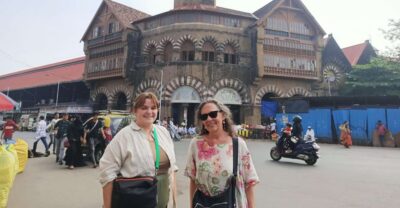
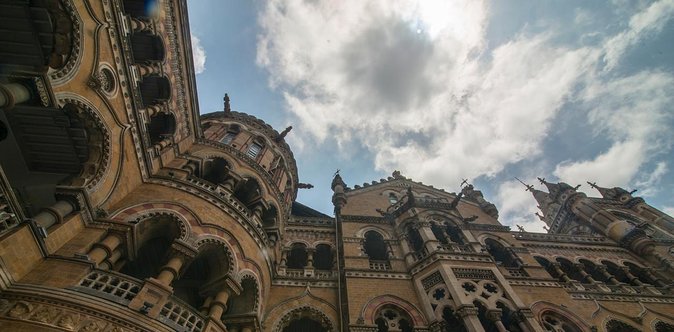
At Chhatrapati Shivaji Terminus, you’ll get the architectural wow-factor. The description notes it’s possibly the most architectural stunning building in India and calls out major daily footfall—660,000—making it the busiest station in Mumbai. This stop is about scale: you’re not just looking at a building; you’re watching the city move through it.
Marine Drive: Mumbai’s sea-breeze pause
Marine Drive is your visual breather. The tour gives you time to relish the sea views. It’s short—just enough—but it helps you reset before the quieter, more human stops like Gandhi’s museum and Dhobi Ghat.
Mani Bhavan Gandhi Museum: Gandhi’s Mumbai, not just statues
Next is Mani Bhavan Gandhi Museum, with admission included and about 20 minutes. This is a strong choice because Gandhi sites tend to go beyond statues into personal objects and documentation. Even in a short visit, it gives you a clear, human entry point to the political story behind the streets you’ve been walking.
Dhobi Ghat: open-air laundry and raw daily work
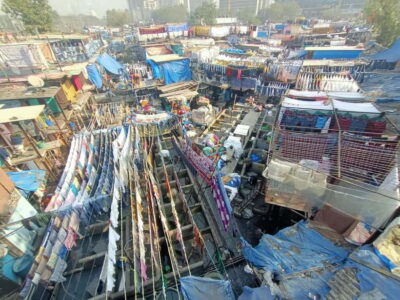
At Dhobi Ghat, you’ll see open-air laundry described as “human washing machines” of Mumbai. This is one of those experiences that can feel intense, but it’s also one of the most authentic city-life stops on the route. Quick tip: be respectful with photos and keep your distance where you can. The work is the point.
Art Deco and cinema stops: Bollywood-era architecture and famous screens
There are additional stops described by specific cultural anchors:
- An Art Deco structure connected to Bollywood queen Zubeida.
- An iconic cinema in the city.
These are likely quick look-and-learn moments rather than long entries, but they add a pop of popular culture to the otherwise government-and-heritage-heavy route.
Wayside Inn turned Punjab Grill: food history tied to people
Another drive/stop references the Wayside Inn, described as turned into Punjab Grill, and connected here to a prominent person in India’s history frequenting it. This is a good reminder that in old Mumbai, even restaurants often sit on top of political and social stories.
Independence flag-raising place: a subtle but powerful site
Finally, there’s a stop tied to a major national moment: the place where Mumbai raised India’s flag for the first time after independence. It’s brief in description, but it’s meaningful context layered into the city’s geography.
How the tour feels in real life: fast, but not chaotic
What I like about this setup is that it’s designed as efficient sightseeing without feeling like a checklist drill. You’re not spending half a day in one museum. You’re sampling.
You’ll likely feel some “same street, new layer” repetition. That’s normal for a colonial-core route. The guide’s job is to keep it meaningful by linking buildings to the stories they carry—like shifting from rail architecture (CST, Rajabai) to legal institutions (High Court) to working Mumbai (Dhobi Ghat, dabbawalas).
If you prefer slow travel, you might find the pace intense. But if you want context and orientation, the pace is the feature.
Who should book (and who should think twice)
This tour is ideal for:
- First-time visitors who want a high-value overview rather than deep dives into one neighborhood.
- Travelers who want a guide to explain why buildings matter, not just what they look like.
- People staying near a hotel that can be picked up easily (so you avoid extra suburban pickup costs).
You might think twice if:
- You’re sensitive to crowds and foot traffic—some stops (stations, maidan edges) naturally involve lots of movement.
- You prefer very quiet sightseeing with long museum time. This route keeps things short and moving.
- You’re visiting on a weekend and specifically want the classic dabbawalas moment described around Churchgate (it’s noted as shut on weekends).
Should you book this private Mumbai 25 sights tour?
If you’re visiting Mumbai for the first time and you want a tour that actually covers a lot without wasting your morning in logistics, I’d book it. The value isn’t only the $83.25 price—it’s what that money buys: a private guide, private transport, hotel pickup, and a route that mixes landmarks with working-city moments.
Go ahead if you want a solid “Mumbai starter kit” with enough variety to decide what you’ll return to later. Skip or choose another style if you dislike fast pacing or you’re only interested in one narrow theme (like art museums only, or religious sites only). For most first-timers, though, this is a practical, well-rounded way to see the city at speed and understand what you’re looking at.
FAQ
What is the duration of the tour?
The tour runs about 3 to 4 hours.
Where does the tour take place?
It’s a private tour in Mumbai, India.
What time does the tour start?
The start time is 9:30 am. The exact start and end timing can shift based on traffic.
Is pickup included?
Yes, hotel pickup and drop-off are included. Pickup from suburban Mumbai hotels may cost extra.
How much does it cost?
The price is $83.25 per person.
What’s included in the price?
You get a private hop-on hop-off style tour with a professional guide, transport by private vehicle, and all fees and taxes. Mani Bhavan Gandhi Museum is included, and many listed stops have free admission.
What’s not included?
Food and drinks aren’t included unless specified. A language guide besides English is an extra cost. Any additional pickup transport cost for suburban hotels is also not included.
Is the tour suitable for kids?
Children below 10 years old can do the tour for free of cost.
What if weather is poor or the tour gets canceled?
The experience requires good weather. If it’s canceled due to poor weather, you’ll be offered a different date or a full refund.