REVIEW · MUMBAI SIGHTSEEING TOURS
Private Mumbai Sightseeing Tour
Book on Viator →Operated by Mystical Mumbai · Bookable on Viator
Mumbai can feel like a blur of traffic.
This private half-day tour gives you a focused, guided hit of the city’s key landmarks in a smart southern-city route, with flexible timing so you can steer the day.
I like that you get hotel/port/rail pickup and drop-off plus air-conditioned transport included, which is a big deal when heat and crowds are moving fast. I also like the mix of stops, from monuments (Gateway of India) to lived-in culture (Dhobi Ghat laundry) and a major UNESCO site (Chhatrapati Shivaji Terminus).
One thing to keep in mind: you’re on a tight 4–5 hour schedule, so you may not have time to go inside every major spot you see. And depending on your vehicle and guide setup, you’ll want to be able to hear explanations clearly while you’re on the move.
In This Review
- Key things to know before you go
- Why this half-day private Mumbai loop works
- Price and value: what $90 covers (and why it matters)
- How pickup, timing, and comfort shape your day
- Banganga Tank: a 12th-century start at Malabar Hill
- Gateway of India and the Taj area: British-era symbolism on the waterfront
- Mani Bhavan Gandhi Museum: Gandhi’s Mumbai base
- Jain Temple and Banganga’s spiritual thread
- Chhatrapati Shivaji Terminus: UNESCO station energy
- Marine Drive, Rajabai Clock Tower, and Kamala Nehru Park viewpoints
- Dhobi Ghat laundry spectacle: watching work happen outdoors
- National Gallery of Modern Art and David Sassoon Library (what to expect)
- Taj Mahal Palace: a final look at heritage by the harbor
- Who should book this private tour
- Should you book this Mumbai private sightseeing tour?
- FAQ
- How long is the private Mumbai sightseeing tour?
- What is the price per person?
- Does the tour include pickup and drop-off?
- Is transport provided during the tour?
- Are museum or monument admission tickets included?
- What’s included in the tour cost?
- Is food included?
Key things to know before you go
- Private guide + private vehicle means you set the pace, ask questions, and adjust the order if you want
- Banganga, Gateway of India, Mani Bhavan, Chhatrapati Shivaji Terminus, Dhobi Ghat give you a strong cross-section of old Mumbai and modern city life
- UNESCO focus: Chhatrapati Shivaji Terminus is a major stop with time set aside to see it properly
- Admission balance: Mani Bhavan Gandhi Museum is included; most other listed stops are free (so your wallet stays calmer)
- A/C transport + bottled water are included, which matters on a half-day walk-and-look route
- Music of the day is traffic: you’ll be driving between spread-out sights, not staying in one tiny area
Why this half-day private Mumbai loop works
Mumbai’s highlights aren’t close together. This tour is built for that reality. In about 4–5 hours, you get a guided route that links the waterfront area (Gateway of India and nearby landmarks) to the central heritage core around Chhatrapati Shivaji Terminus, then onward toward Dhobi Ghat and the Taj Mahal Palace area.
The private format is the real advantage here. You can tell your guide what you care about most—British-era architecture, Gandhi’s Mumbai, religious sites, or iconic city views from parks—and they’ll shape the day. If you’re short on time, this is one of those schedules that helps you get your bearings fast without turning the day into an all-out sprint.
And because there’s a professional art historian guide, the stops aren’t just checkboxes. You’ll hear context as you approach each site, including why certain buildings were built and what they represent in Mumbai’s story.
You can also read our reviews of more private tours in Mumbai

Price and value: what $90 covers (and why it matters)
At $90 per person, the value here is mostly about what’s included—not just the sightseeing. You’re paying for:
- Pickup and drop-off at your hotel, port, or railway station
- An air-conditioned vehicle plus fuel surcharge
- Bottled water
- A professional art historian guide
- Mobile ticket for easy day-of logistics
You don’t have to add on transport costs, and you’re not hunting for directions across a big, busy city. That’s especially helpful if you’re arriving by cruise or train and want a guide to meet you quickly and keep the day moving.
Food and drinks are not included, so plan to handle snacks or meals on your own if you want them. But for a half-day route packed with major landmarks, the trade-off is that your time goes to seeing, not commuting.
How pickup, timing, and comfort shape your day
You’ll start with pickup and travel in an air-conditioned vehicle. The tour is designed to work as a timed loop, with set visits like 20 minutes at Banganga and Gateway of India, about 25 minutes at Mani Bhavan Gandhi Museum, and around 25 minutes at Chhatrapati Shivaji Terminus.
That matters because Mumbai can eat time. When you’re in a vehicle, you’ll cover ground between dispersed sites like Marine Drive, the UNESCO station area, and the laundry sights. When you step out, the guide keeps things efficient so you get context without losing your whole schedule to one location.
A practical note from real-world experience: in older vehicles (or depending on how the AC is running), you might notice sound issues inside the cabin. If you’re sensitive to it, try to sit where you can hear the guide best. If you can’t hear clearly, ask the driver/guide to adjust where you’re positioned.
Loose, comfortable clothing helps too. The tour includes religious sites and outdoor viewing moments, and you’ll likely be moving between shaded and sunny areas.
Banganga Tank: a 12th-century start at Malabar Hill
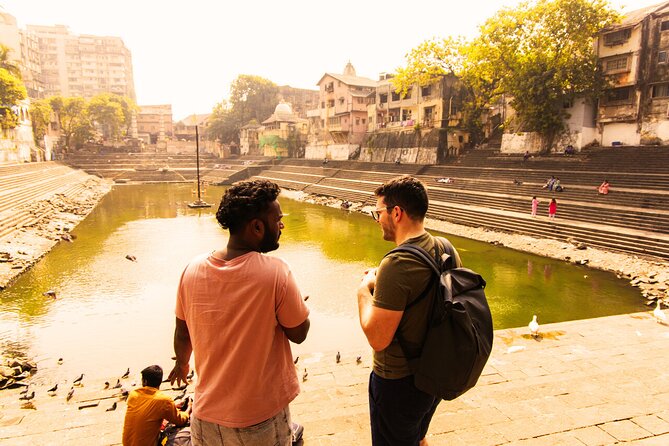
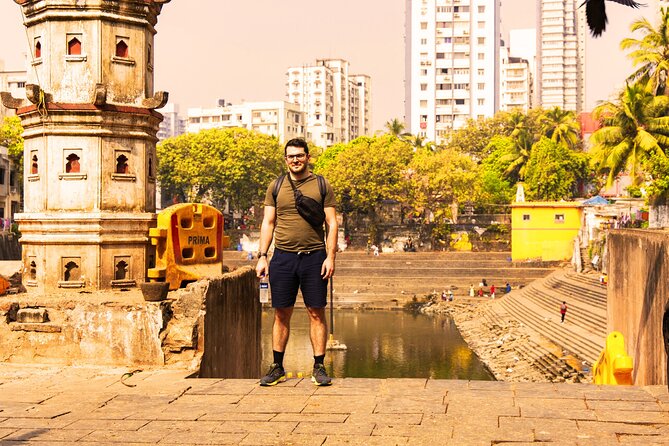
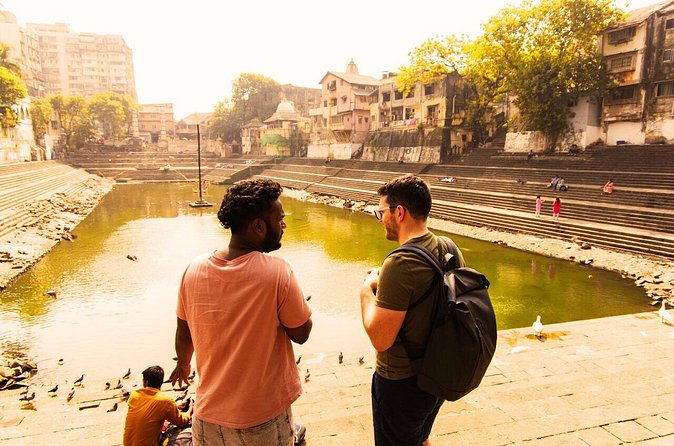
The day begins at Banganga, an ancient tank with origins dating back to the 12th century. It’s part of the Walkeshwar temple complex in Malabar Hill.
What I like about starting here is the tone. You get something older and quieter than the waterfront chaos—water history, temple context, and an immediate sense that Mumbai’s story isn’t only about colonial-era monuments. Even though your visit is around 20 minutes, it’s long enough for a guided explanation and a slow look rather than a rushed photo stop.
If you’re the type who likes to understand a place before you sprint through it, this opening stop sets you up well.
Gateway of India and the Taj area: British-era symbolism on the waterfront
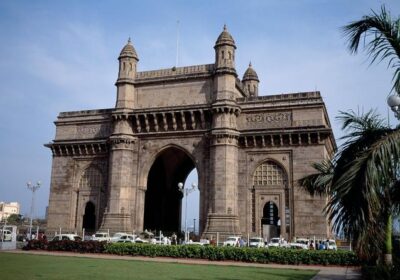
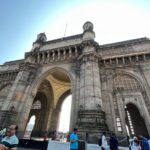
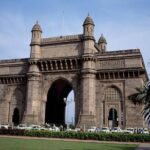
Next comes Gateway of India. You’ll spend about 20 minutes here, and your guide explains its connection to the 1911 visit of King George V and Queen-Empress Mary.
This is the classic Mumbai entrance point—an arch monument that signals power, empire, and the city’s link to global history. You’ll also see the nearby Taj Mahal Palace Hotel, which opened in 1903. Even if you don’t go inside, it’s worth knowing its place in the view.
Your itinerary also includes a stop at Haji Ali, a venerated Muslim tomb where people travel from across India. In that short time, you’ll get a sense of how Mumbai functions not just as a tourism stage, but as a living religious city.
At these stops, take your time with the details—angles, how the structures sit against the waterfront, and what the guide points out about the era each landmark represents. The photos are good here, but the meaning is better.


Mani Bhavan Gandhi Museum: Gandhi’s Mumbai base
You’ll then head to Mani Bhavan Gandhi Museum, Gandhi’s former residence in Mumbai. You’ll have about 25 minutes, and the admission ticket is included.
Your guide will place the home in context: Mani Bhavan served as Gandhi’s Mumbai headquarters for roughly 17 years, from 1917 to 1934. That time frame matters. It’s not a quick nod to Gandhi—it’s a statement about how Mumbai contributed to the broader movement.
This is one of the stops where a guide makes a real difference. Gandhi’s story gets easier to hold when you see the place tied to that work and hear what happened here.
If you want a break from outdoor sun, this is also a calmer, more focused interior stop—short enough to stay efficient, long enough to absorb.
Jain Temple and Banganga’s spiritual thread
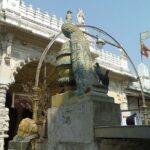
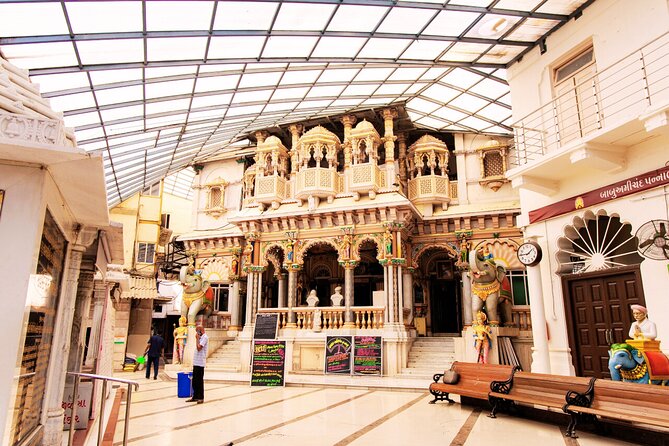
After Mani Bhavan, the route includes a Jain Temple with time set for about 15 minutes. You’ll see intricate stone carvings and a dome painted with zodiac designs, plus a quick introduction to the significance of the place of worship.
This temple stop doesn’t try to turn into an all-day spiritual itinerary. It’s a short encounter that helps balance the day: instead of only colonial monuments and museum-style learning, you get architectural detail and religious atmosphere.
If you’re sensitive to crowds or prefer quieter moments, go with a simple plan: pause, look up, and let the carvings and dome take your attention. The guide will handle the background.
Chhatrapati Shivaji Terminus: UNESCO station energy
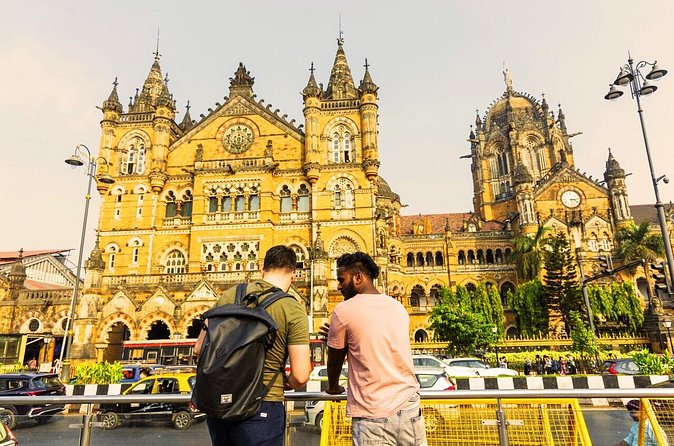
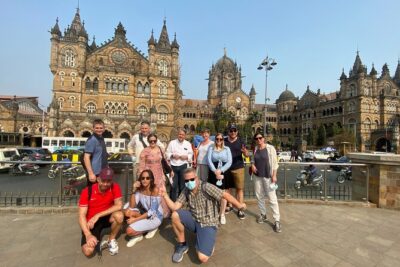
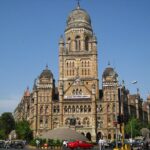
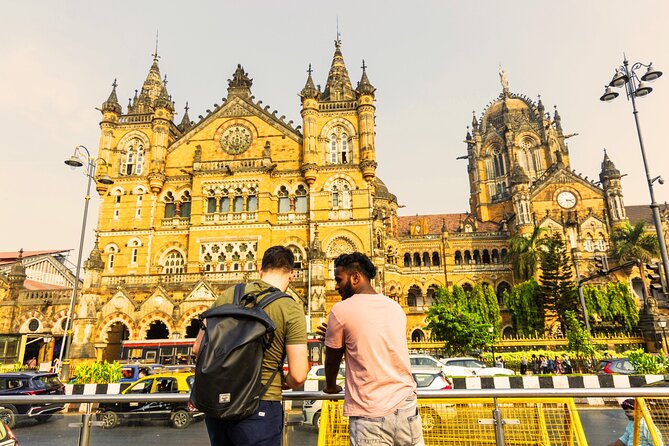
Your next major highlight is Chhatrapati Shivaji Terminus, a UNESCO World Heritage Site. You’ll get about 25 minutes.
This stop is a big reason the tour feels worthwhile. A UNESCO listing can sound abstract until you’re standing in front of a building that still works as a station. The Terminus is famous in films too, and that media presence matches what you feel on-site: a dramatic, functioning landmark.
You’ll also likely notice how busy the station area is. That bustle is part of the experience, and it’s exactly why this place works with a guided schedule. In a short time, you can understand the architecture and the role the station plays in daily movement—without getting lost.
One practical consideration: the itinerary is built around seeing the station environment and stopping to look. If you had your heart set on additional time inside specific areas of the station, this half-day format might feel slightly tight. The trade-off is that you still get many other landmarks in the same day.
Marine Drive, Rajabai Clock Tower, and Kamala Nehru Park viewpoints
Between major monument stops, you’ll enjoy driving time for Marine Drive, also nicknamed Queens Necklace. This is one of those “pass and notice” segments that rewards having a guide who points out colonial-era buildings along the way.
Then you’ll visit Rajabai Clock Tower, with about 10 minutes. It’s 85 meters tall and part of the Victorian and Art Deco Ensemble of Mumbai, which was added to the World Heritage List in 2018.
This is a quick hit, but it’s a smart one. Clock towers are more than timepieces; they’re civic signals. You’ll feel the tower’s scale even in a short stop, especially with the guided explanation of its heritage status.
Next is Kamala Nehru Park for about 25 minutes. The guide may point out that the park has a distinctive boot-shaped structure. It’s a helpful breather in the itinerary: you get a bit of open space after dense urban sights, and you can take in city skyline views at a slower pace.
This chunk of the tour is where you start to feel the pattern: monuments, then views, then back to the city’s everyday heartbeat.
Dhobi Ghat laundry spectacle: watching work happen outdoors
One of the most memorable stops is Dhobi Ghat, the world’s largest outdoor laundry. You’ll have about 20 minutes.
If you’ve never seen outdoor laundry at this scale, it’s a sensory experience. Colors hang in rows, water and work combine into a daily rhythm, and the place feels like a real production line rather than a staged museum photo area.
It’s also a great contrast after monuments. One of the reasons this tour works is that it doesn’t treat Mumbai as only famous architecture. It gives you a window into labor, routine, and what keeps the city moving.
If you’re planning photos, keep your expectations realistic: you’ll be looking, learning, and moving through crowds and activity. You won’t linger forever—but the brief time is enough to see why this place is on so many Mumbai must-do lists.
National Gallery of Modern Art and David Sassoon Library (what to expect)
The itinerary includes time for National Gallery of Modern Art, Mumbai, opened to the public in 1996. It hosts exhibitions and art collections by famous artists, sculptors, and from different civilizations.
You’ll also have a stop for David Sassoon Library, a heritage structure. The name and idea are tied to Albert Sassoon, and the intention was to place a library in the city center.
Here’s how to treat these stops on a half-day schedule: go in ready to notice architecture, then let the guide connect the dots. You may not have time to see everything in a museum-like way, but you’ll understand the significance of why these institutions exist in Mumbai’s urban fabric.
Taj Mahal Palace: a final look at heritage by the harbor
The tour ends with a short stop at the Taj Mahal Palace Hotel, located next to the Gateway of India. The time set is about 10 minutes.
This isn’t about luxury shopping—it’s about finishing where the day started, with a landmark you’ve now learned to place in context. If you haven’t walked around the area yet, this is your last chance to look across the waterfront zone and make sense of how the city grew around these world-facing icons.
Then you’re back to your hotel.
Who should book this private tour
This is a strong fit if you:
- have limited time in Mumbai and want a guided, efficient route
- want a private guide and air-conditioned transport rather than figuring out transit on your own
- care about history markers like British-era commemorations and major heritage architecture
- like a mix of famous sights and everyday city life, like Dhobi Ghat
It may not be the best fit if you:
- want super deep, slow museum time
- need lots of inside access to major buildings beyond what the schedule allows
- are very sensitive to audio/comfort in the vehicle (tell the guide if you have trouble hearing)
Should you book this Mumbai private sightseeing tour?
If your goal is a high-return half-day in Mumbai, I think you should book it. The value isn’t just the $90 price—it’s the bundled guide, transport, pickup/drop-off, and the way the route balances icons with lived culture.
I’d book especially if you’re arriving by cruise or train and want someone to help you get oriented quickly. The itinerary is also built to give you key heritage moments without turning your day into a grid of long transit stretches.
If you want a totally relaxed day with lots of extra stops, you might consider a longer tour instead. But for getting your bearings, learning the why behind the landmarks, and seeing a lot of Mumbai in one shot, this one makes practical sense.
FAQ
How long is the private Mumbai sightseeing tour?
It runs about 4 to 5 hours.
What is the price per person?
The price is $90.00 per person.
Does the tour include pickup and drop-off?
Yes. Hotel, port, or railway station pickup and drop-off are included.
Is transport provided during the tour?
Yes. You travel in a private air-conditioned vehicle with transfers included.
Are museum or monument admission tickets included?
Mani Bhavan Gandhi Museum has admission ticket included. Other listed stops are listed as free admission.
What’s included in the tour cost?
Included items are a professional art historian guide, air-conditioned vehicle, bottled water, and fuel surcharge.
Is food included?
No. Food and drinks are not included.