REVIEW · DHARAVI SLUM TOURS
Private Mumbai Sightseeing Tour Including Dharavi Slum
Book on Viator →Operated by Mystical Mumbai · Bookable on Viator
One day. Two very different Mumbai moods. This private tour pairs a Dharavi walk with colonial-era icons, so you see how the city works at both street level and landmark level. I like that it’s in a private air-conditioned car with an English-speaking guide, which makes a long day feel controlled instead of chaotic.
I also love how the Dharavi portion isn’t just a quick look—it includes the recycling yard and the Kumbharwada pottery lanes, so you get a clearer picture of daily work and local skills. That matters in a city where rushing can turn learning into staring.
One possible drawback: Dharavi can feel emotionally intense. And since Mumbai traffic and weather can be unpredictable, you’ll want to stay flexible if the timing shifts a bit.
In This Review
- Key things I’d zero in on
- A rare one-day contrast: Dharavi and colonial Mumbai, side by side
- Private car logistics: why it’s worth paying for comfort
- Dharavi Slum walk: work, recycling, and Kumbharwada pottery
- How the guide shapes the experience
- A respectful note (because this is real life)
- Chhatrapati Shivaji Terminus: the rail-station landmark you can’t ignore
- Rajabai Clock Tower and Mumbai University area: gothic details with purpose
- Gateway of India and Taj Mahal Palace: iconic waterfront, loaded with stories
- Marine Drive: the Queens Necklace stretch for quick skyline time
- Dhobi Ghat and Hanging Gardens: daily routines plus skyline views
- Mani Bhavan Gandhi Museum: the human-scale history stop
- Jain Temple and small heritage details: short stops that reward attention
- Price and value: what $184.62 per group really covers
- Who should book this tour, and who might want a different day
- What to expect on the ground: timing, pace, and comfort
- Should you book the private Mumbai sightseeing tour with Dharavi?
- FAQ
- Is hotel pickup and drop-off included?
- How long is the private tour?
- What’s the group size limit?
- Does the tour include the Dharavi Slum walking part?
- Are there entrance fees?
- Is food included?
- Can I cancel for free?
Key things I’d zero in on
- A 2-hour Dharavi walking portion that focuses on daily life, small businesses, and community pace
- Plastic/metal recycling yard visits where materials get sorted for reuse
- Kumbharwada pottery, known as the city of lamps, with kiln-fired oil lamp production
- UNESCO Chhatrapati Shivaji Terminus stop for major “Mumbai runs on rails” energy
- Mani Bhavan Gandhi Museum with admission included, not just a photo stop
- Dhobi Ghat and Hanging Gardens for daily-life detail plus skyline views
A rare one-day contrast: Dharavi and colonial Mumbai, side by side
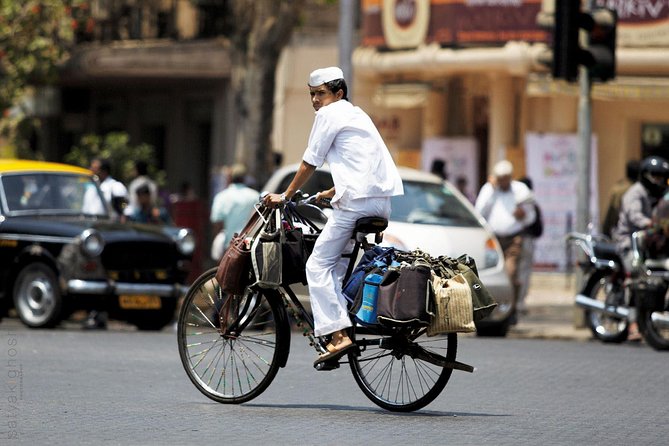
Mumbai is one of those cities that can feel like two places at once. This tour leans into that. You start with the Dharavi Slum walk—streets, small-scale making, recycling, and pottery—then you switch gears to colonial and modern landmarks like the Gateway of India, Marine Drive, and the Rajabai Clock Tower area.
The result is practical if your time is short. You get a full orientation to the city, not just the postcard stuff. And because it’s private, you can ask questions and adjust pacing where you need more time.
You can also read our reviews of more private tours in Mumbai


Private car logistics: why it’s worth paying for comfort
A big part of the value here is simple: you’re not doing this as a chaotic hop-on/hop-off scramble. You get pickup and drop-off (hotel, Mumbai cruise port, or train station) and ride in a private air-conditioned vehicle with your guide.
Mumbai traffic can be a real character in the day. A private car doesn’t stop delays, but it helps you absorb them with less stress. In real terms, that means you spend more time seeing, and less time wrestling with directions.
The group size is also tight: up to 5 people per booking. That makes a difference with questions. You’ll hear the guide’s explanations more clearly, and your guide can talk to you like a small team rather than a large bus crowd.
Dharavi Slum walk: work, recycling, and Kumbharwada pottery
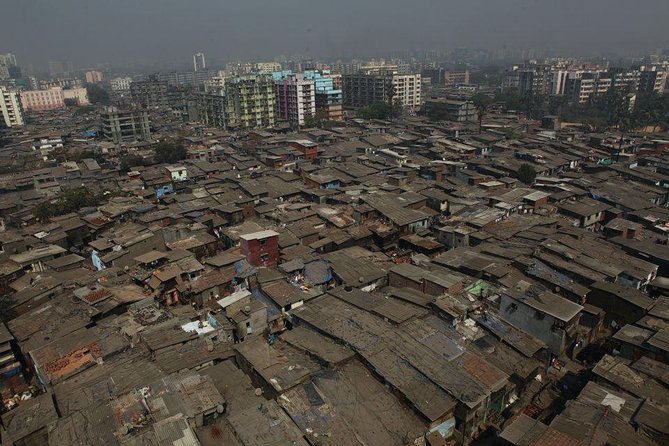
The heart of the day is Dharavi, and it’s planned like a real walking segment (about 2 hours). You’ll start right in the thick of it, where the lane network is dense and life moves fast. You’ll see thousands of makeshift huts, plus the everyday rhythm of small shops—bread and sweets are one example that gets mentioned often in this tour style.
But the focus isn’t only on housing. Your walk is built around the local economy:
- You pass small manufacturing spaces tied to things like clothing, pottery, and soap-making.
- You visit a plastic and metal recycling yard, where materials are sorted for reuse.
- Then you move into Kumbharwada, the pottery neighborhood often described as the city of lamps.
In Kumbharwada, the “why it matters” becomes clearer. These aren’t just souvenirs. You’re watching kiln-fired pots being made for use as oil lamps for festivals. That links craft to culture, and it helps you understand how a place stays connected to tradition even when conditions are difficult.
How the guide shapes the experience
Dharavi walks go well—or go awkward—based on your guide’s tone and pacing. On this tour, guides are specifically praised for explaining slum life without turning it into a spectacle. Names you might get include Aarti and Mukesh, who are noted for strong explanations about Dharavi areas, and Manoj and Anthony, who are described as friendly and knowledgeable.
What to do with that: come ready with questions like how people earn income, how recycling work fits together, or what Kumbharwada crafts are used for. When your guide is good, you’ll leave with a map in your head, not just images on your phone.
A respectful note (because this is real life)
This isn’t a theme park. Even when things are safe, you may feel a bit out of place. One traveler described moments that felt tense inside Dharavi. If that’s the kind of experience that can upset you, know it upfront.
Practical approach:
- Keep your camera use calm and permission-based.
- Don’t crowd people working in small spaces.
- Treat what you see as someone’s home and workplace, not a backdrop.



Chhatrapati Shivaji Terminus: the rail-station landmark you can’t ignore
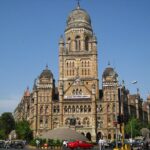
After Dharavi, you shift to Mumbai’s landmark spine with a stop at Chhatrapati Shivaji Terminus (UNESCO). This is one of those locations where the building tells you something about the city even before you start reading plaques.
Expect a lively station feel. It’s not quiet museum time; it’s a working transport hub that has appeared in films over the years. The practical gift here is context: Mumbai has always been a port-and-rail city, and CST reflects that momentum.
You’ll have a short visit window (around 25 minutes). That’s enough for exterior shots and a guided orientation, but don’t expect a long slow stroll. If you want more, you could always plan extra time after the tour.
Rajabai Clock Tower and Mumbai University area: gothic details with purpose
Next comes the Rajabai Clock Tower, tied to the Mumbai University complex. The Gothic architecture is the headline, but the better reason to stop is that it shows how colonial-era buildings tried to project permanence and order.
You’ll get a brief visit (about 20 minutes). Use it for close-looking: arched details, stonework, and the way the clock tower anchors the surrounding streets. If you like architecture, this is a quick payoff stop.
Gateway of India and Taj Mahal Palace: iconic waterfront, loaded with stories
Then it’s back to big names: the Gateway of India (about 15 minutes) and the Taj Mahal Palace area (about 10 minutes). The Gateway is built to commemorate a visit by King George V and Queen Mary, and it has that classic “crowds gather here for a reason” energy.
Right nearby, you’ll see the Taj Mahal Palace, originally commissioned by Jamshedji Tata and opened in 1903. Even if you never go inside, you get a sense of how the British-era grandeur and commercial power wrapped around the waterfront.
If you’re prone to rush, slow down here. This is where Mumbai’s skyline meets history. The photo angle is obvious, but the atmosphere can be surprisingly emotional if you let it land.
Marine Drive: the Queens Necklace stretch for quick skyline time
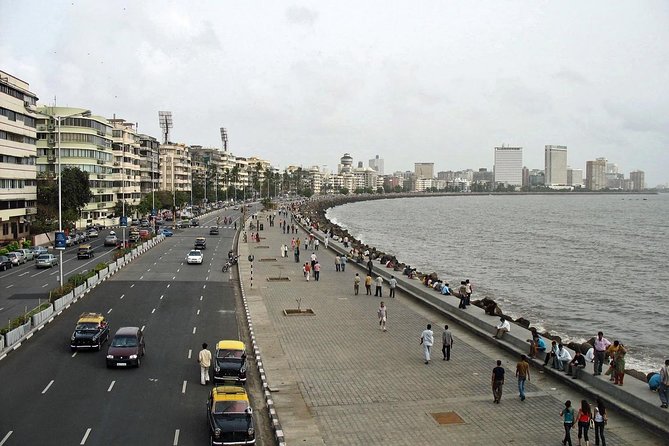
You’ll also pass or stop near Marine Drive, often called the Queens Necklace. It’s famous for a reason: it’s a long curved band of city views that helps you visually connect different parts of Mumbai.
In a 6-hour day, this is likely a shorter stop (more of a drive-by/brief look than an all-out walk). Still, it’s useful. After Dharavi, Marine Drive gives you a sense of how different Mumbai’s structures feel—wide roads, formal buildings, and scenic waterfront spacing.
Dhobi Ghat and Hanging Gardens: daily routines plus skyline views
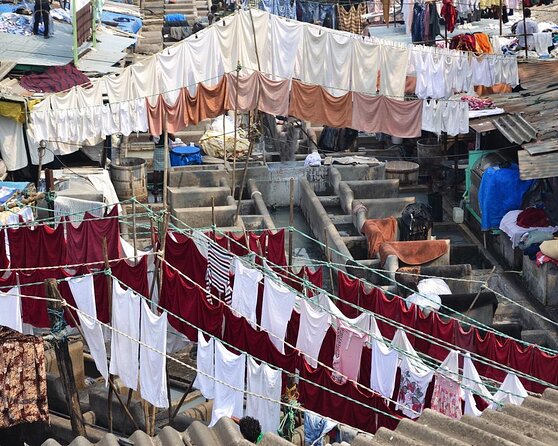
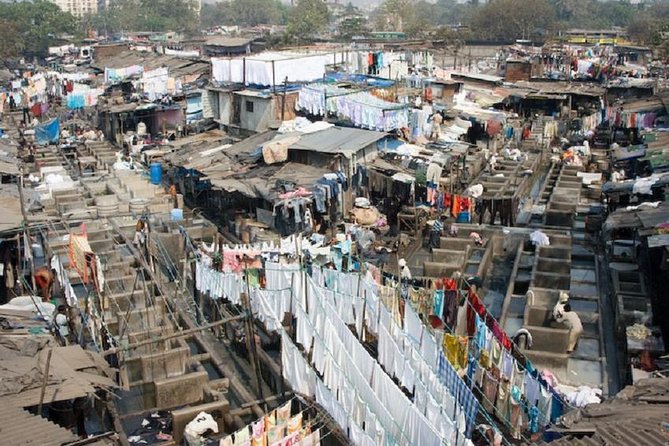
One of the most memorable non-obvious stops is Dhobi Ghat—an open-air laundry area often described as Asia’s biggest. Your stop is about 20 minutes.
Why this works: you’re seeing labor that’s not staged for tourists. Hotels and hospitals rely on laundry systems like this, so it’s part of how the city keeps running. You’ll likely notice how people move, wash, rinse, and handle linens in a space built for work rather than comfort.
Then you’ll head to Hanging Gardens, which sit on top of water tanks. Your visit is brief (about 10 minutes), but the idea is clear: you get a viewpoint with a bit of greenery engineering over the underlying water infrastructure. It’s a clever reminder that Mumbai’s “pretty” can be tied to functional planning.
Also in the broader route are quick views near:
- Kamala Nehru Park (around 15 minutes), including the skyline outlook
- The Tower of Silence area connected with Parsi burial practices, which the gardens area is associated with in the tour description
Mani Bhavan Gandhi Museum: the human-scale history stop
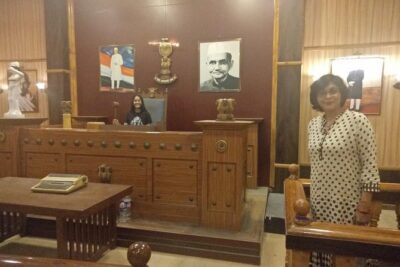
If colonial and city planning are the big themes for much of the day, Mani Bhavan Gandhi Museum is the human-scale counterweight. Your visit is about 20 minutes, and this is one of the few stops where admission is included.
Mani Bhavan was the focal point of Gandhi’s political activities in Mumbai between 1917 and 1934. So instead of just admiring old architecture, you’re getting a named place tied to political organizing and personal movement.
This stop can be a strong reset for your brain after the sensory load of Dharavi and the spectacle energy near famous landmarks.
Jain Temple and small heritage details: short stops that reward attention
There’s also a stop at a Jain Temple with intricate stone carvings and a dome painted with the zodiac. The visit window is about 10 minutes.
Ten minutes sounds fast, but for religious architecture, short focused time can be enough. You’ll want to look upward at the dome and scan the stonework patterns. Even in a tight schedule, this is one of those “turn your head” moments that makes the day feel more layered.
Price and value: what $184.62 per group really covers
At $184.62 per group (up to 5) for about 6 hours, the price is best understood as private logistics plus guided interpretation. You’re paying for:
- pickup and drop-off from hotel, cruise port, or train station
- a private air-conditioned car
- an English-speaking guide
- and time on major landmarks plus the Dharavi walking portion
Entrance fees are handled in a practical way. Many stops are marked as free, and at least Mani Bhavan’s admission is included. That matters because the “free museum” approach is never really free when you account for transport and time. Here, you’re paying for a guided day that reduces decision fatigue.
Is it “cheap”? No. But for Mumbai, where the distance between areas and the traffic reality can eat hours, private value adds up fast. If you’re comparing against DIY transit plus taxi plus guided time, this option often looks more reasonable once you total up the inefficiencies you’d otherwise absorb.
Who should book this tour, and who might want a different day
This is a great fit if:
- you want both sides of Mumbai in one day—Dharavi’s work-life plus colonial and modern highlights
- you like the clarity of having a guide manage timing and explain what you’re seeing
- you’re traveling in a group of up to five and want a private car
This may be less ideal if:
- you’re very sensitive to distressing living conditions, even with a respectful guide
- you only want “pretty” Mumbai and dislike the idea of a serious social stop
- you need a slow pace with lots of free time—this day is designed to be efficient
What to expect on the ground: timing, pace, and comfort
The tour runs about 6 hours, and you’ll be moving between neighborhoods. That means you’ll need comfortable shoes for Dharavi lanes and for the landmark walking time.
Also plan around the fact that Mumbai can throw curveballs—heavy traffic, weather, and crowding happen. People have reported that the tour still managed to reach the highlights safely even when conditions got busy. That’s a sign the guide and driver teamwork matters here.
One last practical tip: bring water. The tour doesn’t include food or drinks, so you’ll want to buy as needed or bring something small if you’re allowed.
Should you book the private Mumbai sightseeing tour with Dharavi?
I’d book it if you want a fast, guided way to understand Mumbai beyond icons. The combination of Dharavi (recycling and pottery) plus CST, Rajabai Clock Tower, Gateway of India, Dhobi Ghat, Mani Bhavan, and other heritage points gives you a day that feels like real orientation.
I wouldn’t book it on autopilot if Dharavi is something you’re worried might be too hard emotionally. If that’s the case, at least go in knowing what kind of experience it is and handle it with respect and patience.
If you do book, pick it for what it is: a private guided contrast day that uses time well and keeps the day moving without pretending that Mumbai is only one story.
FAQ
Is hotel pickup and drop-off included?
Yes. Pickup and drop-off are included, and you can be collected from your hotel. The tour also offers pickup and drop-off from the Mumbai cruise port or railway station.
How long is the private tour?
It runs for about 6 hours.
What’s the group size limit?
The price is per vehicle, with a maximum of 5 people per booking.
Does the tour include the Dharavi Slum walking part?
Yes. The tour includes a walk through Dharavi, including areas tied to daily life, small-scale industries, a plastic and metal recycling yard, and the Kumbharwada pottery area.
Are there entrance fees?
Many stops are listed as free, and Mani Bhavan Gandhi Museum admission is included. The tour description also indicates entrance fees are part of what you get.
Is food included?
No. Food and drinks are not included.
Can I cancel for free?
Yes. You can cancel up to 24 hours in advance for a full refund. Canceling within 24 hours does not include a refund.