REVIEW · DHARAVI SLUM TOURS
Mumbai: Dhobi Ghat Laundry and Dharavi Slum Tour with Local
Book on GetYourGuide →Operated by Inside Mumbai Tours · Bookable on GetYourGuide
Real Mumbai is right here. This 3-hour experience pairs Dhobi Ghat open-air laundry with a guided walk through Dharavi, focused on real routines and real work. You’ll hear how industries operate, where people live and raise kids, and why Dharavi is far more than a movie set.
What I like most is the resident-led feel. Guides such as Bharti, Abi, Ansh, Alkama, Faizan, Aarti, and Zee (names you may see assigned) explain daily life with an inside perspective, not a scripted lecture, and the tone stays respectful. I also love the mix of industries you can actually see up close—plastic recycling plus garment/textile and leather work—so the story of Dharavi’s economy makes sense fast.
One possible drawback: you’re walking through dense, working areas where privacy matters. If you’re the kind of person who hates crowds, noise, or having to follow social norms around photos and observation, this tour might feel more intense than you expect—even though the tour is described as safe and many guides are careful about pace.
In This Review
- Key things you’ll notice on this Dhobi Ghat + Dharavi walk
- Dhobi Ghat and Dharavi: Why this combo works
- Your guide is the whole experience (and names matter)
- Getting oriented: meeting point, trains, and time on the move
- Dhobi Ghat open-air laundry: what you’re really seeing
- Dharavi, inside and around: homes, work, and everyday routines
- The Dharavi economy: plastic recycling plus textile and leather work
- The Slumdog Millionaire spot and other surprises
- How the 3 hours feel: pace, group size, and comfort
- Price and value: why $4.45 can be shocking
- When this tour might not be for you
- Should you book this Dharavi + Dhobi Ghat tour?
- FAQ
- How long is the tour?
- Is this tour private or shared?
- What languages are offered?
- What’s included in the price?
- Is food included?
- What will I see during the tour?
- Can I cancel for a full refund?
Key things you’ll notice on this Dhobi Ghat + Dharavi walk
- Local access inside Dharavi, guided by residents so you’re not just rubbernecking from the edges
- Dhobi Ghat laundry in motion, where the open-air scale is the point, not a museum-style display
- The recycling and manufacturing chain, especially plastic reprocessing alongside textile and leather businesses
- A reality-check for movie assumptions, including a visit to a Slumdog Millionaire filming spot inside Dharavi
- Respectful pace and privacy habits, with guides actively managing questions and movement in busy areas
Dhobi Ghat and Dharavi: Why this combo works
Most Mumbai day tours separate “tourist Mumbai” from “local Mumbai.” This one refuses that split. You start with Dhobi Ghat, where water, labor, and timing shape the day, and then you step into Dharavi, where the economy runs on small workshops and tight neighborhoods.
The reason I think this pairing is smart is simple: Dharavi is often explained as a place of need. Dhobi Ghat is explained as a place of work. Putting them together helps you see the common thread—people creating systems that function daily, even when resources are limited.
This tour also directly challenges the lazy shortcut. It includes a stop tied to Slumdog Millionaire, so you can compare what the film made famous with what’s actually happening in the streets, homes, and production spaces around you.
You can also read our reviews of more tours and experiences in Mumbai.



Your guide is the whole experience (and names matter)
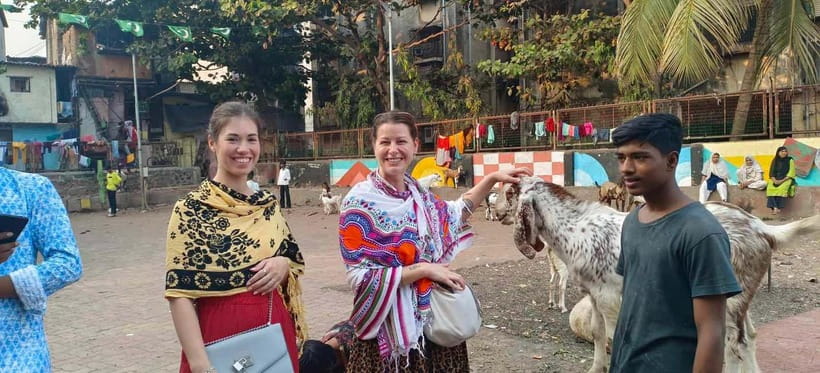
On a tour like this, the guide is not a bonus. It’s the difference between learning and just watching. The guides associated with this experience are frequently described as locals who know the area from the inside—people like Bharti, Abi, Ansh, Alkama, Faizan, Aarti, and Zee show up repeatedly as favorites.
You’ll feel that in how questions are handled. Instead of generic answers, guides tend to connect everyday life to the work you’re seeing—why certain industries cluster, how residents share space, and what “normal” looks like inside a tight urban neighborhood.
There’s also a big safety and comfort factor. Multiple guides are noted for making visitors feel at ease while still respecting the privacy of residents going about their day. If you’re worried about being intrusive, this format is built to help you behave like a guest rather than a spectator.
Getting oriented: meeting point, trains, and time on the move
The meeting point can vary by option, so don’t plan a hard connection right after the tour starts. You’ll want to build a little buffer into your day because the experience includes transit, and part of the “real feeling” comes from actually moving through the city.
A common highlight is the local train ride on the way between Dharavi and Dhobi Ghat. Several guides are praised for making the ride part of the story, not just transportation. Depending on the service conditions on the day, you may even notice the open feel of the train experience (one write-up calls out doors-open excitement), which helps the tour feel like Mumbai, not a staged transfer.
Timing-wise, the total is 3 hours. That’s long enough to see distinct areas and industries, but short enough that you won’t be trapped in a half-day of logistics. Still, it’s a walking-heavy experience, so wear shoes you’re comfortable with for an active urban route.
Dhobi Ghat open-air laundry: what you’re really seeing
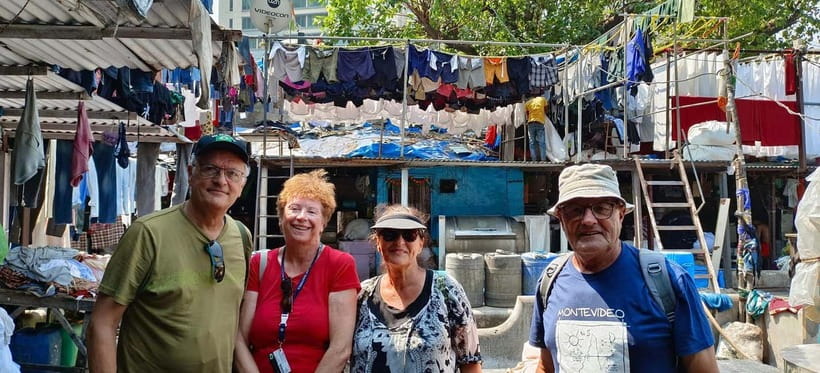
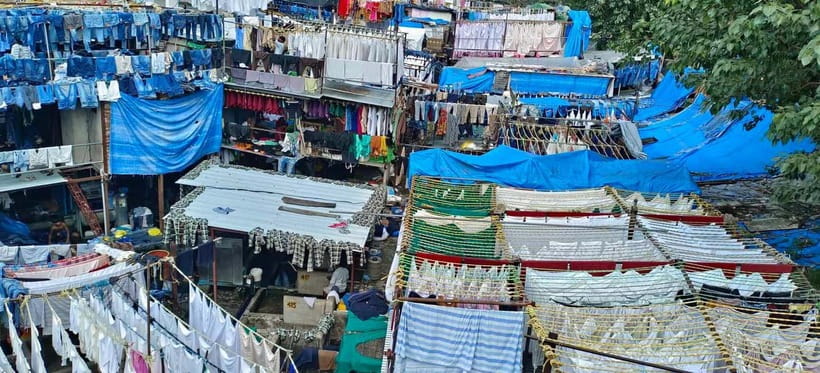
Dhobi Ghat isn’t presented as a photo spot. It’s presented as a working system. Expect to see the laundry process up close in an open-air environment, where the scale comes from the everyday rhythm: water handling, sorting, washing, and the constant flow of work.
The tour’s value here is interpretation. A good guide doesn’t just point out activity; they explain how the laundry works, why it’s set up this way, and what Dhobi Ghat means in the broader ecosystem of the city. Guides connected to the experience—such as Bharti, Alkama, and Abi—are repeatedly praised for describing how the operation functions and how visitors can understand the scale without turning it into a spectacle.
One practical note: entry tickets and travelling fees are included, and water is included too. That helps you stay focused on the experience rather than budgeting minute-by-minute.
Dharavi, inside and around: homes, work, and everyday routines
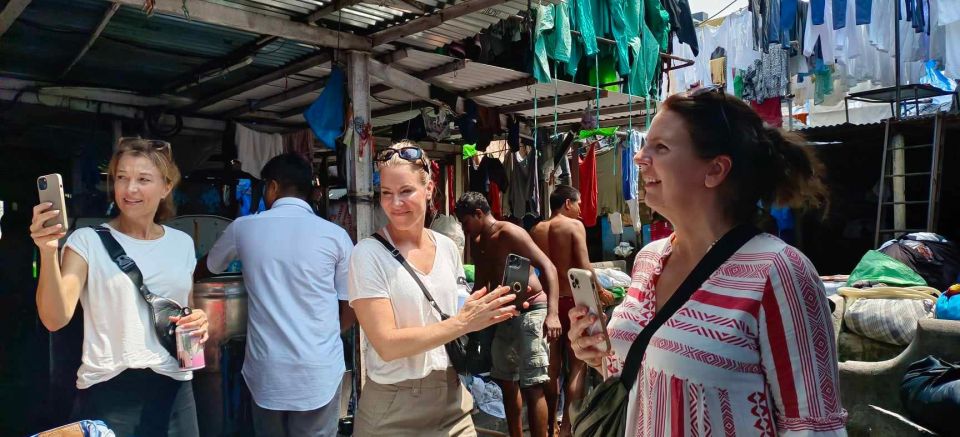
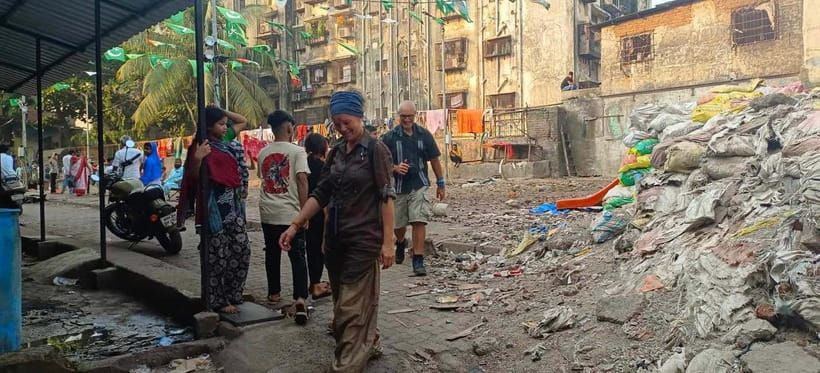
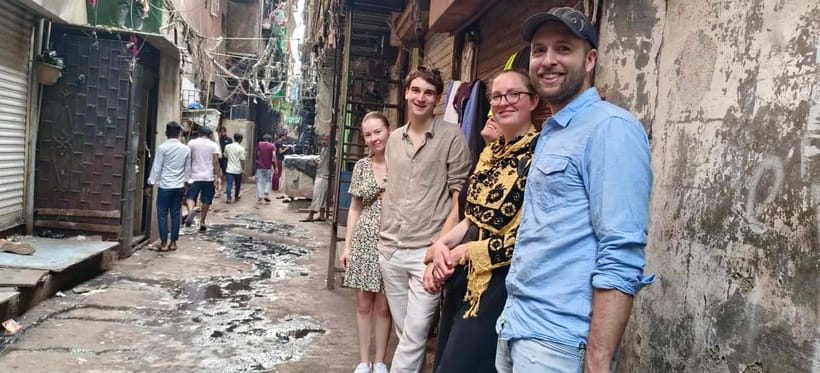
When you enter Dharavi on this tour, the goal is to show life as it actually exists: where families live, where children play, where people relax between tasks, and where the working parts of the neighborhood happen. The emphasis is on what residents do for living, not on dramatic backdrops.
You’ll likely see a layered mix of residential and industrial spaces. That can be surprising if your mental image of Dharavi comes from headlines or film. The tour is designed to correct that quickly, with a “no stereotypes” approach and a resident-led route.
Privacy is part of the structure. The experience is described as safe to visit inside and around, and guides are careful about pacing and respectful behavior. If you want to take photos, treat it like asking permission first—watch what others do, and follow your guide’s cues. The most satisfying tours are the ones where you learn without turning people into background.




The Dharavi economy: plastic recycling plus textile and leather work
This is where the tour becomes genuinely educational, because Dharavi’s industries are not abstract. You can see components of a real production chain: sorting, processing, and remaking waste into usable materials.
The most commonly highlighted sectors include:
- Plastic recycling, often described as a key part of the local economy
- Garment and textile work, tied to clothing and fabric production
- Leather industry activities, described alongside other workshop trades
Guides also point to the big economic picture behind the scenes. One tour description notes yearly income around US $1 billion, which helps you understand why Dharavi has such a complex internal network. Even if you don’t memorize numbers, it changes how you interpret what you’re seeing: this isn’t just survival. It’s organized labor and commerce.
The best part is how the guide connects the industries to daily life. When work is embedded right next to home, you start to understand why the neighborhood feels busy even when the streets are narrow. It’s not chaos. It’s a functioning system with tight routines.
The Slumdog Millionaire spot and other surprises
One of the stated highlights is visiting a location where Slumdog Millionaire was filmed inside Dharavi. That could sound like a gimmick, but here it works because it’s paired with context.
Instead of stopping at a “movie moment” and moving on, the guide helps you compare what you recognize from film with what you notice in reality: the layout, how businesses operate, and how residents’ routines shape the space. The result is a useful reality check—your eyes update, and your assumptions shrink.
The tour also promises additional surprises beyond that filming spot. In practice, that usually means the route includes unexpected angles on the neighborhood: a workshop you wouldn’t find on your own, a view into how products move through the area, or a moment where a resident’s daily routine becomes visible in a way that feels human, not staged.
How the 3 hours feel: pace, group size, and comfort
This experience can be private or shared (and sometimes described as small groups). That matters because Dharavi is dense and active. A small group is easier to manage for a guide, and it usually means more space for questions.
The pace is often handled with care. Hot-day concerns come up in feedback, with guides staying attentive to comfort and timing. If you’re sensitive to heat or long walking, you’ll want to tell your guide early so they can adjust the rhythm.
Also, because the duration is fixed at 3 hours, you should go in with the right mindset. Don’t expect every corner of Dharavi. Expect a curated slice of life focused on industries, homes, and that laundry connection to Dhobi Ghat.
Price and value: why $4.45 can be shocking
At about $4.45 per person, the pricing can look unbelievable at first glance. But the included items make the value logic clearer: the tour includes a local English-speaking guide, entry tickets, travelling fees, and water.
The real value isn’t just the cost. It’s the guide’s translation of what you’re seeing. Without that, Dharavi and Dhobi Ghat can feel like two intense places you pass through. With the guide, you get the reasoning behind the systems—how recycling links to materials, how laundry links to water handling and timing, and how daily life persists inside an urban economy.
If you care about value, this is one of those experiences where paying for access and context matters more than paying for “comfort extras.” Just remember food and drinks aren’t included, so plan a meal before or after.
When this tour might not be for you
This tour is strong for curious, respectful visitors who want a real look at how an urban neighborhood works. It may be less ideal if:
- You’re uncomfortable with close observation in working areas
- You strongly dislike walking or moving through dense streets
- You want a purely scenic or low-interaction type of experience
None of this removes the stated focus on safety and respectful access. It just means you should match the experience to your personality. If you want passive sightseeing, choose something else.
Should you book this Dharavi + Dhobi Ghat tour?
I’d book it if you want Mumbai that actually explains itself. The combo of Dhobi Ghat laundry plus Dharavi’s industries gives you two angles on the same truth: real cities run on real work, and people build systems that keep going.
Choose this tour also if you’re trying to understand Dharavi beyond the surface. The experience is built to dispel stereotypes, and the resident-led approach with guides like Bharti, Abi, Ansh, Alkama, Faizan, Aarti, Ridhi, and Zee is a huge part of why it lands well for many visitors.
One decision tip: if you’re nervous about ethics or privacy, go anyway—but set expectations. You’re not there to collect shock value. You’re there to listen, ask, and look with care.
If that sounds like your travel style, you’ll probably leave with a clearer, more human view of Mumbai—plus a Dhobi Ghat moment you can’t get from a postcard.
FAQ
How long is the tour?
The duration is 3 hours.
Is this tour private or shared?
It’s available as a private or shared tour, depending on the option you select (small groups are also mentioned).
What languages are offered?
The tour is available with an English live tour guide. An optional audio guide in English is also available.
What’s included in the price?
Included are a local English-speaking tour guide, private or shared tour option, entry tickets, travelling fees, and water.
Is food included?
No. Food and drinks are not included.
What will I see during the tour?
You’ll see Dhobi Ghat open-air laundry and Dharavi life/work areas, including plastic recycling and garment/textile and leather-related industry. The tour also includes a visit to a place connected to Slumdog Millionaire filming.
Can I cancel for a full refund?
Yes. Free cancellation is available up to 24 hours in advance for a full refund.