REVIEW · DHARAVI SLUM TOURS
Mumbai: Dhobi Ghat Laundry & Dharavi Slum Tour with a Local
Book on Viator →Operated by Inside Mumbai Tours · Bookable on Viator
Mumbai’s working worlds are only a few stops away. This tour strings together Dhobi Ghat and Dharavi with a resident, English-speaking local guide, so you see daily routines, small businesses, and the movie-familiar corners of Mumbai in one smooth 3-hour loop.
What I like most is the pace: it’s long enough to learn how things work, yet short enough that you won’t feel dragged through traffic and crowds. I also appreciate that the guide perspective is grounded in the neighborhood, with names like Zeeshan, Bharti, Rakesh, and Faizan showing up in the guide experience people talk about.
One thing to consider: this is a walking-and-street experience, so comfortable walking shoes really matter, especially if the route covers uneven ground and busy public spaces.
In This Review
- Key Highlights You’ll Actually Feel
- Dhobi Ghat and Dharavi in One 3-Hour Plan
- Meeting at Third Wave Coffee and How the Tour Starts Smoothly
- Stop 1: Dhobi Ghat Outdoor Laundry and the Work Behind Clean Clothes
- Stop 2: Dharavi With a Resident Guide and the Reality Beyond Labels
- The Local Train Ride: Why It’s Included (and What It Adds)
- Price and Value: Is $9.49 Actually a Good Deal?
- Who This Tour Fits Best (and Who Might Want Something Else)
- Practical Tips for a Better Experience on the Ground
- Should You Book This Dhobi Ghat and Dharavi Tour?
- FAQ
- How long is the tour?
- What stops are included?
- Does the tour include a train ride?
- Are entrance tickets included?
- What is included in the price?
- Is food included?
- Where do I meet the guide?
- Where does the tour end?
- What group size should I expect?
- Do I get a mobile ticket, and is cancellation free?
Key Highlights You’ll Actually Feel
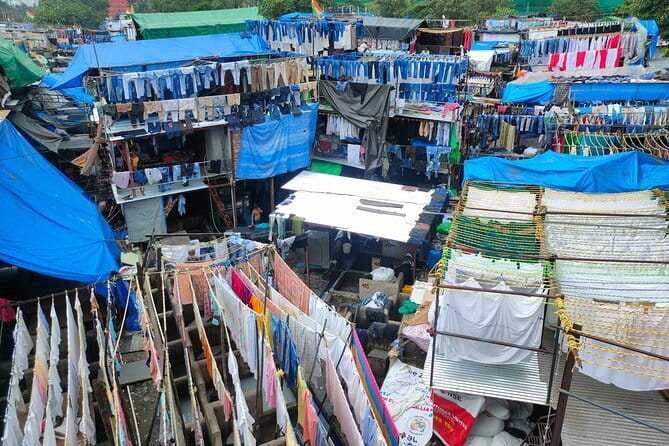
- Dhobi Ghat is laundry as a public system: washing, drying, ironing, and delivery all seen in one working place
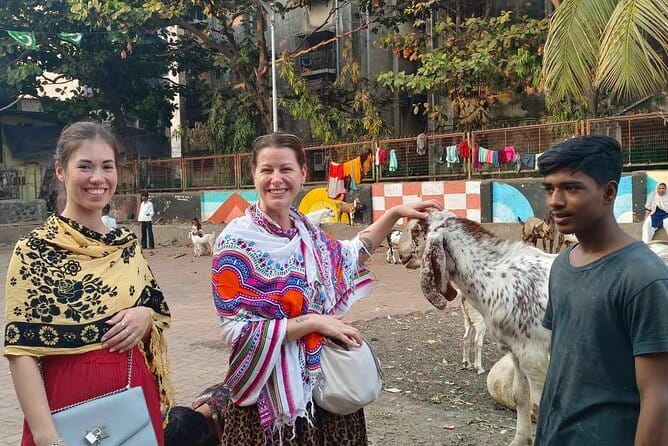
- A resident guide changes the tone: you get context from someone who knows the area’s everyday reality
- Dharavi is about life and work, not labels: you’ll hear about family routines, children playing, and small-scale trades
- Slumdog Millionaire filming locations are part of the walk: you connect film scenes to the real geography
- A local train ride ties neighborhoods together: it’s not just sightseeing from a sidewalk
- Small groups keep it manageable: capped at 15 travelers, with a focus on questions
Dhobi Ghat and Dharavi in One 3-Hour Plan
This is the kind of Mumbai tour that feels like you’re moving through two real workplaces—one outdoor, one neighborhood-based—rather than checking boxes. You start with Dhobi Ghat, widely known as the world’s largest outdoor laundry, then head into Dharavi, one of Asia’s largest slum neighborhoods. The point isn’t shock value. It’s understanding how people live, work, and organize their days in a place most visitors only know from stereotypes or a famous movie.
The structure matters: you’re not stuck on a bus staring out the window. You walk, you ask questions, and you get a guided explanation that helps you interpret what you’re seeing instead of just staring at it.
Guides for this tour are described as English-speaking locals from the area, and names like Zeeshan, Bharti, Rakesh, Alkama, and Faizan come up. That repeated theme—local perspective plus solid English—makes the information feel grounded, not scripted.
You can also read our reviews of more tours and experiences in Mumbai.


Meeting at Third Wave Coffee and How the Tour Starts Smoothly
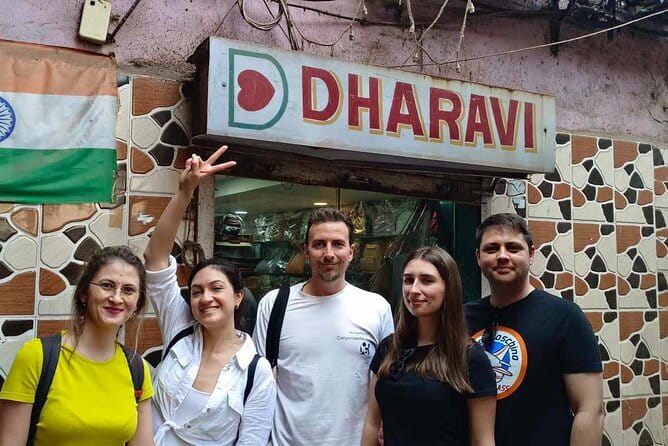
You meet at Third Wave Coffee on Tip Road in Mahim. It’s a practical start point and it’s near public transportation, which helps if you’re juggling morning/afternoon plans in Mumbai.
A small detail I really appreciate here: the meeting spot is described as having good air conditioning. When the day is warm (Mumbai is warm), that kind of setup helps you start the tour feeling human, not fried.
The tour also ends at Mahalaxmi K K Road. The experience includes help booking Uber or local transport afterward, which is smart because Dharavi and surrounding areas can be easier to navigate with a plan than by improvising.
Group size is kept to a maximum of 15 travelers, which tends to make it easier for a guide to move people along without losing everyone every five minutes.
Stop 1: Dhobi Ghat Outdoor Laundry and the Work Behind Clean Clothes
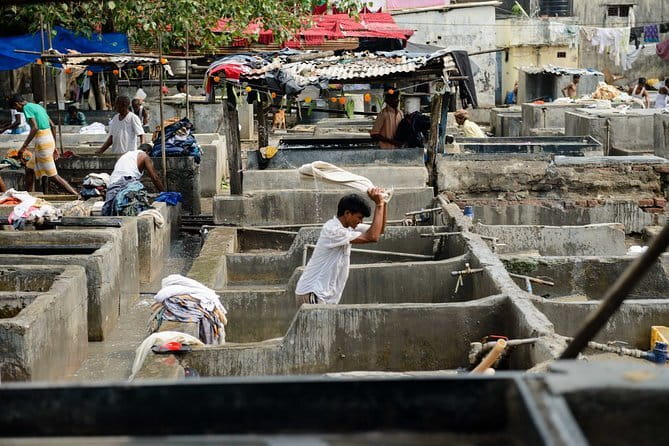
Dhobi Ghat is the headline stop for a reason. This is not a museum of laundry. It’s a functioning outdoor laundry space where you can learn the workflow end to end. The tour focuses on the practical steps—how cloth is washed, where it’s dried, how it’s ironed, and how delivery works after garments are processed.
What makes this stop valuable for you is that it explains the system, not just the sight. Once you understand the steps, you start noticing the logic in what you see: where items are placed to dry, how work gets organized outdoors, and how the process moves from washing to finishing.
You’ll usually get that guidance in a way that helps you ask better questions too. A strong guide can connect the dots between what looks chaotic at first glance and how a working operation actually runs. Dhobi Ghat is famous with international visitors, but it’s still a real workplace—so your best experience comes when you treat it like a job site: look closely, stay respectful, and let the guide translate the process.
Typical timing for this stop is about 1 hour, which is about right. You can absorb the basics without getting numb from repeating details.
Stop 2: Dharavi With a Resident Guide and the Reality Beyond Labels
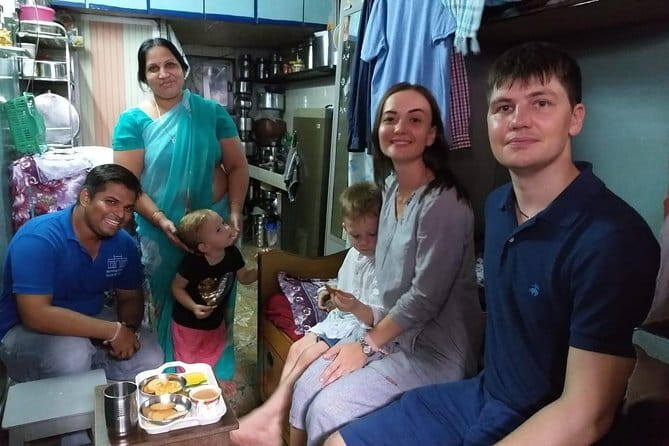
Next comes Dharavi, and the tour’s tone is clear: it’s meant to challenge negative stereotypes about what “slum” living looks like in daily life. Dharavi is described as having nearly one million people, and it’s presented as a neighborhood with routines, family life, work, and play—because that’s exactly what it is.
What you’re likely to see and learn centers on daily life inside the neighborhood:
- where people stay and how families live together
- how children play and community life flows
- where people relax and carry on normal routines
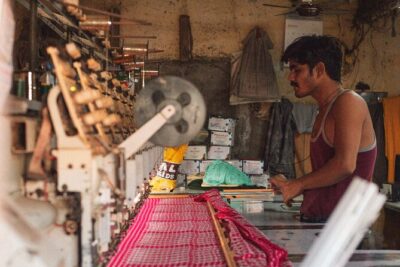
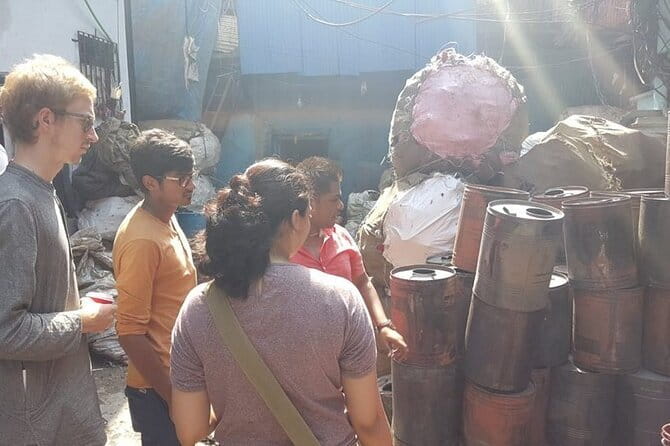
Then there’s the work side. The tour specifically highlights the small-scale businesses that operate in the area, including plastic recycling, leather work, and garment/textile activities. The goal is to show enterprise happening at street level, not just poverty. Even if you’ve heard the trade names before, having a guide explain what’s going on helps you understand how the neighborhood functions.
A major reason this stop grabs attention is the connection to film. The tour includes where Slumdog Millionaire was filmed inside Dharavi. That can be a weird feeling at first—your brain wants to compare movie scenes to reality—but a good guide helps you use the film connection as a pointer, not as the whole story. You end up looking at streets and buildings differently once you know where scenes were shot and what that tells you about the neighborhood’s geography.
Sensitivity matters here. You’re walking through a place where people actually live. The experience is strongest when your curiosity is respectful and your questions are grounded in learning rather than judging.
The Local Train Ride: Why It’s Included (and What It Adds)
The tour isn’t only walking. It also includes a local train ride, described as part of the overall experience of Mumbai.
That matters because rail is one of the city’s biggest “how Mumbai moves” systems. A train ride can help you feel how the city connects different neighborhoods and how locals experience public transit as part of everyday life. It also breaks up the day so you’re not constantly on foot and thinking.
You may also cross into Dharavi via the route the group uses—one guide experience described crossing over near train tracks—which reinforces that you’re seeing how neighborhoods connect in real time, not just stepping into a separate “attraction zone.”




Price and Value: Is $9.49 Actually a Good Deal?

At $9.49 per person, this tour is priced like a budget activity. The key question is: what do you get for that amount?
You get:
- a local English-speaking guide from the slum
- traveling fees
- all entrance/entry fees
- a water bottle
Food isn’t included, so you’ll want to plan a meal separately. But when you add up guide time plus entry fees plus the guiding focus on two major locations, the price looks realistic for a small-group experience.
Also, it’s described as averaging being booked about 16 days in advance, which suggests it’s popular enough to grab attention. If you’re traveling in a busy season or on a tight schedule, booking ahead is smart.
One more value factor: maximum group size is 15 travelers. Budget tours sometimes feel crowded and chaotic. A smaller cap makes it more likely you can ask questions and actually hear answers.
Who This Tour Fits Best (and Who Might Want Something Else)
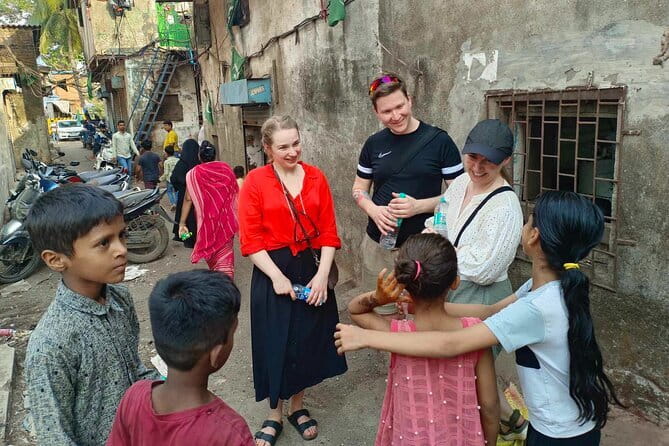
This tour suits you if you want:
- a short, guided introduction to two of Mumbai’s most talked-about places
- learning that focuses on daily work and everyday routines
- a resident guide perspective that makes explanations easier to follow
- a combination of workplace viewing (Dhobi Ghat) plus neighborhood life (Dharavi)
It may be less ideal if you:
- hate walking or can’t handle uneven street conditions
- want long, sit-down museum-style explanations
- prefer tours that focus only on architecture or monuments (this is about people and work, not buildings)
A reassuring note from the guide experience is that guides can be patient and supportive in busy public spaces. There’s also support for families in at least one guide scenario, including a guide being especially kind with a child while navigating busy roads and public areas.
Practical Tips for a Better Experience on the Ground
A few things will make this tour smoother for you:
- Wear comfortable walking shoes. You’re moving through active public areas and an outdoor laundry environment.
- Bring your questions. This tour is the best kind of guided learning: ask what you’re seeing instead of guessing.
- Plan food on your own. Water is included, but you’ll need to eat separately.
- Arrive a little early. Meeting at a coffee shop is convenient, and it’s easier to gather yourself before the day starts.
- Keep a respectful mindset. You’re in real neighborhoods with real homes and businesses—treat it like a workplace, not a spectacle.
If you’re the type who likes context, this is where it pays off. The guide’s explanations about laundry systems and local trades turn quick visuals into something you remember.
Should You Book This Dhobi Ghat and Dharavi Tour?
I’d book it if you want a fast, value-packed, real-life Mumbai experience. It’s short, it’s small-group, and it focuses on how things work—laundry production at Dhobi Ghat and everyday life and small industries in Dharavi. The resident guide element is the difference-maker: it’s what turns the tour from sightseeing into understanding.
Skip it (or pair it with something else) if walking and street conditions aren’t your thing, or if you’d rather spend your limited time on classic monuments.
FAQ
How long is the tour?
The tour lasts about 3 hours.
What stops are included?
You visit Dhobi Ghat (the outdoor laundry area) and Dharavi.
Does the tour include a train ride?
Yes, the experience includes a local train ride as part of seeing Mumbai.
Are entrance tickets included?
Yes. Admission/entry fees for the included stops are part of the tour.
What is included in the price?
The price includes a local English-speaking guide from the slum, traveling fees, all entrance fees, and a water bottle.
Is food included?
No, food is not included.
Where do I meet the guide?
The meeting point is Third Wave Coffee on Tip Road, Unit no. 58, Ground floor, Ram Mahal, Senapati Bapat Marg, Marinagar Colony, Mahim, Mumbai.
Where does the tour end?
The tour ends at Mahalaxmi K K Road, Mahalakshmi, Mumbai.
What group size should I expect?
The maximum group size is 15 travelers.
Do I get a mobile ticket, and is cancellation free?
The tour uses a mobile ticket. Cancellation is free up to 24 hours in advance for a full refund.