REVIEW · DHARAVI SLUM TOURS
Mumbai: Dhobi Ghat Tour with Dharavi and Train Ride Options
Book on GetYourGuide →Operated by Mumbai Dream Tours · Bookable on GetYourGuide
Laundry in Mumbai has a pulse. A Mahalaxmi Dhobi Ghat visit turns a normal chore into a living city system, and you’ll watch clothes move through washing troughs, drying lines, and charcoal ironing. You also get a guided explanation of why dhobis still matter to Mumbai today.
I love how visual the place is, with rows of color that make it photographer-friendly without feeling like a staged show. I also like the human pace of the work: this is mostly done by hand, so you learn the process instead of just hearing a quick fact dump.
One thing to keep in mind: the tour length can be a disappointment if you’re expecting a long, uninterrupted walkthrough. One guest reported their tour ended much sooner than advertised, so it’s smart to confirm the expected duration before you go, especially if you’re stacking add-ons like Dharavi or a train ride.
In This Review
- Key highlights at a glance
- Mahalaxmi Dhobi Ghat: The world’s biggest open-air laundry
- What you’ll actually see on the guided tour
- Handwashing, drying, and charcoal ironing (in plain terms)
- Dhobis as a team system, not one job
- Learning on the walk: what to look for from your guide
- Optional Dharavi tour: pairing two very different Mumbai stories
- Optional train ride: see Mumbai between the sights
- Price and value: how $11 can still be a good deal
- Practical tips for enjoying Dhobi Ghat more
- Who should book this Dhobi Ghat tour
- Where it starts and ends (so you don’t waste time)
- Should you book this Mahalaxmi Dhobi Ghat tour?
- FAQ
- How much does the Mahalaxmi Dhobi Ghat tour cost?
- What is included in the tour?
- Is the tour available in English?
- Where does the tour meet and where does it end?
- Can I choose Dharavi or a train ride, or both?
- What if my plans change?
Key highlights at a glance
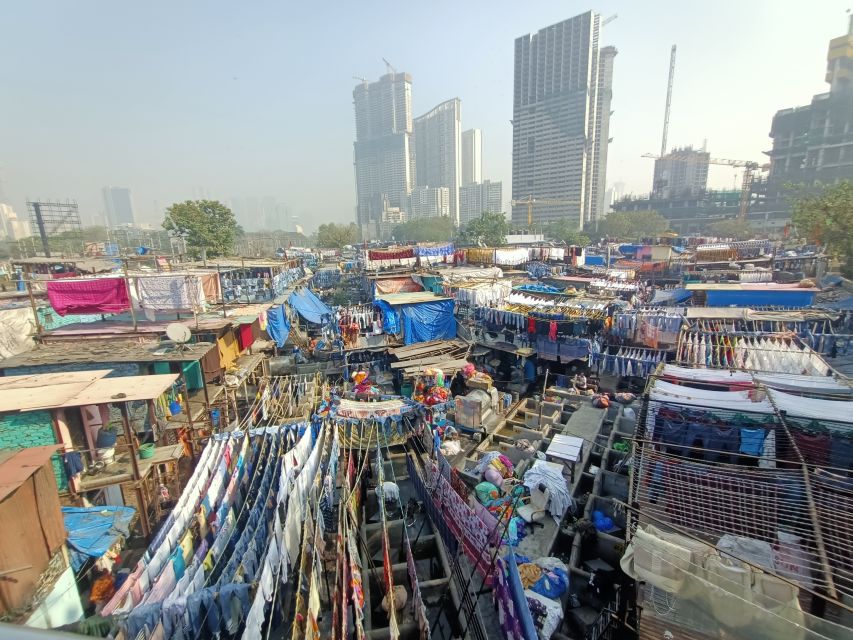
- Mahalaxmi Dhobi Ghat: the city’s largest open-air laundry in operation for over a century
- Hand-washing in action: people flog clothes in troughs, hang them to dry, then iron with bulky charcoal irons
- Photography-friendly rows of color that show the work at street level
- Dhobi Ghat history explained during your guided visit
- Optional Dharavi and train ride add-ons so you can shape the day
Mahalaxmi Dhobi Ghat: The world’s biggest open-air laundry
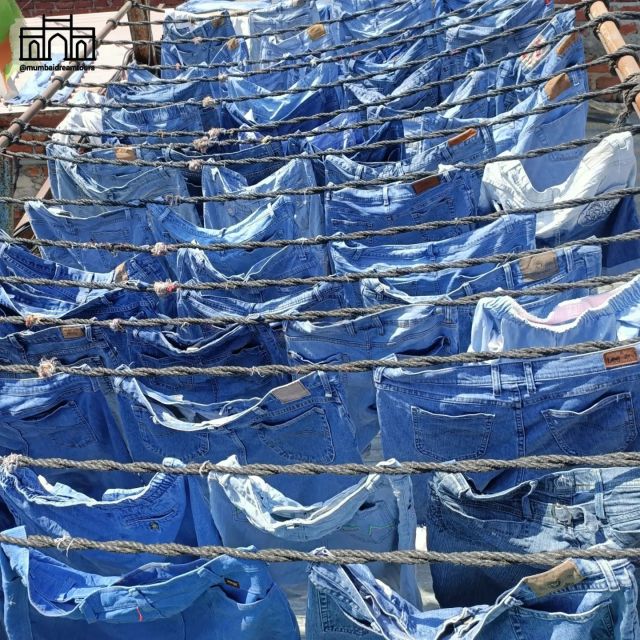
Mahalaxmi Dhobi Ghat is exactly what it sounds like: an open-air laundry facility where the work is the attraction. It’s described as the world’s largest open-air laundry, and it’s been running for more than 100 years. Instead of a museum model behind glass, you see a working system that keeps serving people across Mumbai.
What makes this place interesting is how everyday labor becomes a community routine. You’ll see clothes being brought in from all over Mumbai, and then you’ll watch how that load gets processed through the same kinds of steps that built the reputation of dhobi work in the city. This isn’t about a single moment; it’s about how the whole day runs on shifts and teamwork.
If you enjoy culture that’s practical, not performative, this tour fits. The work is physical, the visuals are strong, and the guide’s job is to connect what you’re seeing to why it still matters.
You can also read our reviews of more tours and experiences in Mumbai.


What you’ll actually see on the guided tour
The tour experience is built around a guided walk through Mahalaxmi Dhobi Ghat, with your guide explaining the history and significance of the place as you go. That structure matters because Dhobi Ghat can look chaotic if you show up with no context. With a guide, you start noticing patterns: who does what, where clothes move next, and how the workflow stays steady even when the place is busy.
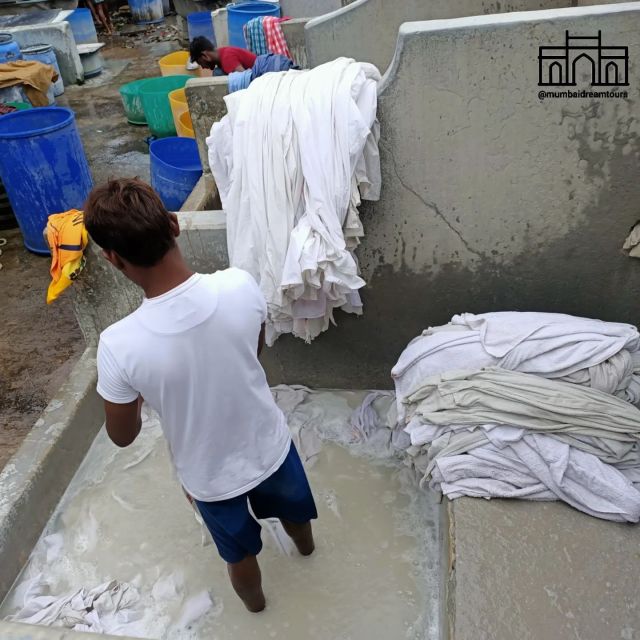
Your route will take you into the working space rather than only offering a viewpoint. One key detail: the process is largely handled by hand. That means you’ll get to understand roles and stages, like how clothes are beaten in the washing trough, then moved out to dry.
You’ll also learn that while some families use machines, much of what you’ll see here is still traditional handwork. That’s an important distinction, because it keeps the tour from feeling like “history from the past.” It’s more like “history that still has a daily schedule.”
Handwashing, drying, and charcoal ironing (in plain terms)

Here’s the workflow you’ll likely be focused on during the tour:
- Clothes are washed in troughs, often with a technique where someone flogs the fabric as part of the cleaning process.
- Clothes are then hung out to dry.
- Finally, the ironing stage uses bulky charcoal irons.
That last part is a detail worth paying attention to. The charcoal iron isn’t just a quirky tool; it explains why the work needs timing, spacing, and hands-on labor. When you understand the tools and steps, you stop thinking of Dhobi Ghat as a photo backdrop and start treating it like a functioning workplace with its own logic.
And yes, this is the kind of place where photos come easy. The work creates a grid of movement: fabric lines, washing areas, and color that stacks across the rows. It’s popular among photographers for that reason, but your guide’s explanation adds a layer most camera stops miss.
Dhobis as a team system, not one job
One of the best things the tour can teach you is that dhobi work isn’t a single-person craft. The description emphasizes that family members handle their part. You’ll hear that the work runs through shifts and that hundreds of washermen and women process clothes brought in from across Mumbai.
This is where the tour becomes more than sightseeing. It’s a window into how labor is organized in a dense city. You’re seeing coordination, not random activity. Even the pace tells a story: washing, drying, ironing all require people to be in the right place at the right time.
If you like street-level culture—how cities truly function—this tour gives you that. It also helps you notice the dignity in the craft. You’re not watching a novelty; you’re watching people do a job they’ve done for generations.
Learning on the walk: what to look for from your guide
The tour is offered in English, which makes a big difference if you want to ask questions on the spot. One guide name that shows up in the experience is Rakesh, and he’s described as relaxed and able to answer questions.
So here’s the practical way to use that. Go in with a few simple questions ready, like:
- What part of the process takes the most time here?
- Why does handwork still happen even with machines available?
- How is the work divided across shifts?
If your guide is communicative, you’ll leave with more than a set of photos. You’ll have a mental map of how the place runs.





Optional Dharavi tour: pairing two very different Mumbai stories
This tour can include a Dharavi tour if you select that option. I like this pairing because it changes your angle on Mumbai. Dhobi Ghat is about the labor that keeps daily life moving—washing, drying, finishing. Dharavi is a totally different kind of community story, and adding it can turn a short day into a broader sense of how local life works.
Just be aware: when you add Dharavi, you’ll spend more time moving between scenes, and the day can feel more intense. If you’re sensitive to crowds or want slower pacing, consider doing Dhobi Ghat only and saving extra energy for the rest of your trip.
Optional train ride: see Mumbai between the sights
There’s also an optional train ride add-on. A train ride can be a smart way to connect neighborhoods with less effort than piecing together multiple local hops on your own. It also gives you context: Mumbai doesn’t sit still between attractions, so the ride becomes part of the story.
Because the exact style and route details aren’t provided here, I’d treat it as a chance to add local movement rather than a guarantee of specific views. The value is mainly in the experience of going through the city, not in promising a particular landmark shot.
Price and value: how $11 can still be a good deal

The price listed is $11 per person, which is strikingly low for a guided cultural experience that includes access to a real working facility plus optional add-ons. For value, the big question isn’t the headline cost; it’s whether you feel you got enough time to learn what you came for.
That’s why the one caution I’ll repeat matters: one person felt the tour ended far earlier than what they believed was confirmed, which made the price feel wrong in their case. I’m not saying this is the norm, but it’s enough to justify a simple habit: before you go, check what duration you should expect and what the experience includes in that time window.
If you get a solid length guided walkthrough, this is a bargain. If the timing is short, the same price can feel stingy. So your “value” basically depends on time on-site and how well the guide uses it.
Practical tips for enjoying Dhobi Ghat more
Dhobi Ghat is a working space, so keep your expectations grounded. This isn’t a quiet gallery. It’s people doing a daily job, and you’ll be moving through areas connected to washing and drying.
A few things you can do to make it smoother:
- Bring a camera mindset, but also a curiosity mindset. Photos are easy here, yet understanding the steps is what makes the visit last.
- Ask questions about the handwork vs. machine detail, because that’s a core theme of the tour.
- If you’re adding Dharavi and/or a train ride, plan water and breaks like you would for any busy half-day.
Also, because the tour is in English, it’s a good option if you want explanations rather than just looking around.
Who should book this Dhobi Ghat tour
This tour is a strong fit if you:
- Want a real working-world experience in Mumbai, not a staged attraction
- Enjoy history that you can see in action, especially labor and everyday systems
- Like photography and want a guided understanding to go with the visuals
- Prefer an English-speaking guide
It might be less ideal if:
- You’re on a tight schedule and can’t handle the possibility of a short visit
- You dislike seeing ongoing manual labor up close
- You want only landmark sightseeing and not a workplace atmosphere
If your goal is to understand Mumbai beyond skyline photos, this is one of the more direct ways to do that.
Where it starts and ends (so you don’t waste time)
Your meeting point can vary depending on the option booked, and the activity ends back at the meeting point. If you’re combining it with other plans that day, double-check your start location so you don’t lose time hunting after the tour ends.
Should you book this Mahalaxmi Dhobi Ghat tour?
My take: book it if you want a budget-friendly, hands-on cultural stop that explains how a real working laundry still operates after more than a century. The handwashing steps—trough washing, drying, and charcoal ironing—give you something concrete to learn, and the photo opportunities add extra payoff.
I’d book with one extra bit of caution: confirm the expected duration before you commit, because at least one person reported a mismatch and that kind of letdown can erase the value fast. If you get clear timing and your guide is engaged, this is the kind of Mumbai experience you remember because it feels real.
FAQ
How much does the Mahalaxmi Dhobi Ghat tour cost?
The price is listed as $11 per person.
What is included in the tour?
You’ll get a Dhobi Ghat tour, and you can add a Dharavi tour or a train ride if you select those options.
Is the tour available in English?
Yes. The tour languages include English.
Where does the tour meet and where does it end?
The meeting point may vary depending on the option booked, and the activity ends back at the meeting point.
Can I choose Dharavi or a train ride, or both?
You can select the Dharavi tour option and the train ride option if you want them added to your experience.
What if my plans change?
You can reserve and pay later to keep plans flexible, and you can cancel up to 24 hours in advance for a full refund.