REVIEW · DHARAVI SLUM TOURS
Mumbai: Private Slum and Sightseeing Full-day tour
Book on GetYourGuide →Operated by Mumbai with Locals · Bookable on GetYourGuide
Mumbai hits you fast. This private day mixes Dharavi street life with major monuments and waterfront drama. You get a clear “how Mumbai works” storyline, not just photo stops.
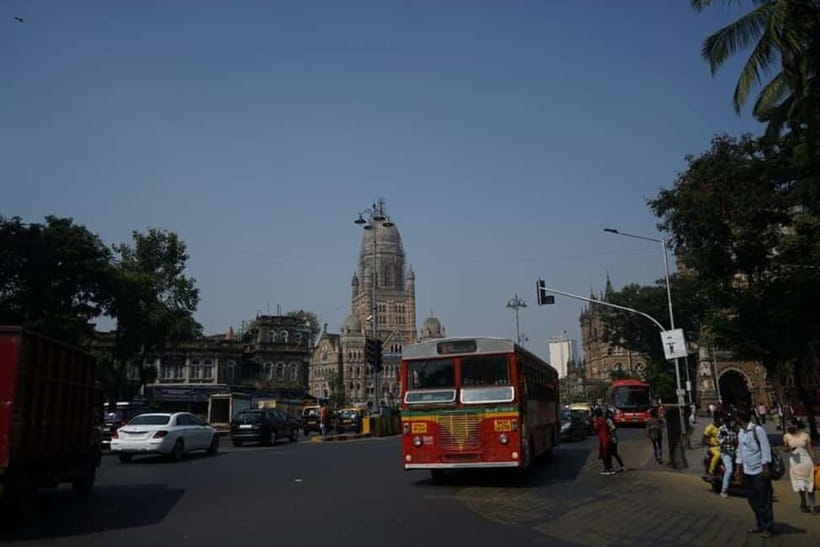
I especially like the contrast between Mahalaxmi Dhobi Ghat and the big-name landmarks. One minute you’re watching open-air laundry in action, the next you’re at Chhatrapati Shivaji Maharaj Terminus (CST), a UNESCO rail hub that looks like a grand building you’d want to linger in.
One thing to plan for: the day includes a Dharavi walk with some uneven walking, and traffic can stretch the timing between sights.
In This Review
- Key things that make this tour worth your time
- Two Mumbais in one 8-hour loop
- Gateway of India to Taj: starting where the city meets the sea
- Chhatrapati Shivaji Maharaj Terminus (CST): when a train station looks like a palace
- Crawford Market and South Mumbai landmarks: where the city buys real stuff
- Mani Bhavan: a quieter pause in the day
- Jain Temple and Banganga Tank: faith stops that feel timeless
- Mahalaxmi Dhobi Ghat: the open-air laundry you can’t unsee
- Kamla Nehru Park and Marine Drive: skyline views between street scenes
- Dharavi walking tour: how the neighborhood changes what you think you know
- Getting around: how the private car keeps the day realistic
- Price and value: what $85 buys in an 8-hour private format
- Who should book this tour (and who should skip it)
- Should you book this Mumbai Private Slum and Sightseeing Full-day tour?
- FAQ
- How long is the Mumbai private slum and sightseeing tour?
- Is this tour private or shared?
- What stops are included besides Dharavi?
- Is Dharavi included as a walking tour?
- What’s included in the price?
- Is food included?
- What language will the guide speak?
- Is the tour suitable for wheelchair users?
Key things that make this tour worth your time
- Dharavi walk is the center of gravity: about 2 hours, guided on foot through narrow lanes and local industries.
- Dhobi Ghat at Mahalaxmi: a short photo stop where you see hundreds of people washing clothes in an open-air laundry.
- CST (UNESCO) up close: a Gothic-style station that’s still a working, busy rail hub.
- Spiritual and reflective breaks: Banganga Tank and a Jain Temple stop give your brain a breather.
- Real-city context from the guide: English-speaking guidance can be strong when the team includes guides like Bala or Javed, and drivers like Pranav get praised for safer, calmer driving.
Two Mumbais in one 8-hour loop
Mumbai doesn’t do slow. It’s loud, crowded, and constantly moving—so a full-day tour only works if it strings together the right moments. This one does that by pairing the city’s headline sights with a guided visit to Dharavi, where you see how people build livelihoods and community day to day.
The structure is also practical. You get a private, air-conditioned car for getting around South Mumbai, then you shift into walking mode for Dharavi. That mix matters because you can’t really “see” Dharavi from a vehicle; you have to feel the pace of the streets.
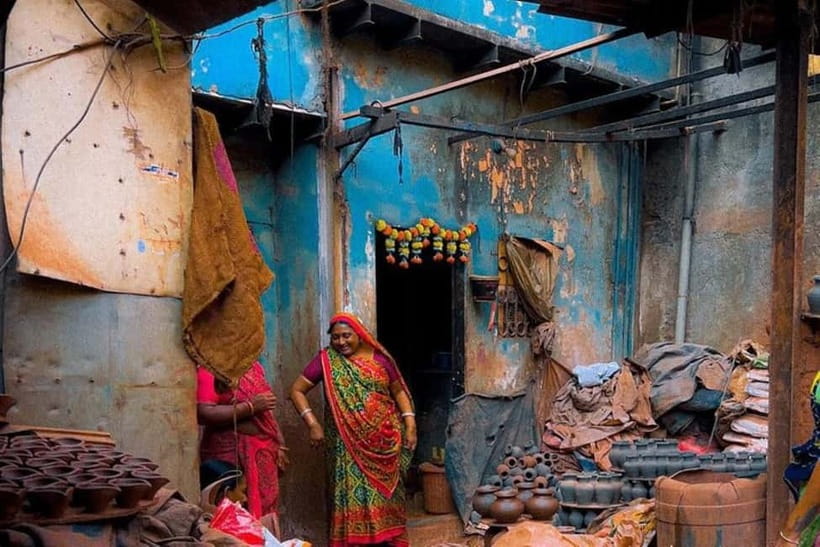
For many people, the biggest value here is perspective. Dharavi is often reduced to a single stereotype. On this tour, it’s presented as a working neighborhood tied to trades like recycling, pottery, and textiles that reach far beyond Mumbai.
You can also read our reviews of more private tours in Mumbai

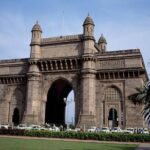
Gateway of India to Taj: starting where the city meets the sea
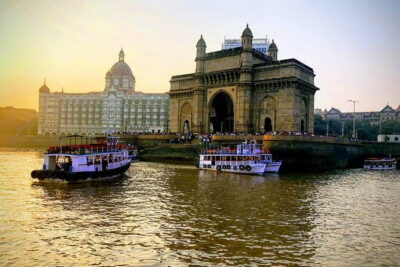
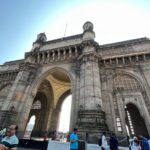
You begin at the Gateway of India, Mumbai’s most famous waterfront landmark. The setting helps right away: you’re near the water, you can catch ocean-breeze air, and you can see why this spot became a symbol.
The Taj Mahal Palace Hotel sits just across the way, so you also get a quick comparison between colonial-era grandeur and today’s Mumbai intensity. Expect a photo stop and a guided explanation that helps connect the waterfront monument to what came before.
If you’re the kind of traveler who likes to understand what you’re photographing, this is a good warm-up. If you hate standing still for photos, just keep your eyes open—there’s plenty to watch even during a short stop.
Chhatrapati Shivaji Maharaj Terminus (CST): when a train station looks like a palace

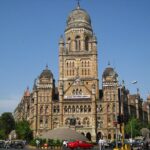
CST is the kind of place you understand even if you know nothing about architecture. It’s UNESCO-listed, and it functions as a busy rail hub, which is the key detail. You’re not visiting a museum building with no life inside it—you’re watching the station do what it was built to do.
On this tour, you get a photo stop and guided visit, about 15 minutes. That’s not long, but CST rewards quick attention: look at the Gothic-style details and then watch trains and commuters flow through the space.
This is also where a good guide helps. When the explanation includes how CST fits into the city’s colonial-era growth and later urban life, the stop turns into more than “pretty building, quick picture.”
Crawford Market and South Mumbai landmarks: where the city buys real stuff
Crawford Market is one of those stops that makes Mumbai feel like Mumbai. You’ll do a photo stop and guided visit with a short walk (around 20 minutes), and you’ll see locals shopping for everything from produce to spices.
Before you reach Crawford, you pass key South Mumbai landmarks by car, including historic Mumbai University and Bombay High Court. You don’t get the kind of long walk-through you’d get on a dedicated heritage tour, but the drive-by still helps you map the city—these aren’t random buildings. They tell you how the area shaped itself.
Tip: if you’re sensitive to crowds and noise, don’t panic. You’re not expected to wander alone. The guide keeps the experience moving so you don’t get stuck at the wrong spot at the wrong time.
Mani Bhavan: a quieter pause in the day
After the city’s street energy and market chaos, Mani Bhavan offers a different mood. You get a visit of about 30 minutes, which is enough time to slow down and focus on what the site represents.
It’s the house where Mahatma Gandhi once lived, so the value here is context. You’ll likely leave with a stronger sense of how Mumbai ties into India’s freedom struggle beyond the usual monuments.
This stop is also a useful reset if you’re tired from traffic and walking. Even when the day feels full, Mani Bhavan gives you a break from constant motion.
You can also read our reviews of more tours and experiences in Mumbai






Jain Temple and Banganga Tank: faith stops that feel timeless
This tour includes two spiritual stops that work well back to back: Jain Temple and Banganga Tank. Both are short—photo stops plus guided visits around 20 minutes each—but the effect is noticeable.
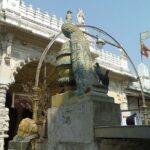
The Jain Temple stop is about looking closely at carved details and understanding how faith shows up in everyday places. Then Banganga Tank brings a different kind of calm: an ancient water tank surrounded by temples. The idea is simple—before you judge the city by its modern skyline, spend a moment where Mumbai feels older.
You’ll want to dress modestly for both stops. The tour specifically asks for respect in local communities, and that includes how you show up physically and mentally, not just what you wear.
Mahalaxmi Dhobi Ghat: the open-air laundry you can’t unsee
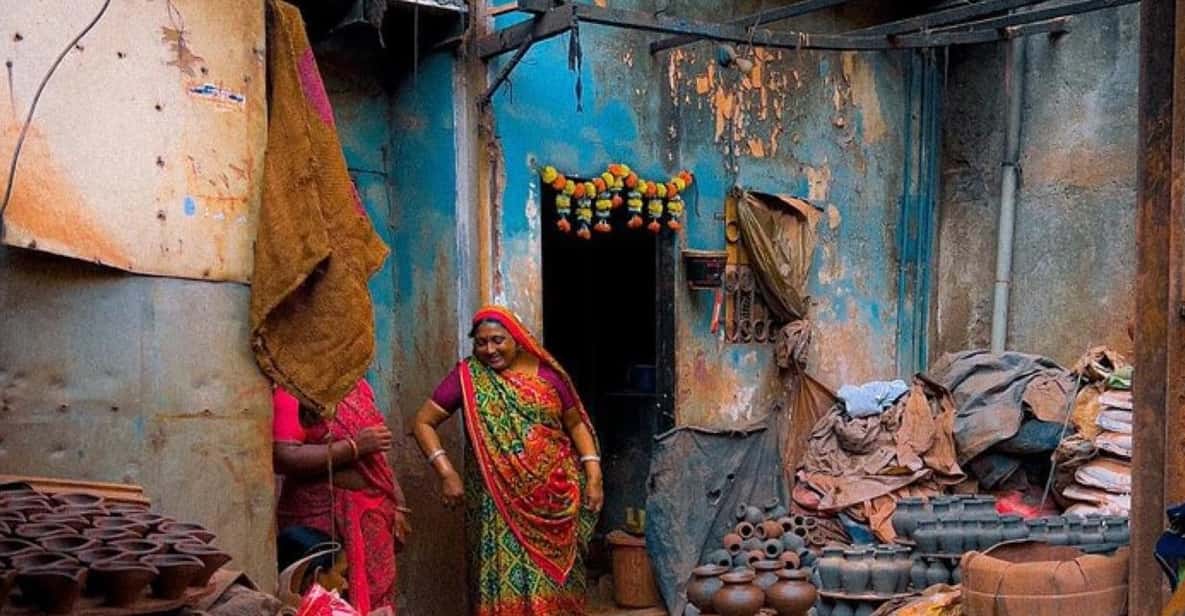
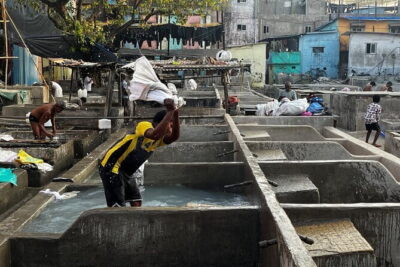
Dhobi Ghat (Mahalaxmi Dhobi Ghat) is one of the highlights people talk about because it’s active. You don’t just see a building—you see hundreds of washermen working in an open-air laundry.
On this itinerary, it’s a short stop: photo stop and sightseeing around 15 minutes. That’s enough to understand what’s happening, but not so long that you feel stuck. The visual is the point.
If you’re planning photos, aim for respectful distances. This isn’t a staged attraction. People are working, and the best photos come when you watch first, then shoot.
Kamla Nehru Park and Marine Drive: skyline views between street scenes
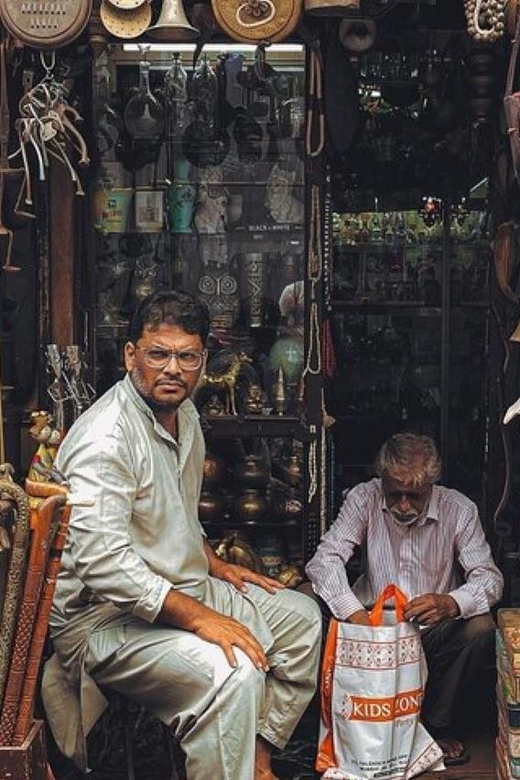
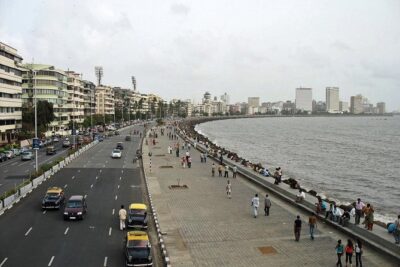
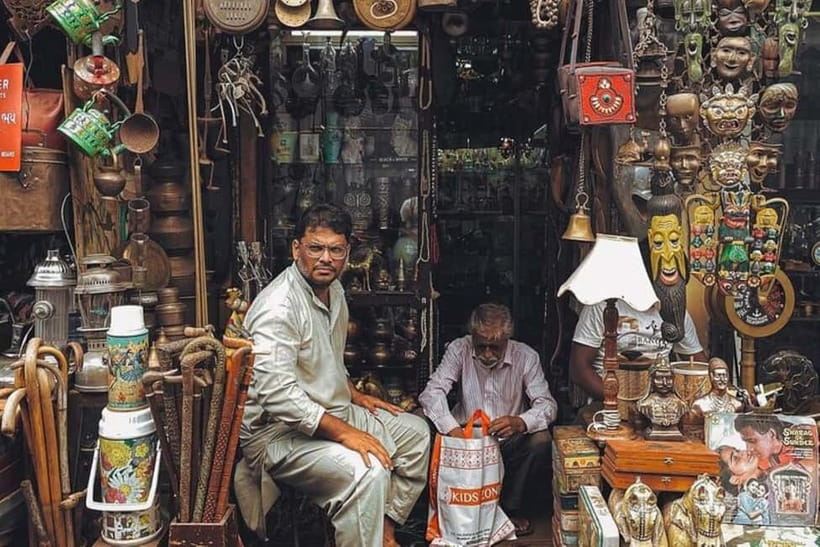
After the laundry and temple moments, the tour shifts toward views. You stop at Kamla Nehru Park for a panoramic look (about 15 minutes), then later you drive along Marine Drive toward the waterfront at sunset.
Marine Drive is known for the night look people call Queen’s Necklace, and the tour times the mood so you catch the city lighting up. You won’t get a long lounge session here, but it’s a strong payoff moment that helps you connect earlier sights into one coherent map of Mumbai.
Practical note: if you’re sensitive to glare, bring sunglasses. Those waterfront angles can be bright once the sun starts moving.
Dharavi walking tour: how the neighborhood changes what you think you know
The day’s most meaningful segment is the Dharavi walking tour. It’s guided and on foot for about 2 hours.
Here’s what makes this part different from a quick sightseeing “slum tour.” Dharavi isn’t presented as a single image. It’s shown as a community where people run small-scale industries: recycling of plastics, pottery, and textiles that can be exported. You’ll be shown the trades and the daily rhythm that keep these businesses moving.
What to look for:
- Work in progress: you’ll see how everyday tasks support livelihoods.
- Family-scale operations: many activities happen close to home, not in distant factories.
- Local networks: the same people often appear across different parts of daily life.
What to remember while you’re there:
- The tour involves walking and includes areas that can be uneven, so comfortable shoes matter.
- Dress modestly and be respectful. This is a real neighborhood, not a theme park.
- The tour is private, but the streets still move fast—stay with the guide and follow their lead.
Also, this part isn’t ideal for everyone. The tour isn’t suitable for wheelchair users or people who are visually impaired, and that’s largely due to the walking and conditions in the area.
This segment is where stereotypes get challenged. If you’re open-minded and ready to learn from how people live, you’ll likely feel the biggest shift in your understanding of Mumbai here.
Getting around: how the private car keeps the day realistic
You get a private air-conditioned car, pickup and drop-off in Mumbai, and packaged water. That matters because Mumbai traffic can be slow and unpredictable, and the tour specifically warns that traffic conditions may affect travel time between sights.
The stop lengths are short enough to keep things moving, but you’ll still feel the full day. You’ll move between landmark zones by car, then commit to walking in a few places—especially Dharavi.
If you tend to get hungry midday, plan ahead. Food and drinks aren’t included. I recommend eating before you set out and carrying small snacks if you can do that comfortably with the day’s walking.
Price and value: what $85 buys in an 8-hour private format
At $85 per person for an 8-hour private tour, the value comes from the mix. You’re paying for more than a driver—you’re paying for a guide plus private transport plus a Dharavi guided walk, all in one day.
Consider what’s included:
- Private air-conditioned car
- English-speaking tour guide (English and Hindi)
- Pickup and drop-off in Mumbai
- Packaged water
- Guided stops across multiple major landmarks
If you tried to piece this together yourself, you’d quickly run into two problems: reliable guidance (especially for context in places like Dharavi) and coordinating multiple areas efficiently in one day.
There’s no food included, so budget a little extra for that. Still, for a first-timer who wants a structured day, this price feels fair.
And yes—your guide and driver can seriously shape the experience. In the feedback tied to this tour, guides like Bala and Javed get called out for strong city and history explanations, while drivers like Pranav are praised for safer, smoother rides.
Who should book this tour (and who should skip it)
This tour is a great fit if:
- You want a full day that balances top sights with real neighborhood context
- You prefer a private guide rather than a large group
- You’re okay with walking, especially during the Dharavi segment
- You like practical explanations—how places fit into the city’s story
It may not be a good fit if:
- You need wheelchair-friendly routes or worry about mobility limits (the tour isn’t suitable for wheelchair users)
- You need fully accessible walking routes (it isn’t suitable for visually impaired people)
- You dislike community visits and prefer only monument-style sightseeing
Also, keep in mind the tour has clear rules: pets, alcohol and drugs, and nudity aren’t allowed. Stick to the modest-dress expectation so the visit stays respectful.
Should you book this Mumbai Private Slum and Sightseeing Full-day tour?
If your goal is to see Mumbai in one packed day—landmarks plus local life—this is a strong choice. The best reason to book is the guided Dharavi walk combined with major sights like CST, Gateway of India, Dhobi Ghat, and the tank-and-temple stops. It’s a lot, but it’s also organized enough that you won’t feel lost.
If you want a calm, low-walking day with minimal neighborhood exposure, you may find the Dharavi segment too much. But if you’re ready to learn, follow your guide, and wear comfortable shoes, you’ll likely come away with a clearer, more human picture of the city.
FAQ
How long is the Mumbai private slum and sightseeing tour?
It runs for 8 hours.
Is this tour private or shared?
It’s a private group.
What stops are included besides Dharavi?
You’ll also have stops such as Mahalaxmi Dhobi Ghat, Banganga Tank, a Jain Temple, Kamla Nehru Park, Mani Bhavan, Gateway of India, Chhatrapati Shivaji Maharaj Terminus (CST), and Crawford Market.
Is Dharavi included as a walking tour?
Yes. Dharavi is guided and includes walking for about 2 hours.
What’s included in the price?
Pick-up and drop-off, a private air-conditioned car, an English-speaking tour guide, and packaged water are included.
Is food included?
No. Food and drinks are not included.
What language will the guide speak?
The live guide is available in English and Hindi.
Is the tour suitable for wheelchair users?
No. It’s not suitable for wheelchair users, and it’s also not suitable for visually impaired people.