REVIEW · ELEPHANTA CAVES TOURS
Full Day Mumbai Sightseeing With Elephanta Caves Private Tour
Book on Viator →Operated by Linda Tours Mumbai · Bookable on Viator
Seven hours that moves fast.
This private day combines Elephanta Caves (UNESCO rock-cut Hindu sculptures) with major South Mumbai sights like Gateway of India, Chhatrapati Shivaji Maharaj Terminus, and Marine Drive. It’s a smart way to see the big icons and the myth behind them without wrestling the city on your own.
I especially like the tight structure of the day: you get a full block at Elephanta (about 4 hours) and then a focused sweep through landmarks in South Mumbai. I also like the human touch. In real trip stories, guides named Shruti and drivers like Pravin were praised for being organized, flexible with what you want to see, and patient when plans shift.
One consideration: this is a lot of moving. You should have a moderate physical fitness level, and one past guest specifically warned to be ready to walk a lot.
In This Review
- Key highlights you should know before you go
- A full-day hit list of Mumbai and the Elephanta myths
- Elephanta Caves: UNESCO rock sculpture time (about 4 hours)
- Gateway of India and Flora Fountain: the photo stops with a story attached
- Gateway of India
- Flora Fountain at Hutatma Chowk
- Chhatrapati Shivaji Maharaj Terminus and Rajabai Clock Tower: rail grandeur meets university architecture
- Chhatrapati Shivaji Maharaj Terminus (CSMT)
- Rajabai Clock Tower at the University of Mumbai
- Dhobi Ghat and Mani Bhavan: everyday Mumbai plus Gandhi’s Mumbai HQ
- Dhobi Ghat (Mahalaxmi Dhobi Ghat)
- Mani Bhavan Gandhi Museum
- Hanging Gardens and Marine Drive: a breather with sea-air vibes
- Hanging Gardens (Pherozeshah Mehta Gardens)
- Marine Drive
- Price and value: what $98 buys you in a city this big
- The day’s pace: why you should pack for comfort
- Who this private tour is best for
- Should you book this Mumbai Elephanta day?
- FAQ
- How long is the Mumbai sightseeing with Elephanta Caves tour?
- What’s included in the price?
- Is pickup included?
- Are admission tickets included for the stops?
- Is this a private tour?
- Can I cancel for a full refund?
Key highlights you should know before you go
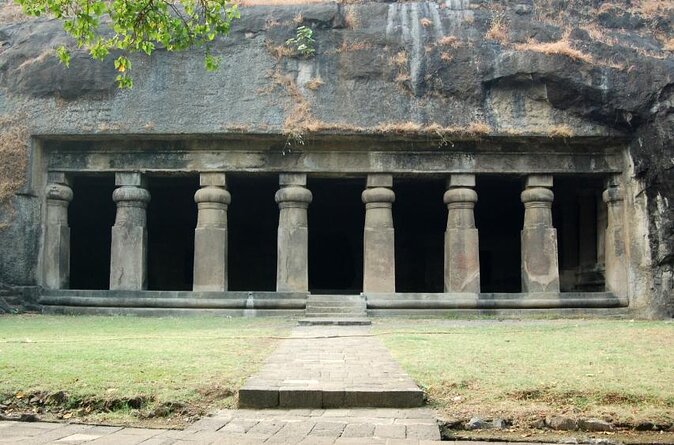
- Elephanta Caves first: about 4 hours at the UNESCO site with carved deities and major photo views.
- Private group experience: only your group rides together in an air-conditioned vehicle.
- South Mumbai icon sweep: Gateway of India, Flora Fountain, CSMT, Rajabai Clock Tower, Dhobi Ghat, Gandhi’s Mani Bhavan, Hanging Gardens, and Marine Drive.
- Guide-led pacing: an English-speaking guide with room to adjust to your requests.
- Admission included where noted: many stops have tickets included, while a couple are free (like Rajabai Clock Tower).
A full-day hit list of Mumbai and the Elephanta myths
This tour is built for people who want a lot, in a manageable order. You start with the one thing most visitors actually travel for: the Elephanta Caves on Elephanta Island (Gharapuri). After that, you shift back to South Mumbai and see why the city feels split into eras—colonial architecture, rail-station grandeur, Gandhi-era memory, and everyday life.
You’ll cover famous landmarks you’ve probably seen on postcards, but the day is paced like a tour guide actually has a plan (not like a random grab-bag). The vehicle ride keeps you comfortable in traffic, and the English-speaking guide is there to connect the dots: what you’re seeing, why it matters, and what to watch for while you’re there.
And yes, it’s private, so the day doesn’t get diluted by strangers slowing you down or speeding ahead. The best part of a private day is that your questions can steer the conversation—whether you care more about architecture, religion, or the grit of real city life.
You can also read our reviews of more private tours in Mumbai

Elephanta Caves: UNESCO rock sculpture time (about 4 hours)
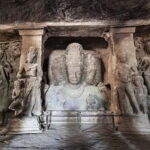
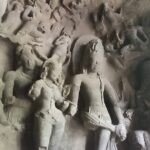
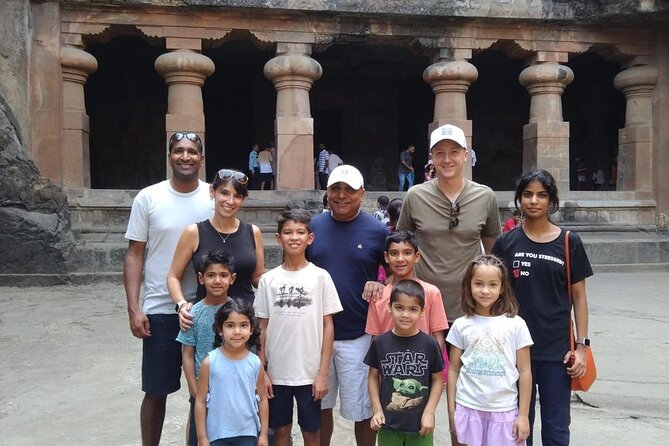
Elephanta Caves are the heart of this experience. The site is carved out of solid rock, and it’s famous for intricate sculptures depicting Hindu deities. You’ll also hear the location explained as two hillocks separated by a tight valley on Elephanta Island, which helps make the place feel like it was designed for quiet focus rather than casual sightseeing.
Why I like this as a first stop: starting here keeps your momentum. Elephanta is the hardest mental shift of the day—suddenly you’re not just looking at Mumbai’s skyline. You’re standing in a carved world of gods, symbols, and ancient artistry.
What to expect during your time there:
- You’ll have a long enough window (about 4 hours) to see the main carved areas without feeling rushed.
- The sculptures are detailed, so don’t expect a 20-minute glance and move on. Even if you’re not a museum person, take your time—this is one of those places where the details reward patience.
Practical note: this is a day that asks for a steady pace. Even if the walking level varies by route, plan for a physically active outing. Past guests have specifically advised bringing comfort in mind—this is not a sit-back-and-scroll tour.
Gateway of India and Flora Fountain: the photo stops with a story attached
After Elephanta, you return to Mumbai and hit the classic “start here” landmarks.
Gateway of India
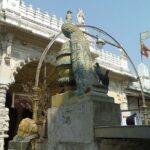
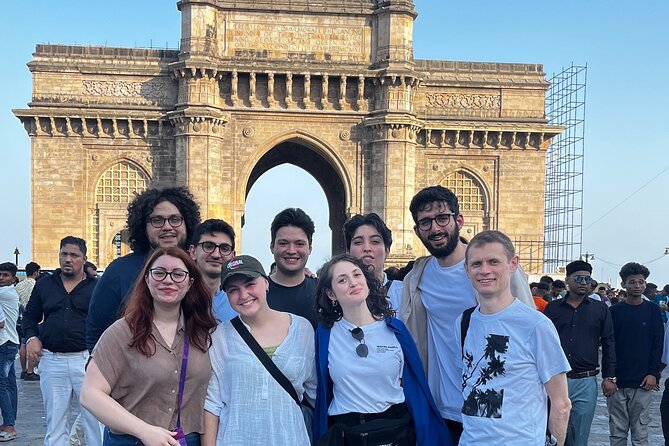
The Gateway of India is an arch monument built in the 20th century. It was erected to commemorate the landing of King-Emperor George V and Queen-Empress Mary. This stop works because it’s not just a landmark—it’s a reminder of how Mumbai’s shoreline and power politics have always been connected.
You don’t need to overthink it: stand close, look up at the shape, and then take a wider shot that includes the surrounding city mood.
Flora Fountain at Hutatma Chowk
Next is Flora Fountain, located at Hutatma Chowk (Martyr’s Square). It’s described as ornamentally sculpted and sits at the southern end of Dadabhai Naoroji Road. If Gateway gives you scale, Flora Fountain gives you detail. It’s also a good pause point where your guide can frame what you’re about to see in the city’s older core.
These stops are short, but that’s a feature here. They’re anchors—once you’ve looked at them, the rest of the day starts clicking into place.
You can also read our reviews of more tours and experiences in Mumbai




Chhatrapati Shivaji Maharaj Terminus and Rajabai Clock Tower: rail grandeur meets university architecture
Mumbai has a thing for dramatic buildings, and this stretch proves it.
Chhatrapati Shivaji Maharaj Terminus (CSMT)
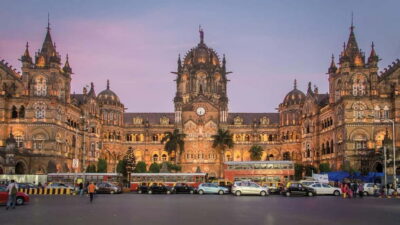
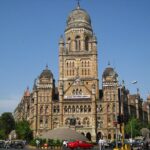
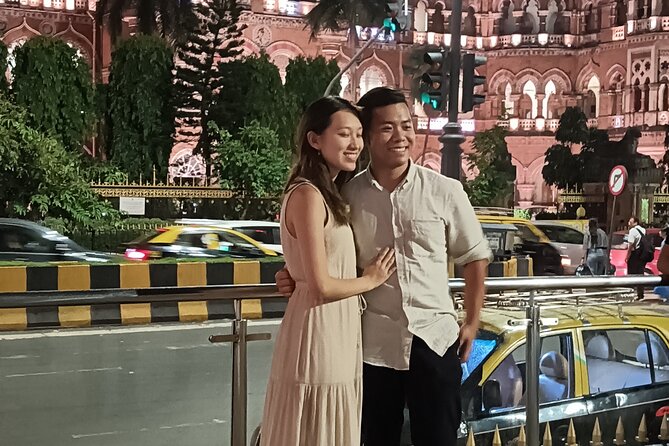
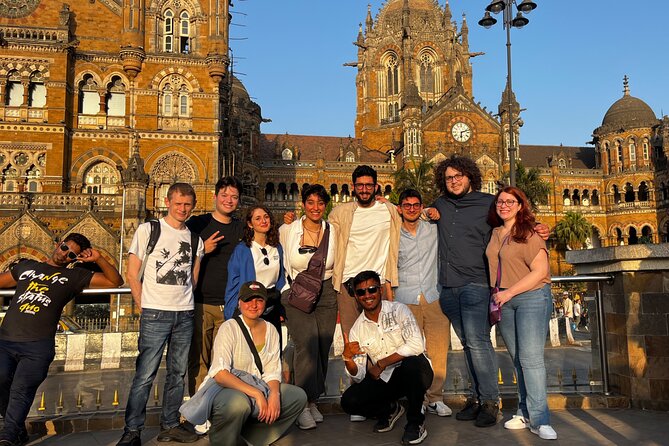
Chhatrapati Shivaji Maharaj Terminus—formerly known as Victoria Terminus—is a historic train station and a UNESCO World Heritage Site. Even if you’re not planning to ride trains today, this is worth it for the sense of ceremony the building projects.
A rail terminal is also a practical stop in a city like Mumbai: you can see how transportation and urban identity blend. And since this tour includes admission for many stops, you’re not left outside squinting.
Rajabai Clock Tower at the University of Mumbai
Then comes Rajabai Clock Tower, part of the University of Mumbai’s Fort campus. It’s about 85 m (280 ft) tall, and it’s there for a reason: clock towers are meant to be seen, and in a city this energetic, they’re a form of public timekeeping and pride.
The cool part is that this stop is free (no admission ticket required on the tour plan). In other words, you get a big architectural moment without paying extra for a quick look.
Dhobi Ghat and Mani Bhavan: everyday Mumbai plus Gandhi’s Mumbai HQ
This is where the day turns human.
Dhobi Ghat (Mahalaxmi Dhobi Ghat)
Dhobi Ghat is an open-air laundromat where washers (called dhobis) work in the open to clean clothes and linens from Mumbai’s hotels and hospitals. It was constructed in 1890. Seeing it in person adds texture that you won’t get from buildings alone.
What you’ll likely notice:
- This isn’t staged. It’s a working space, so your guide’s advice on how to observe respectfully matters.
- It’s a snapshot of labor, logistics, and city rhythm all at once.
Mani Bhavan Gandhi Museum
Next is Mani Bhavan Gandhi Museum, which served as Gandhi’s Mumbai headquarters for about 17 years (1917 to 1934). The mansion belonged to Revashankar Jagjeevan Jhaveri, who was a friend and host of Gandhi in Mumbai during that period.
This stop changes the tone again. You go from daily work to political memory. And because Gandhi’s presence is tied to this specific house, it feels less like reading history and more like standing in a chapter.
If you like meaningful context, you’ll appreciate that the guide can connect the museum’s timeline to the broader story of India’s independence movement.
Hanging Gardens and Marine Drive: a breather with sea-air vibes
After heavy stops (caves, then history), you get lighter scenery.
Hanging Gardens (Pherozeshah Mehta Gardens)
The Hanging Gardens, also known as Pherozeshah Mehta Gardens, are terraced gardens on Malabar Hill, on its western side, opposite Kamala Nehru Park. Terraces make the gardens feel like a layered viewpoint, and that layout is great for short pauses when you need to recover your legs.
This is also a spot where you can take in Mumbai’s skyline rhythm without it being another building lecture.
Marine Drive
Finally, you finish with Marine Drive, a 3.6-kilometer-long boulevard in South Mumbai. It’s described as a C-shaped six-lane road, constructed by Bhagojisheth Keer and Pallonji Mistry.
Marine Drive is classic Mumbai: you can feel the city’s connection to the water and the long habit of promenade-style sightseeing. You don’t need a grand plan here—just use the time to breathe and let the day’s visuals settle.
Price and value: what $98 buys you in a city this big
At $98 per person, this tour can look like a splurge until you break down what’s covered. You get:
- A private setup in an air-conditioned vehicle
- An English-speaking guide
- All fees and taxes
- Bottled water
- A mobile ticket
- Admission tickets for multiple stops (with at least one explicitly noted free stop)
Here’s why that matters in Mumbai: transit time and ticket management are real headaches. Having an organized day that strings together distant sights saves you time and reduces the chance of wasting half your day figuring things out.
If you’re traveling with limited time, you’re essentially buying efficiency plus a local narrator. For many visitors, that’s exactly the trade-off worth paying for—especially when you’re also spending a large chunk of the day at Elephanta.
One more practical note: breakfast isn’t included. So plan a meal before you start, or expect to pick up something later on your own.
The day’s pace: why you should pack for comfort
This is a 7 to 8 hour outing, which sounds “normal” until you realize you’re stacking major sights plus a long cave session. Expect a schedule that moves.
What helps:
- The air-conditioned vehicle reduces fatigue between stops.
- The guide pacing keeps the day from turning into a stampede.
- The tour is private, so the guide can slow down if you need time at a specific viewpoint.
But I’ll repeat the key caution: plan for walking. One guest specifically said it’s a good experience if you can walk a lot. In practice, that means wear shoes you trust, and bring water-refill-friendly habits even though bottled water is provided.
Also, confirmation comes at booking time, and the plan says you’ll have a moderate physical fitness level—so this is best for active sightseers, not people who want an easy-chair day.
Who this private tour is best for
This fits best if you:
- Want Elephanta Caves plus South Mumbai landmarks in one go
- Are short on time and don’t want to stitch together multiple half-days
- Appreciate a guide who can answer questions and adjust when priorities change
It’s especially good for travelers who like both sides of Mumbai: the monumental and the ordinary. You get UNESCO carvings and then a working laundromat. You get Gandhi’s headquarters and then ocean-facing views.
Should you book this Mumbai Elephanta day?
If you’re trying to choose between “a quick city highlights tour” and “a serious day with Elephanta,” I’d lean toward booking this one. It offers a solid balance: the caves take the time they deserve, and the rest of the day stays focused on major South Mumbai anchors you can’t easily prioritize on your own in a limited time window.
If you hate walking, or you’re looking for a slow-paced day with minimal movement, this may feel like too much. But if you can handle a full sightseeing day, this is a strong value: organized, ticketed, guided, and built around the sights that define Mumbai.
FAQ
How long is the Mumbai sightseeing with Elephanta Caves tour?
It runs about 7 to 8 hours.
What’s included in the price?
The tour includes bottled water, an air-conditioned vehicle, all fees and taxes, and an English-speaking guide. Admission tickets are included for multiple stops, and you receive a mobile ticket.
Is pickup included?
Yes, pickup is offered.
Are admission tickets included for the stops?
Admission tickets are included for Elephanta Caves and for several other stops listed in the plan, and Rajabai Clock Tower is noted as free.
Is this a private tour?
Yes. It’s a private tour/activity, so only your group will participate.
Can I cancel for a full refund?
Yes. Free cancellation is available up to 24 hours in advance for a full refund. If you cancel less than 24 hours before the start time, the amount paid will not be refunded.