REVIEW · LUNCH EXPERIENCES
Mumbai Sightseeing Tour by Public Transport with family Lunch
Book on Viator →Operated by Mystical Mumbai · Bookable on Viator
Mumbai looks different from the bus windows. This tour keeps you moving like locals, with an English-speaking guide who explains what you’re seeing and how Mumbai’s daily life actually works.
What I like most is the mix of famous sights and real routines: you’ll ride the rail corridor near Chhatrapati Shivaji Maharaj Terminus and then spot the dabbawallas delivering lunchboxes. The second big win is the family lunch with your guide at Banganga, which turns a sightseeing day into something more human and relaxed.
One consideration: the schedule packs in eight stops, so some locations are quick hits. If Dhobi Ghat isn’t your thing, flag it early—you may have the chance to adjust the plan, but the day still runs on time.
In This Review
- Key highlights you’ll care about
- How the public-transport format changes the whole experience
- Regal Cinema and Chhatrapati Shivaji Maharaj Terminus: the day starts with real Mumbai
- Dhobi Ghat: watching labor up close (and when to swap it)
- Churchgate Railway Station and dabbawallas: the lunch system at human speed
- Marine Drive’s Queen’s Necklace walk: postcard views, but with street-level context
- Banganga: quiet rituals, and the family lunch that makes the day feel personal
- Jain Temple and the Hanging Gardens of Malabar Hill: calm heights after the crowds
- Price and timing: is $50 per person good value?
- Guide style is the secret ingredient here
- Who should book this public-transport Mumbai tour
- Should you book this Mystical Mumbai tour?
- FAQ
- How long is the Mumbai Sightseeing Tour by Public Transport?
- Is lunch included, and where do you eat?
- Does the tour include pickup?
- Are admission tickets included for the stops?
- Is this a private tour?
- Can I cancel for a full refund?
Key highlights you’ll care about
- Public transport focus: You’ll explore with transit routes that show how Mumbai moves, not a staged loop.
- Old cinema start: Regal Cinema kicks off the day and sets a local, not-temple-only tone.
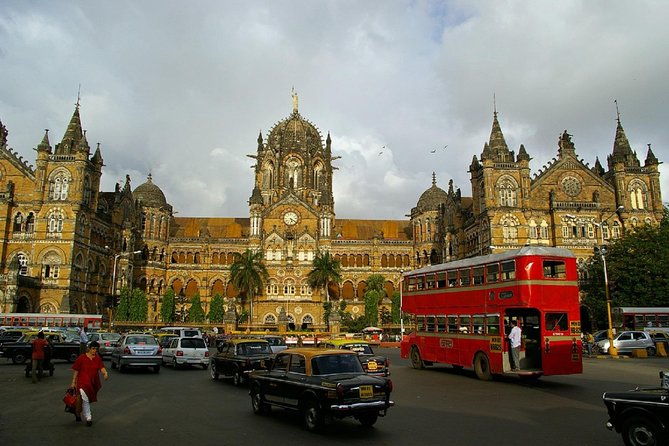
- CSMT area views: The Gothic Victorian energy around Chhatrapati Shivaji Maharaj Terminus is instantly memorable.
- Dabbawala lunch system watch: Churchgate is where the delivery rhythm becomes visible, including the scale of lunchboxes.
- Banganga lunch stop: You’ll get a family lunch with your guide right where rituals happen.
- Malabar Hill finishing stretch: Jain Temple and the Hanging Gardens add calm viewpoints after the city energy.
How the public-transport format changes the whole experience
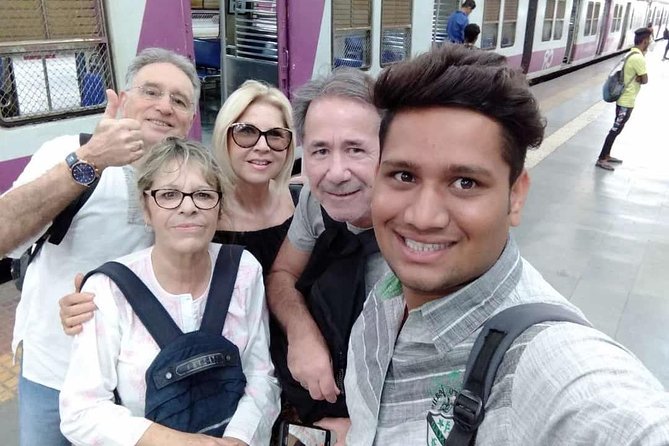
This is the kind of Mumbai tour that makes sense for a first trip. Instead of hopping in and out of a private vehicle all day, you use public transport and see the stations, streets, and flow of people the way residents do.
That matters because Mumbai’s landmarks can feel like postcards if you only look from the outside. With transit in the middle of the plan, you get context. Your guide can point out what’s going on around you—who’s commuting, how crowds move, and why certain places feel like hubs rather than isolated sights.
A practical bonus: you’re not stuck waiting for long transfers. Pickup is offered, and the tour starts in the Fort area by Ballard Pier (or Alexandra Dock / Green Gate area), which is convenient for getting into the city rhythm.
You can also read our reviews of more tours and experiences in Mumbai

Regal Cinema and Chhatrapati Shivaji Maharaj Terminus: the day starts with real Mumbai
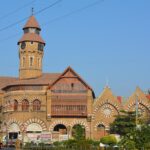
The tour kicks off at Regal Cinemas, one of the city’s older movie theaters. It’s a simple start, but it works. You’re not dropped into history silently—you’re introduced to a living part of Mumbai culture: film-going and the kind of built environment that has served people for generations.
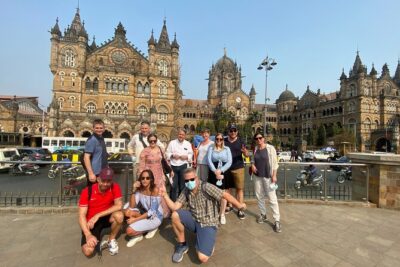
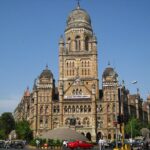
Then you head to Chhatrapati Shivaji Maharaj Terminus (CSMT), described as a high Gothic Victorian landmark and the centerpiece of the city’s suburban train network. Even if you’re not a rail fan, you’ll feel why this place matters. CSMT isn’t just pretty architecture. It’s a functional machine where daily movement happens at scale.
You’ll spend time here, and the best value is what your guide can connect for you: the landmark you see up front and the commuter reality happening behind it. This is one of those stops where a little interpretation turns a quick photo moment into something that sticks.
Dhobi Ghat: watching labor up close (and when to swap it)
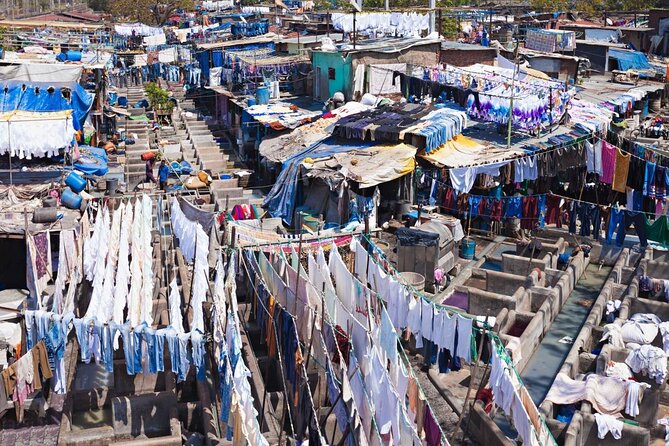
Next is Dhobi Ghat, an open-air laundromat in Mumbai. It was constructed in 1890, and the idea is straightforward: dhobis (washer workers) clean hotel and hospital linens and clothes in the open air.
This is one of the stops that makes the tour feel more like “how the city works” and less like “look at famous buildings.” You’re seeing an everyday service that’s been part of the city’s functioning for a long time.
Here’s the consideration. Watching an active laundromat can be fascinating for some people and not-so-pleasant for others—especially if you’re sensitive to the close-up nature of labor. The good news is flexibility shows up in this tour style. In at least one experience, the group didn’t want to go to Dhobi Ghat, and the guide took them elsewhere. If you think this might be a dealbreaker for your family, tell your guide early in the day so the plan can adapt.
Churchgate Railway Station and dabbawallas: the lunch system at human speed
At Churchgate Railway Station, the tour focuses on something wonderfully specific: the dabbawallas and how they deliver lunchboxes. You’ll also hear the scale—about 200,000 lunchboxes every single day.
This is one of the most practical “Mumbai by the numbers” moments in the whole route. It’s easy to understand why your guide pushes you to look carefully here. You’re watching people coordinate a daily delivery pipeline while you stand in the station world that makes it possible.
If you’re traveling with kids, this stop is a strong winner because it turns logistics into a story. It’s not abstract. It’s visible. If you want to see how organization beats chaos, Churchgate gives you that in a way few cities can.
Marine Drive’s Queen’s Necklace walk: postcard views, but with street-level context
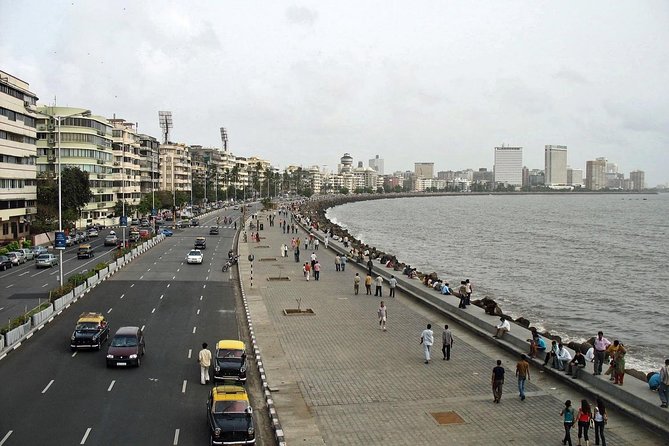
Then you head to Marine Drive, Mumbai’s famous boulevard, for a short walk. This stretch is known as the Queen’s Necklace, a nickname tied to the curve of the shoreline road and the way lights can look from a distance.
A short stop here can feel like filler on a tight itinerary—but it doesn’t have to be. When your day already includes stations and work sites, Marine Drive becomes a reset. You get open space and sea air energy (as much as you can in a city day), and you see how people relax and take photos in the middle of a metropolis.
The best approach is simple: keep moving, take a few photos, and actually watch how pedestrians use the walkway. You’re not just collecting a view; you’re noticing how Mumbai transitions from work to leisure.

Banganga: quiet rituals, and the family lunch that makes the day feel personal
Next is Banganga, where underground springs fill a holy tank used for rituals and prayers. You’ll hear it described as the Ganges of Mumbai, and the point of the stop is the contrast: a busy city, then a space where people come for quiet, routine, and devotion.
This stop is especially valuable because it slows the day down. Before Banganga, the pace is travel-and-look. Here, it’s more about being respectful and observing how the space is used.
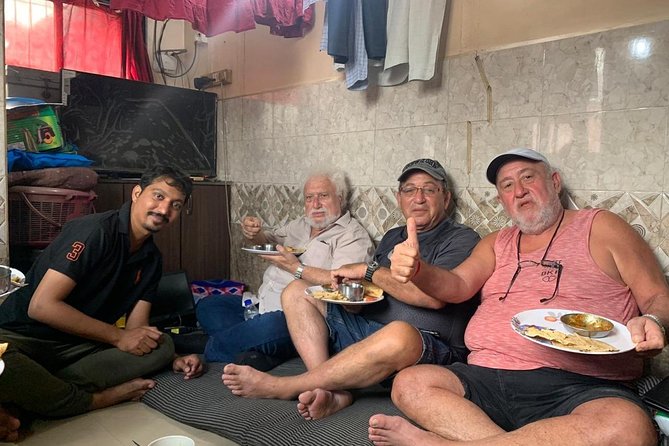
And then comes the part that turns this from a generic sightseeing day into something you’ll remember: family lunch with your guide. Eating together changes the whole dynamic. You can ask questions, get recommendations for the rest of your trip, and get better context on what you just saw.
If you’re traveling as a family, this is the moment that can keep everyone happy. Kids get a break; adults get conversation; nobody’s stuck “rushing to the next thing” for a while.
Jain Temple and the Hanging Gardens of Malabar Hill: calm heights after the crowds
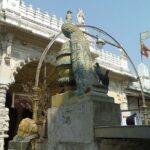
After lunch, the tour heads to Jain Temple – Mumbai, located in the Walkeshwar Teen Batti area on Malabar Hill. The temple is said to have been built in 1904 and is considered a tirth place visited by Jain Deravas (as referenced in the tour description).
Even with a short visit, this is a meaningful stop because the location is specific. Malabar Hill isn’t just a random viewpoint—it’s a set of neighborhoods and elevated spaces that feel different from the lower-city areas you’ll have walked through.
The final stop is the Hanging Gardens, also known as Pherozeshah Mehta Gardens, perched on terraced levels at the top of Malabar Hill, opposite Kamala Nehru Park. This is where you end with greenery and a “step back” feeling.
Again, eight stops in six hours means these are not long sit-down visits. But that’s also part of the value: you finish your tour with a change of scenery rather than ending again in station-crowd mode.
Price and timing: is $50 per person good value?
At $50.00 per person for about 6 hours, this tour is priced in the middle range for Mumbai half-day style experiences. What makes it feel like better value is what’s included in practice:
- Pickup is offered
- You get an English-speaking guide
- You use a mobile ticket
- The listed stops include free admission for each location on the route
- There’s a family lunch included with the guide
When you compare that to tours that charge extra for entry fees or drop the lunch entirely, the math starts to look fair. You’re paying for the guide time and the transit-based organization, and you’re not getting socked with multiple ticket costs at each stop.
Timing-wise, you’ll want to be realistic: each stop is designed to fit into the day, so some locations are short. If you love slow travel, you might wish you had more time at a favorite site. If you like a well-led sampler that shows you the city’s mix, the pacing fits.
Guide style is the secret ingredient here
The tour’s success depends on the guide. In the feedback tied to this experience, different guides came through with distinct strengths:
- Aarti is described as extremely articulate and caring, with clear explanations.
- Nikesh is praised for being fun, joking, and able to answer questions fully.
- Anthony is noted for being patient and helping people feel safe even with big crowds.
You don’t always control who you get, but you can control how you prepare. If you want the day to run smoothly for your family, think of questions you’d like answered before the tour begins. For example: How does the dabbawala system work day-to-day? Why do places like CSMT function like city engines? What’s the meaning behind rituals at Banganga?
A good guide turns those answers into a day that feels smarter, not just louder.
Who should book this public-transport Mumbai tour
This tour fits you if:
- You want Mumbai local life, not only monuments
- You’re okay with short stops and moving between sights
- Your family would enjoy a mix of stations, neighborhoods, and a lunch break
- You like learning how systems work (train networks, lunch delivery, ritual spaces)
It may not be the best fit if:
- You’re expecting long guided time at each attraction
- Dhobi Ghat is a hard no for your group
- You strongly prefer a fully private vehicle itinerary for comfort
The nice part is that the tour style includes at least some flexibility. If your group has a clear preference, the guide may be able to adjust what you see (at least in some cases), instead of forcing a stop that won’t land for you.
Should you book this Mystical Mumbai tour?
If you’re trying to understand Mumbai in one organized day, I’d say this is a smart pick. The combination of public transport, major landmarks like CSMT and Marine Drive, and the day-ending calm of Malabar Hill gives you a real sense of the city’s range. Add the family lunch at Banganga, and it stops being a checklist and starts feeling like a shared experience.
Book it if you want practical sightseeing with a guide who can explain what you’re seeing as you move. Skip or reconsider if you hate crowd logistics or you know your family won’t enjoy Dhobi Ghat.
If your goal is to leave Mumbai with stories you can repeat—stations, lunch systems, and ritual spaces—this tour delivers.
FAQ
How long is the Mumbai Sightseeing Tour by Public Transport?
It runs for about 6 hours.
Is lunch included, and where do you eat?
Yes. You’ll have a family lunch with the guide at Banganga.
Does the tour include pickup?
Yes, pickup is offered.
Are admission tickets included for the stops?
The tour lists admission tickets as free for each stop.
Is this a private tour?
Yes. It’s private, and only your group participates.
Can I cancel for a full refund?
Yes. You can cancel up to 24 hours in advance for a full refund. If you cancel less than 24 hours before the start time, the amount paid isn’t refunded.