REVIEW · TEMPLE & SPIRITUAL TOURS
Banganga Walkeshwar Walking Tour
Book on Viator →Operated by Mumbai Dream Tours · Bookable on Viator
A half-day walk with real Mumbai texture is hard to beat. This Banganga Walkeshwar Walking Tour focuses on older layers of the city: temple lanes, the Banganga Tank, and the big visual moment of Dhobi Ghat. I like the way it turns landmarks into stories, especially around Walkeshwar’s temples and those light-filled pillars at Banganga.
Two things I really like: the English-speaking guide who explains what you’re seeing (not just where it is), and the small-group feel capped at 15 travelers. One possible consideration: this is a walking tour in an active religious neighborhood, so you’ll want comfortable shoes and a flexible mindset if it feels busy or uneven underfoot.
In This Review
- Key Things You’ll Notice on This Walk
- Why Walkeshwar and Banganga Still Feel Old Mumbai
- Where You Start: Hotel Banganga Arogya Bhavan
- Walkeshwar: Temples, Pallias, and the Tank Steps Everyone Uses
- A practical note on walking this section
- Deepstambhas and Temple Lore: The Pillars of Light
- Stop 2: Banganga Street and the Narrow Lane World
- How to handle this emotionally (without pretending you can fix anything)
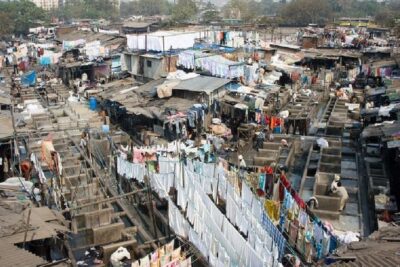
- Dhobi Ghat: Open-Air Laundry Built by the British
- Price and Value: $18.13 for a Real 2.5-Hour City Lens
- What the Guides Do Differently (and Why It Changes Everything)
- What to Bring (So the Walk Feels Easy)
- Who This Tour Fits Best
- Should You Book This Banganga Walkeshwar Walking Tour?
- FAQ
- How long is the Banganga Walkeshwar Walking Tour?
- Where does the tour start and end?
- How much does it cost?
- Is food included?
- What language is the guide?
- Do I need to pay admission fees?
- How big is the group?
- Can I cancel for a refund if plans change?
- Is this suitable for most people?
Key Things You’ll Notice on This Walk

- Walkeshwar’s temple cluster: you’ll trace a set of temples and hear what makes each one matter
- Banganga Tank steps in daily life: a place for kids, neighbors, drying clothes, and puja
- Deepstambhas (pillars of light): entrance markers with temple lore tied to saints
- Dhobi Ghat at open-air scale: you’ll see laundry work that dates back to British-built facilities
- Life along a narrow lane: temples, homes, and dharamsalas packed into a small corridor
- Human complexity nearby: the area includes long-term migrant communities living close to the religious core
Why Walkeshwar and Banganga Still Feel Old Mumbai
Mumbai can change fast, but Walkeshwar and Banganga hold onto daily routines that feel stubbornly old. You’re not just looking at sights from a distance—you’re walking through a living religious zone where people actually use the spaces around them. That’s where the tour earns its keep.
The tour is also framed as a strong first taste of the city’s major landmarks (think big-name sights like Victoria Terminus, Gateway of India, and the Bombay High Court). But the on-the-ground walking time you’ll spend here is concentrated around Walkeshwar and Banganga, so you get a more human, street-level view than a quick photo stop circuit.
The best part is how the guide links the place to meaning. You’ll go from sight to story fast, especially around the temples and tank area, where daily life and faith sit side by side.
You can also read our reviews of more walking tours in Mumbai



Where You Start: Hotel Banganga Arogya Bhavan
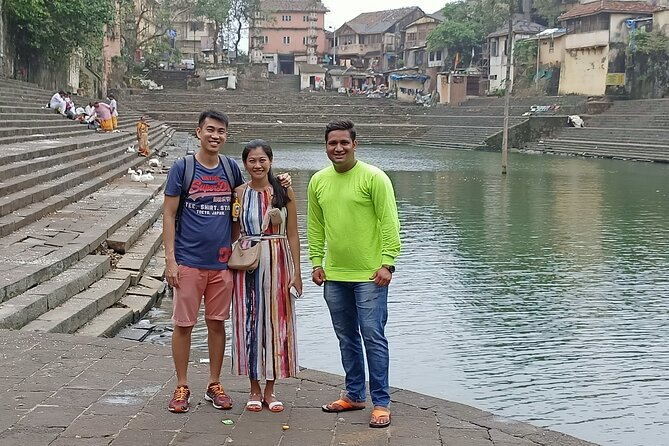
Your day begins back at the same place: Hotel Banganga Arogya Bhavan, near Banganga in Walkeshwar (Malabar Hill area). This matters more than it sounds. When a walk starts and ends in the same pocket, you can relax about logistics and just focus on what you’re seeing.
Also, this tour uses a mobile ticket, which keeps things simple once you’re in the neighborhood. You won’t be hunting for paper confirmations while you’re trying to get oriented in a busy part of town.
Time-wise, expect about 2 hours 30 minutes (approx.). That’s long enough to feel like a real walk, but short enough that you’re not trapped all day if you’re tired or the weather turns.
Walkeshwar: Temples, Pallias, and the Tank Steps Everyone Uses
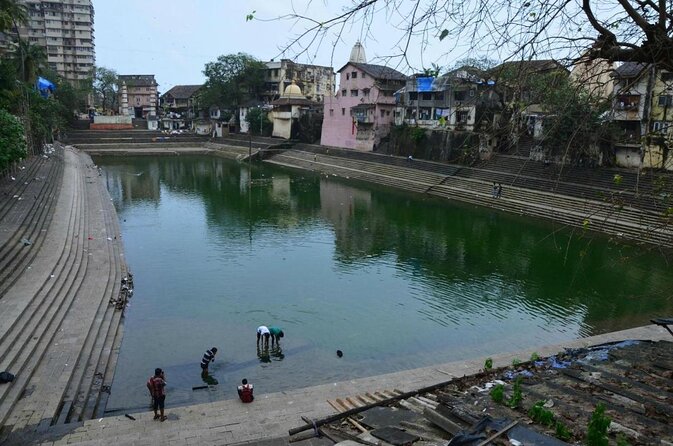
Stop 1 is Walkeshwar, and it’s designed to make you understand why this area matters. The tour points out Walkeshwar as the oldest continually inhabited place in Mumbai, which sets the tone right away. Even if you only remember one idea, keep that one: this isn’t just a scenic neighborhood—it’s a long-running community with layered religious practice.
Next comes the temple circuit. You’ll be guided through a set of 18 temples in the area. The tour’s promise here is not “see temples” but “learn what the temples are and why people care.” That’s a big difference. Without context, you might count domes and carvings. With context, you start noticing symbols, placements, and the logic of why certain shrines are linked.
One of the more distinctive features is the mention of memorial stones (pallias). These are described as memorial stones of dead warriors that are worshiped by Gujaratis. That’s the kind of detail that can make a neighborhood feel suddenly specific. You stop treating the stones as background decoration and start realizing they carry identity, memory, and faith.
Then you hit the heart of the area: Banganga Tank and Walkeshwar Temple. The tour explains how the steps of Banganga Tank serve many purposes. Kids play there. Residents use it as a social hub. Clothes get dried there. And people perform puja there. Seeing that mix in one spot helps you understand Mumbai as it really works—religion isn’t sealed off in a museum. It’s part of daily schedules.
A practical note on walking this section
Because the tank steps and temple lanes are active spaces, you may have moments where you pause and step aside to let people pass. Think of it as part of the experience, not a delay. You’ll get more out of the tour if you slow down and accept that you’re sharing the space.
Deepstambhas and Temple Lore: The Pillars of Light
Still within Stop 1, the tour calls out Deepstambhas, described as pillars of light that mark the entrance to Banganga Tank and significant temples nearby. This part is fascinating because it’s both visual and story-driven.
You’ll hear the lore that a saint is said to be buried under each pillar. Even if you treat the story as tradition rather than a literal fact, it tells you something important: the way belief gets anchored to specific physical markers. A pillar isn’t just a pillar here. It’s a map for devotion.
If you like architecture with meaning—how structures signal status, sacred boundaries, and ritual routes—this segment is a strong reason to book.



Stop 2: Banganga Street and the Narrow Lane World

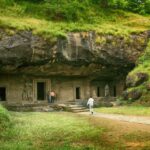
After Walkeshwar, you move into Banganga, where the focus shifts from bigger temple moments to the lived-in fabric around them. The tour describes a narrow street lined with temples, homes, and dharamsalas (religious rest houses). This is where Mumbai’s texture shows up at human scale.
A lane like this is hard to appreciate quickly on your own. You might walk through and think, That’s a crowded street. With a guide, you start understanding what changes in the lane mean—where faith shows up, where travelers are hosted, and why certain buildings sit the way they do.
You’ll also see how long-term residents and newer pressures shape the neighborhood. The tour notes that the area includes slum-dwellers who have occupied it for decades, living close to the religious core. That’s not a comfortable “postcard” picture. But it’s a real one, and it helps you grasp the full city—religious devotion and social struggle existing in the same frame.
How to handle this emotionally (without pretending you can fix anything)
If you’re sensitive to this kind of view, prepare yourself for a moment of discomfort. Then use it well: ask your guide to explain what you’re seeing and what the neighborhood represents. This tour’s value isn’t in sensationalizing it; it’s in giving the social context that many sightseeing routes skip.
Dhobi Ghat: Open-Air Laundry Built by the British
Then comes the big visual stop: Dhobi Ghat, described as the second largest laundry in Mumbai. The tour highlights open-air laundry and notes that the laundry was built by the British. Whether you focus on the historical timeline or just the scale, Dhobi Ghat is the kind of place that makes you pause.
The practical takeaway: expect activity. Laundry work isn’t a staged “look at us” performance, so timing and movement can affect what you see. If you’re photographing, keep your framing flexible and be respectful of workers’ pace.
This is also where the tour’s concept of “history you can see” becomes literal. You’re looking at a facility with historical roots, but it’s still used in daily life. That blend—old infrastructure and ongoing labor—is part of why people remember Dhobi Ghat.
Price and Value: $18.13 for a Real 2.5-Hour City Lens
At about $18.13 per person, this isn’t a budget-burner. It’s priced like a value walk, and the math holds up because you get a guide and the time on-site.
You also get a few built-in cost savers. The itinerary notes admission ticket free for both main segments. That means your money stays mostly focused on experience and guidance, not entry fees.
And the group limit is capped at 15 travelers. Smaller groups usually mean less “stand here while everyone films” energy, which matters a lot in narrow lanes and busy temple areas.
One more value point: the tour uses a private sightseeing framing with an English-speaking guide and the idea of private transportation between attractions (as described in the overview). Even if you’re mostly walking here, that private structure can reduce the frustrating time you lose on transfers.
Booked around 40 days in advance on average, this suggests it’s a popular way to get oriented in the city—especially for people who want something more grounded than a classic bus tour.
What the Guides Do Differently (and Why It Changes Everything)
In a walk like this, a guide is the whole show. The tour’s standout quality is how it links physical places to stories and functions.
One guide named Ajay was described as well informed and passionate, with explanations that went into detail. That kind of teaching style matters because Walkeshwar and Banganga aren’t just single monuments. They’re clusters: tank steps, temple lanes, pillars with lore, memorial stones, and a laundry landscape. Without a guide, you’ll see shapes. With a guide, you’ll understand the logic.
And you’ll likely appreciate the professionalism from a company that keeps customer interaction hands-on. That shows up in how guides meet people and keep the day organized—especially when you’re starting at a specific address and returning there.
What to Bring (So the Walk Feels Easy)
The tour doesn’t include food and drink, so plan for your own water and a snack if you need one. A 2.5-hour walk in Mumbai can add up faster than you expect, especially if you stop often to listen.
Since you’ll be around temples and active religious spaces, dress with respect. That usually means clothing that won’t feel overly casual. Also bring shoes that work well on uneven ground and stairs near the tank area.
Photography is likely part of your plan. If you do shoot, remember that this is a working neighborhood. Keep your pace gentle and avoid getting too close to people performing tasks.
Who This Tour Fits Best
This tour is ideal if you like:
- Religious neighborhoods with real daily use, not just “look and leave”
- Learning how Mumbai’s past stays visible through structures and routines
- Street-level culture around temples, small lanes, and working spaces like Dhobi Ghat
- A guide who can explain the “why” behind what you’re seeing
It may be less ideal if you want a mainly scenic, low-walking plan. This is built around going from one meaningful pocket to another on foot, with steps and narrow lanes.
Also, because the tour includes mention of migrant communities near the religious core, it’s best for travelers who are ready to see Mumbai as it is, not just as a polished destination.
Should You Book This Banganga Walkeshwar Walking Tour?
I’d book it if you want an authentic Mumbai orientation that doesn’t rely on grand monuments alone. The combination of Walkeshwar temple lore, the daily-use reality of the Banganga Tank steps, and the open-air working scene of Dhobi Ghat gives you a mix you won’t get from typical sightseeing.
I’d pause before booking if you’re only interested in the famous skyline sights and you’d rather avoid walking through an area with visible social complexity. Also, if you don’t like active, shared public spaces (temple lanes, tank steps, working laundry), it might feel intense.
If you’re flexible and curious, this is an excellent value use of a half-day. You come away with more than photos—you understand how belief, history, and daily life move through the same streets.
FAQ
How long is the Banganga Walkeshwar Walking Tour?
The tour is approximately 2 hours 30 minutes.
Where does the tour start and end?
It starts at Hotel Banganga Arogya Bhavan in Walkeshwar (Malabar Hill area) and ends back at the same meeting point.
How much does it cost?
The price is $18.13 per person.
Is food included?
No. Food and drink are not included.
What language is the guide?
The tour includes an English-speaking guide.
Do I need to pay admission fees?
The itinerary notes admission ticket free for the main listed segments.
How big is the group?
The maximum group size is 15 travelers.
Can I cancel for a refund if plans change?
Yes. You can cancel up to 24 hours in advance for a full refund.
Is this suitable for most people?
The tour states that most travelers can participate.