REVIEW · DABBAWALA TOURS
Dabbawala, Dhobi Ghat & Dharavi slum Tour with Local Train Ride
Book on Viator →Operated by Mumbai Dream Tours · Bookable on Viator
Mumbai’s real engine shows up fast. This tour links Dharavi’s local industries, the open-air washing at Mahalaxmi Dhobi Ghat, and the lunch delivery system of the dabbawalas, using a local train ride to move you like a city regular. I love how the tour stays practical and human, with a guide who brings the streets to life street-by-street, and I love getting a close look at working life instead of staged sights. One consideration: you’re walking in tight lanes and spending time outdoors, so plan for comfort first—comfy shoes and water matter.
I also like the format for a first-time Mumbai visitor. In about 4 hours, you cover three big topics that are easy to miss from a hotel window: how neighborhoods are built, how clothes get cleaned at scale, and how thousands of lunch boxes reach offices every day. The group is small (up to 15), which helps you ask questions without feeling rushed.
The tour starts near Churchgate (Maharshi Karve Rd) and ends in Dharavi near a Sion Hospital-area landmark, so you’ll finish right where city life is most concentrated. Food and drink aren’t included, so you’ll want to plan your timing around that.
In This Review
- Key Highlights You’ll Actually Remember
- Dharavi on Foot: More Than a Movie Backdrop
- Mahalaxmi Dhobi Ghat: Watching Laundry Run in the Open
- Dabbawala Tribute Statue and the Lunch Network Behind Mumbai
- The Local Train Ride: The Shortcut to Feeling Like You’re There
- Price and Value: What You’re Paying For (and Why It Adds Up)
- What the Best Guides Add: Real Names, Real Flow
- Sensitive Visit Tips: How to Show Up Well
- Who Should Book This Tour (and Who Might Skip It)
- Should You Book It? My Practical Take
- FAQ
- How long is the tour?
- What is the price per person?
- Is food or drink included?
- How many people are in the group?
- What transport is included?
- Where does the tour start and end?
- Is there a ticket fee for the stops?
- Do I need to print anything for my ticket?
- Is the tour accessible for most travelers?
- What is the cancellation policy?
Key Highlights You’ll Actually Remember
- A local guide-led walk through Dharavi’s lanes, with context for what you see
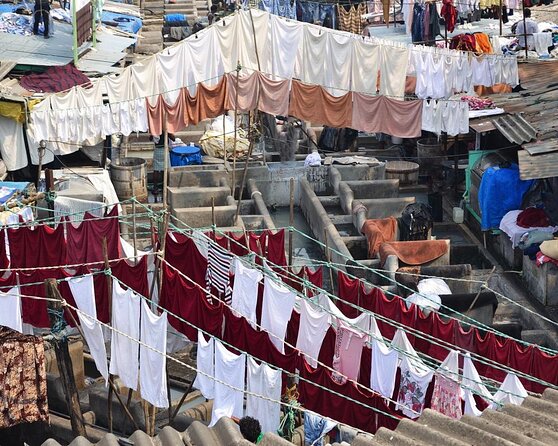
- Mahalaxmi Dhobi Ghat open-air laundry operations, where washing happens in plain sight
- Dabbawalas and the lunch-delivery culture, including a tribute stop to the system
- Local train ride included, so you get a real transit slice of Mumbai
- Small group size (max 15) for more personal attention and smoother pace
- Free entry at stops, which keeps value high for a ticketed day
Dharavi on Foot: More Than a Movie Backdrop
Dharavi is the stop that sets the tone. You spend about two hours moving through a maze of streets and small alleys where daily work is visible rather than explained from a distance. One of the first surprises is that this is not just a single “thing” to look at. It’s a patchwork of activities—leather work, pottery, soap-making, bakery-related work, color dye, and plastic recycling—all happening close to homes, schools, and hospitals.
If you’ve heard of Dharavi mostly through pop culture, you’ll still recognize the idea that it’s often been used as a filming location. This tour specifically points out that a portion of Slumdog Millionaire was shot there, which helps you place what you might have seen on screen. But the important payoff here is the reality check: film framing can’t show how many kinds of work run at the same time, or how crowded life can feel at street level.
What I like about this part of the day is that you’re not just “looking at a slum.” You’re observing how communities organize labor and services. You’ll see houses in the slum and learn about the mix of schools and hospitals alongside the work. That side-by-side view is what makes the place feel complex in a grounded way—not like a simple photo caption.
A practical note: Dharavi lanes can feel narrow and busy. Your guide’s role is not just to tell stories, but to help you read the street—where to stand, what to ask about, and how to move without turning the area into a spectacle. Expect to keep your pace steady and your attention up.
You can also read our reviews of more tours and experiences in Mumbai.


Mahalaxmi Dhobi Ghat: Watching Laundry Run in the Open

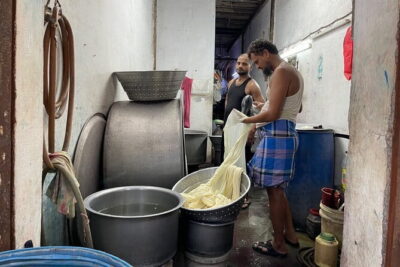
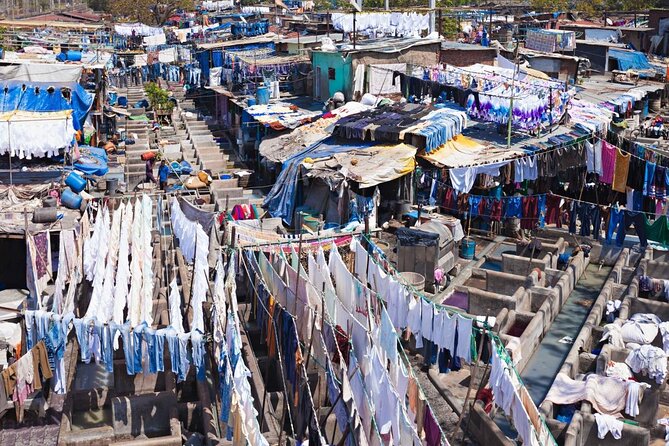
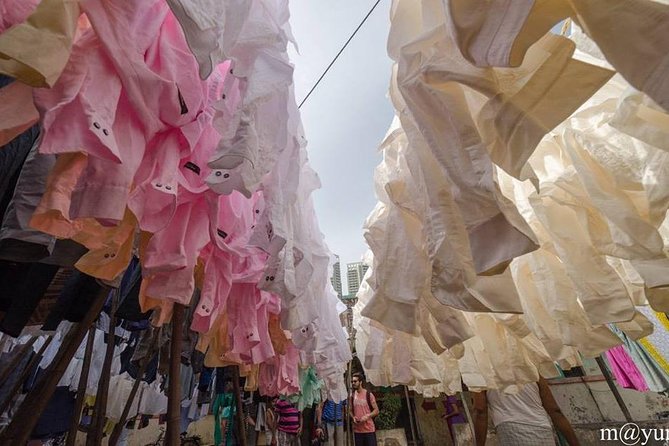
After Dharavi, the tour shifts gears from workshops and alleys to a massive open-air laundry system: Dhobi Ghat (Mahalaxmi Dhobi Ghat). You’ll have about one hour here, and it’s exactly as it sounds—an outdoor laundromat where washing happens in view.
In Mumbai, the washers are known as Dhobis, and this is where you’ll understand why the operation is so famous. Hotels and other businesses send clothes that need cleaning, and the work is performed in the open. Seeing it firsthand changes how you think about “laundry.” It’s not back-of-house. It’s labor with a public footprint, shaped by routine, technique, and constant movement.
There’s a good chance you’ll want to slow down and watch the flow. Even if you’re not an expert in washing processes, you’ll notice how the operation is structured around repetition: sorting, washing, rinsing, and managing loads in a system built to keep pace with demand. The biggest value here is perspective—how a city keeps itself functioning through services that most visitors never notice.
The tour also notes admission is free for this stop, which helps keep the day’s cost tied to the guide and the local train—not extra ticket lines.
Dabbawala Tribute Statue and the Lunch Network Behind Mumbai
Next comes a stop designed to make one idea click: Mumbai doesn’t just run on streets and factories. It runs on logistics—small boxes, tight timing, and thousands of deliveries happening every day.
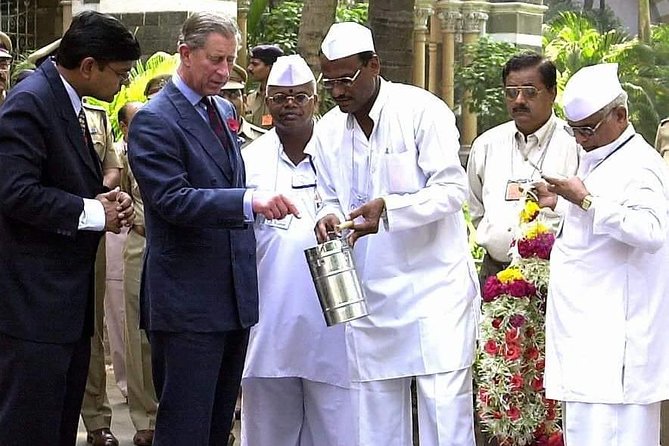
You’ll visit a Dabbawala tribute statue and meet the concept in a more respectful, contextual way. The tour frames dabbawalas as a special class of workers known across Mumbai. The term dab is part of the story (linked to lunch boxes), and the purpose of the stop is to help you connect the nickname to the real system behind it.
What’s useful for you as a visitor is the way this portion gives meaning to a sight you may have seen before without understanding. When you later notice bikes, routes, or lunch containers, you’ll have a mental map of how that delivery rhythm actually works. This part of the tour is less about factories and more about coordination: people moving meals across the city, doing it reliably, and keeping everyday work schedules running.
Also, this stop is another free admission component, so you’re not paying extra to connect the dots between the earlier labor scenes and the delivery network.
The Local Train Ride: The Shortcut to Feeling Like You’re There
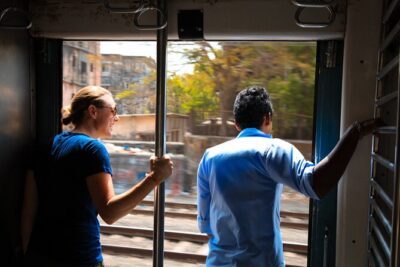
The tour includes transport by local train, and that matters more than you might think. Mumbai’s trains are crowded, fast, and loud—yes—but they’re also one of the easiest ways to understand the city without hiring a private car.
In about 4 hours total, you’re not just transported between viewpoints. You experience a transit rhythm that locals live with every day. When the train ride is part of the plan, the day stops feeling like three separate photo stops and becomes one connected route.
It also helps that the tour keeps things efficient. You’re not stuck fighting traffic or waiting around. A local train segment gets you moving while your guide can keep context flowing—so you’re not left wondering, Okay, why am I going here next?
One small caution: crowded trains can be a mental load. If you get overwhelmed easily in tight spaces, you’ll want to go slow, plan your clothing for comfort, and keep a light grip on your essentials. The good news is that the tour is organized for a small group so the guide can manage timing and movement.
Price and Value: What You’re Paying For (and Why It Adds Up)
At $35.79 per person for an experience running around 4 hours, this sits in the value zone for Mumbai. It’s not just a walk. You’re paying for:
- a professional, qualified guide
- a local train ride included
- entry that’s listed as free at the key stops
- a day structure that ties together labor, services, and logistics
Could you do something similar on your own? Sure. You can walk some streets and watch laundry from outside if you’re persistent. But you’ll likely miss the “why,” and you’ll spend more time figuring out safe, respectful routes.
The best value here is the way the tour connects three topics that are usually siloed. Dharavi shows production and recycling. Dhobi Ghat shows service work at scale. Dabbawalas show distribution that keeps routine alive across the city. Together, that’s a lot of city understanding for the time and money.
Another value point: booking tends to happen about 16 days in advance on average, which suggests it’s a popular time window. If your dates are firm, it’s worth booking early so you don’t end up shifting your schedule.




What the Best Guides Add: Real Names, Real Flow
One reason this tour earns a strong reputation is the quality of the guiding. You’ll see different names in the guide mix, like Rakesh, Abhishek, Sagar, Hardik, and Dinesh—and the common thread is that the guides bring the day to life with clear explanations and an easygoing tone.
In practical terms, a good guide helps you feel safe and oriented. Several guides are described as making the visit comfortable and respectful, with solid English, and with room for questions. If you like your tours to answer the obvious questions—How does this work? Who does what? Why does it exist?—you’ll probably appreciate this format.
I also think this matters emotionally. A sensitive topic like Dharavi doesn’t benefit from rushed storytelling. When the guide sets the pace and explains what you’re seeing, the day lands as informative instead of chaotic.
And yes, there can be memorable “extra” moments. One example shared through this experience includes a stop to a guide’s family home for a homemade meal. That doesn’t sound like a guaranteed add-on, but it does tell you the guides sometimes know how to make the day feel personal beyond the walking route.
Sensitive Visit Tips: How to Show Up Well
This is one of those tours where your behavior affects your experience. You’re walking through active areas of work and community life, not a theme park.
Here’s how I’d prepare you:
- Wear comfortable shoes because you’ll be on your feet for a good chunk of the day.
- Bring water, especially since part of the tour is open-air at Dhobi Ghat.
- Keep your camera use respectful. If people look busy, don’t treat it like a photo shoot—ask or wait for guidance from your tour leader.
- Save lunch for afterward since food and drink aren’t included.
Weather can also change your day. One guide was noted as helping a group still have a great experience despite rough conditions. That’s a sign to dress for flexibility and not assume Mumbai will stay on schedule.
Most travelers can participate, but if you have mobility limits or dislike cramped spaces, you’ll want to think carefully about the walking and train ride.
Who Should Book This Tour (and Who Might Skip It)
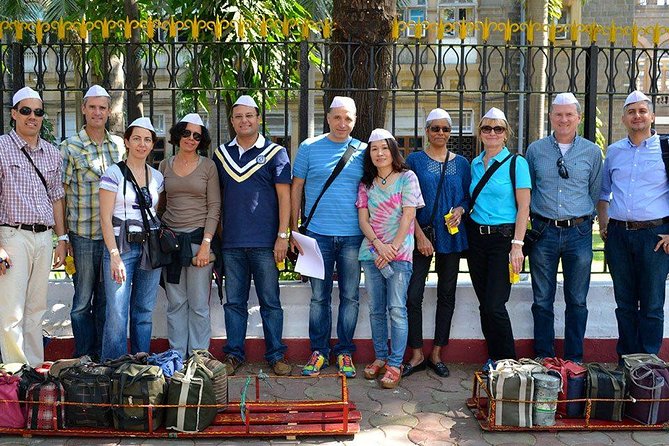
If you want a first-pass view of Mumbai that goes beyond landmarks, this is a strong fit. It’s especially good for you if:
- you like street-level city understanding
- you want a small-group experience with time for questions
- you’re curious about working systems: laundry, delivery, recycling, and local production
It may be less ideal if you:
- want a slow, fully seated sightseeing day
- hate tight spaces and don’t handle crowds well
- expect plenty of tourist-style amenities (food isn’t included, and parts of the day are outdoors)
That said, the tour stays efficient. You’ll cover a lot without turning it into a full-day grind. For many people, that’s exactly what makes it worth it.
Should You Book It? My Practical Take
If you’re trying to choose one “real Mumbai” experience, I’d lean toward booking this one—mainly because it connects three working worlds in a logical route. You’ll walk through Dharavi’s industries, see how laundry happens in the open at Mahalaxmi Dhobi Ghat, and then understand the dabbawala lunch delivery culture with a tribute stop that ties it together. The included local train ride adds context you can’t fake with taxis.
My decision rule for you: if you can handle walking, outdoor time, and a respectful, learn-as-you-go tone, this is a great value day. If you’re looking for a low-effort, low-emotion sightseeing checklist, pick something else.
FAQ
How long is the tour?
The tour lasts about 4 hours (approx.).
What is the price per person?
The listed price is $35.79 per person.
Is food or drink included?
No. Food and drink are not included.
How many people are in the group?
The tour has a maximum of 15 travelers, keeping it small group focused.
What transport is included?
Transport by local train is included as part of the experience.
Where does the tour start and end?
It starts near Maharshi Karve Rd, Churchgate, Mumbai, and ends near Sai Multispeciality Hospital & Research Centre on 90 Feet Rd, in Dharavi (behind Sion Hospital area).
Is there a ticket fee for the stops?
Admission ticket is listed as free for the stops on the route.
Do I need to print anything for my ticket?
The tour uses a mobile ticket.
Is the tour accessible for most travelers?
The information says most travelers can participate, and it is near public transportation.
What is the cancellation policy?
You can cancel for a full refund up to 24 hours in advance of the experience start time.
If you want, tell me your travel dates and whether you prefer fewer crowds or more walking, and I’ll help you decide if this fits your Mumbai plan.