REVIEW · MUMBAI
Local Transport & Dabbawallah Tour
Book on Viator →Operated by Reality Tours & Travel Pvt Ltd · Bookable on Viator
Mumbai’s daily rush is the real show. This local-transport tour is a smart way to see Chhatrapati Shivaji Terminus (CST) and the dabbawallas system without doing everything on your own. I like that you get guidance through trains, bus rides, and taxi hops while still keeping your eyes on street-level life—flowers, open-air laundry work, and market chaos.
One thing to consider: this isn’t a hotel-pickup tour. You meet at Regal Cinema in Colaba and you’ll end at Churchgate, so plan your own way there and don’t expect someone to come to your lobby.
The best part for me is the pace: about 3 hours 30 minutes, moving across South Mumbai with transportation fares included. It’s also small-group style (up to 25), so you’re not stuck in a giant bus herd.
In This Review
- Local Transport & Dabbawallah Tour: Key Points
- Why This Local-Transport Tour Feels Like Real Mumbai
- Regal Cinema in Colaba: Start at a Place Locals Still Use
- Chhatrapati Shivaji Terminus at Rush Hour: UNESCO That Actually Moves
- SHYAM STALL Flower Stop: Worship, Color, and Everyday Use
- Dhobi Ghat: The Open-Air Laundry That Keeps Cities Running
- Chor Bazaar: Market Noise, Small Bites, and Bargain Energy
- Churchgate and the Dabbawallas: How Lunch Gets Delivered
- Getting Around on Train, Bus, and Taxi Without Losing the Plot
- Timing, Group Size, and What to Bring
- Price and Value: Why $32.45 Can Make Sense in Mumbai
- Who Should Book (and Who Should Skip This)
- Should You Book Local Transport & Dabbawallah Tour?
- FAQ
- Where do I meet the Local Transport & Dabbawallah Tour?
- Where does the tour end?
- What time does the tour start?
- How long is the tour?
- What’s included in the price?
- Does the tour use public transport?
- Is admission required for the listed stops?
Local Transport & Dabbawallah Tour: Key Points
- Public-transport practice with a guide, so you can try Mumbai’s systems with less guesswork
- UNESCO CST at rush hour, viewed from a safer spot while the station does its thing
- Dhobi Ghat, the open-air laundry, where you see how Mumbai keeps hotels and hospitals running
- Flower-market stop (SHYAM STALL) focused on how flowers show up everywhere in daily worship
- Chor Bazaar shopping time, with chances for snacks and small purchases
- Churchgate + dabawallas, including the lunchbox delivery operation (200,000 daily)
Why This Local-Transport Tour Feels Like Real Mumbai
This tour is built around one idea: don’t just look at Mumbai from street corners. Instead, you ride the same bones of the city that commuters use—train, bus, and taxi—with a guide steering the route and explaining what you’re seeing.
The value here is practical. At $32.45 per person, you’re paying for a local guide plus transportation fares included, which matters in Mumbai where small costs add up fast when you’re paying as you go. You also get bottled water/cold drink to keep energy up during a morning that stays active.
The itinerary also avoids the classic pattern of “big monument, quick photo, done.” You get a sequence of work and everyday life: a historic cinema exterior, a UNESCO rail hub, religious flowers, the open-air laundry operation, a major flea market, and then the lunch delivery system.
You can also read our reviews of more tours and experiences in Mumbai.


Regal Cinema in Colaba: Start at a Place Locals Still Use
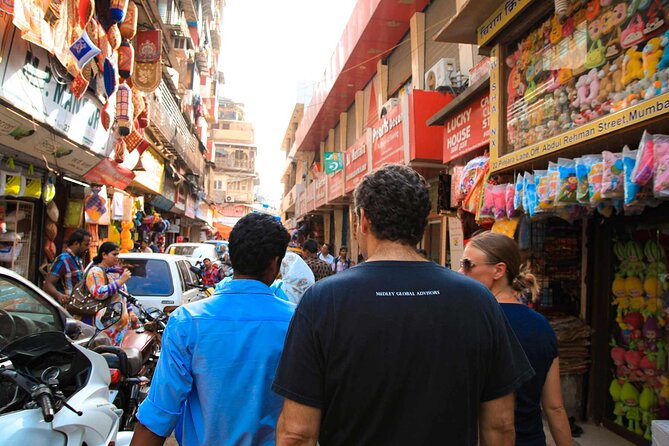
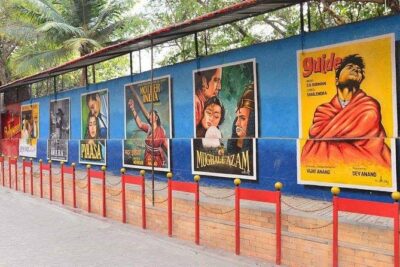
You begin at Regal Cinema on Colaba Causeway, right by Apollo Bandar. It’s an easy South Mumbai starting point and a good signal of the day’s tone: you’re starting where people actually show up for entertainment, not at a choreographed visitor gate.
This stop is short—about 10 minutes—and it’s mostly a warm-up. You’ll get oriented and meet your guide before you head toward the rail network. Even if you don’t catch a show there, the area helps you understand Mumbai’s shape: the city doesn’t spread out politely. It concentrates, overlaps, and keeps moving.
Practical tip: arrive a few minutes early and take a look at the flow on the street. Getting the “direction sense” early makes the rest of the tour feel smoother, especially at the train stops.
Chhatrapati Shivaji Terminus at Rush Hour: UNESCO That Actually Moves
Next is Chhatrapati Shivaji Terminus (CST), the UNESCO-listed station and one of India’s busiest railway hubs. You’ll spend about 10 minutes here—enough time to understand the scale and watch trains at peak energy without turning the visit into a long museum stop.
One of the strongest moments is how the tour handles crowd intensity. You’re not shoved into the thickest human churn. You’ll be positioned to observe trains releasing streams of commuters—what one guide explanation frames as the “super dense crush load” reality—while you stay in a safer viewing area. That’s a big deal if you’ve never navigated a high-volume station before.
Also, this is one of the easiest places to spot why Mumbai runs on systems. CST isn’t just architecture; it’s a daily machine. The guide’s role is key here—pointing out how the station functions and what you should notice beyond the famous facade.
SHYAM STALL Flower Stop: Worship, Color, and Everyday Use
Then you move to SHYAM STALL, a flower-centered stop where the point is not shopping—it’s understanding why flowers are everywhere in Mumbai. The tour frames it as a practical visual lesson: flowers show up in temples, in taxis, at home, and even in everyday ritual moments.
You’ll have about 15 minutes. It’s short, but that’s actually ideal for a morning tour—enough time to see the variety and talk through the cultural meaning without turning it into a longer detour.
If you like street-level detail, this is one of the most memorable stops. Flowers in Mumbai aren’t just decorative. They’re part of movement and meaning, and you’ll notice that more when you see how they’re handled, arranged, and put to use.
Dhobi Ghat: The Open-Air Laundry That Keeps Cities Running
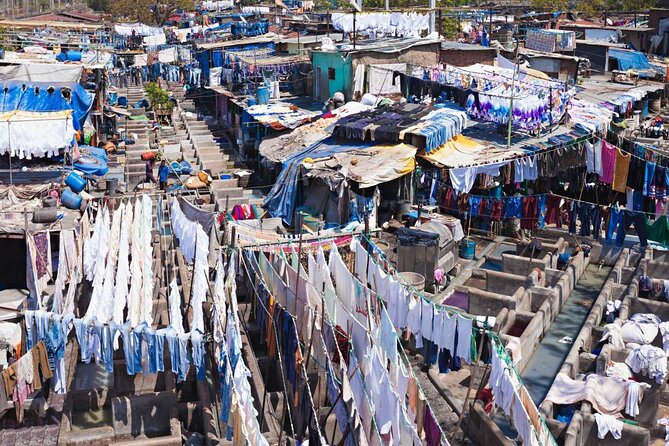
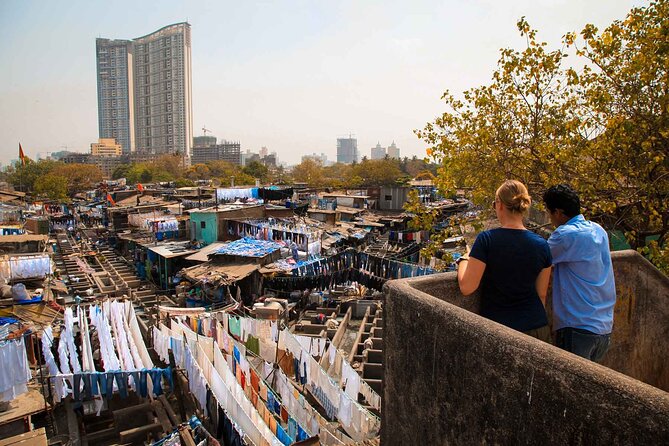
At Dhobi Ghat, you’ll get about 30 minutes at the world’s largest outdoor laundry. This is the stop that shifts you from “sightseeing” to “work-life Mumbai.”
The scale here is easy to grasp: you’re watching washermen (dhobiwallahs) scrubbing and working on linens from Mumbai’s big institutions—especially hospitals and hotels. In other words, you’re seeing behind-the-scenes labor that most visitors never get close to.
What I like about this stop for travelers is the grounded payoff. You’re not just learning a fact. You’re watching a process and seeing the people who make it happen. And because it’s an outdoor working area, the atmosphere feels real fast—no pretend set dressing.
One consideration: the tour timing can matter on public holidays. For example, during India’s Republic Day (Jan 26), one participant found the dabba-wallah-related part shortened because workers were off. The same idea can apply to other work rhythms, so on big national holidays, be ready for minor changes in what’s operating at full speed.


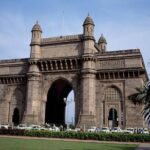

Chor Bazaar: Market Noise, Small Bites, and Bargain Energy
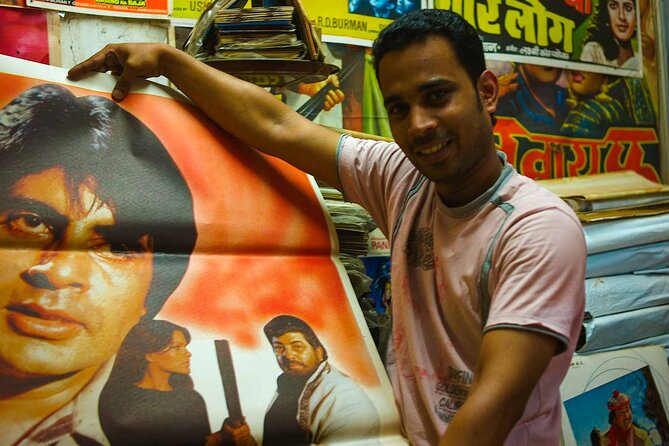
After Dhobi Ghat, you head to Chor Bazaar, nicknamed the Thieves Market. You’ll get around 30 minutes here—enough time to browse, snack, and buy something small if you want.
This is a good match for how Mumbai markets actually work: busy, dense, and full of mixed categories. The tour also encourages you to taste local sweets and pick up items like homemade pickles and chutneys. That’s practical travel value, because food and small consumables are easier souvenirs than carrying random objects all day.
You should also set expectations: this is a large flea market in a real commercial neighborhood. If you prefer quiet and slow shopping, this stop might feel intense. If you like the momentum of markets and you’re comfortable navigating crowd flow, it’s a fun reset.
Churchgate and the Dabbawallas: How Lunch Gets Delivered
The final stop is Churchgate Railway Station, plus a look at the dabba-wallahs system nearby. You’ll have about 10 minutes at the station area, focused on how they organize delivery of 200,000 lunchboxes every day.
This is one of those Mumbai stories that’s hard to believe until you see the organization in action. The power isn’t just logistics—it’s reliability. The tour’s promise is that you’ll understand how the system works in real life, right where it runs.
The tour also points you toward Oval Maidan nearby for a vegetarian dabba-wallah lunch. Whether you buy it or just plan for it depends on what’s available that day and what the tour covers. Either way, the location makes it easy to keep walking after the tour ends.
Getting Around on Train, Bus, and Taxi Without Losing the Plot
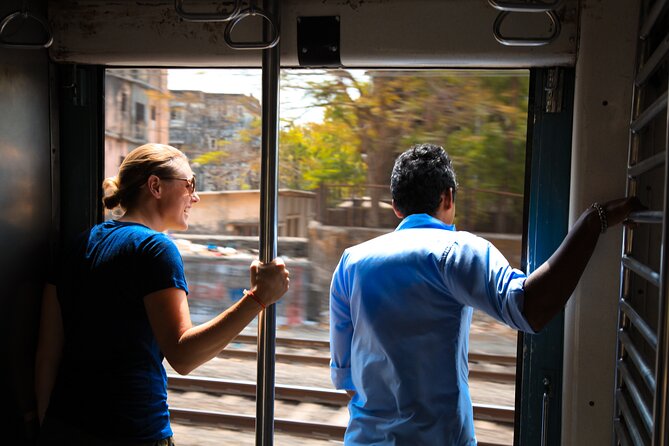
A big part of the tour’s appeal is that you don’t have to figure out transportation alone. You move by train, bus, and taxi, with the guide managing the transitions between modes so you can focus on what’s happening outside the window and at the platform.
This matters for first-time Mumbai visitors. The city’s transit can feel like a live system under pressure—lots of bodies, lots of movement, and quick decisions. The guide’s job is to reduce that mental load, including helping you get oriented at stops and explaining what you’re looking at as you go.
You also get transportation fares included, so you’re not stuck hunting for change mid-ride. And because the tour lasts about 3 hours 30 minutes, it’s short enough to keep your energy level up while still giving you meaningful time inside the city’s transit.
Timing, Group Size, and What to Bring
The tour starts at 8:30 am and ends at Churchgate. In practice, you can expect it to finish around late morning, which keeps the day open for more exploring afterward.
Group size is capped at 25 travelers, which helps. It’s big enough to be social, small enough that you’re not completely separated from the guide’s instructions.
What you should bring:
- Comfortable walking shoes. You’ll move through station areas and market streets.
- A small bottle of water already covered by the tour, but keep an eye on your own hydration.
- A light layer if you run cold in air-conditioned indoor pockets, though this is mostly outdoor/streetside.
Also, confirm you know the meeting point clearly: Regal Cinema on Colaba Causeway. Since there’s no hotel pickup, arriving at the right curb matters more than you’d think.
Price and Value: Why $32.45 Can Make Sense in Mumbai
At $32.45 per person, you’re paying for four things that add up in Mumbai: a local guide, access to multiple stops across South Mumbai, and included transportation fares, plus bottled water/cold drink.
The biggest value lever is the transportation. If you tried to copy this route on your own, you’d pay for taxis plus train/bus costs and the “time tax” of figuring out which direction to go and how to get safely positioned at major hubs. Here, the route is already mapped around key sights and daily operations.
You’re also getting a specific kind of knowledge: not just photos of places, but a sense of how Mumbai functions day to day. That’s hard to replicate quickly without guidance, especially when you’re dealing with rush-hour stations and dense neighborhoods.
If you like “learn the city by using it,” this price is reasonable. If you only care about one or two major monuments, it might feel like more effort than you want for a morning.
Who Should Book (and Who Should Skip This)
This tour is a strong fit if you:
- Want to see how Mumbai works, not just what it looks like
- Feel uneasy navigating public transit alone and want a guide to help you get your bearings
- Like street-level, working-city experiences—open-air laundry, markets, and the lunch delivery operation
It might not be ideal if you:
- Need hotel pickup or prefer fully hands-off logistics
- Don’t like crowds, rush-hour platforms, or market density
- Want long, slow stops at a single place
One more note from real-world experience patterns: the guide can help with timing issues. For instance, there’s a documented case of a guide waiting for a late arrival when someone was delayed getting off a cruise. That’s a good sign that the day has some flexibility if you communicate delays quickly.
Should You Book Local Transport & Dabbawallah Tour?
I’d book this tour if your goal is to understand Mumbai by moving through it. The mix is smart: UNESCO CST for scale, Dhobi Ghat for real work, Chor Bazaar for market texture, and Churchgate for the dabba-wallah lunch system that actually runs the city’s daily rhythm.
It’s also a practical value play: transport fares included plus water, in a time window that won’t eat your whole day. If you’re comfortable meeting at a fixed point and you can handle busy transit areas, this tour gives you a grounded, authentic orientation fast.
If you’re expecting luxury, quiet, or a bus-only experience, choose something else. This one is about public life—crowds included.
FAQ
Where do I meet the Local Transport & Dabbawallah Tour?
You meet at Regal Cinema, Colaba Causeway, opposite Chhatrapati Shivaji Maharaj Vastu Sangrahalaya, Apollo Bandar, Colaba, Mumbai.
Where does the tour end?
The tour ends at Churchgate Railway Station, with easy access to other parts of Mumbai.
What time does the tour start?
The tour starts at 8:30 am.
How long is the tour?
The duration is about 3 hours 30 minutes.
What’s included in the price?
The tour includes local guide, all transportation on the tour, and bottled water / cold drink.
Does the tour use public transport?
Yes. The tour uses train, bus, and taxi, and you ride public transport with help from your guide.
Is admission required for the listed stops?
The listed stops in the itinerary show free admission for each of them.