REVIEW · CITY TOURS
Private 8 Hours Mumbai City Sightseeing and Dharavi Slum Tour
Book on Viator →Operated by Mumbai Dream Tours · Bookable on Viator
Mumbai’s contrasts hit fast. This private day pairs colonial landmarks with real-life neighborhood views, including Dhobi Ghat and Dharavi.
I like the smart pacing: you get a classic South Mumbai loop (UNESCO CST and other British-era buildings) plus time at places locals actually use. I also like that you go with a guide who lives in the area, which changes how Dharavi feels on the ground.
One thing to consider: you won’t stop for food, and some parts of Dharavi involve walking in busy streets and heat.
In This Review
- Key points to know before you go
- A Day That Actually Makes Mumbai Make Sense
- Private 8 Hours With South Mumbai Pickup (Up to 2 People)
- Stop 1 to 5: Gateway of India, the Taj Area, and British-Era Landmarks
- Azad Maidan and Bombay High Court: City-Scale Without the Long Lines
- UNESCO Victoria Terminus (CST) and Marine Drive Views
- Mani Bhavan Gandhi Museum: A Solid Break in the Middle
- Hanging Gardens: When “Viewpoints” Are Actually Urban Engineering
- Dhobi Ghat: Watching Open-Air Laundry at Work
- Slumdog Millionaire Streets: Walking With Local Context
- Dharavi: Big Scale, Real Work, and What the Numbers Mean
- Price and Value: Is $153.08 a Fair Deal?
- Tips That Make the Day Easier (Without Changing the Experience)
- Who This Tour Is Best For
- Should You Book This Tour?
- FAQ
- How long is the tour?
- Is pickup and drop-off included?
- Does the tour include food?
- Is this a private tour?
- Are admission tickets included?
- Where does it operate from within Mumbai?
Key points to know before you go
- Private, up-to-2 group means the day can flex to your pace and timing
- Hotel pickup and drop-off in South Mumbai saves time in traffic
- Air-conditioned vehicle between sights keeps the day comfortable
- Dhobi Ghat is watched laundry work, not a staged “show”
- Dharavi focuses on how people live and work, guided by someone local
- Most admissions are listed as free, so your budget stays steadier
A Day That Actually Makes Mumbai Make Sense

Mumbai can feel like two cities at once. This tour’s structure helps you connect those dots in a single day: British colonial architecture in the morning, Gandhi’s Mumbai in the middle, and the working reality of Dhobi Ghat and Dharavi later.
You also get context you can’t really get from bus-window sightseeing. A guide who lives locally brings the lived details that make places feel less like photos and more like a functioning city.
And yes, it’s efficient. With hotel pickup, an air-conditioned vehicle, and a packed route, you spend less time figuring out logistics and more time looking closely.
You can also read our reviews of more city tours in Mumbai



Private 8 Hours With South Mumbai Pickup (Up to 2 People)
The private setup matters more than you might think in Mumbai. Even “short” rides can turn long during traffic, and having a driver plus a guide who can keep the route moving is a real time-saver.
This is priced per group (up to 2 people), so you’re not paying as if you’re joining a large crowd. If you’re traveling as a couple or with a close friend, this can be a better value than buying seats on a bus-style tour and hoping the group doesn’t drag.
The vehicle is air-conditioned, and the stops are mostly timed in short bursts. That’s a good combo for hot weather days, especially when you want to cover a lot without cooking.
Stop 1 to 5: Gateway of India, the Taj Area, and British-Era Landmarks
The day starts at the Gateway of India, a monument built to welcome King George V and Queen Mary. It’s a classic starting point because it anchors the colonial era visually and geographically, and it’s easy to orient from there.
From the Gateway you move toward the Taj Mahal Palace, Mumbai area. You get a quick look from the hotel zone without needing to plan a separate visit. Even a short stop helps you understand why this part of the city became such a symbol of wealth and power during the British period.
Next come three quick hits that form a kind of walking-history mashup:
- The University of Mumbai Library, a British heritage building built in 1857
- The Rajabai Clock Tower, often treated like Big Ben of India
- Watson’s Hotel Ruins, where the story goes that Tata was refused entry and later built what became the Taj Mahal Hotel
Those short stops are intentional. You get the visual markers and the background stories without spending the entire morning stuck at one location.
Azad Maidan and Bombay High Court: City-Scale Without the Long Lines
Then you get Azad Maidan, home to the Oval Cricket Ground area where cricket is played and celebrated. Even with a brief stop, it helps you see Mumbai not just as architecture, but as a sports-minded city with its own public-energy rhythm.
After that is the Bombay High Court (Principal Bench), another British heritage building. The point here isn’t to tour inside for hours. It’s to show you the design language—columns, scale, and symmetry—that shaped the city’s “official” side.
If you’re sensitive to heat, this is a good place to use your guide’s pacing. The route keeps individual stops fairly short, so you’re not stuck in one spot waiting for the rest of the group.
UNESCO Victoria Terminus (CST) and Marine Drive Views
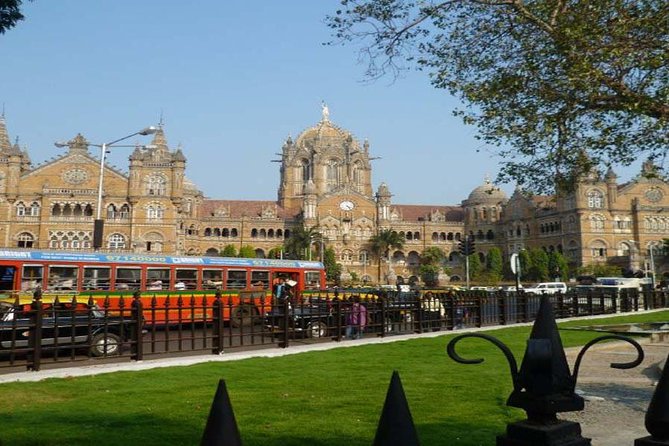
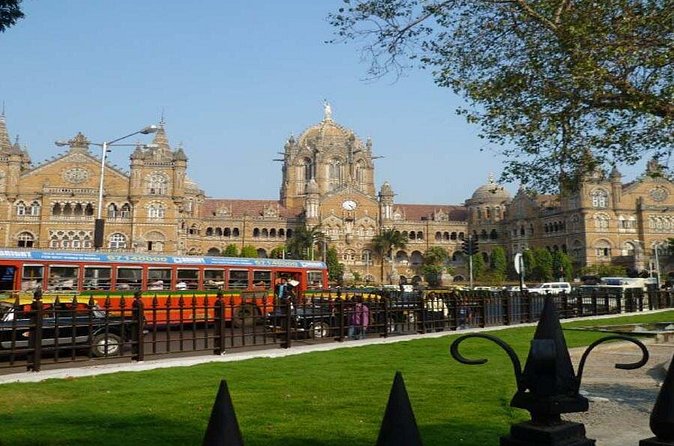
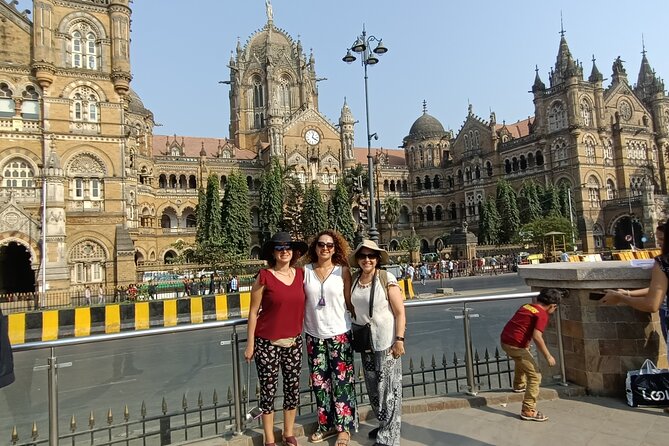
The biggest UNESCO stop is Chhatrapati Shivaji Maharaj Terminus (Victoria Terminus / CST). It’s listed as a UNESCO World Heritage Site, and you’ll get a focused time window to take it in.
CST isn’t only pretty from the outside. It’s also a reminder that the British-era “power buildings” weren’t just offices. They were transport hubs—places where millions of daily movements were designed to run through grand spaces.
From there you drive past Marine Drive and Chowpatty beach. This is one of those Mumbai moments where you don’t need a long visit to get the idea. The view from the road helps you connect the city’s ocean edge with the center’s landmarks.
You can also read our reviews of more private tours in Mumbai




Mani Bhavan Gandhi Museum: A Solid Break in the Middle
After the heavy architecture focus, the tour shifts to Mani Bhavan Gandhi Museum, with about an hour set aside. This is the pause you need on a long day, because it swaps street-level spectacle for a more reflective stop.
The museum time is useful because it gives you space to slow down. You also get a change of pace from just looking outward at buildings and views. Gandhi’s presence in Mumbai is part of understanding the city beyond colonial branding.
If you’re short on time in Mumbai, this stop alone is worth the hour because it adds a different thread to the story.
Hanging Gardens: When “Viewpoints” Are Actually Urban Engineering
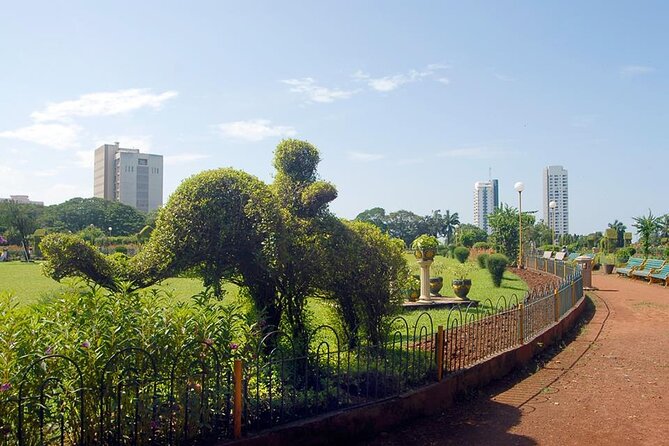
Next is Hanging Gardens, described as gardens built on top of water tanks near the Tower of Silence (linked to Parsi burial tradition). The detail matters. This isn’t just a pretty garden stop—it’s an example of how Mumbai uses space in layered ways.
The stop is about thirty minutes, which keeps it realistic. You get enough time to walk around and take photos without feeling like the gardens are eating your whole afternoon.
This is also a good point to check in with your guide about timing for Dhobi Ghat and the slum portions. The day moves forward quickly, and your guide can adjust if you need a slower pace.
Dhobi Ghat: Watching Open-Air Laundry at Work
Then comes Dhobi Ghat, an open-air laundry where clothes are washed in public view. Expect active work, not a quiet museum scene. The value here is that you see daily labor as daily labor, right in front of you.
The stop is about fifteen minutes. For most people, that’s exactly the right amount of time: long enough to understand what’s happening, short enough that you’re not standing in the same spot while the city keeps doing its thing.
A practical note: this is a sensory location. You’ll likely want to keep your camera ready but be respectful about how close you stand. If you’re unsure what’s appropriate, follow your guide’s lead.
Slumdog Millionaire Streets: Walking With Local Context
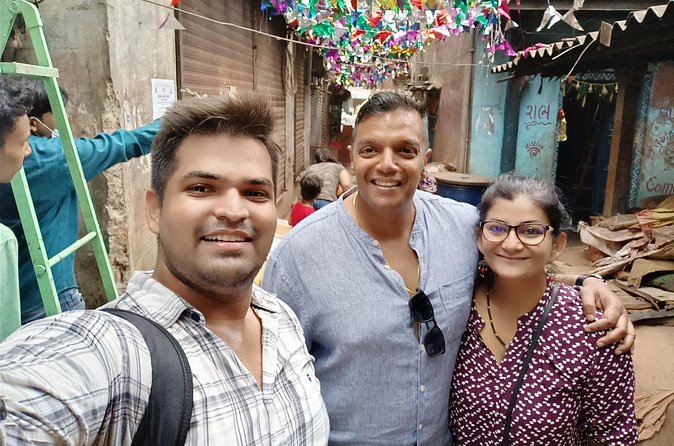
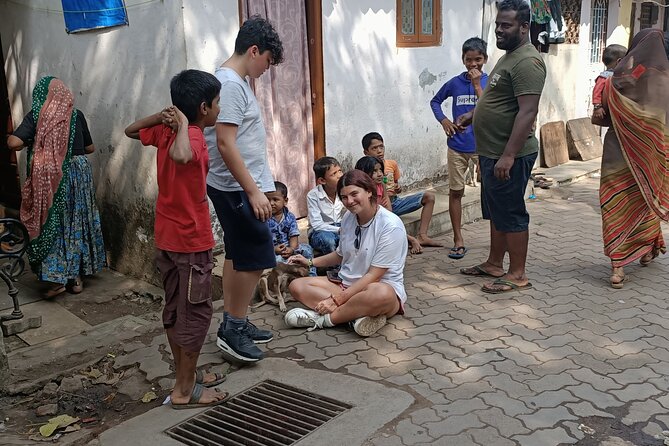
After Dhobi Ghat, the route shifts toward the slum areas, with a slum walking segment of about two hours led by your guide. This is where the tour becomes more than sightseeing.
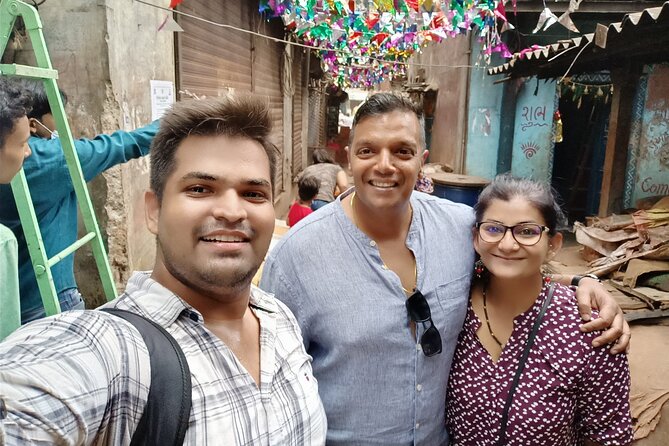
The tour is designed to be guided by someone who lives there, which helps you understand the “why,” not just the “what.” You’re not only watching scenes; you’re seeing neighborhood life through a local lens.
There’s also a connection to pop culture in the overview: the slum where scenes from Slumdog Millionaire were shot. That matters because it explains why some outsiders recognize the area by movie frames. Your guide should help you move past the cinematic version and see the real one.
A good rule for days like this: keep your curiosity on people and everyday routines, and keep the questions human. Your guide can steer you to what’s appropriate and meaningful.
Dharavi: Big Scale, Real Work, and What the Numbers Mean
Finally comes Dharavi, another two-hour portion of the day. Dharavi is described as one of the largest slums in Asia, with economic output estimated at about 1 billion US dollars annually—much of it tied to informal recycling and related work.
That figure is useful because it changes how you mentally categorize Dharavi. You’re not just looking at “poverty.” You’re looking at a large working economy where people organize production, trade, and recycling to survive and build stability.
This is why the guide-led approach is so important. Without local interpretation, Dharavi can become a blur of movement and surfaces. With it, you can connect what you see to how the area functions.
Also, be realistic about the setting. You’re in a dense neighborhood. The walk is part of the experience, so comfortable shoes and a calm, respectful attitude matter.
Price and Value: Is $153.08 a Fair Deal?
At $153.08 per group (up to 2) for roughly 7–8 hours, the value comes from what’s included and what you avoid.
You get:
- Hotel pickup and drop-off in South Mumbai
- Transport by air-conditioned vehicle
- A professional, qualified guide
- A route where many listed stops have admission ticket-free entry
- Mobile ticket
The biggest hidden value is the logistics. If you tried to do this alone, you’d spend a lot of mental energy planning transportation and timing across far-flung sights—plus you’d still need someone to explain why each building matters or how to approach Dharavi respectfully.
If you’re the type who wants your day planned but not stiff, the private format helps. If you want a long beach day or lots of museum time, this schedule might feel packed.
It’s also an efficient “contrast sampler.” You’re getting colonial landmarks, Gandhi time, a functioning laundry view, and Dharavi all in one day.
Tips That Make the Day Easier (Without Changing the Experience)
Based on the structure of the stops and the heat factors, I’d plan like this:
- Bring water. Food isn’t included, and Dhobi Ghat and Dharavi can be physically demanding.
- Wear shoes that handle street conditions and longer standing moments.
- If you’re traveling with kids or anyone who can’t walk far, this kind of private day is where you can ask for a pacing adjustment early.
- For photography in close neighborhoods, follow your guide’s cues.
One more smart move: tell your guide your priorities at the start. The day is flexible enough to tailor the route emphasis, and getting that clarity early saves time later.
Who This Tour Is Best For
This is a great fit if you want:
- A single-day “Mumbai story” that connects colonial history to modern daily life
- A local-guide perspective for Dharavi and the slum walk
- Private pacing with hotel pickup, not public transit juggling
It may be less ideal if you want lots of downtime, slow museum wandering, or a food-focused day.
The most positive part of the experience, based on the real-world guidance styles highlighted by the operator, is how well the guide can adapt—especially for families and for guests who need to move slower in heat.
Should You Book This Tour?
If you’re curious about Mumbai beyond postcard views, I’d book it. The day’s mix is unusually well balanced: you get major sights, then real working-life stops like Dhobi Ghat, and finally Dharavi with local context.
The choice comes down to your comfort with two things: walking time and the emotional weight of slum areas. If you go in with respect, patience, and comfortable shoes, this private day gives you a lot of understanding per hour.
If you want help deciding, think about your goal. Are you here to connect the city’s layers? This tour is built for that.
FAQ
How long is the tour?
The tour runs about 7 to 8 hours, depending on timing and the pace of the group.
Is pickup and drop-off included?
Yes. Round-trip transfers from South Mumbai hotels are included.
Does the tour include food?
No. Food and drink are not included.
Is this a private tour?
Yes. It’s a private tour/activity with only your group participating.
Are admission tickets included?
Admission tickets are listed as free for the stops in the itinerary, and the experience uses a mobile ticket.
Where does it operate from within Mumbai?
The itinerary is built around South Mumbai sights and includes access to areas described in the route, with the tour noted as near public transportation.