REVIEW · MARKETS
Mumbai Bazaar Walking Tour
Book on Viator →Operated by Young Tours And Travel · Bookable on Viator
Markets tell Mumbai’s story fast. I like the English-speaking guide and the way this Mumbai Bazaar Walking Tour blends markets with places of worship like Shri Mumbadevi Temple. The only catch: you’ll be on your feet in crowded streets, so wear comfortable shoes.
I also appreciate the practical setup for a short outing. This is typically 3 to 4 hours, with bottled water and snacks included, plus private transportation and a mobile ticket that keeps things simple when you’re moving through busy districts.
Finally, a small consideration: the stops are quick (often around 15 to 20 minutes). If you’re hoping to spend a long time shopping or lingering for photos at every counter, you may feel a bit rushed—use the guide to prioritize what matters most to you.
In This Review
- Key highlights I’d circle
- Why This Mumbai Bazaar Walk Works: Markets, Worship, and Animal Care
- Where You Start: Crawford Market and the Tour’s Easy Flow
- Stop 1: Crawford Market for Everyday Market Life in Fort
- Stop 2: Mangaldas Market and Fabric Shopping That Actually Makes Sense
- Zaveri Bazaar Jewelry Lanes: Gold, Silver, and Diamonds Up Close
- Shri Mumbadevi Temple and Bhuleshwar Bazaar: Faith Next to Street Life
- Shri Mumbai Panjrapole: A Shelter With a Purpose (and Included Admission)
- Madhav Baug Derasar Jain Temple: Quiet Beauty After the Crowds
- Street Food Expectations and the Included Snacks Reality
- Price and Value: Is $49 a Good Deal for This Route?
- Who Should Book This Tour (and Who Might Not)
- Tips for a Smooth Walk in Fort and Bhuleshwar
- Should You Book the Mumbai Bazaar Walking Tour?
- FAQ
- How long is the Mumbai Bazaar Walking Tour?
- What locations are included on the tour?
- Is admission included for all stops?
- Is the tour private?
- Is pickup offered?
- What is included in the price?
- Is tipping included in the tour price?
- Where does the tour start and end?
- Is there a mobile ticket?
- What’s the cancellation policy?
Key highlights I’d circle
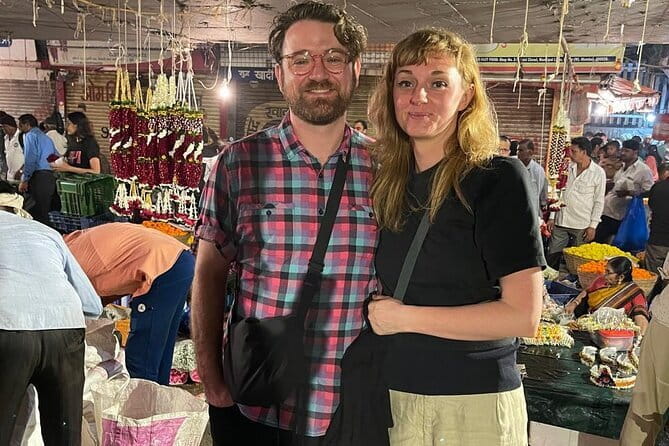
- Crawford Market start: a famous Fort-area market with free admission and enough time to get oriented quickly
- Mangaldas Market textiles: silk, cotton, and other fabrics on display, with a focus on what’s actually sold there
- Zaveri Bazaar jewelry lanes: gold, silver, and diamonds, where traditional craftsmanship sits next to modern styles
- Shri Mumbadevi Temple + Bhuleshwar Bazaar: a shift from shopping to faith, right next door to everyday street life
- Shri Mumbai Panjrapole animal shelter stop: an included look at 19th-century care for cows and other livestock
- Snacks, water, and English guidance: built-in comfort and clarity so you’re not guessing your way through the maze
Why This Mumbai Bazaar Walk Works: Markets, Worship, and Animal Care
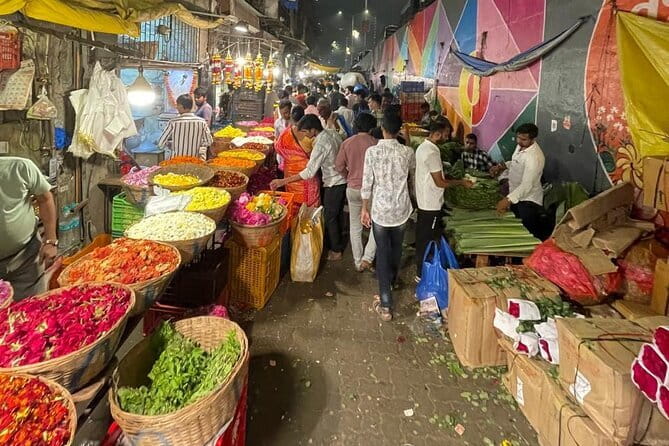
This tour feels like Mumbai on foot, without pretending the city is a theme park. One moment you’re in commercial lanes full of everyday buying and selling, and the next you’re near temples where people come to pray. That contrast is the point. You get a more complete picture of how faith, commerce, and community life sit side by side in central Mumbai.
I also like that it’s not only about shopping. Yes, you’ll see major marketplace areas like Crawford Market, Mangaldas Market, and Zaveri Bazaar. But the route also includes Shri Mumbadevi Temple, Bhuleshwar Bazaar, Shri Mumbai Panjrapole, and the Jain temple Madhav Baug Derasar. That balance helps you understand what you’re seeing, instead of just walking past it.
One more practical win: you’re paying for guidance, not just movement. An English-speaking guide keeps you oriented and helps connect the history and meaning behind each stop, especially when the streets start changing character block to block.
You can also read our reviews of more walking tours in Mumbai



Where You Start: Crawford Market and the Tour’s Easy Flow
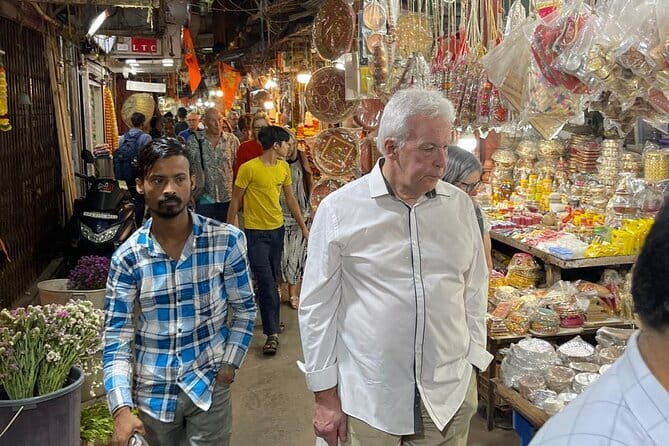
You begin at Crawford Market in the Fort area. The provided meeting point is Crawford market, 474, 1nd Lane, Khand Bazar, Dhobi Talao, Chhatrapati Shivaji Terminus Area, Fort, Mumbai, Maharashtra 400003. The tour ends at CP Tank Circle (CP Tank Cir, Charni Road East, Khandiwadi, Ambewadi, Girgaon, Mumbai, Maharashtra 400004). Your guide will help you get back to your hotel or wherever you want to go after.
The pacing is designed for a half-day: a few short stops clustered in the market-and-temple belt of Mumbai. You’ll also have private transportation included, which matters because Mumbai’s distances can look short on a map but feel longer when you factor in crossings, traffic, and crowds.
Expect the tour to be structured enough that you don’t have to plan each turn. You get a mobile ticket, and confirmation is received at booking time. If you’re using public transit, it’s helpful that the tour is listed as near public transportation, so you’re not totally dependent on taxis between points.
Stop 1: Crawford Market for Everyday Market Life in Fort
Crawford Market is one of Mumbai’s best-known shopping hubs, and starting here makes sense. The goal isn’t just to admire the place; it’s to help you understand how a major market functions before you move on to more specialized lanes.
You’ll spend about 15 minutes here, with admission listed as free. In a short window, you can still pick up what the market is known for: a mix of goods sold in many different categories, plus a very real sense of daily hustle. Even if you’re not there to buy anything, this is a strong first stop because it sets the rhythm for the rest of the walk.
The main drawback is the same as any big market: crowd density. If you want wide photo angles or quiet moments, you’ll get them only in brief gaps between flows. Use your guide’s timing to move with the group rather than fighting the current.
Stop 2: Mangaldas Market and Fabric Shopping That Actually Makes Sense
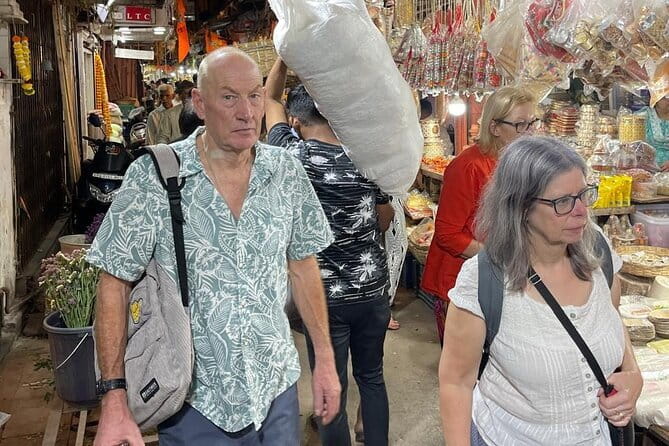
Next up is Mangaldas Market, known for textiles and fabrics. This stop is about learning what’s available and what the market specializes in, so you can better interpret what you see later in the city.
Again, your time here is about 15 minutes, and admission is listed as free. You’ll see colorful displays and a range of materials such as silk, cotton, and synthetic options. The guide’s role is useful here. Fabric markets can look similar from the outside, but the types of goods and how they’re grouped tell you what locals are coming for.
If you’re the kind of person who likes to shop with a plan, Mangaldas is a good place to notice differences: how materials are presented, what stands out, and what feels everyday versus special-occasion. If you’re not shopping, you’ll still benefit from the context, because textiles are part of Mumbai’s wider economy and culture.
A possible consideration: if you’re sensitive to strong smells from food stalls nearby or tight pathways, take it slow. Market lanes can vary in width, and you’ll want to keep your footing.
Zaveri Bazaar Jewelry Lanes: Gold, Silver, and Diamonds Up Close

Then comes Zaveri Bazaar, one of the most famous jewelry marketplace areas in Mumbai. This is where the tour shifts from everyday goods and textiles to higher-value craftsmanship and gem-and-metal retail.
You’ll walk the lanes focused on gold, silver, and diamonds, with a mix of traditional craftsmanship and modern styles. That blend is worth paying attention to because it shows how Mumbai’s business culture handles both heritage and new market demands.
What makes Zaveri Bazaar a highlight is that it’s visually easy to understand. You don’t need a long explanation to notice what’s sold, but you do benefit from a guide helping you connect the area to Mumbai’s identity as a major commercial city.
One practical tip: jewelry markets can trigger decision fatigue if you spend too long staring. Keep your focus on observation and ask the guide what you should look for, rather than feeling like you must compare every shop.
You can also read our reviews of more shopping tours in Mumbai




Shri Mumbadevi Temple and Bhuleshwar Bazaar: Faith Next to Street Life
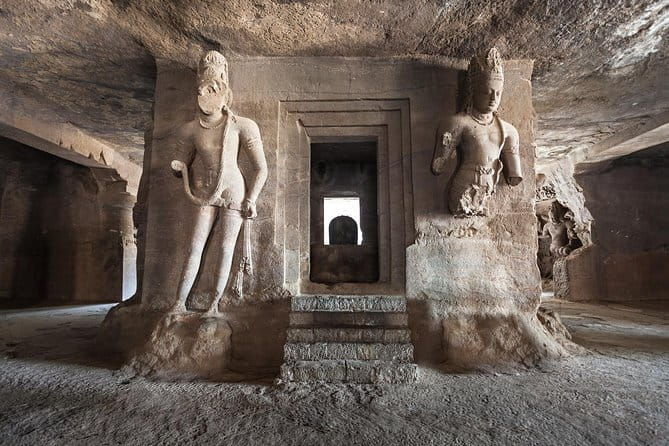
After the jewelry and market energy, the route steps into something more spiritual. Shri Mumbadevi Temple sits in Bhuleshwar and is dedicated to Mumbai’s guardian deity, Goddess Mumbadevi. It’s described as one of the oldest temples in Mumbai and a significant pilgrimage site.
This is where you get a meaningful change of pace. You’ll still be in the Bhuleshwar area, surrounded by normal city movement, but the temple setting changes your sense of time. You’ll have a chance to see how religious life and daily shopping coexist right beside one another.
From there, you move to Bhuleshwar Bazaar, located near Shri Mumbadevi Temple. Your time here is listed as about 20 minutes, with admission listed as free. This bazaar offers a wide range of products and gives you another slice of everyday commerce, but now the background story feels clearer. You’re not just walking through a market; you’re walking through a neighborhood where people shop and also worship nearby.
The only real “watch-out” is etiquette and attention. When you’re near religious spaces, keep your behavior respectful and follow your guide’s cues about movement and where photos are appropriate. A good rule: if you’re unsure, pause and wait for the group.
Shri Mumbai Panjrapole: A Shelter With a Purpose (and Included Admission)
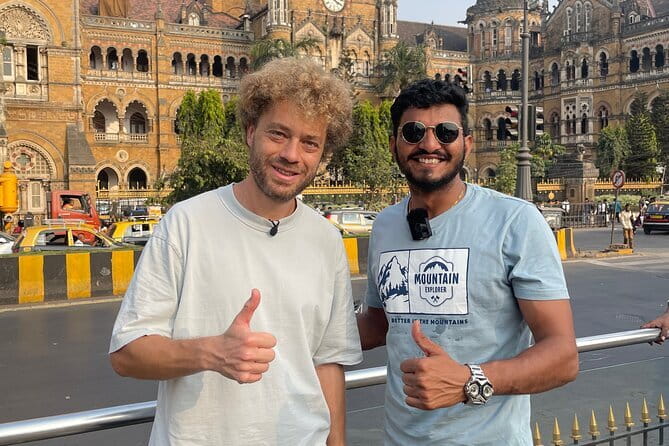
Not every market tour includes animal care. Here, you stop at SHRI Mumbai Panjrapole, an institution established in the 19th century dedicated to the care and protection of animals, particularly cows and other livestock. Admission here is listed as included.
This stop can be the emotional pivot of the tour. It’s a reminder that Mumbai isn’t only about buildings, markets, and commerce. There are also community systems built around care, responsibility, and long-term support.
Because your time is about 20 minutes, you won’t get a deep documentary experience, but you’ll still see the mission in a real-world way. If you care about animals or want your itinerary to include something genuinely different from shopping lanes, Panjrapole is an excellent choice.
A practical consideration: animal shelters can involve uneven surfaces and areas where you need to watch your step. Wear shoes with good grip, and keep your route tidy with the group.
Madhav Baug Derasar Jain Temple: Quiet Beauty After the Crowds
To close the spiritual part of the route, you’ll visit Madhav Baug Derasar, a Jain temple noted for its serene ambiance and intricate architecture. It’s dedicated to Lord Mahavira, the 24th Tirthankara of Jainism.
This stop works well after Panjrapole and the markets. You go from caring-for-life to structured spiritual space, which helps you slow down mentally even if your feet are still moving. The architecture is the main reason people remember this kind of temple stop: intricate details that reward careful looking.
Since your time on each stop is limited, don’t expect a full museum-style experience. Instead, use the guide to point out what to notice—shape, design elements, and the general layout—so you get more from the short window.
Street Food Expectations and the Included Snacks Reality
The tour overview mentions street food, and the format supports that idea: you’re moving through major market districts where food is a natural part of the scene. At minimum, you’ll have snacks included and bottled water to keep energy up during the walk.
Here’s the practical way to handle this: treat the included snacks as a baseline, not a full meal. Markets can be food-heavy, and you may want to grab additional bites on your own depending on what’s available and what the guide suggests in the moment.
If you have dietary restrictions, plan to ask early. Food stalls change frequently, and a guide can help you find options that fit your needs without derailing the pace.
Because this is a 3 to 4 hour outing, timing matters. Don’t assume you’ll have long sit-down meal time. You’ll likely be tasting and nibbling rather than settling in.
Price and Value: Is $49 a Good Deal for This Route?
At $49.00 per person, this Mumbai Bazaar Walking Tour can be good value, especially because several costs are handled for you. You get an English-speaking guide, bottled water, snacks, and private transportation. You also get the structure of a curated route that hits major market zones and major religious sites.
What makes this price feel reasonable is the mix of included items and the stop selection. Many shorter tours charge for guidance alone, then leave you to pay separately for the experience. Here, parts of the route explicitly note free admission at major market stops and included admission at Panjrapole.
The other value lever is that it’s private, meaning it’s only your group. That can be ideal if you want questions answered as you go, or if you want the guide to adjust pacing a bit for your comfort level.
One more subtle point: market tours are often only fun if you can understand what you’re seeing. The English-speaking guide makes the difference between a list of places and a coherent city story. If you like that kind of context, the price starts to feel like more than a price tag.
Who Should Book This Tour (and Who Might Not)
This tour fits best if you want a fast, structured look at central Mumbai through everyday markets and key religious locations. It’s also a strong choice if you’d like an English guide who can connect the dots between what’s for sale and what matters culturally.
You might not love it if you:
- want long shopping time at each market stop
- prefer quiet neighborhoods over crowd-heavy streets
- need a lot of downtime during the outing
- are easily overwhelmed by switching between intense commercial areas and sacred spaces
If you’re traveling as a couple or small group, private transportation and the private format can make the experience smoother. If you’re solo, you may still enjoy it, but keep your expectations aligned with the short stop timing.
Tips for a Smooth Walk in Fort and Bhuleshwar
A few practical things can make or break a half-day market walk:
- Wear comfortable, grippy shoes. You’ll cover multiple stops and likely deal with uneven patches and crowded corridors.
- Bring a light layer. Indoor/outdoor airflow can change as you move between market alleys and temple settings.
- Use your guide to prioritize. Since stop times are around 15 to 20 minutes, ask what to focus on at each location.
- Treat religious areas with extra care. Keep your pace calm and follow guidance on where to stand and whether photos are appropriate.
- Plan for street movement. Even with private transport, you’ll walk lane to lane, and you’ll want to move with the group rather than stopping abruptly.
One detail that came through in a customer note: the guide Kamlesh stood out for being friendly and well-informed. That kind of guide style matters on a market route because it turns confusion into clarity fast.
Should You Book the Mumbai Bazaar Walking Tour?
Yes, if you want a short, well-structured slice of Mumbai that goes beyond shopping counters. The combination of Crawford Market, Mangaldas Market, Zaveri Bazaar, Shri Mumbadevi Temple, Bhuleshwar Bazaar, Shri Mumbai Panjrapole, and Madhav Baug Derasar gives you a route with variety and meaning, not just repetition.
I’d skip it only if you want long free time in shopping lanes or a slower pace with fewer transitions. At this format and duration, it’s a great choice for seeing a lot with guidance, not for leisurely browsing all day.
If your top priority is context—why these places matter and what you’re looking at—this tour is a solid bet for the price.
FAQ
How long is the Mumbai Bazaar Walking Tour?
It’s about 3 to 4 hours.
What locations are included on the tour?
The listed stops are Crawford Market, Mangaldas Market, Zaveri Bazaar, Shri Mumbadevi Temple, Bhuleshwar Bazaar, Shri Mumbai Panjrapole, and Madhav Baug Derasar.
Is admission included for all stops?
Crawford Market, Mangaldas Market, and Bhuleshwar Bazaar are listed as free. Shri Mumbai Panjrapole is listed as included.
Is the tour private?
Yes. It’s a private tour/activity, and only your group participates.
Is pickup offered?
Pickup is offered.
What is included in the price?
Included items are bottled water, snacks, private transportation, and an English speaking guide.
Is tipping included in the tour price?
No, tip is not included.
Where does the tour start and end?
It starts at Crawford Market and ends at CP Tank Circle. The guide will help you find your way back to your hotel or other destination.
Is there a mobile ticket?
Yes, the tour includes a mobile ticket.
What’s the cancellation policy?
Free cancellation is available. You can cancel up to 24 hours in advance for a full refund.