REVIEW · MARKETS
Mumbai Morning Market Tour of Flowers, Fish, and More
Book on Viator →Operated by Cityscape Mumbai Tours · Bookable on Viator
Waking up early in Mumbai pays off. This tour takes you through the city’s day-to-day food and flower supply chain while most of Mumbai is still rubbing sleep out of its eyes. You get the fish market-to-flower market contrast, a chai stop, and a ride onward to Dhobi Ghat to see clothes cleaned on a huge open-air scale.
I love how the morning route gives you access to places that feel real, not staged for sightseeing. I also love the hands-on feel of following a local guide through crowded lanes, where the explanations matter and help you read what you’re seeing (from fish handling to how laundry work flows day to day).
One possible drawback: the early start means you’ll feel it. Between crowded streets and the fish market smell and wet floor areas, you’ll want to plan your comfort and footwear accordingly.
In This Review
- Quick hits worth knowing
- A Morning in Mumbai That Feels Like Daily Life
- Sassoon Dock Fish Market: What You’ll Notice First
- Dhobi Ghat: Seeing Laundry Work on a City Scale
- Dadar Fruit and Vegetable Market: How Markets Read Your Palate
- Dadar Flower Market: Color, Fragrance, and Purpose
- Getting There and Moving Around Without Losing Your Day
- Price and Value: What $20.72 Really Buys You
- Who This Tour Is Best For (And Who Might Not Love It)
- Small Practical Tips That Improve Everything
- Should You Book This Mumbai Morning Market Tour?
- FAQ
- FAQ
- How long is the Mumbai Morning Market Tour?
- What stops are included in the tour?
- Is hotel pickup available?
- Do I have to pay admission fees at the stops?
- Is this tour private?
- Is there anything included besides market visits?
- What if I need to cancel?
Quick hits worth knowing
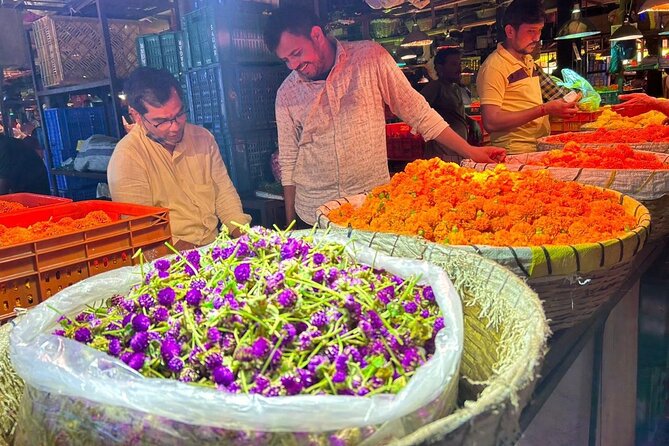
- Sassoon Dock at the right hour to catch fishermen unloading fresh catches
- Dhobi Ghat’s scale: over 2,000 clothes washed daily
- Chai break during the market circuit
- Local taxi or train onward to Dhobi Ghat instead of staying stuck in one spot
- Private group feel with only your group participating
- Photo-friendly early light while also avoiding some daytime traffic
A Morning in Mumbai That Feels Like Daily Life
Mumbai’s markets move on their own clock. This tour starts when the city is still quiet enough that you can actually notice details: how people carry goods, how stall owners price fast, and how workers shift from one task to the next. It’s a sharp contrast to the slower pace you’ll find later in the day.
You also get a nice mix of senses. Fish brings strong, unmistakable smells and a damp, busy atmosphere. Flowers bring color and fragrance that feel almost like a reset. And then there’s Dhobi Ghat, where the work is louder and more visual: thousands of clothes moving through wash and drying routines.
For me, the best part is that the tour isn’t trying to be a “museum” version of Mumbai. You’re watching production and daily buying happen in real time, in areas locals rely on every day.
You can also read our reviews of more shopping tours in Mumbai


Sassoon Dock Fish Market: What You’ll Notice First

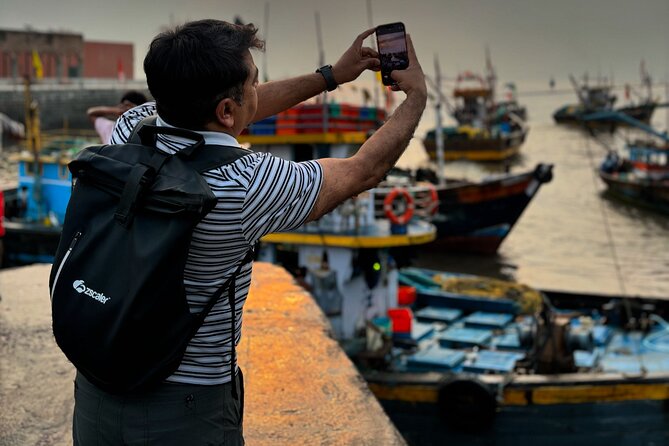
Sassoon Dock is where the morning energy starts, and it’s timed for you to see fishermen unloading fresh catches. That one-hour stop is long enough to walk through, pause for explanations, and watch how quickly everything changes as buyers arrive.
Expect a sensory overload, in a normal way for this kind of place. You’ll likely smell fish and see lots of wet surfaces. The crowd can be tight and fast-moving, so going slow helps. This is also the part where I’d follow your guide’s lead on where to stand and how to cross busy areas.
One practical note from experience-based tips: don’t wear your best shoes here. The market can be smelly and wet, and you don’t want to spend the rest of your trip worrying about your footwear.
If your guide is Jawwad (also called Jay), you may get clear explanations and a friendly, calm presence while you’re in the busiest zones. People mention he arrives early and helps you find things you might not spot on your own.
Dhobi Ghat: Seeing Laundry Work on a City Scale
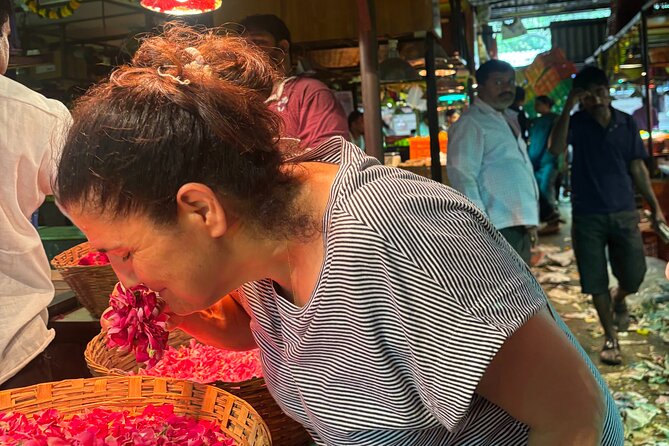
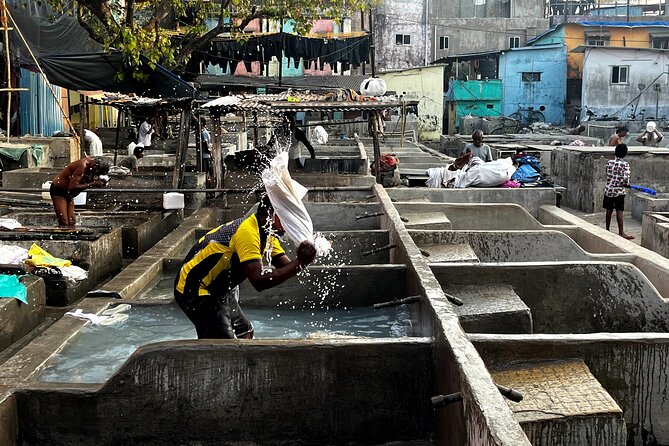
Dhobi Ghat is where the tour widens your understanding of what keeps Mumbai running. You’re going to see the world-famous open-air laundry area where more than 2,000 clothes are washed every day. It’s a short stop (about 30 minutes), so the goal isn’t to tour the whole operation. It’s to understand the system and what the workers are doing at that hour.
What makes this stop genuinely interesting is the visibility. Unlike laundromats you might know, this is out in the open. You can see the workflow and how many different tasks overlap—washing, rinsing, drying, and moving clothes through the space.
You’ll also see how Dhobi Ghat links to the broader city. The tour description emphasizes that laundry supports hotels, hospitals, and private homes, and that’s the key context to keep in mind. This isn’t just a spectacle. It’s part of Mumbai’s service economy.
The pace here is different from the fish market. You’ll need to keep moving with your group, but you can also slow down and watch. A guide like Sharon has been praised for patient answers and helping people cross streets safely, which is exactly what you want when you’re mixing sightseeing with active work areas.
Dadar Fruit and Vegetable Market: How Markets Read Your Palate

After Dhobi Ghat, the tour shifts to everyday produce at the Dadar fruit and vegetable market. This is a 45-minute stop, and it’s designed to show you the sheer variety and the rhythm of buying fresh ingredients.
If you like food, this part hits. You’ll see seasonal produce laid out in practical ways, and you’ll start noticing that the market isn’t just about what’s available—it’s about what people plan to cook right now. Coriander and chili show up in the smell profile the tour highlights, and those aromas stick to your memory long after you leave.
This stop also works well for photos, but don’t treat it like a camera safari. Look at the hands doing the work: sorting, weighing, packing, and swapping attention between customers and stall tasks. That’s where the “daily life” feeling comes from.
The market time is long enough to get a sense of how people choose items quickly—without dragging you through every single stall. If you’re on a first trip to Mumbai, this is where you’ll start to understand how local food shopping is organized.
Dadar Flower Market: Color, Fragrance, and Purpose
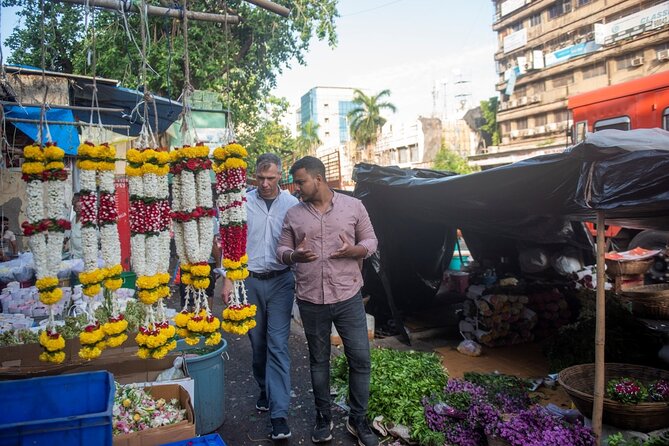
Then comes Dadar Flower Market, another 45-minute stop, and it’s easy to see why this tour includes flowers as a highlight. You go from seafood and produce into color and fragrance, and the change in atmosphere feels intentional rather than random.
Flowers here aren’t just decoration. In a city like Mumbai, they’re tied to daily rituals, celebrations, and social life. Even if you don’t know the names of every flower you see, you can still understand the trade: people buying stems, vendors bundling and arranging, and the careful handling that keeps blossoms looking good.
This is also a good place to look for small gifts or practical souvenirs. You might not want to buy large bouquets that won’t survive travel, but you can still appreciate how vendors create ready-to-use bundles for buyers.
If you’re traveling in the morning, you also get better light for photos. One useful tip from feedback: mornings mean better conditions for pictures and often less gridlock than later in the day.
You can also read our reviews of more tours and experiences in Mumbai





Getting There and Moving Around Without Losing Your Day
Timing is the secret sauce on this tour. It lasts about three hours, which is short enough to fit into a tight schedule, yet long enough to cover multiple market types without feeling rushed through everything.
You start at PizzaExpress Dhanraj Mahal on Chhatrapati Shivaji Maharaj Marg in Apollo Bandar, Colaba. The tour notes that the guide helps you book a taxi for the start, which matters if you’re coming from elsewhere and don’t want to figure it out right before pickup time.
Transportation-wise, you’ll take a local taxi or train to reach Dhobi Ghat. That’s a nice shift because you’re not just walking between stops. You’re getting a small taste of how movement works in Mumbai.
All of this helps you avoid the worst of the daytime traffic, and it keeps your morning focused. The tour’s goal is not to cover every famous monument. It’s to show you how Mumbai sources and processes everyday needs.
Price and Value: What $20.72 Really Buys You
At $20.72 per person, this tour is priced like an “earn your value” experience: you’re paying for access to a smart morning route plus local guidance in crowded, working spaces.
Here’s what makes it feel fair:
- You get a multi-stop circuit in a compact time window (fish, laundry, produce, flowers).
- You’re not paying separate admission fees at each stop; the tour info states admission ticket free.
- You get a chai break, plus the guidance that helps you understand what you’re seeing.
The cost also lines up with the experience type. These markets don’t slow down for visitors. Without a guide, you can still go independently, but you’ll spend more time figuring out routes and what to pay attention to. With a guide, you can focus on the why behind the scenes.
If you’re a first-timer in Mumbai or you want a non-temple, non-museum day that still feels deeply local, this pricing can make sense quickly.
Who This Tour Is Best For (And Who Might Not Love It)
This tour is a strong fit if you like:
- Market scenes where you can observe real work
- Food-focused travel where smells and textures matter
- Photography in morning light
- A short, organized route instead of hours of wandering
It may be less ideal if you hate crowded spaces or you’re sensitive to strong odors. The fish stop is part of the deal, and Dhobi Ghat’s working environment is not designed for quiet, slow walking.
Comfort matters, too. If you can handle a bit of street movement and standing in busy areas, you’ll enjoy it more. If you want a totally polished experience with minimal sensory intensity, you might find the markets challenging.
Small Practical Tips That Improve Everything
These are the kinds of details that help you enjoy the tour instead of just enduring it:
- Wear comfortable shoes. The fish market can be wet and smelly.
- Keep your pace flexible. The group moves with the market flow.
- Listen to your guide about crossing streets and where to pause for photos. Feedback includes help with safe walking from guides like Sharon.
- Bring a willingness to look at your surroundings as working space, not a backdrop.
Also, remember that guides in this tour are often praised for strong English and patient explanations. People describe Abhishek (Abhi) as easy to talk with and very knowledgeable in a way that’s practical, not rehearsed. Another guide, Ayan, is noted for guiding visitors to see more than they could find alone and for clear, helpful storytelling.
Should You Book This Mumbai Morning Market Tour?
I think you should book this tour if you want a true “start-of-the-day” Mumbai snapshot: fish unloading, flower buying, produce shopping, and Dhobi Ghat laundry work—compressed into about three hours. The price feels reasonable for the route, the early timing, and the guidance you’ll get in places that can otherwise overwhelm you.
I’d hesitate only if you know you’re sensitive to smells, crowds, and wet conditions. If you can handle those realities and you like seeing how a city functions before it becomes a tourist day, this is a smart use of your morning.
FAQ
FAQ
How long is the Mumbai Morning Market Tour?
The tour lasts about 3 hours.
What stops are included in the tour?
You’ll visit Sassoon Dock, Dhobi Ghat, the Dadar Fruit and Vegetable Market, and the Dadar Flower Market.
Is hotel pickup available?
Pickup is offered, and the tour notes that the guide helps you book a taxi at the start point.
Do I have to pay admission fees at the stops?
Admission tickets are listed as free for the stops included in the tour.
Is this tour private?
Yes. It’s private, and only your group participates.
Is there anything included besides market visits?
The tour includes a small chai (tea) break, and you’ll also take a local taxi or train to reach Dhobi Ghat.
What if I need to cancel?
You can cancel for free up to 24 hours in advance for a full refund. Cancellation changes within 24 hours aren’t refunded.