Dharavi and laundry in three hours. This tour pairs a close-up walk through Dharavi with Mumbai’s famous Dhobi Ghat, plus a quick local train ride that shows how the city actually moves.
I especially like the small group size (max 15) and the way local English-speaking guides steer you through homes and workplaces with care. One thing to consider: the experience depends a lot on your guide’s English and storytelling style, so come with curiosity, and keep your camera use respectful.
In This Review
- Key things to know before you go
- A 3-hour reality check on Mumbai’s work-life
- Meeting at Third Wave Coffee: how to start without fuss
- Dharavi walk: work, trade, and what people build
- The short local train ride: Mumbai in motion
- Dhobi Ghat: watching 100,000 clothes at work
- Safety, respect, and pacing through tight streets
- Guides matter: what you can expect from Priti, Ruba, Subhan, and Ruqaiyya
- Price and value: $9.29 for a lot of moving parts
- Who should book this tour (and who should pause)
- Should you book Dharavi Slum & Dhobi Ghat?
- FAQ
- How long is the Dharavi Slum & Dhobi Ghat Laundry Tour?
- Where does the tour start and end?
- How big is the group?
- Is there a local train ride included?
- What’s included in the price?
- What isn’t included?
- Are the guides English-speaking?
- Do I need tickets for Dharavi or Dhobi Ghat?
- Is bottled water provided?
- Can most people participate?
- What is the cancellation policy?
Key things to know before you go
- Max 15 people keeps it conversational and lets your guide manage the pace.
- Dharavi first, Dhobi Ghat second means you understand the neighborhood before you see the laundry system.
- Dhobi Ghat runs on hand methods as thousands of garments are washed and processed outdoors each day.
- A short local train ride (about 15 minutes) breaks up the walking and gives you that real Mumbai rhythm.
- Bottled water included, handy in the heat, with a stop that works well for a half-day plan.
- Meeting point is specific (Third Wave Coffee in Mahim), so show up a bit early to avoid stress.
A 3-hour reality check on Mumbai’s work-life
If you want Mumbai without the postcard filter, this is a smart way to spend a few hours. You’ll walk through Dharavi, known for its small-scale industries and day-to-day hustle, then head to Dhobi Ghat, an outdoor laundry operation where clothes are washed using time-honored methods. It’s not the kind of sight you forget in five minutes.
The value here is the combo. Many tours do either Dharavi or Dhobi Ghat. You get both, and you also get a 15-minute local train ride that makes the whole thing feel stitched into the city instead of staged.
Price-wise, $9.29 is low enough that you don’t feel like you’re buying a fancy package—you’re paying for a guide, a route, and access to places most people would struggle to navigate alone. The trade-off is that it’s simple: no private transportation, and it’s walking plus transit on public systems.
You can also read our reviews of more tours and experiences in Mumbai.


Meeting at Third Wave Coffee: how to start without fuss
You start at Third Wave Coffee, Tip Road, Unit no. 58, Ground, Ram Mahal, Senapati Bapat Marg, Marinagar Colony, Station, Mahim, Mumbai, Maharashtra 400016. The tour ends back at the meeting point, which makes the day easier to plan.
Here’s the practical advice: treat this like a timed appointment. If you’re coming from another part of town, give yourself extra time. One review-style pattern from people joining similar tours is that it can be a little tricky to locate the exact spot when you’re jet-lagged or navigating new streets. So arrive a bit early, find your guide or group, and then you’re good.
Also note the tour says you’ll be near public transportation. That usually means you’re not doing a long private ride just to get started. Good for time and cost. Just be prepared for normal city movement.
Dharavi walk: work, trade, and what people build
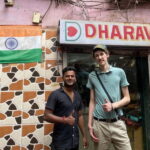
Your first stretch is about 2 hours in Dharavi. You’re there to see more than a label. The route is designed to show you daily life and the entrepreneurial spirit of residents who run small industries and find ways to make livelihoods work.
What makes this part worthwhile is the focus on how the community functions. You’re not just passing by storefronts; you’re walking through areas that connect residential life with working life. One guide-led route description that comes up often is going deep enough into the residential zones that you feel the scale of everyday living—not just the work areas.
You’ll also want to manage your expectations about photography. Dharavi is a living neighborhood. If you pull out a camera, do it quietly, with permission when appropriate, and don’t treat people like a moving exhibit. A more respectful posture helps you stay present, and it usually makes your guide more willing to answer the questions that actually interest you.
A note on guides: names that have been highlighted include Priti, Ruba, Subhan, and Ruqaiyya. People praised them for clear explanations, good English, and pacing that doesn’t leave the group behind. If your guide’s style is more direct and factual, that can be fine. If you want stories and context, bring questions like:
- What kinds of small industries are most common here?
- How do people adapt day to day?
- What does a normal work rhythm look like?
The short local train ride: Mumbai in motion
Between the two main stops, you’ll take a local train ride for about 15 minutes. Even if it’s brief, this is one of those pieces that turns a walking tour into an actual city experience.
Why it matters: local trains are where Mumbai’s speed becomes real. You’ll feel how people board, move, and organize themselves fast. And you’ll understand why guides often build routes around transit—because this city runs on public connections, not traffic-free fantasy.
Practical tip: plan for tight space and quick movement. Hold your essentials close, and listen for your guide’s instructions about where to stand and when to move. If your guide is the type who gives clear train pointers, you’ll appreciate it—some guides have even helped people with platform details for later plans.
Dhobi Ghat: watching 100,000 clothes at work
Your second main stop is about 1 hour at Dhobi Ghat, and this is where your senses really kick in. This is described as the world’s largest outdoor laundry, with over 100,000 garments washed daily using hand methods passed down through generations.
This part works best if you slow down and observe the process in layers:
- Look for how the washing is organized (people, tools, and workflow).
- Notice how it’s not a single machine moment—it’s many hands and routines.
- Pay attention to the structure of the work: what seems chaotic at first often has a system.
The laundry is also a great lesson in how tradition and city needs overlap. You’re seeing labor that continues because it solves a real problem at a real scale. It’s one thing to hear about history. It’s another to stand next to daily work that’s still actively supporting people’s clothing needs.
Admission is included for Dhobi Ghat, so you’re not scrambling for tickets on the spot. That’s part of why this tour feels good value: you’re paying for a guided route, and one of the most time-sensitive parts (getting to the laundry and entering smoothly) is handled.




Safety, respect, and pacing through tight streets
A big question people have is whether a slum-area tour is safe and how it’s managed. The tour format here is built for a group size up to 15 people, led by a local English-speaking guide, with walking plus transit rather than solo wandering.
In the guidance people highlighted, the common themes were:
- A pace that works for the group
- Feeling comfortable and well guided
- A respectful approach to the people and spaces you pass through
You should still assume this is an active neighborhood. Expect uneven ground, close interactions, and lots of everyday movement. Wear shoes that don’t hate walking. And keep your tone grounded. You’re there to learn and witness, not to treat the place like a theme park.
Guides matter: what you can expect from Priti, Ruba, Subhan, and Ruqaiyya
This tour’s quality hinges on the guide, and the names that show up with strong praise tell you what to look for. Guides such as Priti, Ruba, Subhan, and Ruqaiyya have been called out for things like:
- clear English
- thoughtful explanations of industries and daily life
- helping guests feel comfortable (including taking photos when appropriate)
- pacing that doesn’t make the group rush through sensitive areas
- practical advice for navigating trains and platforms afterward
One balanced note: not every departure will feel the same. If your guide’s English is harder to follow, the tour can feel more like a translation-driven walk than a conversation. That’s not a deal-breaker if you’re patient, but it’s the reason I suggest you come with flexibility and a willingness to ask questions in simple terms.
Also, if you’re the type who wants deep storytelling, don’t just wait for it. Ask. Good guides love engaged questions.
Price and value: $9.29 for a lot of moving parts
At $9.29 per person, this tour is priced like a bargain, but you still get multiple core components:
- A guided Dharavi walk (2 hours)
- Dhobi Ghat entry with an hour on site
- A 15-minute local train ride
- Bottled water included
- A local English-speaking guide and a route that links the parts
What you don’t get is private comfort: no private transportation. That’s okay if you already like city travel and public transit. It also keeps the price down, which is the whole point.
If you’re trying to decide between options, treat this as a “high learning per dollar” style of tour rather than a luxury experience. You’re paying for access, local direction, and time inside two working Mumbai worlds.
Who should book this tour (and who should pause)
I’d send you on this if you want:
- a guided, structured way to see both Dharavi and Dhobi Ghat
- a short city-transit moment (the local train)
- a group format that stays under 15 people
- a practical, no-frills tour where you can ask questions and move at a reasonable pace
You might want to pause if:
- you’re not comfortable walking through working neighborhoods and residential areas
- you need lots of explanations and your guide’s English style matters a lot to you
- you dislike public transit or tight timing
The best fit is someone who’s curious, patient, and willing to treat people and places with respect—because the tour’s value comes from real observation, not from spectacle.
Should you book Dharavi Slum & Dhobi Ghat?
Yes, if you’re looking for a Mumbai experience that feels grounded in daily work. The strongest reasons to book are the combination: Dharavi plus Dhobi Ghat, plus the local train ride, all for a price that feels almost too good to be true.
If you do book, go in with the right mindset. Wear comfortable shoes. Arrive at Third Wave Coffee in Mahim a little early. Bring questions, keep your camera use respectful, and let your guide set the pace—especially if you want the story behind what you’re seeing.
If you want a thoughtful, street-level Mumbai day, this is a solid choice.
FAQ
How long is the Dharavi Slum & Dhobi Ghat Laundry Tour?
It runs for about 3 hours (approx.), with around 2 hours in Dharavi and about 1 hour at Dhobi Ghat, plus a short train ride.
Where does the tour start and end?
The tour starts at Third Wave Coffee in Mahim (Tip Road, Unit no. 58, Ground, Ram Mahal area) and ends back at the same meeting point.
How big is the group?
The tour has a maximum of 15 people.
Is there a local train ride included?
Yes. You’ll take a Mumbai local train ride for about 15 minutes as part of the experience.
What’s included in the price?
The tour includes bottled water, and Dhobi Ghat admission is included (Dharavi ticket is free as listed).
What isn’t included?
Private transportation is not included.
Are the guides English-speaking?
Yes. The tour is led by a local English-speaking guide.
Do I need tickets for Dharavi or Dhobi Ghat?
Dhariavi is listed as admission ticket free, and Dhobi Ghat admission is included.
Is bottled water provided?
Yes. Bottled water is included.
Can most people participate?
The tour states that most people can participate.
What is the cancellation policy?
You can cancel for free up to 24 hours in advance for a full refund. If you cancel within 24 hours of the start time, the amount paid is not refunded.