REVIEW · HERITAGE WALKING TOURS
Best South Mumbai Heritage Walk
Book on Viator →Operated by Mumbai Dream Tours · Bookable on Viator
A city can feel like a museum when you walk it right. This South Mumbai Heritage Walk links major landmarks with the kinds of architecture that explain how Mumbai grew under colonial influence.
I like that the route is built for close-up photos and good street-level viewing, not just quick passing glances. I also like the small group size (up to 15), which makes it easier to ask questions and actually connect with the stories behind places like Chhatrapati Shivaji Terminus.
The main thing to consider is that it’s a 3-hour walking tour with several stops that can be brief (some are around 10 minutes). If you’re hoping for long, slow hangs at every monument, you may want to pair this with extra independent time afterward.
In This Review
- Quick reasons this walk is worth your time
- Walking the Fort–Colaba heritage belt (in about 3 hours)
- Price and what you get for $17.89 per person
- Meeting at McDonald’s near CST: start where you can find it
- A morning vs afternoon heritage walk you can actually schedule
- Gateway of India: the iconic opening shot
- Kala Ghoda: arts energy in a historic pocket
- Town Hall and the Asiatic Society Library: neoclassical calm
- Flora Fountain and Hutatma Chowk: architecture you can frame
- Horniman Circle Garden: a quick breath in the middle of Fort
- High Court Principal Bench: power made visible
- Taj Mahal Palace (Colaba): luxury in walking distance
- Chhatrapati Shivaji Terminus: the architecture stop you should linger at
- The guide makes the difference (Aakash, Gautam, Sandesh, Sanika)
- “Eco-friendly” and slower pace: what that means on the street
- What you’ll learn as you connect the stops
- Photo and comfort tips that match the route
- Logistics wrap-up: end near Gateway of India
- A fair word on drawbacks and expectations
- Should you book this South Mumbai Heritage Walk?
- FAQ
- How long is the South Mumbai Heritage Walk?
- Are there morning and afternoon options?
- How much does the tour cost?
- What group size should I expect?
- Is the ticket mobile?
- Do I need to pay admission for the stops?
- Where does the tour start and end?
- Is it near public transportation, and can most people join?
- What is the cancellation policy?
Quick reasons this walk is worth your time
- Small group (max 15) keeps the pace comfortable and the questions coming.
- Morning or afternoon options help you fit it around your other plans in Mumbai.
- Architecture variety includes Victorian Gothic Revival and neoclassical design you can actually see up close.
- Photo-friendly stops like Gateway of India and Flora Fountain make it easy to get great shots.
- Free entry at listed stops means your money mainly covers guiding and walking time.
- Mobile ticket simplifies check-in for a smooth start.
Walking the Fort–Colaba heritage belt (in about 3 hours)
South Mumbai has a way of stacking eras on top of each other. One minute you’re looking at grand monuments, and the next you’re in a street where the city’s colonial-era shape is still obvious in the buildings and the street plan.
This tour is timed for a focused hit: about 3 hours of walking, with a slow pace that beats the stress of bouncing around by car. It’s also designed to be eco-friendlier, since you’re moving on foot instead of relying on vehicles for short distances.
You can also read our reviews of more walking tours in Mumbai
Price and what you get for $17.89 per person
At $17.89 per person, this isn’t priced like a private driver day. It’s closer to what you’d pay for a guided walking experience that organizes the route and tells you what you’re looking at.
The value part is that the stops listed on the route are admission ticket free. So you’re paying primarily for expert guidance, direction, and the time spent seeing these places up close rather than figuring it out alone.
Also, this one has enough recent demand to feel “wanted”—over 10 bookings in the last month—which usually means it’s consistently running and not some one-off experiment.
Meeting at McDonald’s near CST: start where you can find it
The start point is very specific, and that’s a good thing when you’re in a big city. You’ll meet at McDonald’s, Building No 142, Shop No 12, Empire Building, No 134 to 136, Dr Dadabhai Naoroji Road, next to CST Station, in Azad Maidan (Fort).
Why I like this kind of meetup: it reduces guesswork. Near major transit means you can show up without needing a complicated taxi route or a long walk just to begin the tour.
One small practical note: because it’s a busy area, give yourself a little buffer time. You’re aiming to start together, not sprint into the group at the last second.
A morning vs afternoon heritage walk you can actually schedule
You get both morning and afternoon tour options. That matters more than it sounds, because South Mumbai is a “walk and look” place—you want your eyes fresh, not tired from rushing.
If your day is packed with museums or shopping, an afternoon slot can work well because it’s still daylight. If your plan is more laid-back later, the morning option helps you tick off the big landmarks early and keep the rest of the day lighter.
Gateway of India: the iconic opening shot
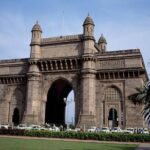
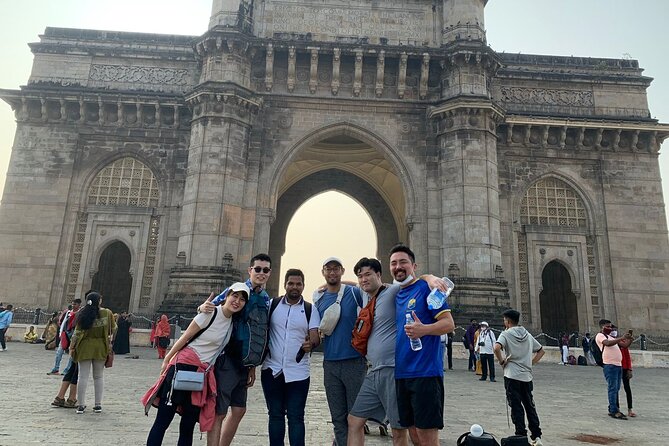
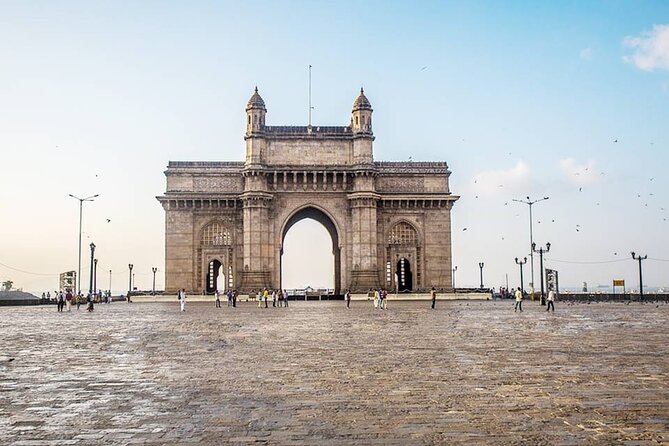
Most heritage walks in Mumbai start strong, and this one begins at Gateway of India. You get about 30 minutes here, and that’s enough time to take photos from different angles and get your bearings.
The monument itself was built in the early 20th century, so it helps frame the story of Mumbai at a turning point. From a walking-tour perspective, it also works as an easy anchor: it’s famous, it’s central to the city’s image, and it gives you a clear mental map for what comes next.
You can also read our reviews of more historical tours in Mumbai





Kala Ghoda: arts energy in a historic pocket
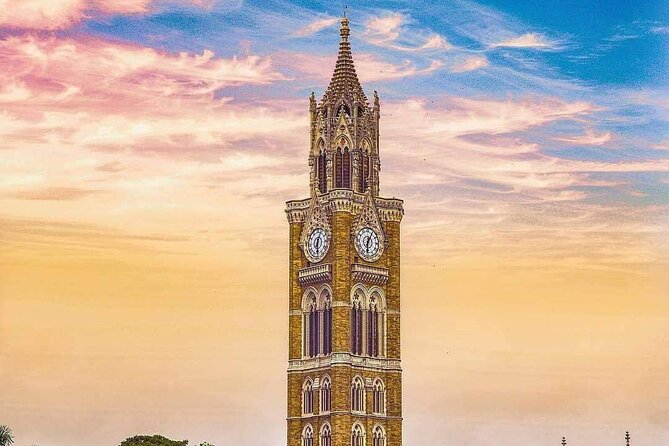
Next up is Kala Ghoda, where you spend around 30 minutes. This area is known for the Kala Ghoda Arts Festival held every February, which is a helpful detail because it connects the neighborhood to living culture, not only monuments.
Even if you’re visiting outside February, the place still feels like it has a reason to exist beyond sightseeing. On foot, it’s easier to notice the way galleries, institutions, and heritage buildings sit close together—small distances, big mood.
Town Hall and the Asiatic Society Library: neoclassical calm
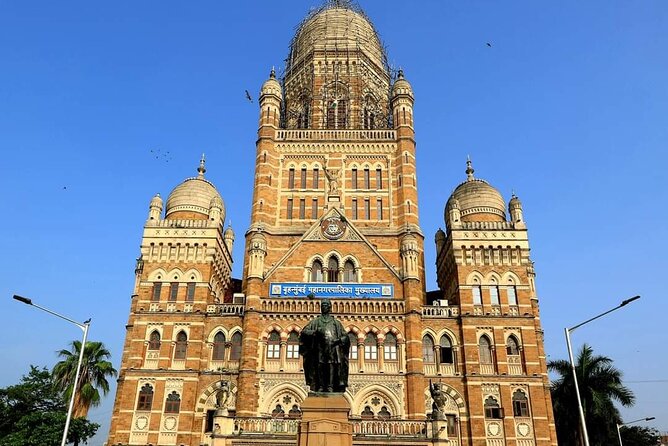
Then you reach Town Hall (Asiatic Society Library) in the Fort locality, also around 30 minutes. The key detail here is style: it’s a neoclassical building.
This is the kind of stop that rewards slowing down. When you can see the proportions and facade details up close, the architecture stops being a blur in a skyline photo. It’s also a good place for your guide to explain what “colonial influence” looks like in real buildings, not just in theory.
Flora Fountain and Hutatma Chowk: architecture you can frame
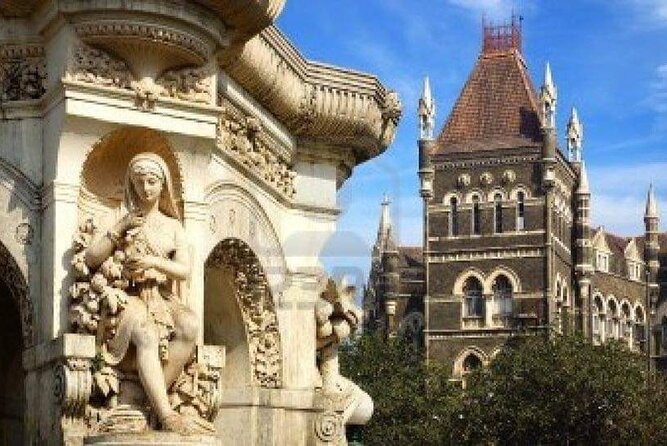
About 30 minutes is set aside for Flora Fountain at Hutatma Chowk. It’s described as an ornamentally sculpted heritage monument, which is exactly what you want on a walking route: something visually strong without requiring tickets or a long detour.
From a photography point of view, fountains and plazas are the easiest “stand here, frame it, repeat” spots. If your camera roll needs balance between big monuments and smaller street scenes, this is a great place to reset your shot list.
Horniman Circle Garden: a quick breath in the middle of Fort
You spend about 10 minutes at Horniman Circle Garden. It’s a compact park area inside the Fort district, surrounded by office complexes.
Think of this stop as a palate cleanser. You go from stone monuments to a patch of greenery, which also gives you a place to pause, regroup, and ask your guide questions without feeling like you’re holding up the group.
High Court Principal Bench: power made visible
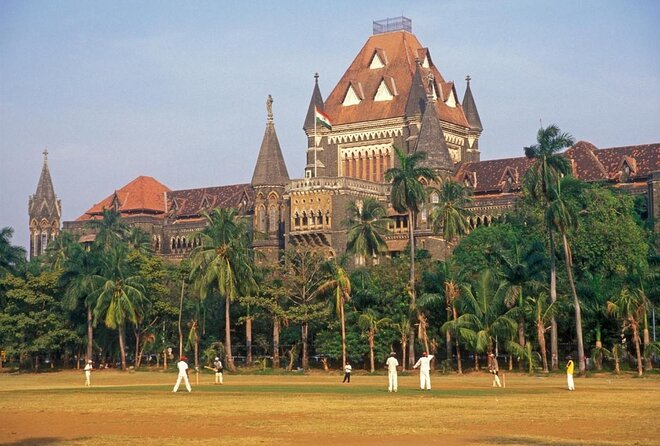
The tour then heads to the High Court of Bombay, Principal Bench, with about 10 minutes on the site. This stop reinforces the theme that architecture wasn’t just for beauty—it was for authority, governance, and the shape of public life.
Even if you don’t have a deep legal-history background, you’ll likely understand the basics faster with a guide pointing out what you’re seeing. In many cities, court buildings look similar at a glance. In Mumbai, details and context help the difference become clear.
Taj Mahal Palace (Colaba): luxury in walking distance
Next is The Taj Mahal Palace, Mumbai, with roughly 10 minutes for this viewpoint stop. It’s a five-star luxury hotel in the Colaba area, and it fits the broader story of how Mumbai’s heritage includes both older landmarks and the city’s modern prestige.
A quick reality check: this kind of stop works best when you treat it as a photo and architecture moment, not a “hang out and tour the inside” situation. The value is in seeing how this area’s identity sits beside historic public monuments nearby.
Chhatrapati Shivaji Terminus: the architecture stop you should linger at
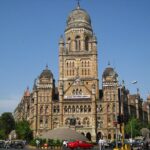
Finally, the route ends at Chhatrapati Shivaji Terminus (CST), with about 30 minutes. CST is a UNESCO World Heritage Site, and it’s widely known for its Victorian Gothic Revival architecture—one of the highlights specifically called out for the walk.
If you like buildings with personality, CST is where the tour really earns its keep. It’s also the best place to take time on details, because the structure has layers: curves, stonework, and facade rhythm that look different as you move around it.
This is also a good moment to get practical advice from your guide. A strong guide will help you pick angles for photos so you don’t spend 20 minutes standing in the wrong spot.
The guide makes the difference (Aakash, Gautam, Sandesh, Sanika)
What makes this walk more than a list of landmarks is the human layer. In past tours under this same provider, I’ve seen the kinds of guide styles that matter:
- Aakash is described as having extensive historical knowledge and a very likable approach. If you enjoy explanations that connect the dots between eras, you’ll likely feel taken care of.
- Gautam is praised for showing the best photo spots and for adding Bollywood insights alongside the history. That combo works well because it keeps the walk from turning into a lecture.
- Sandesh is highlighted for interesting facts about South Mumbai’s historic landmarks. He’s the kind of guide you want if you like clear, steady storytelling.
- Sanika is noted as friendly and personable, with broad conversation about India beyond the immediate landmarks. If you enjoy talking back and forth while walking, this style tends to land well.
With a group capped at 15 people, you’re not stuck whispering questions over loud crowd noise. You can actually hear the answers.
“Eco-friendly” and slower pace: what that means on the street
“Eco-friendly” in a city like Mumbai isn’t just a slogan here. The practical result is less time stuck behind traffic, fewer quick vehicle stops, and more continuous walking where you notice street details.
That slower pace also makes the route feel more like exploring than chasing. You’re better able to observe how buildings sit next to each other—especially where colonial-era design shows up alongside later development.
What you’ll learn as you connect the stops
This is a heritage walk built around the idea that colonialism shaped Mumbai’s landscape. You’ll see that idea through changes in architecture and civic planning: monumental entrances, institutional buildings, and major public landmarks designed for formal presence.
The stops aren’t random. They build a chain from iconic imagery (Gateway of India) to institutional power (Town Hall and the High Court) to transportation-era magnificence (CST). Along the way, the route also points you toward scenic city sections, including views associated with Marine Drive.
Photo and comfort tips that match the route
Because this is a walking tour with multiple short stops, you’ll get the best experience by planning like a photographer.
- Wear comfortable walking shoes you trust for a couple hours of city sidewalks.
- Keep your camera ready for quick switches in angles at major landmarks like Gateway of India and CST.
- Bring a refillable water bottle if you’re the kind of person who likes staying ahead of thirst. (The tour duration is short, but you’ll be outside much of the time.)
- If you’re traveling with a phone-only setup, make sure you can still access storage before you start. You’ll likely take more photos than you think.
Logistics wrap-up: end near Gateway of India
You’ll finish at Regal Cinema, Apollo Bandar, Colaba, Mumbai, Maharashtra 400001, and it’s listed as being close to Gateway of India.
That end location is convenient if you want to keep the night going with food or more wandering around Colaba. It also means you’re not stuck on the far side of town at the moment your legs are ready to complain.
A fair word on drawbacks and expectations
Every walking tour has a tradeoff. Here’s the one I’d think about before booking: some stops are around 10 minutes, so you won’t get a long, slow deep dive at every building.
Also, while most experiences should run normally, one past guest reported a cancellation with no prior warning and had to pursue a refund. That’s rare, but it’s a reminder to keep your day flexible and check your messages close to the start time.
Should you book this South Mumbai Heritage Walk?
Book it if you want an efficient way to understand South Mumbai’s built form—especially the Victorian Gothic Revival feel you’ll see at CST—without spending your day researching. It’s also a good choice if you like photo stops with a guide helping you find angles, not just landmarks on a map.
Skip it or consider pairing differently if you’re the type who needs long time at each site. This route is designed to hit several major anchors in one walk, so it’s more “best-of walking tour” than “slow-study architecture seminar.”
If you’re a first-time visitor and you want your bearings fast, this is a smart way to get them. And if you already know Mumbai landmarks but want better context and better photos, the guide-led storytelling here is exactly what makes it click.
FAQ
How long is the South Mumbai Heritage Walk?
The tour lasts about 3 hours.
Are there morning and afternoon options?
Yes. The experience offers morning and afternoon tour options so you can match it to your schedule.
How much does the tour cost?
The price is listed as $17.89 per person.
What group size should I expect?
The tour has a maximum of 15 travelers.
Is the ticket mobile?
Yes. The tour uses a mobile ticket.
Do I need to pay admission for the stops?
The listed stops show admission ticket free.
Where does the tour start and end?
It starts at McDonald’s, Empire Building area near CST (Azad Maidan, Fort) and ends at Regal Cinema, Apollo Bandar, Colaba.
Is it near public transportation, and can most people join?
It is listed as near public transportation, and most travelers can participate.
What is the cancellation policy?
You can cancel for a full refund if you cancel at least 24 hours before the experience starts. If you cancel less than 24 hours before, the amount paid is not refunded.