REVIEW · MUMBAI MARKETS & BAZAAR TOURS
Mumbai: Local Markets & Temples Tour
Book on GetYourGuide →Operated by Reality Tours and Travel Private Limited · Bookable on GetYourGuide
Wholesale chaos turns into a map of Mumbai. In 2.5–3 hours, I like how the guide turns Mumbai’s wholesale markets—including fruit, vegetables, and meat—into an orderly walk, starting near Regal Cinema. I also like the cultural anchor of Mumbadevi Temple, where the temple’s story ties directly to the name Mumba.
One consideration: you cover a lot in a short time, so this is best if you want variety over long temple stays. You’ll still pause for Bombay Panjrapole, a sanctuary focused on the welfare of more than 350 cows.
In This Review
- Key things I’d circle on your plan
- Entering Mumbai the practical way: markets, temples, and a quick pace
- Where the tour starts and how you’ll get around in those 15 minutes
- Crawford Market: learning the market logic fast, not just seeing stalls
- Mangaldas Market’s indoor textile world: why “wholesale” feels different in a roofed space
- Flower Alley and the older lanes: the “in-between” that makes the route real
- Zaveri Bazaar: a quick lane-market stop that keeps the tour moving
- A local restaurant pass-by: how you see everyday breaks without turning it into a food tour
- Mumbadevi Temple: the namesake idea made human
- Shri Mumbai Panjrapole: seeing the cow shelter and its welfare mission
- Price and value: $27 for markets, temples, and a welfare stop
- Rain or shine: what it means for comfort and planning
- Small group, English guide, and why the guide matters here
- Who should book this tour, and who may want more time elsewhere
- Should you book this Mumbai Markets & Temples Tour?
- FAQ
- How long is the Mumbai Local Markets & Temples Tour?
- What’s included in the $27 price?
- Where do we meet the guide?
- Which sites are visited on this tour?
- Is the tour only for temples, or are there markets too?
- Does the tour run in bad weather?
- What’s the cancellation policy?
- Is there a private group option?
Key things I’d circle on your plan
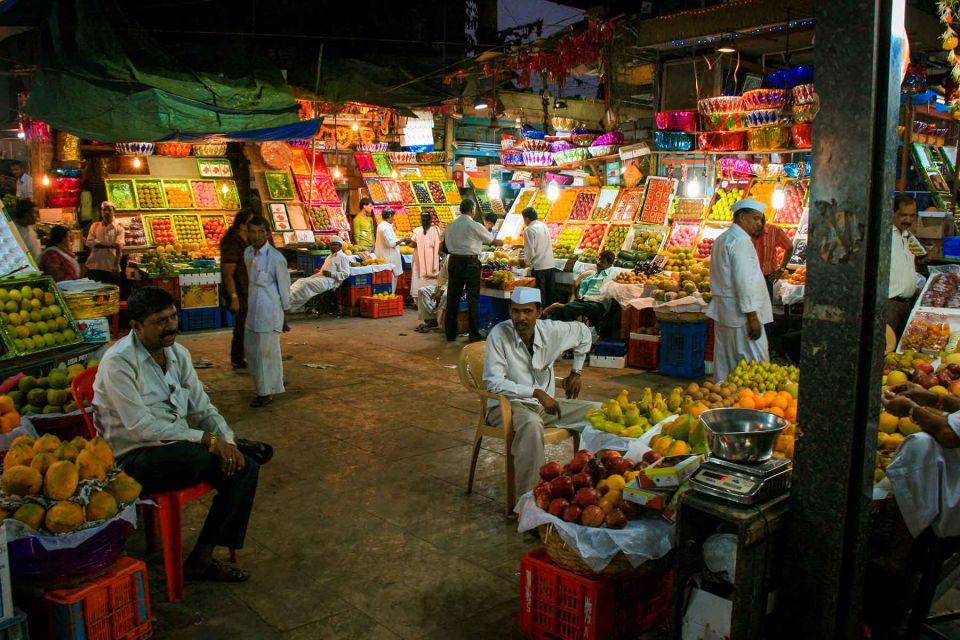
- A giant wholesale market mix: fruit, vegetables, and meat in one of the city’s biggest wholesale hubs
- Mangaldas Market’s indoor textile world: locals buy clothing inside the largest indoor wholesale textile market in Mumbai
- Classic anchors plus lesser-known lanes: Crawford Market, Mangaldas Market, and spots like Flower Alley
- Mumbadevi Temple connects to the city’s name: the historic Hindu temple known as Mumba’s namesake
- Panjrapole is about animal welfare: see Bombay Panjrapole’s cow shelter and how it operates
- A small window to see a lot: 2.5–3 hours with water/cold drinks and an English-speaking guide
Entering Mumbai the practical way: markets, temples, and a quick pace
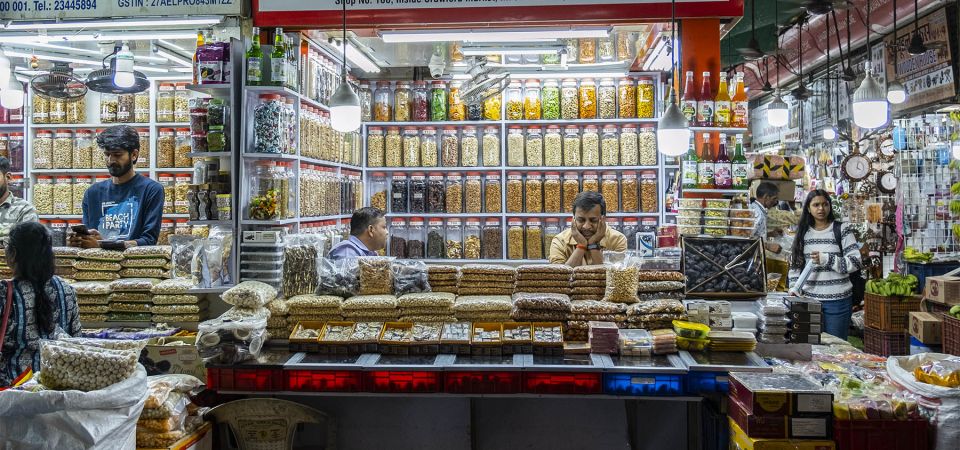
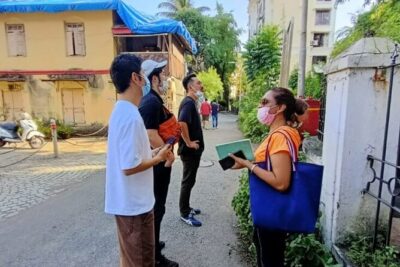
Mumbai isn’t shy about being loud. The streets, the shopfronts, the smells, the calls from carts—everything moves at once. What makes this tour work is that you’re not just watching from the sidewalk. A local English-speaking guide keeps you oriented while you move through some of the city’s most important everyday places.
Two stops drive the emotional balance of the route. The markets show you how goods flow through Mumbai’s daily life—especially the wholesale side, where you see the scale and the organization behind the noise. Then the temples slow you down for reflection, including Mumbadevi Temple, tied to the city’s roots through the namesake of Mumba.
There’s also a third mood shift that I really appreciate for perspective: Bombay Panjrapole. It’s a sanctuary with a welfare mission for more than 350 cows. Even if you’re not a temple person, this stop gives the tour a humane, grounded center.
Finally, note the pacing. This is designed for 2.5–3 hours, not an all-day immersion. If you want a long, unhurried deep-sit temple day, you might feel a little rushed. If you want a focused sampler that still covers big landmarks, it’s a strong fit.
You can also read our reviews of more tours and experiences in Mumbai.



Where the tour starts and how you’ll get around in those 15 minutes
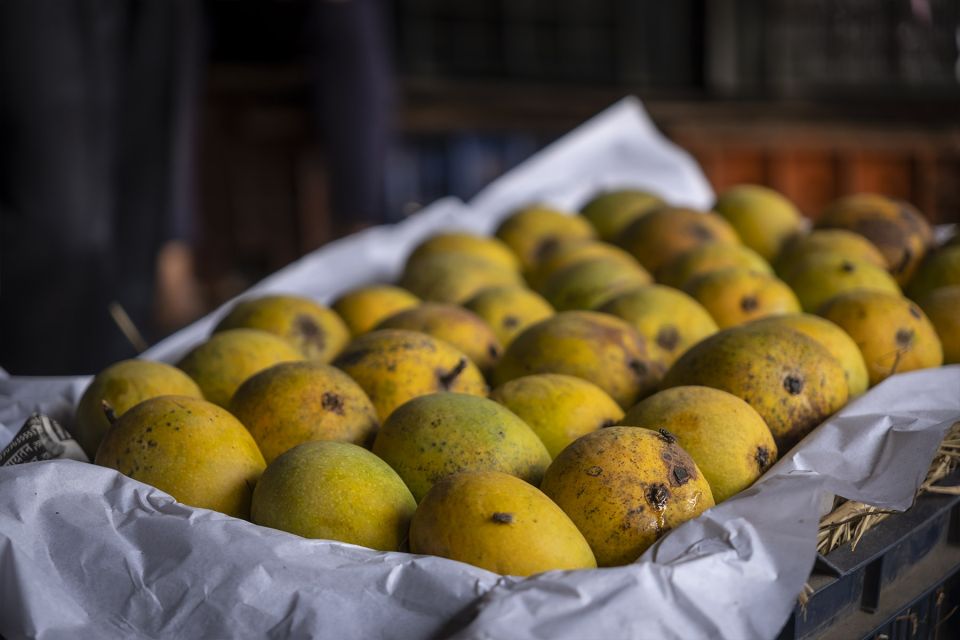
You’ll meet at a starting point near Regal Cinema. The exact meeting point can vary by option, so it pays to double-check your confirmation message. From there, you take a black cab for about 15 minutes to reach Crawford Market.
That short cab ride matters more than it sounds. It helps you skip the first layer of guesswork—crossing busy areas before you’re fully oriented—and gets you into market territory while your guide can set the tone. Once you’re on foot, the walking pace is part of the experience. Narrow lanes plus active vendors are where you feel the city’s rhythm for real.
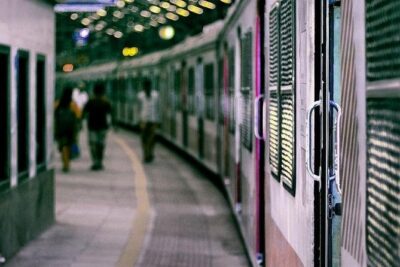
At the end, you’ll be dropped off at one of the provided central locations—either Chhatrapati Shivaji Terminus or Charni Road Railway Station (Girgaon area). That’s convenient if you’re continuing on to another part of Mumbai right after your tour.
Crawford Market: learning the market logic fast, not just seeing stalls
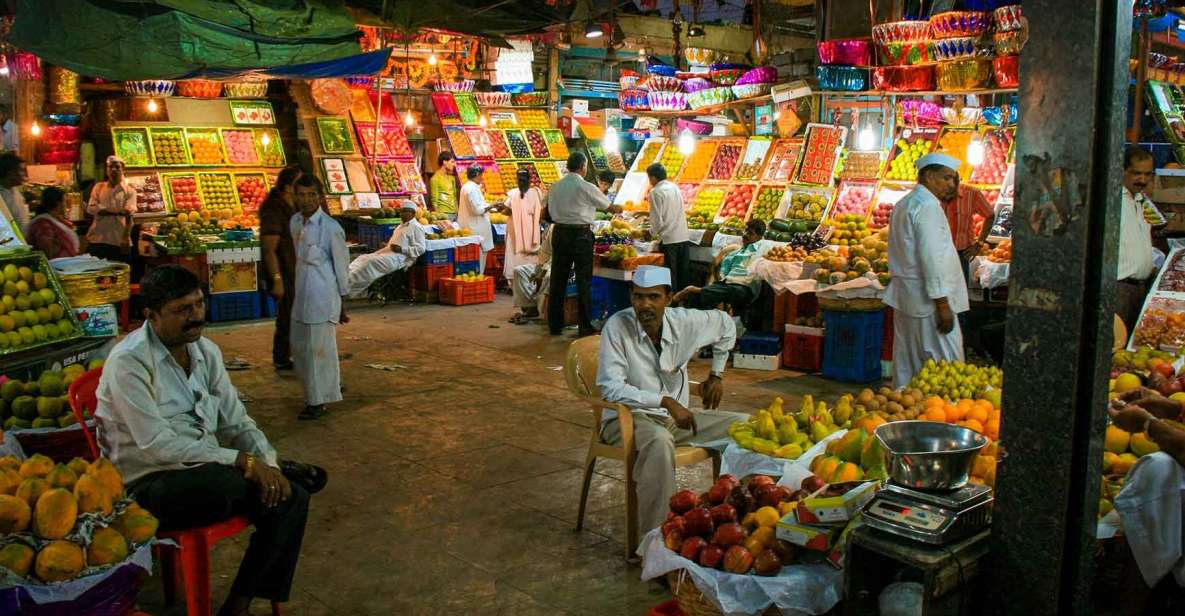
Crawford Market is one of those Mumbai places where the scale hits you first. You’re walking into a wholesale-style environment, and your guide’s job is to help you read what you’re seeing instead of just absorbing chaos.
Expect a guided walk with time to look around—about 15 minutes of visiting and walking time on this stop. You’ll likely notice how vendors and buyers interact, and you’ll get explanations that turn random sights into a story: what kind of goods are being traded, how the day’s flow works, and why this area is a must-see.
What I like about this stop is that it sets up your later comparisons. After Crawford, Mangaldas Market feels even more meaningful because you’ve already learned the wholesale pattern—how the crowd and inventory make sense together.
Practical tip: this is an active shopping area. Keep your phone accessible but not in your hand the whole time. Let your guide show you the landmarks and then take your pictures. You’ll waste less time stepping around people that way.
Mangaldas Market’s indoor textile world: why “wholesale” feels different in a roofed space
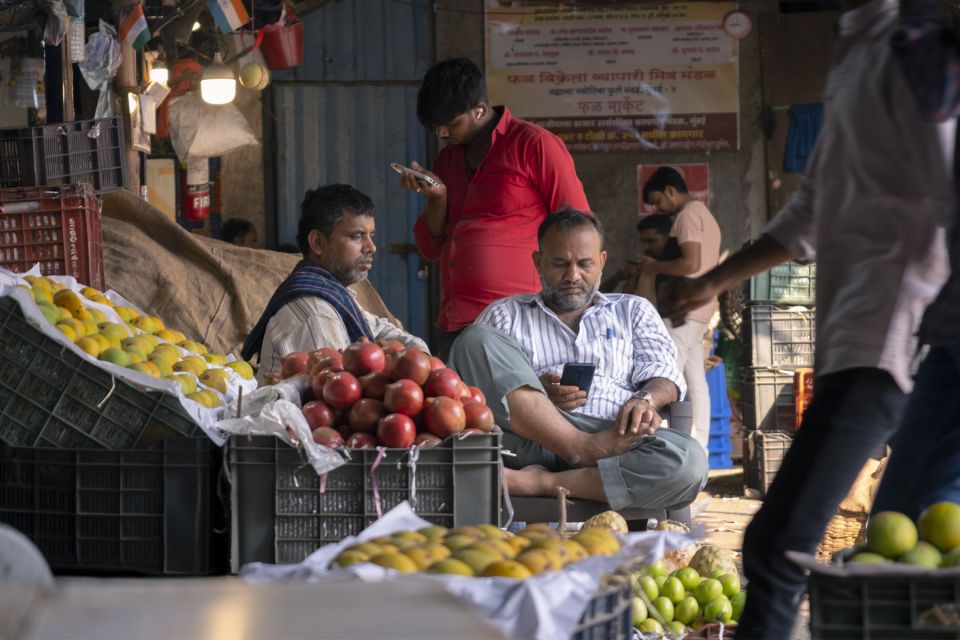
Mangaldas Market is where the tour shifts from food and goods to clothing and fabric trade. The key detail is huge: it’s the largest indoor wholesale textile market in Mumbai, and locals come here to buy clothing.
You’ll spend around 10 minutes at Mangaldas with guided context, then a bit of walking through the area. Indoors changes your experience. Sounds bounce differently, crowds compress and expand, and it can feel more controlled than the open-air streets. That’s helpful if you’re visiting in monsoon rain, because the tour is set to run rain or shine.
I also appreciate how this stop adds texture to your mental map of Mumbai. Markets aren’t one thing here. Food markets, textile markets, and lane-based bazaar areas all do different jobs. When you understand that, Mumbai stops feeling like one long market street and starts looking like a network.
If you’re the kind of traveler who loves shopping but hates high-pressure sales, this is a useful change of pace. It’s not about buying on the spot. It’s about seeing how people trade and choose in a wholesale setting.
Flower Alley and the older lanes: the “in-between” that makes the route real
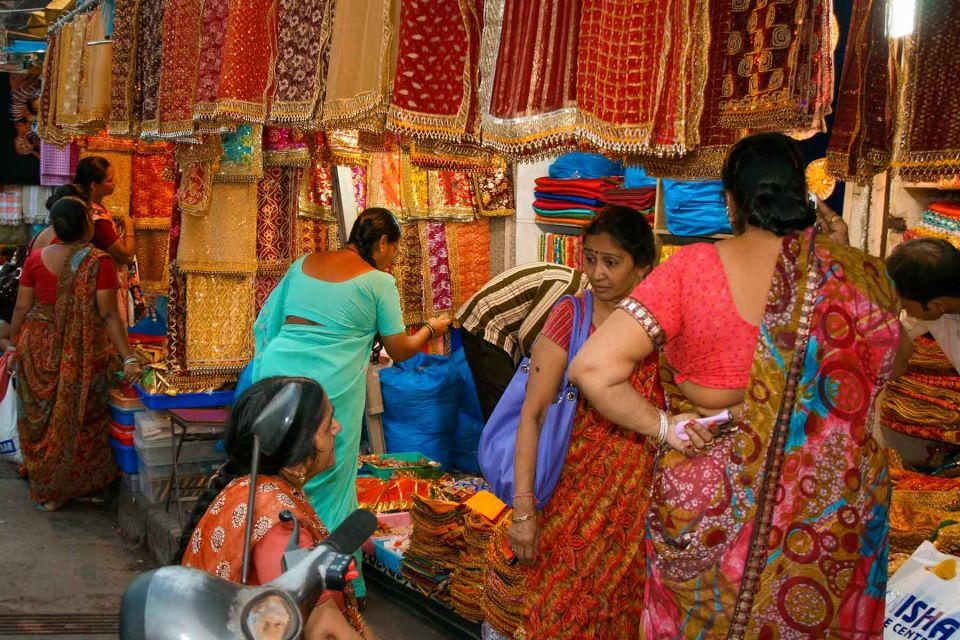
Mumbai’s big sights can feel scripted if you only follow the obvious streets. This tour includes time for the lanes and connectors that local life actually uses. Along the way, your guide introduces lesser-known markets such as Flower Alley.
This is where you’ll learn what the route is really for. The guide isn’t just ticking off famous names. They’re showing you how Mumbai’s older lanes connect major destinations like Crawford and Mangaldas, and how temples sit inside the same living grid as vendors and carts.
This part is also a good mental reset. When you’re in a wholesale market all morning (or all day), it can become sensory overload. The “in-between” segments give you small breaks: a turn, a view of a lane, a temple-facing corner where you can catch your breath and recalibrate.





Zaveri Bazaar: a quick lane-market stop that keeps the tour moving
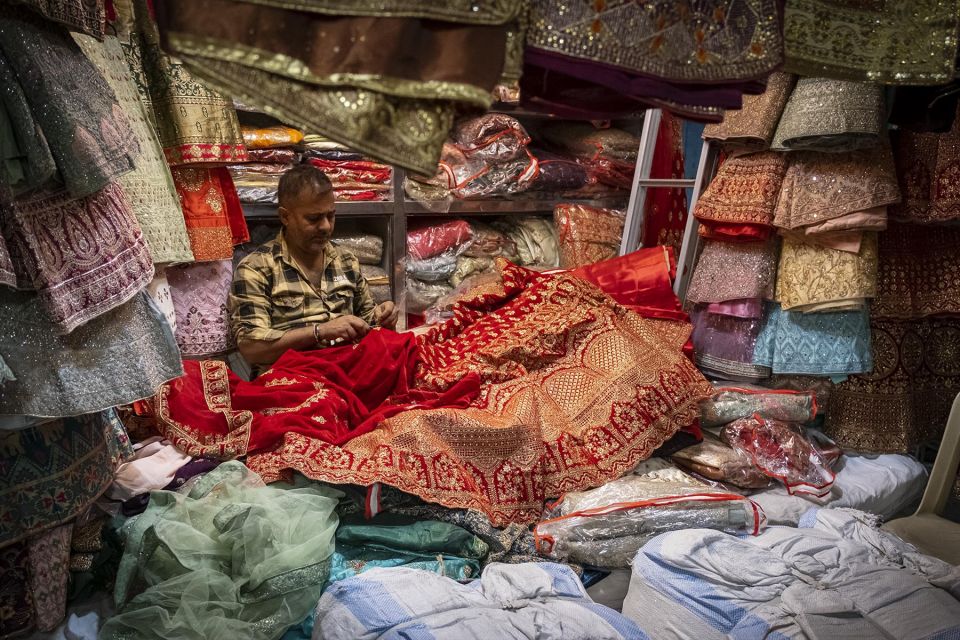
Next up is Zaveri Bazaar, another guided stop with time for sightseeing and a short walkthrough—around 10 minutes.
You won’t get a long stand-still museum moment here. Instead, it works like a snapshot: a chance to feel the character of one more market area and understand that Mumbai shopping isn’t limited to one type of trade. Your guide’s explanations help you spot what makes this bazaar feel distinct compared with the food-and-textile emphasis of earlier stops.
A realistic expectation: this is a short stop. If you want a slow browse, you’ll likely want to come back later on your own. For this tour, the goal is range and context, not shopping time.
A local restaurant pass-by: how you see everyday breaks without turning it into a food tour
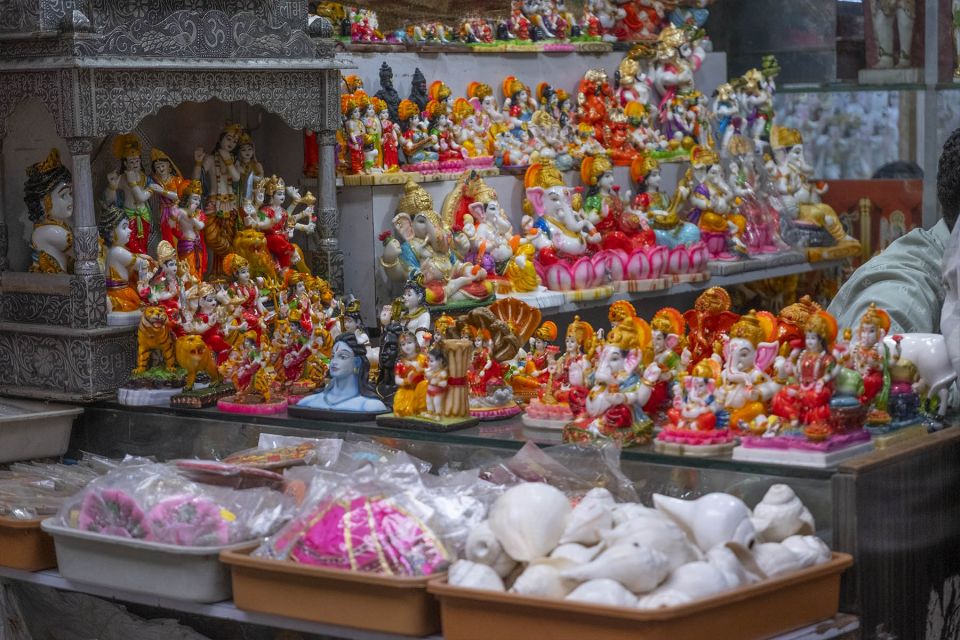
You’ll stop at a local restaurant area for a quick look—about 5 minutes—more of a pass-by than a meal.
I like that the tour doesn’t pretend it’s a full food experience. You’re here for markets and temples, and the included refreshment is water/cold drinks. That keeps the structure tight and the schedule realistic for a 2.5–3-hour day.
Since food isn’t included, you’ll get a clean slate at the end of the tour to choose what you want. You can match your meal to your tastes, your spice tolerance, and your budget—without feeling rushed through someone else’s predetermined menu.
Mumbadevi Temple: the namesake idea made human
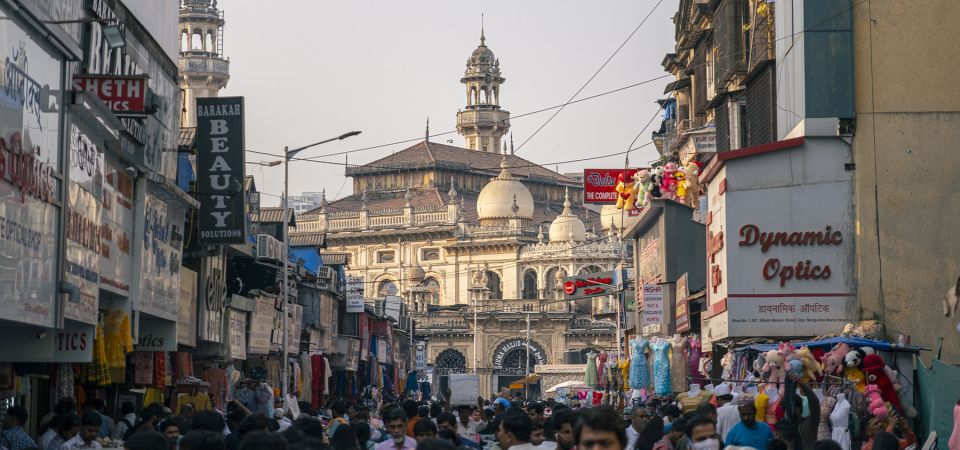
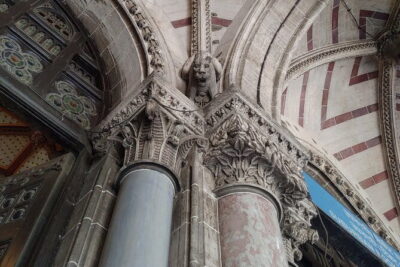
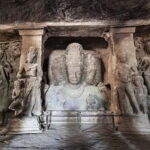
After the markets, you reach the heart of the tour: Mumbadevi Temple. This is a historic Hindu temple connected to the namesake of Mumba.
You’ll spend around 10 minutes here with a guided visit, sightseeing, and walking. That doesn’t sound like much on paper, but temples often work differently than markets. The guide’s explanation helps you understand what you’re seeing, so you don’t spend that time just looking at symbols without context.
What stands out most about Mumbadevi Temple is the way it anchors the entire day. The markets show how Mumbai trades and lives today. The temple reminds you why people have been connected to this place for generations, and why the name “Mumba” isn’t just a label.
Practical tip: dress and behavior matter around temples. Keep shoulders and legs covered as much as you can, and follow your guide’s cues on where to stand and how to move through the space.
Shri Mumbai Panjrapole: seeing the cow shelter and its welfare mission
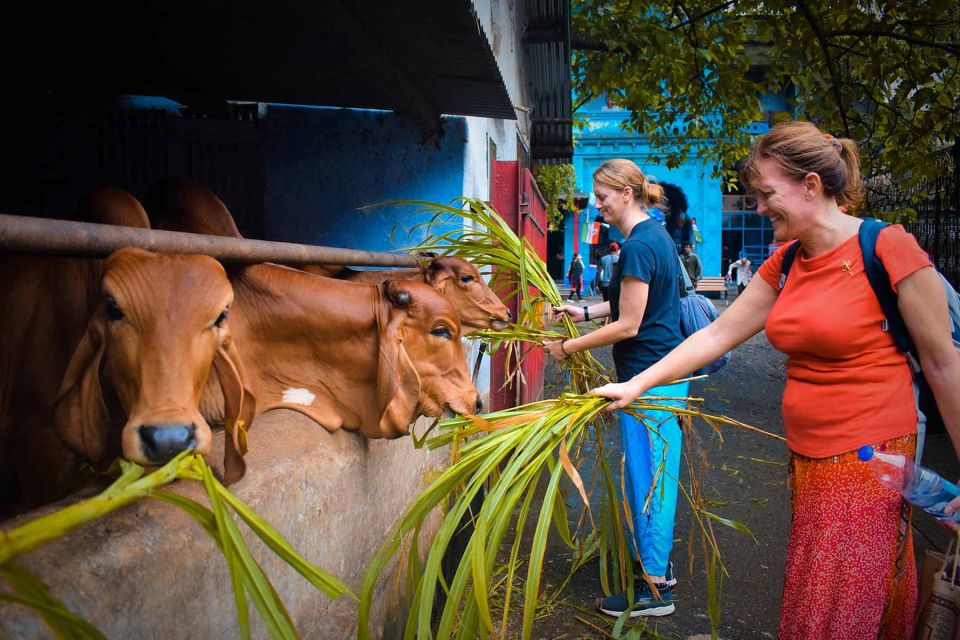
Then comes a stop that changes the tone of the tour quickly: Shri Mumbai Panjrapole. This is a cow shelter, and the mission is clear—welfare for more than 350 cows.
You’ll have about 15 minutes for a guided visit and sightseeing. Again, it’s not an all-day visit. But it’s long enough for you to understand the purpose of the place and for your guide to explain how the shelter fits into local life.
What I like about including Panjrapole in a markets-and-temples route is that it adds real-world compassion to the day’s themes. Markets can feel transactional unless you pause to see the values behind the community. A shelter focused on animal welfare gives you that pause.
If you’re sensitive to close animal contact, this is still worth considering because your guide will set expectations. And if you’re the type who likes to do responsible tourism, this stop is one of the most meaningful ways to do it on a short schedule.
Price and value: $27 for markets, temples, and a welfare stop
At $27 per person for 2.5–3 hours, the value comes from what’s bundled together. You’re paying for a local English-speaking guide, time in several high-signal locations, and included water/cold drinks. You’re also getting a planned route that uses a black cab segment so you start in the right place and keep moving efficiently.
The best way to think about value here is not just the headline price. It’s the number of distinct experiences you get without needing to plan connections or hire multiple guides for different themes. Wholesale food and textile markets are different kinds of learning. Temples add cultural context. Panjrapole adds a welfare dimension. This tour strings it together into one short, understandable arc.
Since food isn’t included, you should plan on buying your own meal afterward. That’s not a downside. It gives you control over what you eat and when.
Rain or shine: what it means for comfort and planning
The tour runs rain or shine, which is actually a big plus in Mumbai. If you’ve ever tried to walk markets in sudden monsoon showers, you know the difference between “possible” and “enjoyable.”
Your guide helps keep the day structured even when the streets get slick and crowded. Indoors at Mangaldas Market can be a nice relief if the weather turns wet. Still, you should bring basic rain protection and comfortable shoes. Market days punish sandals fast.
Small group, English guide, and why the guide matters here
The tour is offered with a local English-speaking guide, and private group options are available. The guide quality is a major factor because markets and temples are both knowledge-heavy. You don’t need a lecture, but you do need someone who can explain what matters and point out what you’d miss alone.
Recent feedback highlights guides such as Rakesh and Javid for being gentle, personable, and passionate about explaining what you’re seeing. That’s especially important when you’re dealing with busy market environments where you want to feel safe, not rushed.
Also, watch for the solo-traveler angle. One booking experience described being charged for two people but traveling alone and still getting a full guide experience. That’s a reminder to read your confirmation details and ask questions if you’re worried about group size.
Who should book this tour, and who may want more time elsewhere
This tour fits you best if:
- You want a short, structured day that hits multiple sides of Mumbai: wholesale trade, textiles, and temple culture
- You like local explanations more than shopping for shopping’s sake
- You want a humane stop with the cow shelter, not just photos at big-name locations
- You’re okay with a quick tempo where each place gets enough time for context, not a long stay
You might want a longer or different plan if:
- You’re chasing only the most famous “big temple” time and want longer, quieter stays
- You prefer browsing markets at your own speed without guided timing
- You know you’ll want to linger on one site for 30–60 minutes and photograph everything
This is a sampler. It’s not a single-focus pilgrimage day.
Should you book this Mumbai Markets & Temples Tour?
I’d book it if you want the fastest route to understanding Mumbai’s everyday engine. Crawford Market and Mangaldas Market alone make it worthwhile because you see wholesale trade up close—food and textiles in two very different forms. Add Mumbadevi Temple for the city’s namesake story, then top it off with Shri Mumbai Panjrapole for a welfare-focused stop, and you get a balanced day without needing to over-plan.
Book it with the right expectations: you’re getting a guided highlights route in 2.5–3 hours, not a slow museum-style deep visit. If that matches your travel style, this is a strong value at $27.
If you’re unsure, check what you most want—markets, temples, or the cow shelter mission—and then compare that to a short, moving itinerary. This one is best for people who like variety and clear guidance.
FAQ
How long is the Mumbai Local Markets & Temples Tour?
The tour lasts about 2.5 to 3 hours.
What’s included in the $27 price?
A local English-speaking guide and water/cold drinks are included. Food is not included.
Where do we meet the guide?
Meeting point may vary depending on the option booked, with Regal Cinema listed as a starting location.
Which sites are visited on this tour?
You’ll visit Crawford Market, Mangaldas Market, Zaveri Bazaar, Mumbadevi Temple, and Shri Mumbai Panjrapole.
Is the tour only for temples, or are there markets too?
There are multiple markets, including a large wholesale fruit/vegetable/meat market, the indoor wholesale textile market at Mangaldas, plus other market lanes.
Does the tour run in bad weather?
Yes. The tour runs rain or shine.
What’s the cancellation policy?
You can cancel up to 24 hours in advance for a full refund.
Is there a private group option?
Yes, private group availability is offered.