REVIEW · 2-DAY EXPERIENCES
Mumbai : Private 2 Days Agra Taj mahal & Delhi Tours From Mumbai
Book on Viator →Operated by 707 TOURS · Bookable on Viator
A quick flight south sets up a memorable culture sprint. This private Delhi + Agra trip is built around smart routing, so you get a guided, calmer visit to the big names like the Taj Mahal, plus classic Old and New Delhi stops. I especially like the private, air-conditioned door-to-door transfers and the fact you’re not stuck figuring timing and tickets by yourself. One thing to consider: monument fees aren’t included, so you’ll want to budget for entry costs on top of the package price.
You’ll sleep in a 4-star hotel in Agra for one night, eat breakfast twice, and get a full day to see the Taj area without rushing the photos into oblivion. The schedule also squeezes in major Delhi landmarks on Day 1—New Delhi to Old Delhi and back toward the grand civic sights—then swaps cities for Agra overnight.
In This Review
- Key things I’d plan around
- The value of this “fly out, see it right” plan
- Day 1 in Delhi: Qutb, Jama Masjid, and the big-city landmarks
- New Delhi: airport transfer and a clean start
- Qutub Minar: the “victory tower” context helps
- Jama Masjid: Mughal power in Old Delhi
- India Gate and the civic axis: a quick reset
- Lotus Temple: Baháʼí simplicity with a modern feel
- The overnight advantage: why staying in Agra matters
- Day 2 in Agra: Taj Mahal, Agra Fort, and the “Bachcha Taj” stop
- Taj Mahal: the headline site with a guided pace
- Agra Fort: power, then shifting capitals
- Itmad-ud-Daulah: the “Bachcha Taj” that deserves time
- End of Day 2: back to Delhi for your flight
- How the guide changes the whole trip
- Price and logistics: what you’re really paying for
- Who this tour suits best
- Should you book this from Mumbai?
- FAQ
- How long is the Agra and Delhi tour?
- Does the price include flights from Mumbai?
- Are hotel meals included?
- Is pickup offered, and are transfers included?
- Are monument and admission fees included?
- Is this a private tour?
Key things I’d plan around
- 4-star hotel in Agra for one night keeps the trip comfortable and reduces day-to-day stress
- Flights Mumbai–Delhi–Mumbai are included, so you’re not juggling schedules on your own
- English-speaking personal guide adds context fast, especially for Mughal-era sites
- Door-to-door A/C transportation makes the long sightseeing blocks feel manageable
- Monument fees aren’t included, so entry costs may add up for major stops
- Private format means the pace can fit your group rather than a big herd
The value of this “fly out, see it right” plan
This tour works because it treats the route like a system, not a checklist. You fly from Mumbai into New Delhi, sightsee with an English guide, then continue on to Agra and stay overnight in a 4-star hotel. The next day centers on Agra’s highlights and then sends you back to Delhi for your flight home.
At $681 per person, the headline number looks steep at first glance—until you break down what’s bundled. You’re getting round-trip flights (Mumbai–Delhi–Mumbai), private air-conditioned transportation, an English-speaking guide, a 4-star hotel bed in Agra (one night), and two hotel breakfasts plus dinner. For many people, that’s exactly what makes the difference between a tiring self-planned sprint and a smoother, guided trip.
A small planning note: the schedule is only about 2 days, so you should be okay with “see the classics well” more than “linger forever.” If your style is slow travel with long café hours, you may feel a bit time-pressed. If your style is history + big sights, you’re in the right lane.
You can also read our reviews of more private tours in Mumbai

Day 1 in Delhi: Qutb, Jama Masjid, and the big-city landmarks
Day 1 is all about getting oriented—Old Delhi and New Delhi mix, then the day turns toward Agra. Since pickup and airport transfers are included, you’re not burning energy on logistics, which matters because Delhi traffic can make “short distances” feel long.
New Delhi: airport transfer and a clean start
The day begins with pickup from your hotel and an airport transfer to fly to New Delhi. The tour labels the airport/flight segment as part of the day flow, which is useful: you’re not stuck hunting for a ride or trying to coordinate timing while also adjusting to a new city.
If you like knowing the plan from the start, this is one of the strongest parts. It also sets you up for the rest of the Day 1 route, where you’ll jump between landmarks rather than doing one slow neighborhood at a time.
Qutub Minar: the “victory tower” context helps
You’ll stop at Qutub Minar, part of the Qutb complex. The tour frames it as a minaret and victory tower at the site of Delhi’s oldest fortified city, Lal Kot. With a guide, you’re not just looking at a tall structure—you’re connecting it to the bigger story of early Delhi’s fortifications and dynasties.
One practical drawback: entry isn’t included for this stop. So if you’re hoping to pay one “all-in” price, this is where the extra costs can pop up.
Jama Masjid: Mughal power in Old Delhi
Next is Jama Masjid, described as built by Mughal emperor Shah Jahan between 1644 and 1656, and inaugurated by its first Imam. This stop is short in time, which can be fine if you’re guided. A guide can point you toward what to notice quickly—architecture, scale, and how the mosque anchors Old Delhi’s historic core.
Again, monument entry isn’t included. That means you’ll want to keep some budget and time buffer for ticketing.
You can also read our reviews of more tours and experiences in Mumbai





India Gate and the civic axis: a quick reset
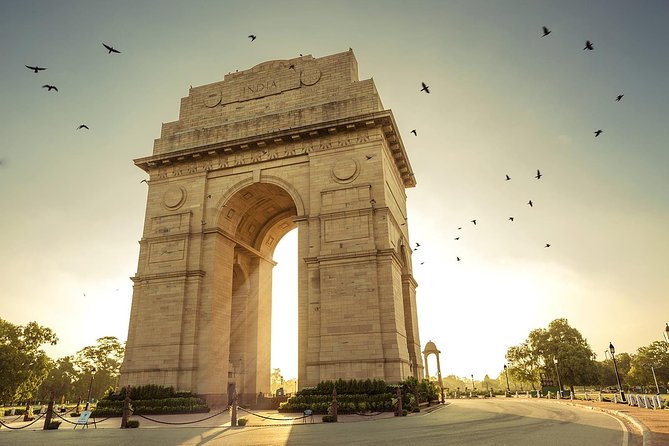
India Gate is a fast stop near the Kartavya path on the eastern edge of the ceremonial axis (formerly Rajpath). Then there’s also a stop for the Rashtrapati Bhavan area. These pauses aren’t “mystery stops”—they give you a sense of how modern Delhi organizes itself around grand public space.
If you’re worried this segment will feel like rushing, here’s the angle: these stops break up the day after Old Delhi’s religious intensity. It’s a chance to reset, get photos with breathing room, and let your brain switch gears from Mughal-era focus to modern civic scale.
Lotus Temple: Baháʼí simplicity with a modern feel
The day ends with the Lotus Temple, a Baháʼí House of Worship dedicated in December 1986. It’s a very different kind of architecture than the earlier Mughal stops, which helps the day feel varied rather than repetitive.
At the end of this sightseeing block, you drive to Agra for your overnight stay. That move is part of the package, which is a big deal: you don’t want to be negotiating transport at the end of a long Delhi day.
The overnight advantage: why staying in Agra matters
You get one night in a 4-star hotel in Agra, included. Even if your hotel experience ends up being average on paper, the biggest win is time. Staying in Agra means your Day 2 starts close to the Taj Mahal zone rather than turning the morning into another travel day.
And per the review notes shared by the operator, guests praised the hotel accommodations as first class and talked about the breakfasts being wonderful buffet style. That’s exactly the kind of detail that matters on a short trip: a solid breakfast makes the second day’s sightseeing easier, not just prettier.
Day 2 in Agra: Taj Mahal, Agra Fort, and the “Bachcha Taj” stop
Day 2 is your Agra core. The tour moves from Taj Mahal to Agra Fort, then to I’timād-ud-Daulah, and finally drives you back to Delhi for your flight.
This day is where the value really lands, because the biggest attraction is not just a monument—it’s the surrounding area, the sight lines, and the time your guide helps you notice details you’d otherwise miss.
Taj Mahal: the headline site with a guided pace
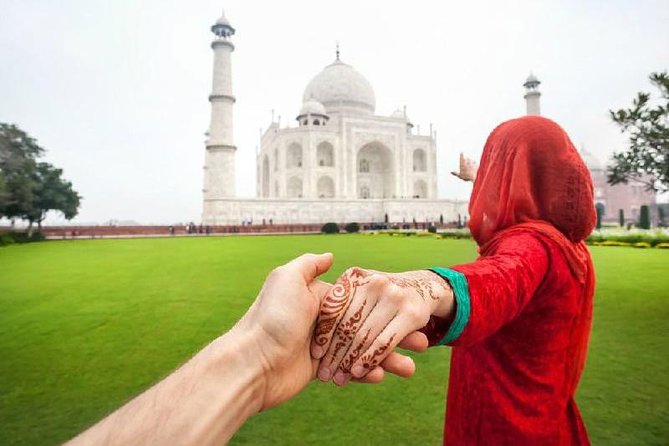
You’ll visit the Taj Mahal, an ivory-white marble mausoleum commissioned in 1632 by Shah Jahan. The tour gives a 3-hour slot, which is enough for more than one round of photos and a chance to look slowly at design features.
The tour also lists Taj Mahal admission as not included. That’s important for budgeting. It also means you should expect a small additional line-item cost at the gate or via pre-arranged entry depending on how your operator handles timing.
What’s great here is the guided context. When you’re not rushing, you can actually read the building—proportions, symmetry, and the way the complex feels like a planned world, not a single object.
Agra Fort: power, then shifting capitals
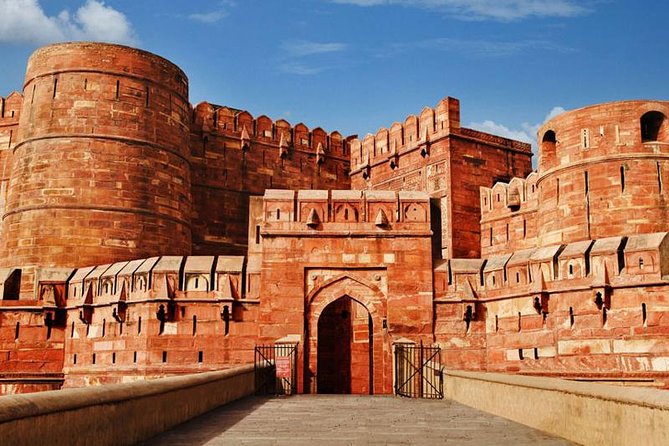
Next is Agra Fort, described as the main residence of Mughal Dynasty emperors until 1638, when the capital shifted from Agra to Delhi. That date detail is useful because it turns the fort from “old stones” into a political timeline.
You’ll have about 1 hour for this stop. That’s likely enough to understand the role of the fort and enjoy it visually, especially with a guide translating the layers quickly.
Admission is also not included here, so plan for additional entry costs.
Itmad-ud-Daulah: the “Bachcha Taj” that deserves time
The final main sight is Itmad-ud-Daula, the tomb of I’timād-ud-Daulah. The tour description calls it a Mughal mausoleum often described as a “jewel box,” and it’s sometimes called the “Bachcha Taj.” That nickname tells you the right expectation: this is about charm, refinement, and detail work more than sheer scale.
You get about 50 minutes. For me, this is one of those stops that can easily feel skippable if your day runs long. Don’t skip it mentally. Even with less time than the Taj, the craftsmanship focus can be a relief—like swapping from a grand stage to a well-lit workshop.
End of Day 2: back to Delhi for your flight
After Agra sightseeing, the tour drives you back to Delhi and to Indira Gandhi International Airport so you can fly back to Mumbai (or another drop-off point in Delhi). The drive time is listed as 4 hours.
This is the moment where you’ll appreciate the private format. If you were self-driving or piecing rides together, the airport transfer would be a stress multiplier.
How the guide changes the whole trip
A lot of tours show you the same monuments. This one is designed to give context through an English-speaking guide, which matters most at the places where you might otherwise see only surfaces.
For example:
- At Qutub Minar, the “victory tower” and Lal Kot reference helps you connect the complex to early Delhi.
- At Jama Masjid, hearing the Shah Jahan timeframe and inauguration detail turns the visit into a story about Mughal-era religious authority.
- At the Taj Mahal, guided framing helps you notice design intent rather than only chasing the iconic view.
This is where the private format helps, too. Your guide isn’t splitting attention among dozens of people.
Price and logistics: what you’re really paying for
Let’s talk straight about $681 per person. This is not a low-cost backpacker-style option. But it’s also not just paying for someone to drive you around.
You’re paying for:
- Flights round-trip from Mumbai to Delhi and back
- Private air-conditioned transport and airport transfers
- An English-speaking guide
- 4-star hotel accommodation in Agra for one night
- Two breakfasts plus dinner
- Private, small-group handling (your group only)
The main thing not included is monument fees. If you’re the kind of traveler who hates surprise expenses, that’s your main “watch this” item.
One more practical point: the tour says confirmation happens at booking time and the minimum age is 18. Also, the experience has free cancellation, with refunds if canceled at least 24 hours in advance (local time). That flexibility can be useful if your flight plans are still in motion.
Finally, the average booking time is reported as about 159 days in advance. If you want this to fit neatly with your dates and flight schedules, booking earlier can help.
Who this tour suits best
This is a strong fit if you:
- Want a guided, relaxed pace within a tight two-day window
- Prefer door-to-door convenience over public transit and route planning
- Like “big monuments with context,” not only photo stops
- Want comfort with a 4-star hotel in Agra and meals included
It may not be the best fit if you:
- Want to spend long hours on one site without moving on
- Hate any extra costs for entry fees
- Are looking for lots of neighborhood wandering beyond the main landmarks
Should you book this from Mumbai?
If you’re traveling from Mumbai and you don’t want the Delhi and Agra pieces to turn into an admin project, I think you should strongly consider booking this. The included flights, private transfers, English guide, and a 4-star Agra stay add up in real-world convenience, not just on a brochure.
My main caution is simple: budget for monument fees and keep your expectations aligned with a two-day rhythm. For most people, seeing the Taj Mahal properly—and still getting Agra Fort and Itmad-ud-Daula without turning the trip into a blur—is the payoff.
If you value smooth logistics more than chasing every side street, this private format is a smart way to do the classics.
FAQ
How long is the Agra and Delhi tour?
The tour runs for about 2 days.
Does the price include flights from Mumbai?
Yes. Mumbai–Delhi–Mumbai flight tickets are included.
Are hotel meals included?
Yes. You’ll have two breakfasts and dinner included.
Is pickup offered, and are transfers included?
Yes. The tour includes pickup and door-to-door air-conditioned transportation with private transport.
Are monument and admission fees included?
No. Monument fees are not included, and admission is listed as not included for several major stops.
Is this a private tour?
Yes. It’s a private tour/activity, and only your group participates.