REVIEW · CITY TOURS
Mumbai City Sightseeing and Elephanta Caves Tour
Book on Viator →Operated by Mumbaiwanderstour · Bookable on Viator
Two days of sights in one long day. You’ll roll through Mumbai’s most recognizable corners in an air-conditioned car, then head to the UNESCO Elephanta Caves for guided rock-cut history. Along the way, you’ll pause at places most first-timers only ever see from the sidewalk.
My two favorite parts are the private guide attention and the comfort of the air-conditioned roundtrip transport. It’s a lot to pack into one day, and having someone manage timing means you spend less time guessing and more time seeing.
The main drawback is simple: this is a full, long day. Elephanta and the outdoor viewpoints mean you’ll want moderate physical fitness, good shoes, and a plan for sun and heat.
In This Review
- Key points before you go
- How this 9-hour Mumbai sweep actually feels
- Elephanta Caves: UNESCO Shiva carvings in focused time
- Chhatrapati Shivaji Terminus: 10 minutes of Gothic grandeur
- Dhobi Ghat: the working city behind the postcards
- Hanging Gardens and Malabar Hill: quick green, big sea views
- Municipal HQ and High Court: Gothic facades with real function
- Marine Drive and Oval Maidan: skyline mood + cricket culture
- Mani Bhavan: a quick Gandhi stop that adds meaning
- Taj Mahal Palace, University of Mumbai library, and Gateway of India
- What I’d watch for with guide quality
- Price and value: is $96.38 worth it?
- Who should book this tour?
- Should you book this private Mumbai + Elephanta tour?
- FAQ
- How long is the Mumbai City Sightseeing and Elephanta Caves tour?
- Is pickup included, and do I get roundtrip transportation?
- Is this tour private, or will I share it with strangers?
- Are tickets included for Elephanta Caves and other stops?
- Does the tour include a bottle of water?
- Are snacks included?
- What kind of physical fitness level do I need?
- Is mobile ticketing provided?
- What happens if weather is poor or plans change last minute?
Key points before you go
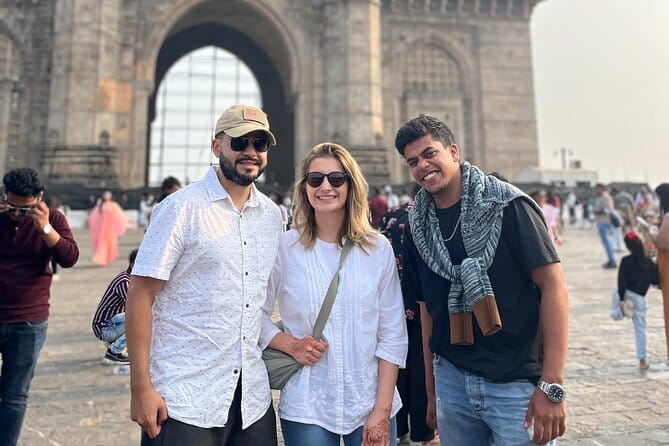
- Elephanta Caves time built in: about 2 hours at the UNESCO site with admission included.
- Private, on-the-move guidance: you get real explanations instead of just a checklist of stops.
- Comfort matters: air-conditioned vehicle plus bottled water for the long city stretch.
- Hand-washing history at Dhobi Ghat: you’ll go to the viewing deck (20 minutes) with admission included.
- Classic Mumbai skyline moments: Marine Drive’s famous night lighting and Malabar Hill views.
- A lot of big names, short stops: Taj Mahal Palace, Mani Bhavan, the University library, and Gateway of India all fit in.
How this 9-hour Mumbai sweep actually feels

This is the kind of tour that’s ideal when you’re short on time but still want a sense of the whole city. You’re not just ticking off monuments. You’re moving through neighborhoods and architectural styles—railway Gothic, colonial-era institutions, seaside viewpoints—then ending on UNESCO rock-carvings at Elephanta.
The pacing is “stop-and-absorb.” Most city stops are brief (often around 5–10 minutes), so you’ll want to treat each pause like a photo plus a quick orientation moment. The payoff is that you end the day with lots of context for what you might explore later on your own.
Also, this tour leans on comfort. You’re picked up in an air-conditioned vehicle for roundtrip travel, and you get a bottle of water. That’s a big deal in Mumbai, where traffic and heat can turn a sightseeing day into a stamina test fast.
If you’re traveling with friends or a small group, the tour’s private setup can feel like paying for control and clarity—especially helpful when you’re trying to navigate a dense, high-energy city without wasting hours figuring out logistics.
You can also read our reviews of more city tours in Mumbai



Elephanta Caves: UNESCO Shiva carvings in focused time
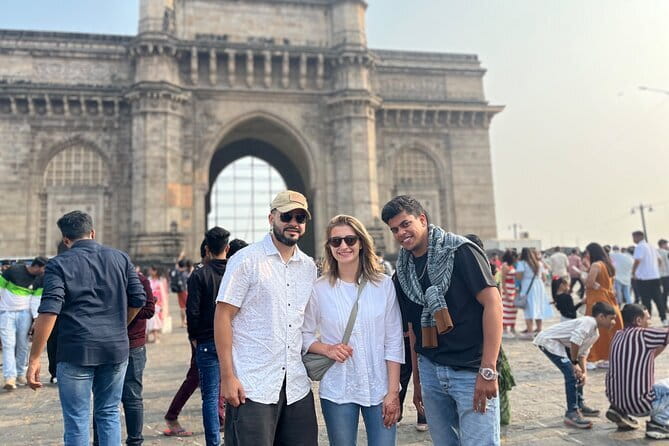
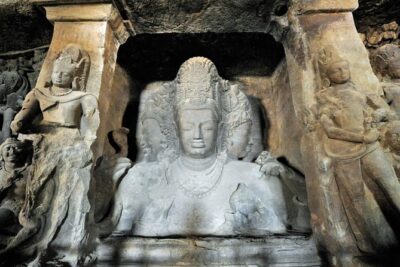
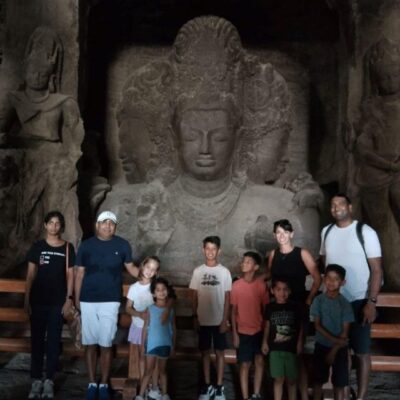
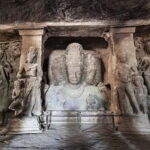
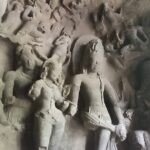
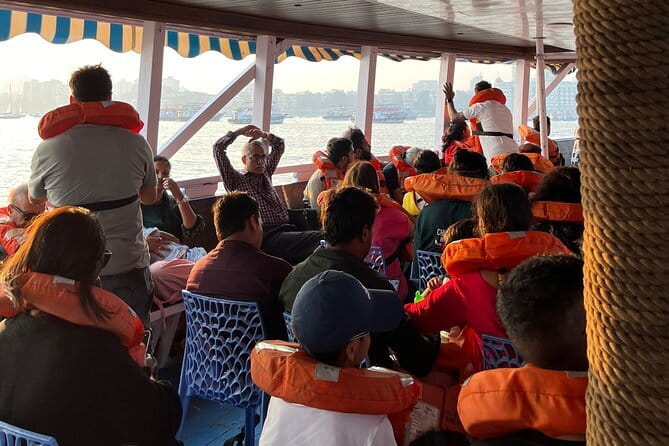
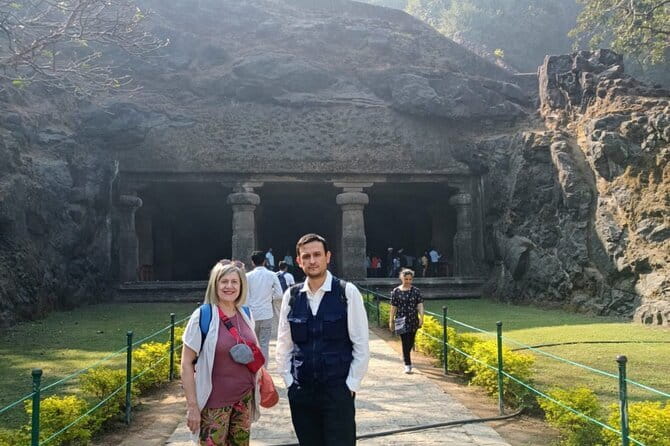
Elephanta Caves are the headline, and they’re given about 2 hours on the schedule with admission included. You’re visiting the ancient rock-cut caves on Elephanta Island, with caves dating to roughly the 5th–7th centuries. That time range matters because the art is older than most travelers expect. You’re not looking at “nice old caves.” You’re looking at a major Hindu rock-carving tradition with detailed sculptures and figures.
What I like about how this tour handles Elephanta is the structure. You get guided time, so the experience is less about reading a plaque and more about understanding what you’re seeing—especially the religious themes and the visual storytelling style.
A practical note: caves are a mix of steady walking and looking up. You’ll want good footwear and a light layer if it’s cooler inside. The tour notes moderate physical fitness, which is a fair warning to take seriously. If you’re the sort of traveler who hates stairs or uneven ground, plan carefully.
Chhatrapati Shivaji Terminus: 10 minutes of Gothic grandeur
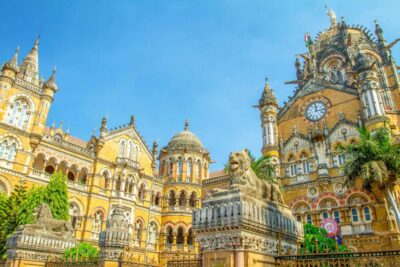
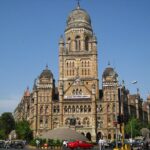
Then you pivot to one of Mumbai’s most dramatic architectural landmarks: Chhatrapati Shivaji Maharaj Terminus (CSMT). This UNESCO railway station is a Victorian Gothic structure, and it’s the kind of building you can’t fully appreciate in passing—yet the tour gives you the right amount of time for a quick orientation.
You’ll have around 10 minutes, with admission listed as free. That means: don’t treat it like a museum visit. Treat it like a chance to take in the shapes, the façade, and the sheer presence of a station that still functions as a major transport hub.
If you love architecture, this is a good sanity break between the more interpretive stops and the outdoor views later in the day. Even a short stop here helps you “read” Mumbai’s layers.
Dhobi Ghat: the working city behind the postcards
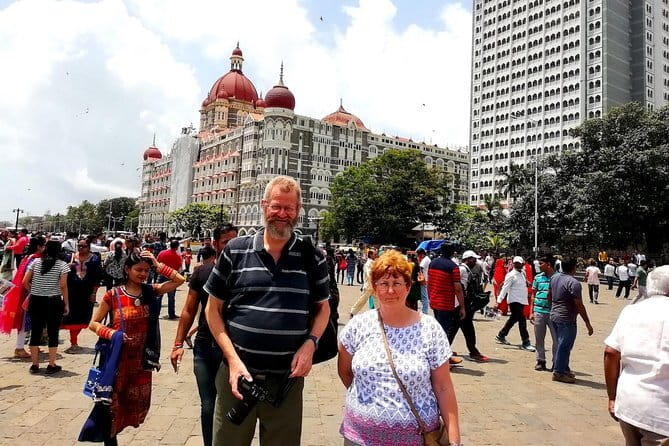
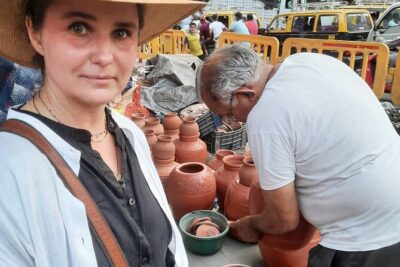
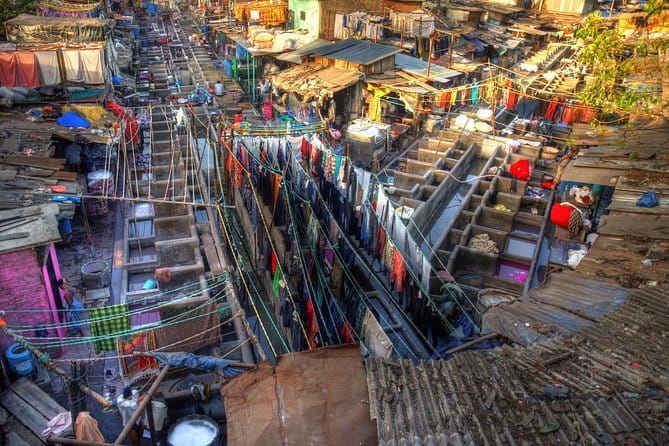
Dhobi Ghat in Byculla is one of those places that hits differently because it’s not staged for tourism. The tour takes you to the historic open-air laundromat, and you’ll view the activity from a designated deck. Time is around 20 minutes, and admission is included.
This is a great stop because it shifts your perspective from landmarks to daily life. You’re seeing labor and routine in action—thousands of clothes washed by hand—so the city feels lived-in, not curated.
The tour keeps this efficient. That viewing deck time is usually long enough to notice patterns in how the washing works, and short enough that you’re not rushed out before you’ve truly looked.
Practical tip: if you’re sensitive to strong smells or steam, be aware this is an active washing area. It’s part of the authenticity, but it’s also real work.
Hanging Gardens and Malabar Hill: quick green, big sea views
Next come the sea-facing viewpoints. You’ll visit both Hanging Gardens (terraced gardens atop Malabar Hill) and then Malabar Hill itself. Each stop is brief—think around 5 minutes each—and both are listed as free.
Why it’s worth your time: this area gives you panoramic framing for Mumbai’s coastal geography. You see the city’s layout against the Arabian Sea, and it helps you understand why Marine Drive and the surrounding neighborhoods look the way they do.
Even though the time is short, the value is orientation. After Elephanta and CSMT, this is your visual reset. It’s the kind of pause that makes later city views feel clearer because you’ve already “mapped” the coastline in your head.



Municipal HQ and High Court: Gothic facades with real function
You’ll also see two Gothic-style civic buildings: the Brihanmumbai Municipal Corporation building and the Bombay High Court principal bench. Both stops are free and quick (around 10 minutes each).
These aren’t the “most famous” sights for first-timers, but they matter because they show how British-era architecture left a lasting footprint. You’re looking at buildings that still serve important roles. That adds weight to the photos. It’s not just an old façade; it’s part of how the city runs.
If you enjoy historical architecture, this section is a nice bridge between the grand ceremonial feel of some landmarks and the working-city reality of places like Dhobi Ghat.
Marine Drive and Oval Maidan: skyline mood + cricket culture

Two of Mumbai’s easiest-to-feel-on-the-map stops are Marine Drive and Oval Maidan.
Marine Drive is a crescent-shaped boulevard along the Arabian Sea, known for sunset views and the famous night lighting locals call the Queen’s Necklace. The stop is around 10 minutes and admission is free. Even in daylight, the shape of the boulevard is easy to appreciate, and it gives you that classic Mumbai shoreline perspective.
Oval Maidan is a historic cricket ground surrounded by iconic Victorian and Art Deco buildings. You’ll have about 5 minutes and it’s also free. What I like here is the cultural shorthand: you’re seeing Mumbai’s love of cricket embedded in the city fabric.
This pairing works well because Marine Drive gives you the emotional coastline side, while Oval Maidan gives you the local rhythm side.
Mani Bhavan: a quick Gandhi stop that adds meaning
You’ll also stop at Mani Bhavan Gandhi Museum. Admission is included, and you’ll have around 10 minutes.
This is one of the stops that turns “random sightseeing” into something more grounded. Gandhi’s story and the freedom movement context add a human layer to all the stones and buildings you’ve been seeing.
The time is short, so you won’t get a textbook experience. Still, if you walk in with curiosity—who Gandhi was in Mumbai and why this place matters—you’ll leave with a stronger sense of the city’s historical identity.
If you like museums but want them in digestible form, this is a good fit.
Taj Mahal Palace, University of Mumbai library, and Gateway of India
This tour also gives you a cluster of heavyweight landmarks, all in quick stops:
- Taj Mahal Palace, Mumbai: a luxury hotel stop with admission included, about 10 minutes.
- University of Mumbai library: about 10 minutes with admission included.
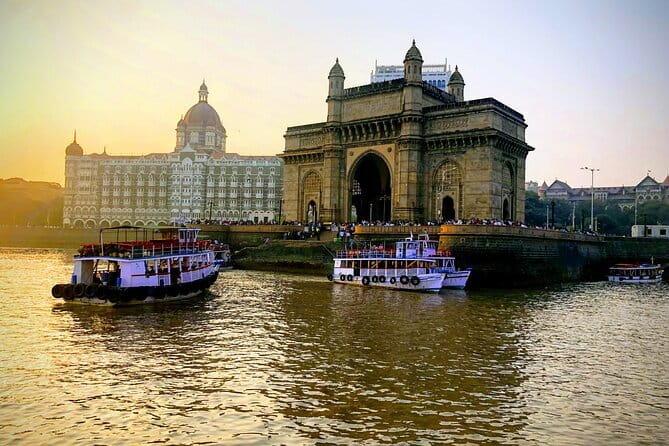
- Gateway of India: about 10 minutes, admission included, built to commemorate King George V’s 1911 visit with Arabian Sea views.
These stops are fast, but they’re strategically chosen. Together, they show Mumbai’s mix of colonial-era grandeur and present-day status symbols. Even if you don’t go inside for long, you’ll get a feel for scale and style.
If you’re the type who hates wasting time outside famous places, this section is a trade-off. You won’t have hours here. You’ll have quick impressions. The value is finishing the day with images that connect to the stories you’ve learned in the guided parts.
What I’d watch for with guide quality
This tour leans on your guide to make the day click. In the feedback for this experience, certain guide names come up—like Droan, Max, and Pankaj—and Pankaj is specifically noted for having deep knowledge of the Elephanta Caves.
If you’re assigned one of these guides (or someone similarly prepared), ask one good question at each major stop. For example: What should I look for first in the cave sculptures? Or what detail on the CSMT façade matters most? You’ll get more from the time you have, especially on the brief 5–10 minute pauses.
A strong guide also helps you keep your expectations realistic. Elephanta is the long stop. The rest is about orientation and quick context.
Price and value: is $96.38 worth it?
At about $96.38 per person, this tour isn’t the cheapest way to see Mumbai—but it can be good value for the right traveler, mainly because a lot of key costs are handled for you.
Included items in the experience list:
- private transportation
- air-conditioned vehicle
- all fees and taxes
- bottle of water
- admission tickets for specific stops (Elephanta Caves, Dhobi Ghat viewing deck, and several major landmarks/museums)
- mobile ticket
Not included:
- snacks
- personal expense
Here’s how I’d judge value. If you’re trying to do Elephanta plus multiple top city sights in one day, you’re paying for time saved and for a guided flow. Elephanta alone can be a scheduling puzzle. Adding guided city framing makes the whole day feel organized instead of fragmented.
If you already have flexible days and love independent wandering, you might do this more cheaply on your own. But if you want a single-day plan that covers a lot, with comfort and guided context, this price can land as fair.
One extra planning detail: this tour often gets booked well ahead (average booking is around 121 days). If your dates are fixed, you’ll want to lock in early rather than hope.
Who should book this tour?
Book it if you:
- have limited time in Mumbai and want a structured city overview
- care about Elephanta Caves and want guided help, not just casual walking
- like the idea of a private tour where your pace and questions matter
- want air-conditioned transport to cut down on fatigue
You might skip it if you:
- prefer slow, long museum hours instead of short landmark stops
- have difficulty with moderate walking and uneven cave terrain
- want a tour with lots of free time for meals and wandering (snacks aren’t included, so you’ll need your own plan)
Should you book this private Mumbai + Elephanta tour?
I’d book it if you’re in a time crunch and you want a day that feels intentionally planned. The strongest selling point is the combo: Elephanta Caves with guided focus, then a guided sweep through Mumbai’s major identity points—CSMT, Dhobi Ghat, Marine Drive, and landmark stops like Mani Bhavan and Gateway of India.
If you’re comfortable with a long day, want comfort, and value admission/tickets handled for you, this is a smart way to get oriented fast. Just plan to bring snacks or money for them, wear good shoes, and expect short stops that work like snapshots—useful, but not meant to replace a full second visit.
FAQ
How long is the Mumbai City Sightseeing and Elephanta Caves tour?
The tour is about 9 hours.
Is pickup included, and do I get roundtrip transportation?
Pickup is offered, and you travel in a private air-conditioned vehicle with roundtrip transport.
Is this tour private, or will I share it with strangers?
It’s a private tour/activity, so only your group participates.
Are tickets included for Elephanta Caves and other stops?
Elephanta Caves admission is included, and admission is also included for several other stops listed on the schedule (like Dhobi Ghat viewing deck and multiple landmark/museum stops). Some stops are listed as free.
Does the tour include a bottle of water?
Yes, bottle of water is included.
Are snacks included?
No, snacks are not included.
What kind of physical fitness level do I need?
The tour notes a moderate physical fitness level.
Is mobile ticketing provided?
Yes, the tour includes a mobile ticket.
What happens if weather is poor or plans change last minute?
The experience requires good weather. If it’s canceled due to poor weather, you’ll be offered a different date or a full refund. Free cancellation is available up to 24 hours in advance for a full refund.