Mumbai’s temples tell stories fast. This private full-day route strings together five major sacred sites plus sweeping city-and-sea viewpoints, with a local guide and hotel pickup so you spend less time figuring out logistics and more time seeing details up close. I love how the day is built around photo-friendly architecture and real context for what you’re looking at.
The other thing I liked a lot is the variety. You’ll move from Shiva at Balbulnath Temple to Ganesh at Siddhivinayak, then to Mumba Devi and the Hare Krishna ISKCON temple in Juhu, so it feels like a guided tour through how different traditions and legends shape Mumbai.
One consideration: it’s a long, active day (about 7 to 8 hours), and you’ll be working within temple rules like the dress code and taking shoes off at the entrances. Add traffic time and you’ll want comfortable shoes and patience for the schedule.
In This Review
- Key highlights you’ll feel right away
- Planning Your 9:30am Temple Circuit in Mumbai
- Balbulnath Temple: Shiva on a hillock with Arabian Sea views
- Mahalakshmi Temple: 1831 devotion to Adi Shakti
- Shree Siddhivinayak: Ganesh, gold-toned details, and carved doors
- Lunch break: plan for local food (not included)
- Mumba Devi Temple: why Mumbai is named after her
- ISKCON Temple in Juhu: Hare Krishna devotion since the 1970s
- The private guide’s real value (beyond explanations)
- Transport, pickup timing, and how to avoid a long-day headache
- Dress code and shoes: the rules you must follow
- Price and value: is $116 per person worth it?
- Who this tour fits best
- My booking advice: should you choose this private temple tour?
- FAQ
- How long is the private full-day Mumbai temple tour?
- What’s the start time?
- Is hotel pickup and drop-off included?
- Are temple admission tickets included?
- What’s the dress code for temple visits?
- Is lunch included?
Key highlights you’ll feel right away
- Private guide + private air-conditioned vehicle for hotel/airport/cruise-port pickup and drop-off
- Five temples in one day: Balbulnath, Mahalakshmi, Siddhivinayak, Mumba Devi, and ISKCON (Juhu)
- Scenic breaks like Balbulnath’s hilltop look over the Arabian Sea and Mumbai
- Temple details worth slowing down for, including Siddhivinayak’s ornate gates and gold-toned roof
- Comfort-focused service for solo guests, with extra care for traveler comfort and suitable guide matching in at least one case
- Lunch is on your own, so budget time and money for a sit-down meal between afternoon temples
Planning Your 9:30am Temple Circuit in Mumbai
This tour runs from a 9:30 am start, and you’ll have a pickup from your hotel (or the airport/cruise port). The exact pickup time can shift based on where you’re coming from and local traffic, but the plan stays simple: head to one temple in the morning, two more mid-day, then wrap the day with two afternoon stops and drop-off later in the day.
Because this is private, it doesn’t feel like you’re squeezed into a crowd. Your guide can set a walking pace that matches your energy, and you’re less stuck playing catch-up. Also, the transport is a private air-conditioned vehicle, which matters in Mumbai’s heat.
Timing tip: plan your morning outfit around temple rules, not just the weather. The tour expects you to follow a dress code that covers shoulders, chest, navel, and upper arms, with bottoms below knee length.
You can also read our reviews of more private tours in Mumbai
Balbulnath Temple: Shiva on a hillock with Arabian Sea views
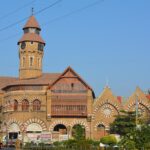
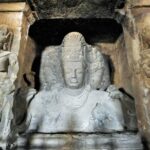
Your first stop is Babulnath (Balbulnath) Temple, described as Mumbai’s oldest Shiva temple. It sits on a small hillock, so even before you go deep into details, you get that elevated sense of the city around you.
This is a great temple for photos because the setting gives you angles beyond the doorway. From the temple area, you can take in views over the Arabian Sea and the surrounding Mumbai skyline. Your guide’s job here is to connect the dots—Shiva worship, what you typically see in a Shiva temple, and why the location matters in a city built next to the sea.
Practical note: you’ll still want to keep your camera ready, but also keep an eye on your footing. Hillock locations can mean uneven ground and lots of people moving around for darshan.
Mahalakshmi Temple: 1831 devotion to Adi Shakti
Next you’ll visit Mahalakshmi Temple, one of Mumbai’s best-known temples dedicated to Mahalakshmi. This stop is about the divine feminine—your guide will connect the goddess to the idea of Adi Shakti, described here as the goddess of knowledge.
The temple is said to have been built in 1831 by Dhakji Dadaji, a Hindu merchant. Even if you’re not a history buff, that date gives the place weight. It also helps you understand why this temple became a central point for worship and community in a growing city.
At this stop, the visit window is shorter (about 30 minutes), so I’d treat it like a focused photo and observation stop. Look for the sacred space layout, notice how people move through the temple area, and don’t rush the moment just because you have limited time.
Shree Siddhivinayak: Ganesh, gold-toned details, and carved doors
Your mid-day anchor is Shree Siddhivinayak Temple, dedicated to Lord Ganesh. The tour describes it as one of Mumbai’s richest temples and dates it back to the 18th century.
This is the stop where you’ll most likely feel the “wow” factor. The highlights listed for this temple include carved wooden doors, a towering gold roof, a Ganesha shrine, and a central statue of Lord Ganesh. This is also a place where your guide helps you read what you’re seeing. Even simple features—like where people pause, where they photograph, and how the shrine area is oriented—make more sense when someone explains the meaning behind it.
If you want the best photos, keep your camera low and steady. Temple entrances can have reflective gold-toned surfaces, and bright light can blow out details. Take a couple quick shots, then shift to slower observation for the real texture: carved wood, the shape of the doorways, and the shrine space people are focusing on.
Lunch break: plan for local food (not included)
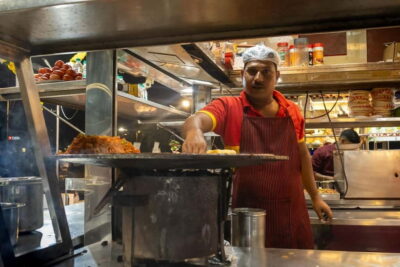
Between the morning and afternoon temples, you’ll have lunch at a local restaurant, and meals are your own expense. This is actually a good design choice: Mumbai has a lot of food variety, and you can pick what fits you—vegetarian options are easy to find, but your preferences matter.
A practical move: eat lightly enough that you still have energy for the last two temples. You’ll likely be walking, stopping for photos, and navigating crowds even with private transport.
You can also read our reviews of more tours and experiences in Mumbai



Mumba Devi Temple: why Mumbai is named after her
In the afternoon, you’ll go to Mumba Devi Temple, dedicated to Goddess Mumbadevi. The tour info connects her directly to the city name—Mumbai is said to be named after Goddess Mumba—and the temple is described as built in the 18th century.
This stop gives the “local roots” feeling. It’s not just about big-famous gods; it’s about how the city’s identity is tied to devotion. Your guide should help you understand why this goddess matters to Mumbai’s religious story and how the temple’s reputation grew over time.
The visit time here is about 30 minutes, so treat it as a concentrated stop for atmosphere, respectful observation, and a few good photos if lighting works. If you want to linger, you can, but remember you’re on a full-day route with the final stop next.
ISKCON Temple in Juhu: Hare Krishna devotion since the 1970s
Your last temple stop is ISKCON Temple in Juhu, and it’s part of the Hare Krishna movement. This is a useful contrast after the earlier Hindu temples, because it broadens what you’ll recognize as “temple culture” in Mumbai.
The temple is described as being built in the 1970s, under the guidance of Swami Prabhupada, the founder of ISKCON. That background helps you understand why the temple feels different in layout and tone compared with older structures like Babulnath or the 18th-century sites.
Your guide can help you follow what’s happening during your visit—common ISKCON features are designed for devotion and community. Expect about 1 hour here, which is just enough time to take in the setting, learn a few key points, and still make it through the day without rushing.
The private guide’s real value (beyond explanations)
A lot of temple tours stop at facts. This one adds something more practical: a professional local private guide who can steer you through what matters.
You’ll have time during transit and at each site to ask questions—what you’re seeing, why it’s arranged this way, and how to handle the practical parts of visiting with respect. That matters because temple rules can be confusing if you’re going on your own. Here, you get clear expectations.
There’s also a comfort angle that stands out from real-world feedback. One solo female traveler noted that the organization took extra precautions to help her feel at ease, including matching her with a guide who was also a woman. If you care about comfort and someone making you feel settled, this is a reassuring detail to keep in mind when you book.
Transport, pickup timing, and how to avoid a long-day headache
This is a full-day experience, roughly 7 to 8 hours, and the itinerary expects you to use that time efficiently. You’ll start with pickup and then move temple to temple in your private air-conditioned vehicle.
Transfers are listed as approximate because traffic affects the day. I’d handle this by building a calm mindset: if you arrive a few minutes earlier or later than expected, that’s normal here. Your guide can adjust pacing, and your best chance for a smooth day is to keep your schedule flexible.
Also, you’ll have bottled water included. That’s small, but it helps on a day when you’re outside in the sun and moving between multiple sacred sites.
Dress code and shoes: the rules you must follow
This tour is temple-focused, so rules are not optional.
Dress code is specific: clothing must cover shoulders, chest, navel, and upper arms. Pants or skirts must be below knee length. You don’t want to scramble before your pickup, so check your outfit early.
Footwear: you’ll need to remove shoes outside the temple, though socks may be worn. Bring socks you’re comfortable walking in for short stretches. If you’re the type who hates stepping down without traction, consider wearing socks with a bit of grip.
Price and value: is $116 per person worth it?
At $116 per person, the value depends on what you’d otherwise spend to do the same day yourself.
Here’s what you’re getting for that price:
- Private vehicle with hotel/airport/cruise-port pickup and drop-off
- Professional local private guide
- Bottled water
- Temple admissions listed as free in the stop details
- A structured route that hits five major stops plus viewpoints
If you’re traveling with someone else, private tours often feel even better because costs divide while you keep the same comfort level. If you’re solo, you still get the benefit of the private setup—less waiting, fewer coordination headaches, and a guide who can help you navigate etiquette quickly.
The only real “cost outside the package” is lunch and your personal expenses at restaurants. That’s not unusual for a temple day, but it’s worth planning so you don’t hit sticker shock mid-route.
Who this tour fits best
This is a strong fit if you want:
- A first-time Mumbai day that isn’t just beach and shopping
- A guided explanation of major temples without doing research all week
- A private setup if you care about comfort, pace, or solo travel confidence
It may be less ideal if you want a totally free-form itinerary. The route is set: five temples, plus a lunch window, plus a defined endpoint with hotel drop-off. You can usually linger a bit, but the day is designed to flow.
My booking advice: should you choose this private temple tour?
I’d book this if you like structure and you want a single day to connect the dots between multiple religious sites in Mumbai. The mix of Shiva at Balbulnath, Ganesh at Siddhivinayak, Mumba Devi’s city connection, and ISKCON in Juhu makes it feel like more than a checklist.
Also, if you’re someone who prefers clear rules—dress code handled, shoes handled, pickup handled—this kind of tour makes temple visiting easier. If you’d rather wander independently with no schedule and no guide, then a self-guided plan might be your better move.
One practical reassurance: the cancellation terms are flexible with free cancellation up to 24 hours in advance. That takes some stress out of deciding when the itinerary is set.
FAQ
How long is the private full-day Mumbai temple tour?
It runs about 7 to 8 hours, with transfer times depending on the time of day and traffic.
What’s the start time?
The tour starts at 9:30 am.
Is hotel pickup and drop-off included?
Yes. The tour includes pickup and drop-off from your hotel, airport, or cruise port.
Are temple admission tickets included?
The stop details list admission tickets as free for each of the five temples.
What’s the dress code for temple visits?
You must cover shoulders, chest, navel, and upper arms. Pants or skirts must be below knee length.
Is lunch included?
Lunch is not included. You’ll stop for lunch at a local restaurant, and you’ll pay on your own.