REVIEW · DHARAVI SLUM TOURS
Mumbai Dharavi Slum Tour With Local English Guide
Book on Viator →Operated by Cityscape Mumbai Tours · Bookable on Viator
A two-hour walk that changes your worldview. This Dharavi Slum tour in central Mumbai is led by a local English guide, designed to show both everyday life and the local economy that shapes it. You get a clear, street-level view of one of Asia’s biggest informal settlements, without the usual secondhand blur.
I like the local resident guide aspect most. I also like seeing both home life and small businesses, so the tour covers more than a single angle or mood.
One thing to consider: it’s about two hours of walking, and lunch isn’t included. Plan a meal before or after so you stay focused on the neighborhood, not your hunger.
In This Review
- Key things to know before you go
- Why a Dharavi Slum tour makes sense in Mumbai
- Local resident English guide: the value you can feel in the questions
- The two-hour walking route: what you can expect start to finish
- Residential Dharavi: seeing everyday living instead of stereotypes
- Commercial Dharavi: small-scale industries and the neighborhood economy
- Price and value: what $8.54 gets you (and what it doesn’t)
- Pickup and meeting point: easiest way to get on track
- Who this tour fits best (and who should rethink the timing)
- Should you book this Dharavi Slum tour?
- FAQ
- How long is the Mumbai Dharavi Slum Tour?
- Is this tour private or shared?
- Do I get an English-speaking guide?
- What is included in the price?
- Is lunch included?
- Is hotel pickup available?
- Where does the tour start?
- Is the meeting point near public transportation?
- Can I cancel and get a full refund?
Key things to know before you go
- Local resident English guide with firsthand context and clear explanations
- Residential + commercial Dharavi so you understand daily life and work
- Tight 2-hour format that keeps the experience focused
- Small group size (up to 15), making questions easier
- Bottled water included, but no lunch
Why a Dharavi Slum tour makes sense in Mumbai
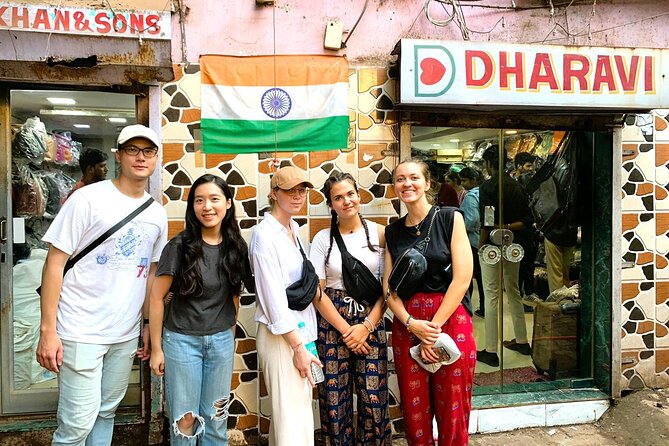
Dharavi can feel like a headline in the travel world. This tour turns it into something you can understand with your feet and your questions.
The big value here is that you don’t just see a place—you learn how people live, what they do for work, and how the neighborhood functions day to day. The tour is built around history and culture, with a local guide who can explain what you’re looking at in plain language.
It’s also short enough that you can keep the rest of your Mumbai trip light. After two hours, you can still move on to the rest of the city with a clearer head.
You can also read our reviews of more guided tours in Mumbai


Local resident English guide: the value you can feel in the questions
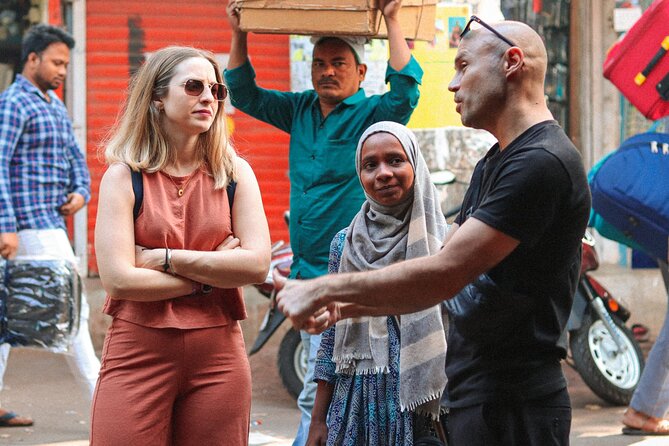
The guide is the heart of this experience. You’re walking with a local resident of the area, and that matters because Dharavi isn’t just a set of streets—it’s systems, routines, and relationships.
One reason people rate this so highly is the communication. Guides are repeatedly described as giving very clear English and answering lots of questions, including broader ones about India and culture. That means if you want to understand the why behind what you’re seeing, you’re not stuck with vague answers.
You may also notice a pattern in the way guides handle the visit. The tour approach is balanced: it covers both positives and challenges, instead of selling only one side of the story.
The two-hour walking route: what you can expect start to finish
The tour is a guided walking experience with a single main focus: the Dharavi neighborhood itself. It runs about 2 hours, and it ends back at the starting point, so you’re not left guessing how to get home.
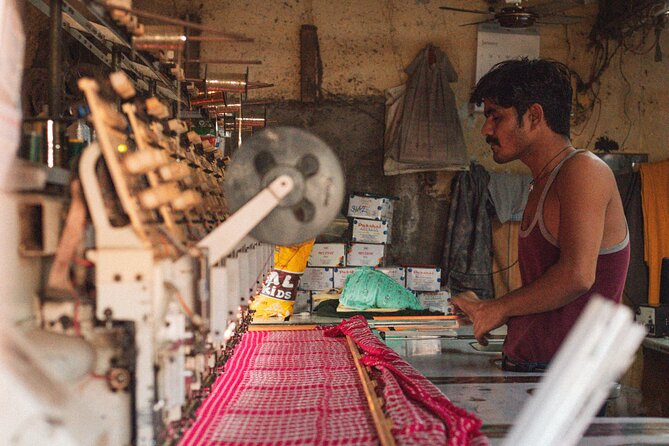
Your experience is centered on a walk where you’ll see residential life and the commercial side, where people run small-scale industries. In practical terms, that usually means you’re moving between spaces that look and function differently—homes are one world, workplace corridors are another.
There’s also an important mental note to make before you go: this is not a sightseeing circuit built for comfort. You’re in a real neighborhood, so the pace is more about learning and observing than collecting photo backdrops.
Residential Dharavi: seeing everyday living instead of stereotypes

On the residential side, the guide’s explanations are what turn the view into understanding. You’ll be shown the areas where locals live, and you’ll learn about daily life in Dharavi—what life can look like inside tight spaces, and how community ties form in dense areas.
This part of the tour is often the most emotionally intense, because it confronts visitors with the gap between perceptions and reality. But the guide structure helps: you’re not watching from a distance. You’re getting context so you can interpret what you see without turning it into a cartoon.
A key takeaway is that Dharavi isn’t portrayed as only hardship. The tour framing includes cultural and historical context, which helps you recognize resilience and routine as part of daily life, not just survival.
Commercial Dharavi: small-scale industries and the neighborhood economy
Then you shift to the commercial side, where residents make a living through various small-scale industries. This is where Dharavi starts to feel less like a label and more like a working local economy.
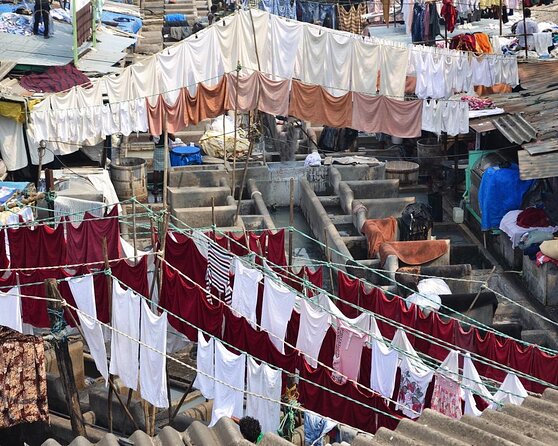
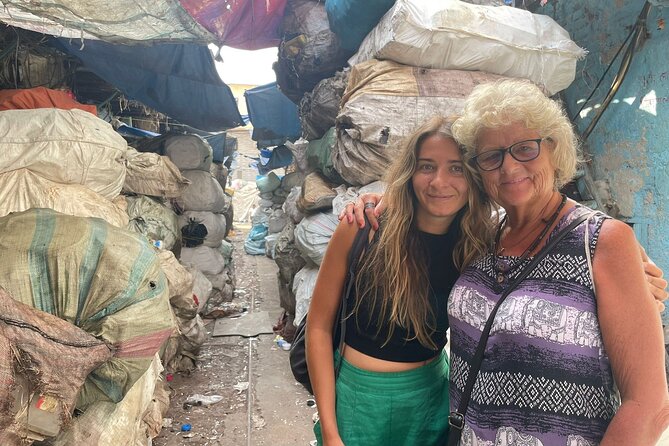
From the feedback around this tour, one of the standout topics is the way work is tied to practical systems—especially recycling and related industries. Even if your exact route doesn’t highlight the same topic as someone else’s experience, you can still expect to see how industry is woven into everyday space.
This section tends to land well for people who want more than social commentary. You’re looking at how labor, materials, and informal networks can keep an economy running in a place outsiders often assume is only missing.



Price and value: what $8.54 gets you (and what it doesn’t)
At about $8.54 per person for a roughly 2-hour guided walk, this is priced to be accessible. You’re not paying for luxury. You’re paying for interpretation: local guidance that helps you read what you’re seeing.
Bottled water is included, and that’s a simple but useful touch in a place where you don’t want to worry about hydration mid-walk. An admission ticket is also marked as included, so you’re not juggling extra small fees on the day.
The tradeoff is also clear: lunch isn’t included. If you schedule this tour right before a meal, you’ll feel the value more. If you do it when you’re already hungry, you may spend the second half thinking about food instead of learning about the neighborhood.
Also, your group is capped at 15 travelers. That matters for value because it keeps the experience from turning into a slow parade where everyone gets quiet while the guide talks.
Pickup and meeting point: easiest way to get on track
Pickup is available from select hotels, which can be a big convenience if you’re staying nearby. If you don’t get pickup, the meeting point is clearly set at Third Wave Coffee on Tip Road in Mahim (Ram Mahal, Unit no.58, Ground, Senapati Bapat Marg, Marinagar Colony, Station, Mahim, Mumbai, Maharashtra 400016).
The tour ends back at the meeting point. That’s helpful because you don’t need a complicated route plan after the walk. You can step out, reset, and then go wherever your Mumbai day is headed next.
One more practical point: it’s near public transportation. If you’re traveling through Mumbai by train or bus, you’ll likely find it easier to connect than to reach a tour that’s deep in the outskirts.
Who this tour fits best (and who should rethink the timing)
This is a strong choice if you want a reality-based Mumbai experience and you like learning from locals. It’s also a good pick if you care about understanding systems—housing, work, and culture—rather than collecting only surface impressions.
You should also like this if you’re comfortable with a walking format and you don’t need a full-day plan. The whole experience is about 2 hours, so you can place it between other activities without wrecking your schedule.
Who might pause? If you know you struggle with intense poverty imagery or you get overwhelmed easily by dense city environments, you may want to schedule this when you’re mentally ready and not already stressed. And remember, since lunch isn’t included, plan your meal timing so the experience stays about learning, not hunger.
Should you book this Dharavi Slum tour?
If your goal is to understand Dharavi beyond headlines, this is a smart booking. The combination of a local resident English-speaking guide plus a clear focus on both residential and commercial life makes it a practical way to get context fast.
I’d book it if you like question-friendly tours, want the neighborhood explained in plain terms, and you’re okay with a real-world walking experience. I’d also book it early in your Mumbai trip—because it can reshape how you interpret the city afterward.
Skip it only if you’re looking for a relaxed, purely scenic walk or you can’t do about two hours of movement. Otherwise, at this price point, it’s hard to find a better value that still feels genuinely grounded in everyday life.
FAQ
How long is the Mumbai Dharavi Slum Tour?
The tour lasts about 2 hours.
Is this tour private or shared?
It’s a private guided walking tour, but it can include a small group. The maximum group size is 15 travelers.
Do I get an English-speaking guide?
Yes. The tour is described as being led by a local English guide.
What is included in the price?
Bottled water is included, and an admission ticket is marked as included in the experience.
Is lunch included?
No, lunch is not included.
Is hotel pickup available?
Pickup is available from select hotels.
Where does the tour start?
The meeting point is Third Wave Coffee, Tip Road, Unit no. 58, Ground, Ram Mahal, Senapati Bapat Marg, Marinagar Colony, Station, Mahim, Mumbai, Maharashtra 400016, India.
Is the meeting point near public transportation?
Yes. It’s near public transportation.
Can I cancel and get a full refund?
Yes. You can cancel up to 24 hours in advance for a full refund.