REVIEW · 2-HOUR EXPERIENCES
2-Hour Guided Tour of Dharavi
Book on Viator →Operated by Be The Local Tours and Travel · Bookable on Viator
A slum tour that skips the misery movie. You’ll walk Dharavi with a professional local guide like Razak, and you’ll see how people work, live, and spend downtime—beyond the stereotypes. I love that the experience is built to show real industry (bakeries, pottery, and small workshops) while still pointing you toward schools and everyday life. The only real downside: this is active, close-up human territory, so you’ll want good weather and an open mind.
The tour runs about 2 hours, stays small-group focused, and uses a mobile ticket. It also includes round-trip transfers from your hotel, which makes a tough-sounding outing feel manageable in practice.
In This Review
- Key things that make this Dharavi tour worth your time
- Entering Dharavi the right way: a city within a city
- The 2-hour walk: work, homes, schools, and the trades that power the area
- Step 1: Seeing the work first (the bakeries and workshops)
- Step 2: Where people live (and how families adapt to space)
- Step 3: Schools and learning nearby
- Step 4: Relaxation areas and everyday life
- Guides matter: local storytellers like Razak, Touseef, Adil, and others
- Price and value: what $22.32 buys you in the real world
- Where you meet and where you end: Third Wave Coffee to Kumbhar Wada
- What to pack and how to handle the emotional temperature
- Who should book this Dharavi tour (and who might rethink it)
- Should you book it? My take
- FAQ
- How long is the Dharavi guided tour?
- What does the tour include inside Dharavi?
- Is there an entry ticket fee for the tour?
- Is it a private tour or a small group?
- Do I get hotel transfers for this experience?
- Where do I meet, and where does the tour end?
- What time does the tour operate?
- What if the weather is poor or I need to cancel?
Key things that make this Dharavi tour worth your time
- Local-guided context, not hand-waving: You’re led by people tied to the neighborhood, such as Razak (grew up in Dharavi) and other neighborhood guides named Faisan, Touseef, Adil, Avil, and Abir.
- A stereotype breaker by design: You don’t only see hardship; you also see how families organize daily life and how trade keeps the community moving.
- Work + home + school in one loop: You’ll pass through areas where people live in small spaces, learn in local schools, and make goods in workshops.
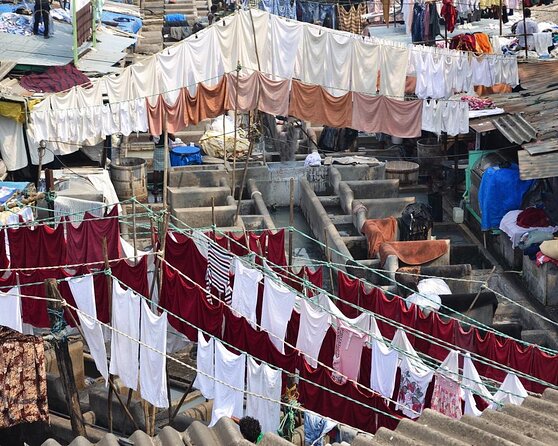
- Industry you can actually picture: The walk highlights large-scale local production, including bakeries that support much of Mumbai and pottery work.
- Easy logistics for a tight schedule: Round-trip transfers are built in, and the tour stays to a tight 2-hour window.
Entering Dharavi the right way: a city within a city
Dharavi has been turned into a pop-culture shorthand—usually by movies that zoom in on the worst moments. This tour nudges you to look past the shortcut. You’ll go in expecting something bleak, and you’ll come out noticing something else: organization, skill, and pride.
That shift matters. When you only see one slice of a place, you stop thinking like a traveler and start thinking like a viewer. Here, the guide helps you read Dharavi as a functioning neighborhood, where people have routines and roles, and where industry shapes what’s possible.
I also like that the tour doesn’t try to deny suffering. Instead, it frames the area with daily life in view—where people work, where people live, where people relax, and where kids go to school. That balance is what makes the whole experience feel honest instead of performative.
You can also read our reviews of more guided tours in Mumbai

The 2-hour walk: work, homes, schools, and the trades that power the area
You’ll spend roughly two hours moving through Dharavi on foot, with the guide guiding your attention—so you’re not just looking at buildings and calling it a day. The focus stays on four practical themes: work, living space, education, and where people unwind.
Step 1: Seeing the work first (the bakeries and workshops)
One of the strongest parts of the tour is how clearly the guide shows you industry that serves more than just the neighborhood. You’ll see large industrial pockets, and you’ll learn how trades operate close to where people sleep.
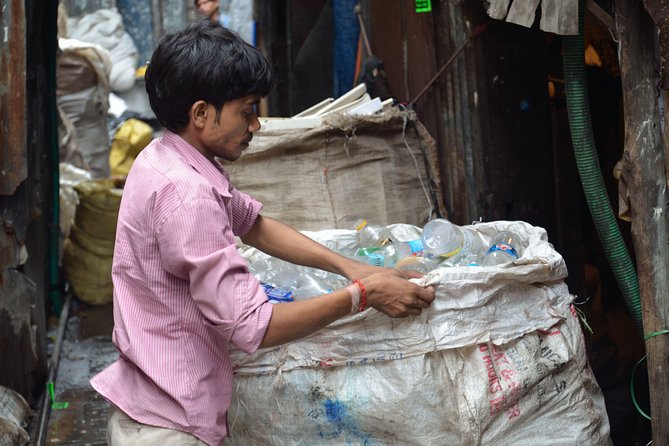
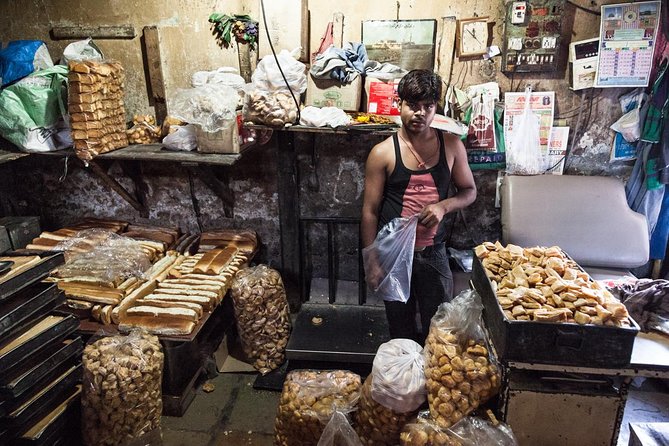
Bakeries are specifically highlighted, including ones that supply much of Mumbai. Pottery work also comes up, along with smaller workshops where people make goods using skills that are often passed down and practiced every day. Even if you don’t remember every detail, you’ll leave with a mental map of how labor and production shape the area’s rhythm.
A useful way to experience this segment: watch for the pattern. Look at where tools sit, where materials move, and how the workspace relates to nearby homes. That connection is the point.
Step 2: Where people live (and how families adapt to space)
Next, you’ll look at residential areas—often described as tiny by outsiders, and absolutely real in size on the ground. The guide points out how whole families live in small rooms, and how daily life keeps going in tight quarters.
I think this part lands best when you keep one mindset: try to understand the system, not just the square footage. When you see how people arrange life around limited space, you start to understand why communities develop practical solutions rather than waiting for outsiders to define what’s possible.
Step 3: Schools and learning nearby
You’ll also visit local schools. Even without an agenda of heavy policy talk, it gives you a grounded view of what the future looks like for families who stay in the neighborhood.
This is one of the reasons I like this tour’s pacing. It doesn’t jump straight from work to buildings and call it “culture.” It lets you see how children’s lives connect to the same local economy that adults rely on.
You can also read our reviews of more tours and experiences in Mumbai





Step 4: Relaxation areas and everyday life
Finally, you’ll pass through spaces where people relax. This is the section that breaks the movie framing hardest. A place with only labor sounds like a trap. A place with work and downtime feels like a real community.
If you’re worried you’ll be emotionally overwhelmed, this portion helps. It gives you moments to breathe, ask questions, and reset your assumptions.
Guides matter: local storytellers like Razak, Touseef, Adil, and others

The guide is the engine of the tour. The format gives you time to ask questions, and the guide’s background shapes the tone. Some guides are named in the experience stories you’ll hear along the way—like Razak, who grew up in Dharavi and still lives there, and Touseef, who has been reported to collect guests directly.
Other guide names you may encounter include Faisan, Adil, Avil, and Abir. The common thread is that they’re not reading facts from a brochure. They explain how life works from the inside—how people handle work pressure, how family life fits around trade, and what outsiders often misunderstand.
It’s also clear the tour supports education. Some guides have been described as local students who receive school support through their role. That adds a layer of value beyond your own learning, because your participation connects to local opportunity.
Price and value: what $22.32 buys you in the real world
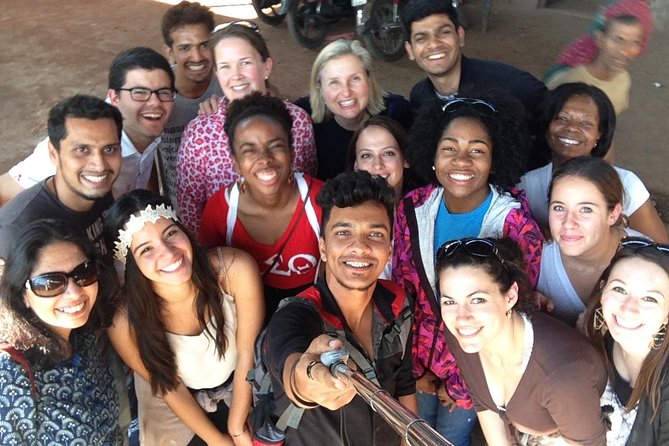
At about $22.32 per person for around 2 hours, this sits in the “serious experience, not a luxury” category. The price makes sense because you’re paying for three things that add up fast in a city like Mumbai: a guide with local context, transportation coordination (round-trip hotel transfers), and a small-group setup.
Here’s how I see the value:
- You’re not paying for a generic drive-by. You’re paying for a focused walking route and guided interpretation.
- You’re not paying for a ticket to a single venue. You’re paying for a human-led neighborhood walkthrough.
- You’re paying to reduce friction—hotel transfers and a time-boxed tour mean you can fit this into a packed itinerary.
For me, the best value signal is the emphasis on small groups. In a place like this, you don’t want twenty voices competing with your questions. You want the guide’s attention, and you want time to look closely.
Where you meet and where you end: Third Wave Coffee to Kumbhar Wada
Logistics matter more than people think. This tour has a clear start and a clear end, and that helps you avoid the usual “where do we go now?” travel stress.
You start at Third Wave Coffee, Tip Road, Unit no. 58, Ground, Ram Mahal, Senapati Bapat Marg, Marinagar Colony, Station, Mahim, Mumbai (Mahim area). The tour ends near Kumbhar Wada, close to Sion Hospital.
Also, the tour is scheduled within operating hours listed as 10:00 AM to 4:00 PM, Monday through Sunday. If you’re planning your day, I’d treat it like a main activity, not a “maybe.”
If you’re staying in South or Central Mumbai, you’ll likely appreciate the included round-trip hotel transfers. Even if you’re using public transit, the start location is noted as near public transportation.
What to pack and how to handle the emotional temperature
This isn’t a thrill-ride tour, and it’s not a museum. It’s close-up, human-scale travel. That means your comfort choices matter.
Bring water. One guide-focused suggestion you’ll often hear with this tour is exactly that. Also dress for warm conditions and for walking in tight areas. You don’t need to guess too much—the tour is short (about two hours), but it’s still outdoors.
Then comes the mental prep. The experience works best when you go in with curiosity and a calm willingness to be corrected. If you arrive with a single mental picture of Dharavi, the guide will likely push you toward a fuller one. That’s the whole point.
Who should book this Dharavi tour (and who might rethink it)
You’ll probably love this tour if you want:
- Real neighborhood context rather than a checkbox “slum tour”
- A guide who can explain local industry in everyday terms
- A short, guided format that fits a day in Mumbai
You might rethink it if:
- You’re trying to avoid emotionally intense scenes entirely. This is a place with real struggles, even when the tour highlights everyday life and industry.
- You strongly prefer destinations where you can keep distance from local streets and daily activity. This experience brings you right into the neighborhood flow.
If you’re traveling with someone who gets uncomfortable around poverty imagery, talk it through before you go. The tour’s framing is designed to lift stereotypes, but it can still feel intense.
Should you book it? My take
Book it if you want a Dharavi experience that treats the neighborhood like a place where people have jobs, families, and futures—not just a dramatic set. The combination of a professional guide, small group attention, and round-trip transfers makes it practical, even if the setting is challenging to describe on paper.
Skip it if you only want broad, low-contact sightseeing. This is a walking tour where understanding comes from talking, looking, and moving slowly enough to notice how life functions in a tight space.
If you do book, keep one travel rule in your back pocket: ask good questions. When the guide is someone like Razak or a local student guide, your curiosity becomes part of the value you take home.
FAQ
How long is the Dharavi guided tour?
The tour lasts about 2 hours.
What does the tour include inside Dharavi?
You’ll visit areas to see where people work and live, places connected to local schools, and local industries such as bakeries and pottery work. You’ll also have time to interact and learn with your guide.
Is there an entry ticket fee for the tour?
The tour is listed as admission ticket free.
Is it a private tour or a small group?
It’s a private tour/activity, and only your group participates. Small group sizes are included to allow personal attention from the guide.
Do I get hotel transfers for this experience?
Yes. It includes hassle-free round-trip transfers from your hotel.
Where do I meet, and where does the tour end?
You start at Third Wave Coffee on Tip Road in Mahim (Ram Mahal area). You end at Kumbhar Wada near Sion Hospital.
What time does the tour operate?
The listed opening hours are 10:00 AM to 4:00 PM, Monday through Sunday.
What if the weather is poor or I need to cancel?
The experience requires good weather. If it’s canceled due to poor weather, you’ll be offered a different date or a full refund. You can cancel for a full refund up to 24 hours in advance; cancellations within 24 hours aren’t refunded.