REVIEW · MUMBAI SIGHTSEEING TOURS
Private Mumbai Sightseeing Tour with Pickup, Car & Guide
Book on Viator →Operated by MUMBAI EXPERIENCES · Bookable on Viator
Mumbai hits hard and then teaches you. This private car-and-guide day mixes iconic South Mumbai sights with a real, on-the-ground look at Dharavi and everyday work. It also works for your schedule because you can choose a half-day or full-day plan.
I especially like how the day stays focused on what you can actually see: the route pairs major landmarks like the Gateway of India and Chhatrapati Shivaji Terminus with neighborhood-scale life in Dharavi. I also like that you’re not stuck figuring things out—pickup and drop, bottled water, and a guide keep you moving with context, not just checklists.
One thing to consider: the itinerary is packed, and several stops are short. If you want long museum time or slow, deep wandering, you may feel a bit rushed between places—so wear comfortable shoes and keep expectations realistic.
In This Review
- Key things I’d plan around
- Why this private Mumbai plan works so well
- Dharavi Slum walk: seeing work, industry, and daily life
- Dhobi Ghat, the laundry rows, and the rhythms of the city
- Chhatrapati Shivaji Maharaj Terminus: architecture you can’t fake
- South Mumbai quick hits: BMC building, Crawford Market, and Gateway of India
- Marine Drive and the long promenade walk
- Banganga Tank and Malabar Hill: sacred spaces and city views
- Jain Temple: where the details matter
- Mani Bhavan Gandhi Museum: a compact dose of context
- Price and value: what $32.92 buys you in real terms
- Guide quality: what to look for on the day
- Who this tour is for (and who should pass)
- Should you book this private Mumbai tour?
- FAQ
- How long is the tour?
- Is this tour private?
- What’s included in the price?
- Are entrance fees included?
- What food or drinks are provided?
- Is there walking involved?
- Can I cancel for a refund?
Key things I’d plan around
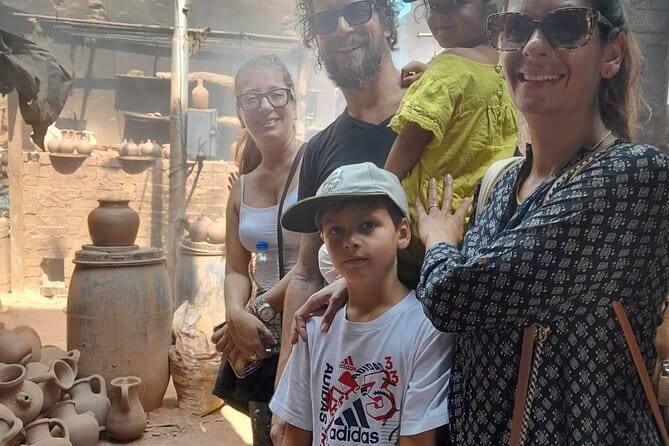
- A guide-led Dharavi walk for context, not just sightseeing, including working areas and residential lanes
- Iconic South Mumbai in tight segments, with quick views of major architecture you can’t skip
- Marine Drive as a real stroll, including the promenade length (Queen’s Necklace)
- Most entrance fees listed as free, with the Mani Bhavan Gandhi Museum fee included
- Private, air-conditioned car with pickup and drop, so you spend less time trapped in transit stress
Why this private Mumbai plan works so well

Mumbai can overwhelm you fast. Roads are busy, signage can be chaotic, and the city’s layers—colonial buildings, rail history, temples, markets, and neighborhoods—can feel random if you’re on your own. This is a practical solution: you get a private AC car, pickup and drop, and a guide who helps you connect the dots as you go.
The other big win is the balance. Many “highlights” tours stop at photos. This one keeps going into a different kind of education: Dharavi, a place you’ll likely only hear about from headlines. Here, you get a guided look at how people work and live, alongside the postcard moments of South Mumbai.
And because you can pick half-day or full-day, you can control how intense your day feels. You can also shape the flow around your interests—if architecture matters more to you than shopping, for example, you’ll have room to adjust on the fly.
You can also read our reviews of more guided tours in Mumbai


Dharavi Slum walk: seeing work, industry, and daily life
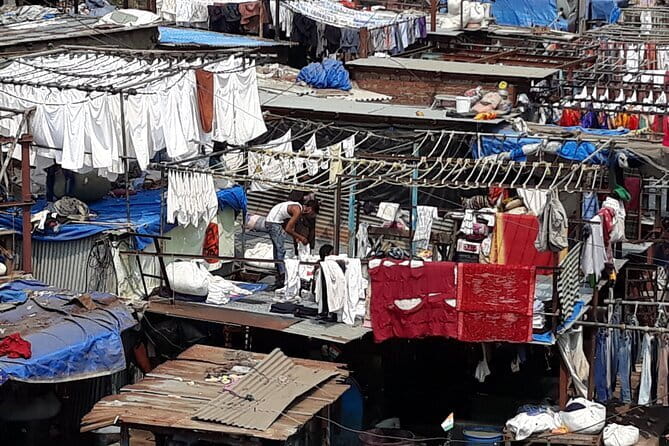
The day’s most important segment is Dharavi. It’s described as India’s largest slum, and the point of the visit isn’t to reduce it to poverty. It’s framed as a living community where work and community structures exist side-by-side.
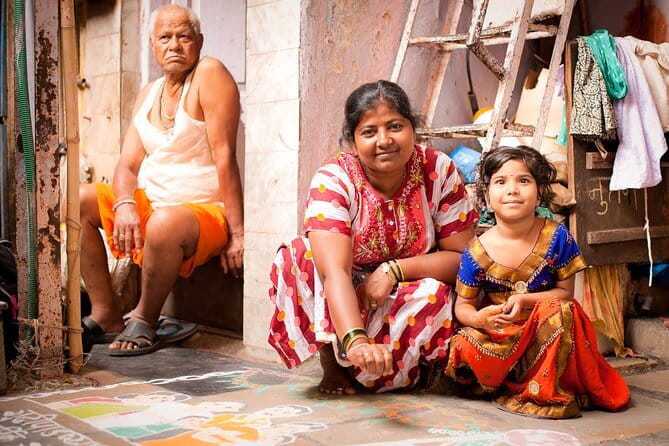
You’ll spend about 2 hours here, with a guide-led look at both working and residential areas. The focus is on how Dharavi functions day to day—small-scale industries, recycling workshops, pottery areas, and the residential lanes that tie it all together.
This is also where you should bring the right mindset. You’re not touring a museum. You’re walking through someone else’s neighborhood. Ask questions with respect, move slowly, and remember the goal is understanding, not gawking.
If you care about how cities actually run—economies, informal industries, and community systems—this part is often the highlight. In the guides mentioned in customer experiences, people specifically praised Sid/Siddhu/Siddesh for making Dharavi feel understandable, patient, and human instead of shocking.
Dhobi Ghat, the laundry rows, and the rhythms of the city
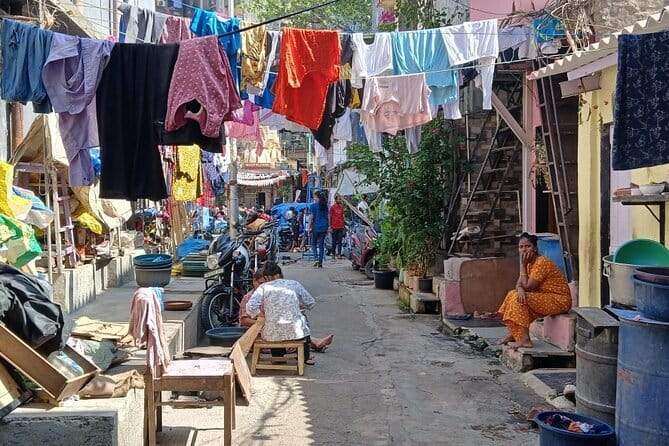
After Dharavi, the tour shifts to a very different kind of “working city.” Dhobi Ghat is presented as the world’s largest open-air laundry. Here you’ll see washermen and women working across rows of washing stones, turning laundry into a visible daily routine.
The stop is short (about 10 minutes), so I treat this as a quick sensory hit: look at the process, notice the scale, and let the colors and movement do the work. If you’re hoping for a long documentary-style walkthrough, you may want to pair this with extra time later on your own—but as part of a full route, it’s a strong contrast to Dharavi and a great way to understand Mumbai’s labor culture.
Chhatrapati Shivaji Maharaj Terminus: architecture you can’t fake

Next up is Chhatrapati Shivaji Maharaj Terminus (listed here as Victoria Terminus). It’s UNESCO-listed and famous for a blend of Victorian Gothic and Indian architecture. It’s also a real train station, so it doesn’t feel like a staged landmark—you’re seeing history still in use.
You’ll have around 15 minutes here. That’s not enough for every detail, but it’s enough to appreciate what the place is: a landmark of movement and design. If you like architecture, plan to look up as well as around—rail stations like this reward the “slow eyes” approach even on a short stop.
A nice bonus from the pacing: stopping at CST helps you later recognize other colonial-era and Gothic-inspired designs you’ll see around South Mumbai.
South Mumbai quick hits: BMC building, Crawford Market, and Gateway of India
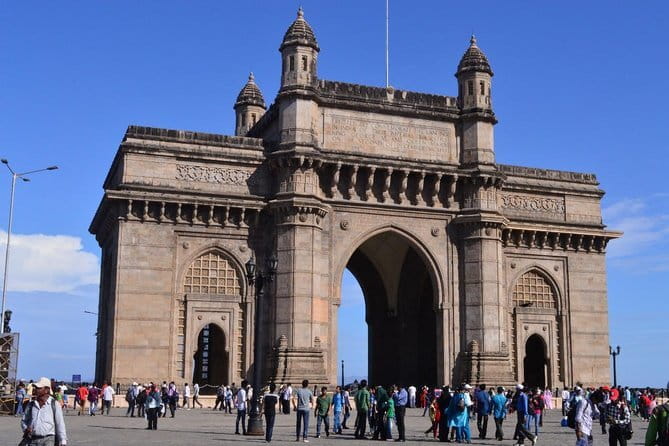
The tour then keeps stacking recognizable landmarks with short time windows:
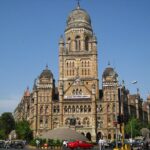
- Brihanmumbai Municipal Corporation (BMC) building across from CST, described as Gothic-style and built in 1893 (about 5 minutes).
- Crawford Market, a historic market with stalls for fresh produce and spices (about 15 minutes).
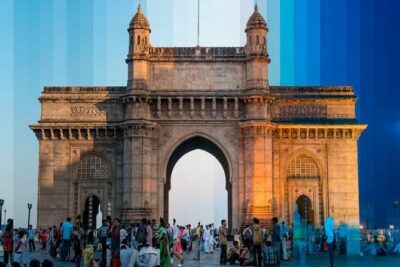
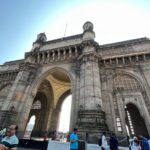
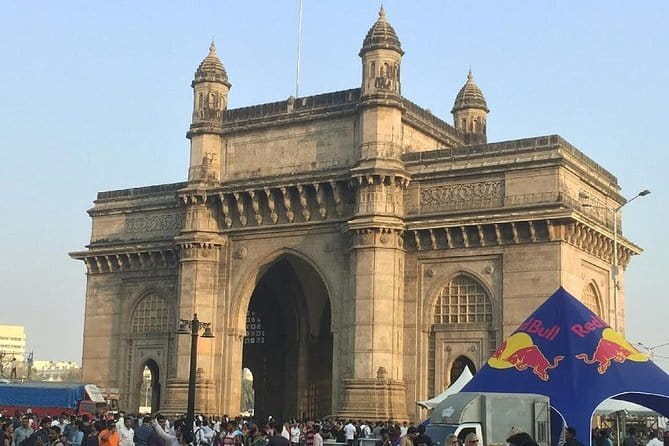
- Gateway of India, built in 1924, with Indo-Saracenic design and colonial-era history (about 15 minutes).
These are fast stops, but they’re not filler. The key is what they teach you about the city’s identity:
- The BMC building signals the administrative power that shaped colonial-era South Mumbai.
- Crawford Market shows everyday commerce—something you can often only understand by standing near the stalls and looking at how people move through the space.
- The Gateway of India gives you that famous silhouette overlooking the Arabian Sea, and it’s a useful “anchor point” for orientation. Even if you only spend 15 minutes there, you’ll understand why it’s iconic.
You can also read our reviews of more private tours in Mumbai



Marine Drive and the long promenade walk
One of the best parts of the itinerary is the walk along Marine Drive, described as a 3.6 km promenade by the Arabian Sea. It’s known as the Queen’s Necklace, partly because of the way lights and shoreline views can look after dark.
Even if the timing isn’t perfect for a sunset photo, you still get a nice break from strict landmark-hopping. This stretch also gives your feet something useful to do: you can stretch, take in the coastline, and soak up the city’s mood without needing to “perform” for every photo.
This is also a good moment to ask your guide a few street-level questions—how neighborhoods differ, where locals spend time, how people think about the sea and weather—since the guide will have more context at this point in the day.
Banganga Tank and Malabar Hill: sacred spaces and city views

The route adds Banganga next—Banganga Tank, a sacred water reservoir in Mumbai’s Walkeshwar area. You’ll have about 15 minutes. It’s set among temples and busy lanes, and the stop is about recognizing Mumbai’s spiritual layers, not just seeing buildings.
Then comes Hanging Gardens (about 15 minutes). The gardens sit atop Malabar Hill, and the idea is relaxation plus viewpoint time: flowerbeds, greenery, and broad city views. If you’re arriving mid-tour tired, this section can feel like a reset button.
Jain Temple: where the details matter
You’ll also stop at a Jain Temple in Mumbai, listed for its intricate marble carvings and calm, serene ambiance (about 10 minutes). A short visit here can still be worth it if you focus on one thing: the craftsmanship. With marble carving, you’ll often notice patterns and repeated motifs only if you slow your gaze.
This stop also balances the day’s heavier topic in Dharavi. After working neighborhoods and city infrastructure, a temple visit gives you a different pace and a different kind of meaning.
Mani Bhavan Gandhi Museum: a compact dose of context
The itinerary finishes one of its cultural peaks at Mani Bhavan Gandhi Museum, described as Gandhi’s former home in Mumbai. Your time here is about 15 minutes, and the museum fee is listed as included.
With a short museum stop like this, I use it like a “start here” stop. Instead of expecting to absorb everything, you can look for a few key themes and photos, then carry that context into later parts of your trip. It’s especially helpful if your day already covered work, community life, and city governance.
Price and value: what $32.92 buys you in real terms
At $32.92 per person, this tour can feel surprisingly fair—if you understand what’s bundled. You’re getting:
- a private AC car
- pickup and drop
- a guide
- bottled water
- the Mani Bhavan museum fee
- and the itinerary lists admission fees as free for many of the other major stops
The big “value” point for me is that private transport plus a guide often costs more than a typical walking tour—especially in a city like Mumbai where travel time can eat your day. This route is designed so you’re not stuck in transit or searching for entrances.
Two practical notes:
- Your total experience quality depends on how many people are in your group. Since the transport is private, spreading the cost makes it even better.
- The tour duration is 4 to 8 hours (approx.), so check whether you’re selecting half-day or full-day. Longer days can justify the price more if you actually want all the stops.
Guide quality: what to look for on the day
Some guides were repeatedly named in customer experiences, and that matters because a guided day like this rises or falls on clarity and pacing. People praised Sid/Siddhu/Siddesh for being patient and for helping the Dharavi visit feel informative rather than uncomfortable. Others mentioned Shivam and his understudy Jeezal for strong explanations and good history of the area.
If you have a choice when booking, I’d request one of those names. If not, still go with the same strategy: ask early for what you should focus on at Dharavi, and ask what you’ll see next so you can mentally prepare for the transition from one part of the city to another.
Who this tour is for (and who should pass)
This tour is a great fit if you want a first-time Mumbai day that covers both:
- headline landmarks (Gateway of India, CST, Marine Drive), and
- the lived reality side (Dharavi, Dhobi Ghat, market life)
It also suits you if you like structure. The stops are timed, and the guide keeps things moving without leaving you stranded at confusing intersections.
You might think twice if:
- you hate walking through crowded areas,
- you want long stays at fewer sites rather than many short stops,
- or you’re looking for a purely relaxed sightseeing day with minimal talking.
The good news: you can choose half-day vs full-day, so you can tune the intensity.
Should you book this private Mumbai tour?
Yes, I’d book it if you’re visiting Mumbai for the first time and you want both the postcard view and the real-city view in one day. The combination of private car + guide and the mix of major landmarks with a Dharavi walk is exactly how you get a fuller sense of the city fast.
Just go in with the right expectations: some stops are quick by design, so you’ll get breadth more than slow, deep study. Bring comfortable shoes, plan to skip a big breakfast hangover, and keep an open mind for a day that moves between architecture, markets, sea views, temples, and everyday work.
If you want a structured, respectful way to see the city beyond the obvious, this is a strong option.
FAQ
How long is the tour?
The duration is listed as approximately 4 to 8 hours, and you can choose a half-day or full-day option.
Is this tour private?
Yes. It’s a private tour/activity, and only your group participates. You get your own car and guide.
What’s included in the price?
Included items are a private AC car, pickup and drop, bottled water, the guide, and the museum fee.
Are entrance fees included?
The itinerary lists admission ticket as free for multiple stops, and the Mani Bhavan Gandhi Museum fee is included.
What food or drinks are provided?
Food and drinks are not included, so you’ll want to plan your own snack or meal.
Is there walking involved?
Yes. The tour includes a walk inside Dharavi (about 2 hours), plus time for short walks and sightseeing at several landmarks, including a promenade along Marine Drive.
Can I cancel for a refund?
You can cancel for free up to 24 hours in advance for a full refund. If you cancel within 24 hours of the start time, the amount paid isn’t refunded.