REVIEW · DHARAVI SLUM TOURS
Dharavi Slum Walking Tour: Mumbai’s Inspiring Small Industries
Book on Viator →Operated by Explore Mumbai Tours · Bookable on Viator
Two hours in Dharavi changes your map. This guided walk sets you down at Third Wave Coffee and then takes you through Dharavi’s mix of work and home—commercial recycling and manufacturing first, then the residential side with workshops nearby. I also like that the experience focuses on real people and real production, including a stop at the Kumbharwada pottery colony inside Dharavi, with guides such as Sharon and Ruqaiyya praised for being engaging and well informed.
What you should consider: this is not a distant-looking tour. You’re in the work areas and walking narrow lanes, so it can feel too close for anyone who prefers a viewpoint from far away.
In This Review
- Key things to know before you go
- Starting at Third Wave Coffee: how this 2-hour walk actually flows
- What you’ll see in Dharavi: recycling, leather work, textiles, and home life
- Kumbharwada pottery colony: a craft stop inside the neighborhood
- Guides like Sharon and Ruqaiyya: why the human connection is the point
- Price and value for $9.51: what that budget buys you
- The narrow-alleys reality: comfort, photos, and what to expect
- Who this Dharavi tour is best for (and who should skip it)
- Should you book this Dharavi Slum Walking Tour?
- FAQ
- How long is the Dharavi slum walking tour?
- Where does the tour start?
- Is this tour private?
- What’s included in the tour?
- Do I need to buy an admission ticket?
- Is hotel pickup and drop-off available?
- Is the meeting point easy to reach?
- What is the cancellation policy?
Key things to know before you go
- Two worlds in one walk: commercial production and residential life, side by side
- Kumbharwada pottery colony: see one of Dharavi’s hands-on trades in action
- Guides with a resident perspective: people like Sharon and Ruqaiyya are reported as proud and personal
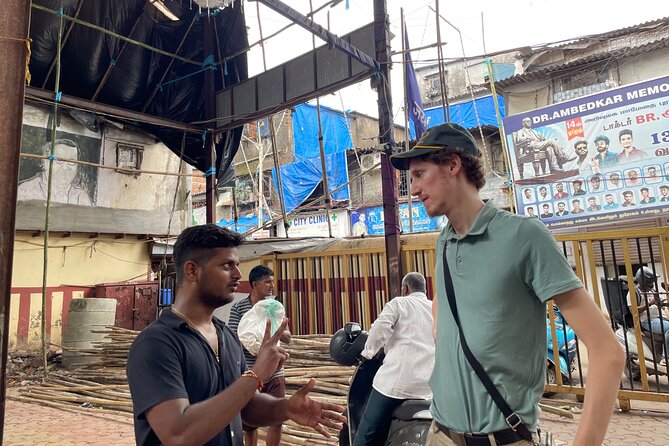
- Up-close working alleys: you’ll be walking through active craft and production spaces
- Option for hotel pickup/drop-off: easier logistics if you’re not keen on navigating
Starting at Third Wave Coffee: how this 2-hour walk actually flows
The tour starts back at the meeting point you begin with: Third Wave Coffee on Tip Road in Mahim (Senapati Bapat Marg area, Ram Mahal, Unit 58). That’s a nice setup because it keeps the day simple—no awkward end-of-tour wandering needed.
You’ll be out for about 2 hours. It’s built as a walking tour, and you can expect a tight route that moves between parts of Dharavi rather than long “on the bus” travel time. The tour is also listed as a private tour/activity, meaning only your group participates. For people who want questions answered in a quieter setting, that matters.
You don’t have to bring cash for entry as an “admission ticket,” since admission is listed as free. You’ll use a mobile ticket, and there’s also mention of group discounts (so if you’re traveling with friends or family, it can cost less per person than you might expect).
One practical note: the meeting point is described as near public transportation, which helps if you’re arriving on your own. If you choose the transfer option, you can add hotel pickup and drop-off, which is the easiest way to reduce friction on a day that’s already busy and close-packed.
You can also read our reviews of more walking tours in Mumbai


What you’ll see in Dharavi: recycling, leather work, textiles, and home life
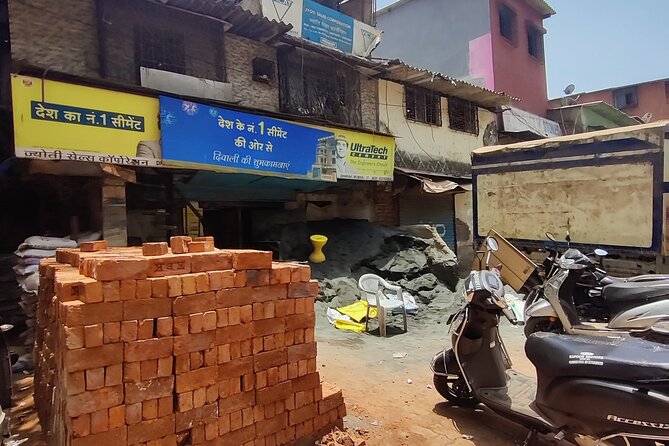
Dharavi is famous, but this tour treats it like a working place, not a headline. The walk is designed around the area’s dual character: you start in a busier commercial zone, then shift toward the residential side where families live and community buildings sit close to small workshops.
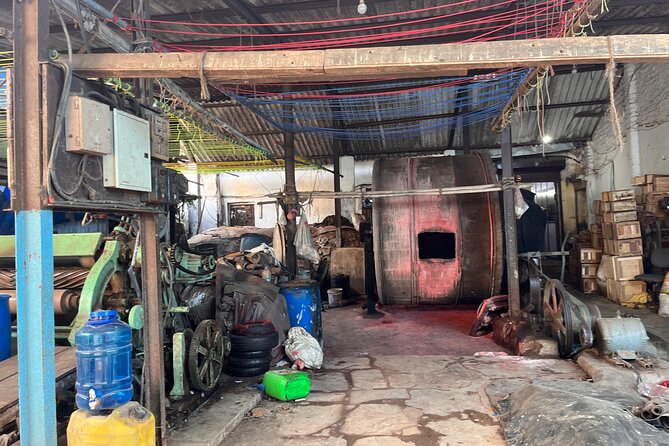
On the commercial side, expect to see small-scale production and recycling activity tied to materials like plastic, cardboard, aluminum, and garments. Even if you’ve read about these trades before, watching them in motion on foot gives you a clearer picture of what “small industry” looks like at street level.
Then you move toward the residential sector: think small-roofed houses close together, alongside government and private buildings, and workshop spaces such as leather work. This is where the tour’s value really shows. You get the sense that production isn’t separated from daily life—it’s braided into it.
A good way to think about this for your own expectations: you’re not just touring “poverty.” You’re walking through a place where people make a living through skill, repetition, and problem-solving—sometimes in tiny spaces.
Kumbharwada pottery colony: a craft stop inside the neighborhood
One of the most specific highlights here is the visit to Kumbharwada pottery colony within Dharavi. This matters because it shifts the day from general observation to a particular trade with visible hands-on work.
A pottery colony stop is useful for a couple reasons. First, it gives you a concrete example of how residents turn materials and know-how into work that’s passed along and practiced daily. Second, it changes the rhythm of the tour: you’re not only watching recycling or assembly-style production; you’re seeing a craft process.
Also, it helps the walk feel balanced. The industrial side can overwhelm if you only think in terms of labor and goods. A pottery stop adds a human tempo: making takes time, and you’ll be able to notice the step-by-step flow in a way that’s harder in faster production areas.
Your guide plays an important role here. The tour is built around learning from a local, and the best moments come from asking simple questions like what people do during different parts of the day, or how the craft fits into neighborhood life.
Guides like Sharon and Ruqaiyya: why the human connection is the point
A cheap tour still can be great, but in this case what you’re paying for is access to interpretation. The experience is built around a local guide who walks with you for safety and context, and the guides featured in strong feedback—Sharon and Ruqaiyya—are praised for being engaging and informative.
In particular, I like the way some guides are described as proud and personally connected to Dharavi. When your guide lives there, you tend to get answers that sound lived-in rather than rehearsed. That’s what turns a tour from “seeing something” into understanding what you saw.
You’ll also notice that the tour is designed for learning without turning the area into a museum. You’re walking with someone who can point out what you’re looking at, why it exists, and how it supports daily survival.
If you’re the type who enjoys a back-and-forth, come ready with a few questions. Ask about the difference between the commercial lanes and residential lanes. Ask how pottery or recycling work fits into the larger neighborhood. When you do that, the 2 hours go fast—in a good way.
Price and value for $9.51: what that budget buys you
At $9.51 per person for an approximately 2-hour guided walk, this is one of those deals that only makes sense if you understand what’s included. You’re not paying for transport across the city for most of the time; you’re paying for a guided route through the area, a local explanation, and a structured visit that includes Kumbharwada pottery.
It’s also listed with mobile tickets and free admission, so you’re not stuck paying extra onsite for basic entry. That keeps the total cost predictable.
There’s also mention of group discounts, which can make it even better if you can travel with others. And if logistics are a headache, the transfer option with hotel pickup and drop-off can justify the add-on cost for you, especially in a city as active as Mumbai.
One timing tip: the experience is described as commonly booked about 25 days in advance on average. That doesn’t mean you’ll always sell out, but it does suggest you’ll want to reserve sooner rather than later if you’re traveling during a busy season or with tight scheduling.




The narrow-alleys reality: comfort, photos, and what to expect
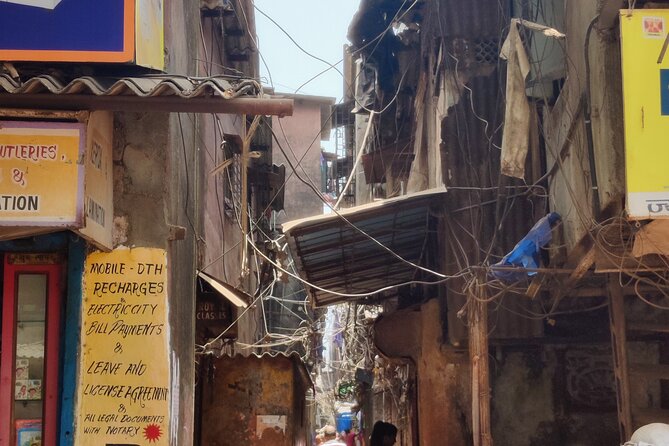
This tour is praised for being up close, meaning you walk through narrow alleys and through areas where people are working. One description even points to passages that feel extremely tight—on the order of just a couple of feet wide. That’s the kind of detail you should take seriously.
So here’s the practical consideration: if you don’t like crowded spaces, or you get anxious in tight corridors, you may find the walking portion uncomfortable. The tour can still be interesting, but your comfort will depend on your tolerance for closeness.
On the upside, the tour is built for safety, and the guide helps you navigate. It’s also designed to support photography—you’ll be able to capture photos, and the guidance helps with when and how to look without turning it into chaos.
My advice: treat your camera like a tool, not a shield. Look first, then photograph. And keep your attention on your guide’s pace. In a working neighborhood, speed and space matter.
Who this Dharavi tour is best for (and who should skip it)
This tour fits best if you want to understand Dharavi through small industries and daily life rather than just landmarks. If you’re curious about how materials get recycled and how trades like pottery and leather operate inside a dense neighborhood, you’ll get a lot out of the route.
It also makes sense if you like learning from a guide who can explain what you’re seeing in plain terms. The guides praised in feedback—Sharon and Ruqaiyya among them—show that the experience leans on strong interpretation, not just walking.
If you want a more “view from a distance” experience, you may prefer something else. This walk is intentionally hands-on. You should choose it when you’re comfortable with being close to workplaces and homes.
Should you book this Dharavi Slum Walking Tour?
If your goal is a thoughtful, hands-on introduction to Dharavi’s small industries—recycling, crafts, and neighborhood work—this is a strong value. The price is low enough that it’s not a big risk, and the route structure (commercial work first, residential life next, then a Kumbharwada pottery visit) gives you a balanced overview in just about 2 hours.
Book it if:
- You want a local-guided walk that explains what you see
- You’re interested in the practical side of production and recycling
- You like tours that are up close and real
Consider skipping or choosing a different style if:
- Tight, crowded lanes make you uncomfortable
- You mainly want wide views from farther away
- You prefer a tour with less focus on the industrial side
If you decide to go, wear comfortable shoes and plan your day so you can be fully present for the walking part. This tour works best when you treat it like meeting a neighborhood, not just checking off a destination.
FAQ
How long is the Dharavi slum walking tour?
The tour is about 2 hours.
Where does the tour start?
It starts at Third Wave Coffee, Tip Road, Unit no.58, Ground, Ram Mahal, Senapati Bapat Marg, Marinagar Colony, Station, Mahim, Mumbai, Maharashtra 400016.
Is this tour private?
Yes. It’s listed as a private tour/activity, so only your group will participate.
What’s included in the tour?
You’ll have a guided walk to learn about residents’ daily lives and small businesses, including a visit to the Kumbharwada pottery colony within Dharavi.
Do I need to buy an admission ticket?
Admission is listed as free for this activity.
Is hotel pickup and drop-off available?
Yes. There’s an option for transfers that includes hotel pickup and drop-off.
Is the meeting point easy to reach?
The start location is described as near public transportation.
What is the cancellation policy?
Cancellation is free if you cancel up to 24 hours in advance for a full refund.
If you want, tell me your travel month and whether you prefer more housing focus or more industry focus, and I’ll help you decide what time of day to schedule this.