Bandra has a secret rhythm you can walk into. This 3-hour Bandra walk mixes Portuguese-era landmarks with working neighborhood streets, so you get context for why this area is called the Queen of the Suburbs. Two things I really like are the small group size (max 15) and the guide’s on-the-ground commentary that connects churches, villages, and forts into one story.
My other favorite part is the route itself: you’ll start at St. Andrew’s Church by the seashore and end near Mount Mary, passing spots many people miss when they only do the flashier parts of Mumbai. One consideration: it’s a walking tour with no food included, so plan to grab something before or after, and wear comfy shoes.
In This Review
- Key highlights you’ll care about
- Entering Bandra’s Portuguese-to-Mumbai story in 3 hours
- Price and what $17.90 buys you (and what it doesn’t)
- Where the walk starts: St. Andrew’s Church at 4:00 pm
- Stop 1: St. Andrew’s Church and the 1575 Portuguese Jesuit link
- Stop 2: Ranwar and the original 24 pakhadis of Bandra
- Stop 3: Chimbai Village and the side of Bandra most people skip
- Stop 4: Mount Carmel Church, also called Mount Mary Church
- Stop 5: Bandstand Promenade and the 17th-century watchtower remains
- Stop 6: Bandra Fort (Castella de Aguada) and the name clues
- How to make this walk feel smooth (not just long)
- Guides, group size, and why small matters on this route
- Who should book this Bandra walking tour
- Should you book Bandra on foot with Mumbai Dream Tours?
- FAQ
- How long is the Bandra walking tour?
- What is the price per person?
- What time does the tour start?
- Where does the tour start and end?
- How many people are in the group?
- Is a mobile ticket used?
- Are admissions included at the stops?
- What’s included in the price?
- Is food and drink included?
- What is the cancellation policy?
Key highlights you’ll care about
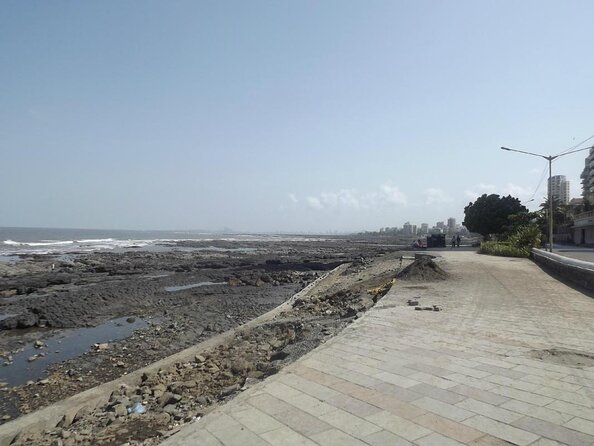
- Portuguese roots in plain sight, from Jesuit-built St. Andrew’s Church to Portuguese-named forts
- A tight group (max 15) that makes questions and slower pacing feel easy
- Several stops marked free entry, including churches and fort remains
- Bandra’s “pakhadis” origin story, including Ranwar as the original village pattern
- A coastal finish near Mount Mary, letting you land the walk with a strong sense of place
- Guide support that helps you spot details, with guides like Roshita specifically praised for clear guidance
Entering Bandra’s Portuguese-to-Mumbai story in 3 hours
Bandra can feel like it’s split into moods: the sea-facing world of promenades and churches on one side, and quieter pockets of everyday neighborhood life on the other. This walking tour keeps you moving long enough to build momentum, but short enough that you don’t feel like you’re rushing through Mumbai. The main payoff is how the guide stitches together the Portuguese past with later British-era shifts, so landmarks aren’t just objects. They become markers of how power and culture moved through the area.
You’ll also get a strong orientation. Bandra West is known as the Queen of the Suburbs, but that nickname doesn’t mean much until you see how many different layers fit into a small radius. By the end, you’ll understand why people come here for both atmosphere and history, and you’ll have a better sense of where to explore next on your own.
You can also read our reviews of more walking tours in Mumbai
Price and what $17.90 buys you (and what it doesn’t)
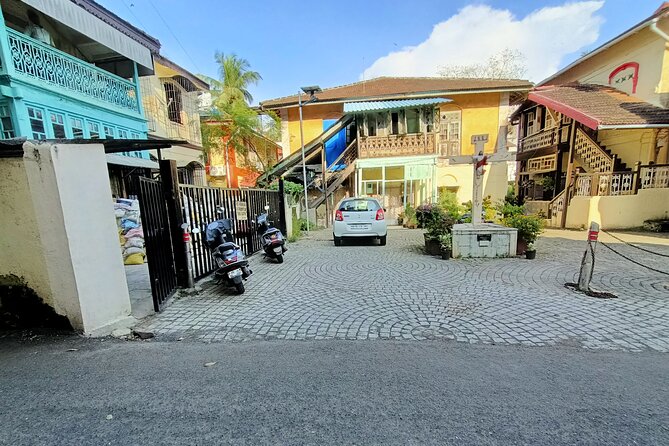
At $17.90 per person for about 3 hours, this is the kind of tour that makes sense if you want a guided route without a big spend. You’re paying mainly for time with a local guide who’s set up the route and commentary so you don’t have to figure out what you’re looking at.
A few value points that matter:
- The experience includes a professional guide (not just a walk leader reading off facts).
- The group is capped at 15, which usually means more interaction and less waiting.
- The listed stops are marked with free admission tickets, so you’re not stacking extra costs at each stop.
- Food and drink are not included, so budget for a snack or a post-walk meal.
What it doesn’t include is what often turns a good afternoon into a practical headache: you’ll need to handle your own refreshments.
Where the walk starts: St. Andrew’s Church at 4:00 pm
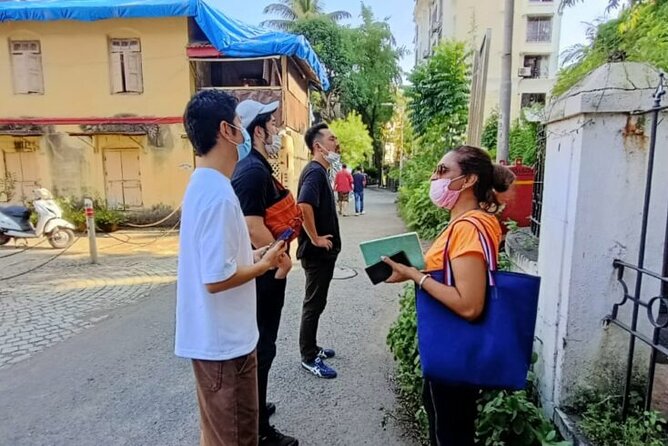
The tour begins at St. Andrew’s Church, address 115, Hill Rd, Old Rajaram Wadi, Bandra West, Mumbai, Maharashtra 400050. Start time is 4:00 pm, and you’ll end at Taj Lands End, Mount Mary, Bandra West, Mumbai, Maharashtra 400050.
That timing is useful because late afternoon is often when Mumbai starts to feel more walkable. Even if it’s still warm, the streets tend to have a different tempo than midday. Also, starting at a landmark by the seashore sets a tone: you’re not just walking through Bandra, you’re walking with the coast in the background.
It’s also noted as near public transportation, which helps if you want an easy connection from where you’re staying.
Stop 1: St. Andrew’s Church and the 1575 Portuguese Jesuit link
You start at St. Andrew’s Church, one of the oldest churches in Mumbai. The tour frames it as a Portuguese Jesuit build from 1575, set right on the seashore in Bandra.
This stop matters because it’s a clear anchor for the tour’s main theme: how Portuguese influence wasn’t abstract, it was physical, religious, and tied to specific locations. Standing here, you’ll understand why Bandra’s story includes forts, churches, and settlement patterns rather than only later colonial chapters.
Practical tip: since the church is on the seashore area, you’ll likely notice how the building’s setting connects to why Portuguese powers built and watched from the coast.
Stop 2: Ranwar and the original 24 pakhadis of Bandra
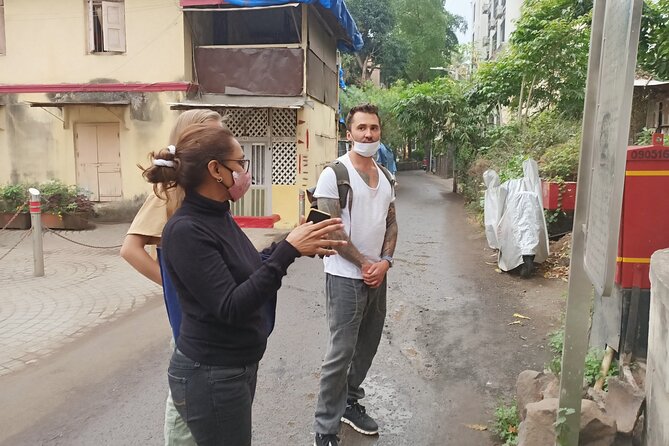
Next is Ranwar, described as the original of the 24 pakhadis (villages) that made up Bandra. The tour also connects this to the broader political shift when the British took Bombay from the Portuguese in 1661, but didn’t gain control immediately.
What I like about including Ranwar is that it prevents Bandra history from becoming only castles-and-churches. You get a sense of settlement structure: Bandra wasn’t invented all at once. It formed from a network of villages, and then those village patterns got reshaped as different powers took hold.
This also helps you read the neighborhood as a patchwork. After Ranwar, other stops feel less random, because you’re already thinking about how communities formed and changed.


Stop 3: Chimbai Village and the side of Bandra most people skip
Chimbai Village is placed next to the more famous Bandra West scenes, including the Bandstand area. But Chimbai is positioned as a contrast: unlike the artsy, upscale vibe people often associate with the area, Chimbai is described as a village far from that development and artsy scene.
This is a smart transition. Bandstand gets attention because it’s visible and photogenic, while village pockets can disappear if you walk too fast. By putting Chimbai in the middle of the route, the guide balances the walk so you don’t leave with only one version of Bandra.
You’ll likely come away thinking about class and change in the area without it turning into a lecture. It’s just a walk where the neighborhood itself does the explaining.
Stop 4: Mount Carmel Church, also called Mount Mary Church
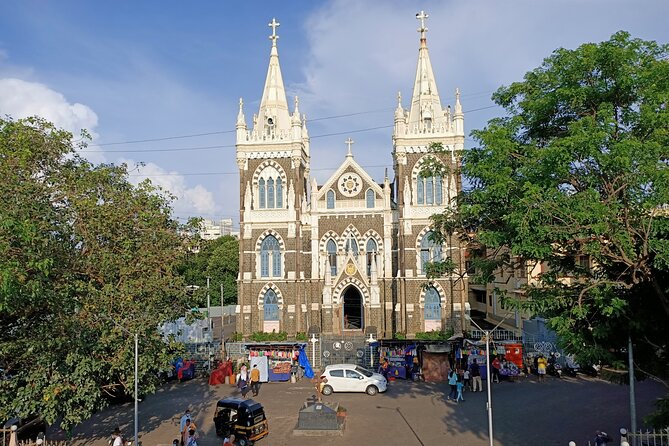
Then you move to Mount Carmel Church, also commonly known as Mount Mary Church. It’s identified as a Roman Catholic Basilica in Bandra, and the tour notes the celebration of the feast of the Blessed Virgin Mary here.
Even if you’re not religious, a basilica like this functions as an identity anchor. It’s the kind of place where people return again and again, and where Portuguese-era religious presence connects to modern Mumbai life.
The practical value is that this stop gives the walk emotional and cultural depth. Forts and forts’ views are one story; a living religious center is another. And the tour doesn’t treat them as separate worlds.
Stop 5: Bandstand Promenade and the 17th-century watchtower remains
Next up is the Bandstand Promenade, located at the tip of Bandra West. Here, the tour points out remains of a 17th-century fort built by the Portuguese as a watchtower overlooking Mahim Bay.
This is where the walking tour starts to feel cinematic. You’re thinking like a watchman for a minute: why this location, why this coastline, why this line of sight. Even if you’ve never studied Portuguese fortification strategies, you can see the logic in the geography.
The fort is described as now providing an excellent experience, and even without inventing details, the placement tells you the main idea: you’re meant to experience the bay perspective and the coast’s role in Bandra’s Portuguese past. It’s a strong checkpoint before the final fort stop.
Stop 6: Bandra Fort (Castella de Aguada) and the name clues
The last stop is Bandra Fort, also known as Castella de Aguada. The tour highlights a Portuguese language detail: Castella is described as a misspelling for Portuguese Castelo, and it also notes the fort’s Portuguese builders seem to have called it something closer to Forte de Band.
Why this matters: names are often the easiest way history leaks into everyday signage and memory. If you’ve ever walked past a confusing name and wondered why it looks slightly off, this is the explanation style the tour uses. You’ll understand how small language changes can carry bigger stories about who built the place and how later people recorded it.
This final stop also ties back to earlier themes. Starting with a church built in the 1500s, then moving through village origins and Portuguese-to-British shifts, you end with a defensive structure on the coast. It’s a satisfying arc.
How to make this walk feel smooth (not just long)
A 3-hour walking tour is short enough to enjoy, but long enough that small choices make a difference. Here’s how to set yourself up:
- Wear comfortable walking shoes. Bandra includes streets that can be uneven and busy.
- Bring a small water plan, since food and drink aren’t included.
- If you’re the type who likes photos, give yourself a few extra seconds at each landmark. The tour’s value is in noticing details, not sprinting between stops.
- Keep your phone charged. The tour uses a mobile ticket, so you’ll want it accessible.
If you like guided context, this tour is built for you. If you prefer total independence, you might find it slower than your usual solo stroll. But since the group is capped at 15, the pace is usually easier than larger city tours.
Guides, group size, and why small matters on this route
The tour caps the group at 15 travelers, which is the quiet difference between a tour that feels like transportation and a tour that feels like a conversation. With a smaller group, the guide can keep track of how everyone’s doing, and you can ask questions without the whole group turning into a blur of shoulders.
The reviews highlight that guides like Roshita are praised for being genuinely helpful in showing people where to look and how to connect the dots. I take that as a sign of the tour’s real strength: it’s not only facts. It’s direction, so you actually see what you came for.
Also, because the experience is built around a sequence of churches, village origins, and fort remains, you’ll benefit from a guide who can explain why each stop follows the last.
Who should book this Bandra walking tour
This is a great fit if:
- You want a guided walk through Bandra’s Portuguese-era landmarks and coastal viewpoints.
- You like learning how a neighborhood formed, not only what it looks like today.
- You prefer small-group experiences where you can move at a human pace.
- You’re doing Mumbai for a limited time and want fast orientation with meaningful stops.
It may not be your best match if you’re only interested in quick photo spots and don’t want history context. Also, if you hate walking or need food included as part of the ticket, plan around that since the tour doesn’t include food and drink.
Should you book Bandra on foot with Mumbai Dream Tours?
I’d book this tour if you want a clean, structured way to understand Bandra beyond the headlines. For $17.90, you’re buying a focused 3-hour walk with a professional guide, a small group cap, and multiple free-to-enter stops that connect into one understandable story. The route also ends near Mount Mary, which makes it easy to continue exploring at the end rather than scrambling for a pickup.
Book it sooner if you like having options, too. The tour shows 5+ bookings last month, so it’s clearly finding its audience.
Do skip it only if you want a food-inclusive outing or if you dislike walking through multiple landmarks without frequent breaks. Otherwise, this is a smart way to see Bandra’s coast, its villages origins, and the Portuguese fingerprints left behind.
FAQ
How long is the Bandra walking tour?
It lasts about 3 hours.
What is the price per person?
The price is $17.90 per person.
What time does the tour start?
The start time is 4:00 pm.
Where does the tour start and end?
It starts at St. Andrew’s Church, 115 Hill Rd, Old Rajaram Wadi, Bandra West, Mumbai, Maharashtra 400050, India. It ends at Taj Lands End, Mount Mary, Bandra West, Mumbai, Maharashtra 400050.
How many people are in the group?
The tour has a maximum of 15 travelers.
Is a mobile ticket used?
Yes, you’ll receive a mobile ticket.
Are admissions included at the stops?
The listed stops are marked as admission ticket free.
What’s included in the price?
A cultured, professional, highly qualified guide is included.
Is food and drink included?
No, food and drink are not included.
What is the cancellation policy?
Cancellation is free up to 24 hours in advance for a full refund. Changes within 24 hours aren’t accepted, and refunds aren’t available if you cancel less than 24 hours before the start time.