REVIEW · HERITAGE WALKING TOURS
Jewish Heritage and Mumbai Highlights Private Full-Day Tour
Book on Viator →Operated by Jewish India Tours · Bookable on Viator
Some cities teach you through buildings; Mumbai teaches you through people. This private tour links Jewish life with the Hindu and Muslim world around it, using real synagogue visits and community stories to make the history feel present.
I like two things a lot. First, you get to step into key places of worship, including the Magen David Synagogue with its daily minyan. Second, the tour isn’t just about stones and dates; it’s built around meeting Jewish community members and hearing personal stories.
A possible drawback: it’s about 5 hours long, so it can feel like a fast run rather than a slow wander. If you want long photo stops or lots of spare time to shop, plan for less free time than a typical half-day “roam and snack” outing.
In This Review
- Key Highlights You’ll Notice Right Away
- Why This Jewish Heritage Route Works So Well in One Stretch
- Victoria Terminus: Starting With Mumbai’s Grand, Film-Ready Landmark
- Magen David Synagogue: The Detail That Makes It Feel Alive
- Tiphereth Israel Synagogue: Active Community Centers, Not Just Old Buildings
- Dhobi Ghat and Mani Bhavan: Mumbai’s Work Life Meets Gandhi’s Story
- Keneseth Eliyahoo and the David Sassoon Library: When History Has Names
- Gateway of India: A Harbour View to Close the Story
- Price and Value: What You’re Really Paying For
- Getting the Most From Your Guide (and Your Questions)
- Who This Tour Suits Best
- Should You Book This Jewish Heritage and Mumbai Highlights Tour?
- FAQ
- How long is the Jewish Heritage and Mumbai Highlights Private Full-Day Tour?
- What time does the tour start in Mumbai?
- What places does the tour include?
- Are there entry fees for the tour stops?
- Is lunch included?
- What’s included in the tour price?
- Is this tour private or shared?
- What is the cancellation window?
Key Highlights You’ll Notice Right Away

- Daily minyan at Magen David Synagogue gives you a specific, living reference point for the community
- Private, only-your-group experience with pickup and drop-off to keep the day stress-light
- Meet community members first-hand, not just a lecture from outside
- Architectural stops with names attached (Jacob Sassoon and Elias Sassoon come up at Keneseth Eliyahoo)
- Dhobi Ghat adds a memorable Mumbai working-life sight to balance the heritage focus
- Gandhi stop at Mani Bhavan works as a thoughtful contrast within the same route
Why This Jewish Heritage Route Works So Well in One Stretch
This is a private tour in an air-conditioned vehicle, timed for a 9:30am start and roughly 5 hours on the clock. That matters because you’re moving through several very different parts of the city, and the pickup/drop-off removes the puzzle of arranging your own transport.
The other value piece: many of the featured stops don’t require you to pay entry fees. That means your money goes mostly to the guide, the vehicle, and the structure of visiting the right places in the right order. No, it’s not a “stay all day” sit-down tour. But it’s efficient in a way that helps you understand how Mumbai’s Jewish story fits into the wider city.
Finally, you’re not limited to talking about Jewish life in theory. The experience includes time to meet members of the Jewish community to hear their stories first hand, which is where the tour usually earns its top ratings.
You can also read our reviews of more private tours in Mumbai

Victoria Terminus: Starting With Mumbai’s Grand, Film-Ready Landmark
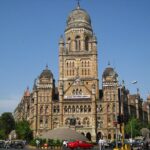
You kick off with a drive-by and look at Victoria Terminus—you’ll also see Mumbai University in the same sweep. It’s one of those sights that instantly gives you a sense of Mumbai as a global port city, not just a place to pass through.
Victoria Terminus is also famously tied to pop culture: it’s been filmed for Slumdog Millionaire. That doesn’t replace the real-world story of the building, but it does help you orient fast. When your guide connects what you’re seeing to how different communities lived and traveled through the city, the landmark stops feeling like just a photo backdrop.
At around 20 minutes, this stop is short. The trade-off is that you’re not getting museum-style time here. The payoff is you’re saving your deeper attention for the synagogues and institutions that follow.
Magen David Synagogue: The Detail That Makes It Feel Alive
The first true worship-stop is Magen David Synagogue, and the standout fact is straightforward: it’s the synagogue with a daily minyan. That’s not trivia. It’s a clue about continuity—Jewish practice here isn’t only historical; it’s still happening day to day.
Expect a focused visit of about 30 minutes. With the minyan context in your head, it’s easier to notice what your guide emphasizes—how routine prayer connects people, time, and community identity. Even if you know little about Jewish tradition going in, this is one of the easiest places on the route to understand what “community” means in practice.
One practical note: synagogue visits can involve quiet, respectful behavior and sometimes limited photo conditions. Keep your camera ready, but be ready to follow whatever the community says on the day.
Tiphereth Israel Synagogue: Active Community Centers, Not Just Old Buildings
Next up is Tiphereth Israel Synagogue, described as one of the city’s most active Jewish centers. This stop is about energy—how a synagogue functions as a hub, not only as a heritage object.
You’ll typically get around 30 minutes here. For me, the value is the way an active center changes the tone of the tour. You’re not only asking how people lived “back then.” You can also ask how communal life works now, and what traditions stay stable as the city changes around them.
The guide’s role matters here. Names like Hanna and Joshua come up in past tour experiences, and they’re praised for bringing both Jewish life and Indian context into the same conversation. That’s exactly the kind of guiding style that turns a synagogue visit into a story you can actually use to understand the city.
Dhobi Ghat and Mani Bhavan: Mumbai’s Work Life Meets Gandhi’s Story
After the synagogues, the tour makes a smart pivot to broader Mumbai life.
First is Dhobi Ghat, the massive outdoor laundry. It’s a visually strong stop because it shows how work and daily routines shape a city. For this route, Dhobi Ghat isn’t random. It helps you understand the city’s rhythm, which makes later heritage stops feel less “separate.”
Then you head to Mani Bhavan Gandhi Museum, dedicated to Mahatma Gandhi. This is about context. When your guide ties Gandhi-era ideals and modern city life into what you’ve seen so far, the Gandhi stop becomes more than a detour. It becomes a lens for thinking about coexistence, ethics, and community responsibility in a place as layered as Mumbai.
Both stops are brief—Dhobi Ghat at about 15 minutes and Mani Bhavan at about 30 minutes. If you’re the type who likes long photo sessions, you’ll have to be quick here. If you’re the type who likes meaning-per-minute, this pacing actually works.
You can also read our reviews of more historical tours in Mumbai






Keneseth Eliyahoo and the David Sassoon Library: When History Has Names
Two of the most memorable heritage stops on this day are also the ones where the architecture comes with a story attached.
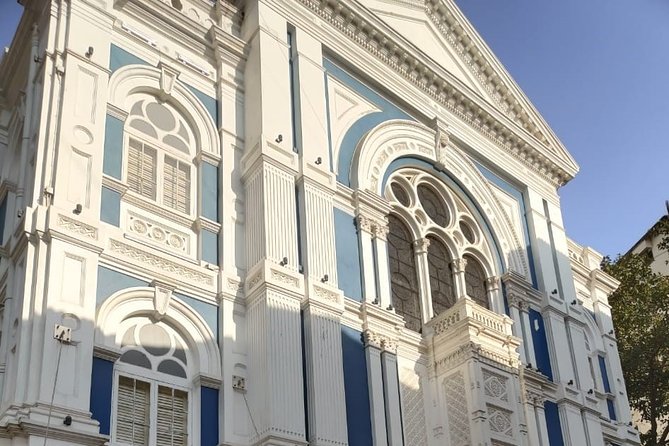
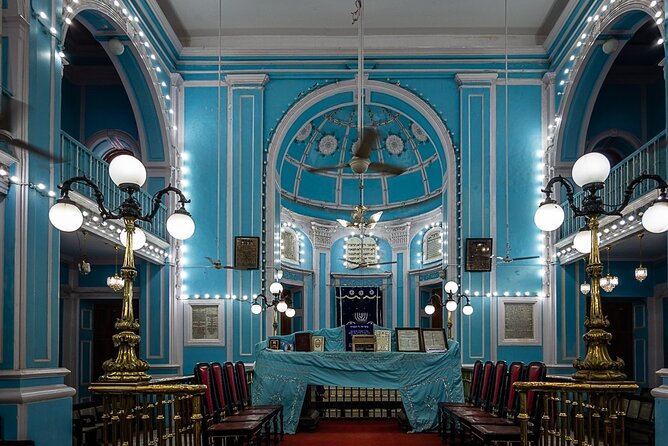
Keneseth Eliyahoo Synagogue was built in 1884 by Jacob Sassoon, in memory of his father, Elias Sassoon. Your guide should connect those names to the wider Baghdadi Jewish presence in Mumbai, and that context helps you look at the building as more than pretty facades. It becomes a marker of identity, family memory, and community ambition—visible in stone and kept in use.
Then you visit the David Sassoon Library and Reading Room, built in honour of David Sassoon, a well known Baghdadi philanthropist. Libraries and reading rooms are perfect for this tour because they sit at the intersection of faith and civic life. They signal education, support, and long-term thinking—values that keep communities stable when the outside world is changing.
These stops are around 20–30 minutes each. That’s enough to appreciate the architecture and understand the names behind it. It’s not enough to do a deep research project on the spot, so if you love document-level history, treat this as a foundation and plan to follow up after the tour with reading.
Gateway of India: A Harbour View to Close the Story
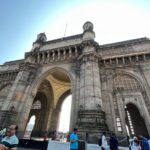
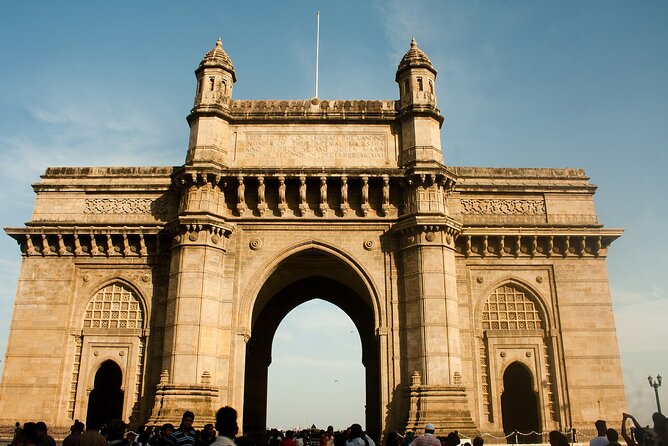
You finish with a drive to the Gateway of India, overlooking the Mumbai harbour. This is your “big final frame,” and it matters because the Jewish story in Mumbai is tied to trade routes, migration patterns, and a city shaped by arrivals and departures.
A 30-minute stop gives you time for photos and a bit of breathing space. More importantly, it gives you a chance to connect the earlier stops—synagogues, institutions, and community life—to the idea that Mumbai has always been a meeting point.
If you’re tired, this is the right moment to slow down. You’re not switching into another heavy indoor visit. You’re just looking at the water and letting the day’s story settle.
Price and Value: What You’re Really Paying For
At $106.87 per person, you’re buying three main things:
1) Private transport with an air-conditioned vehicle and pickup/drop-off
2) An English-speaking guide who can connect the Jewish sites to Mumbai as a whole
3) Time in multiple key places, many without entry fees on the route
You’re not paying for included lunch. That’s a real consideration. The day runs about 5 hours, so you’ll likely want either a pre-tour snack or a post-tour meal plan. If you’re hungry, don’t wait until you’re cranky. Eat something light before pickup and keep water handy if you think you’ll need it.
Also, this is a private experience, meaning it’s only your group. That’s a value boost if you want to ask follow-up questions without worrying about group timing. It’s also great for couples and families who prefer a calmer pace than big group buses.
Getting the Most From Your Guide (and Your Questions)
This tour’s success depends on the guide’s ability to turn local Jewish heritage into something you understand quickly.
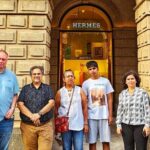
In past experiences with guides such as Hanna and Joshua, what stands out is how they bring personal perspective alongside the landmarks. Some guiding styles even include sharing family rituals and what it feels like to be Jewish in Mumbai—details that make the day feel human, not like a checklist.
Here’s how I’d prepare if you want your tour to land well:
- Write down 3–5 questions before you start. Examples: How does a synagogue community stay active? What changed over time in Mumbai? How do people practice tradition today?
- Ask respectfully about customs you see. Synagogue contexts can vary, and your guide can explain what’s appropriate.
- If your group has different levels of knowledge, ask your guide to meet everyone where they are. The best guides can do that.
One more tip: wear something comfortable. You’ll be moving through several stops in one stretch, and you’ll want to stay focused rather than distracted by tight shoes.
Who This Tour Suits Best
I’d recommend this tour if you want Jewish heritage that’s practical, not just a museum-style history lesson. It’s ideal for:
- First-timers to Mumbai who want the Jewish story without getting stuck figuring out logistics
- People who like places where faith and community life are still active
- Couples, friends, and small families who want a private day with time for questions
- Anyone who wants a guide who can connect Jewish sites to the broader India context
If you’re mostly after long, slow sightseeing, you may feel rushed by the 5-hour pacing. But if you want clarity—what to see, why it matters, and what questions to ask—this is a strong fit.
Should You Book This Jewish Heritage and Mumbai Highlights Tour?
For most people who care about culture over crowds, I think this is a yes.
Book it if you value synagogue visits with meaningful context, want to meet community members, and prefer a guide-led route that keeps the day efficient and easy. The price also feels reasonable for what you get: private transport, an English-speaking guide, and multiple major stops with no entry fees indicated for the covered places.
Skip it only if you strongly want a slower day with lots of free time for wandering, or if you hate structured timing. This tour is designed to teach through a set route, not to let you roam without guidance.
If you’re on the fence, here’s my simple rule: if you want to understand Mumbai as a city of real communities living side by side, this tour gives you that in one well-timed morning-to-early-afternoon window.
FAQ
How long is the Jewish Heritage and Mumbai Highlights Private Full-Day Tour?
The tour runs for about 5 hours (approx.).
What time does the tour start in Mumbai?
The start time is 9:30am.
What places does the tour include?
It includes stops such as Victoria Terminus, Magen David Synagogue, Tiphereth Israel Synagogue, Dhobi Ghat, Mani Bhavan Gandhi Museum, Keneseth Eliyahoo Synagogue, David Sassoon Library and Reading Room, and the Gateway of India.
Are there entry fees for the tour stops?
The tour notes that no entry fee applies for the places covered, and tickets for Victoria Terminus are listed as free.
Is lunch included?
No. Lunch is not included.
What’s included in the tour price?
Included are an air-conditioned vehicle, an English-speaking experienced guide, bottled water, pickup and drop-off from your accommodation, and presently applicable tax.
Is this tour private or shared?
It is private. Only your group will participate.
What is the cancellation window?
You can cancel up to 24 hours in advance of the experience for a full refund.