REVIEW · HERITAGE WALKING TOURS
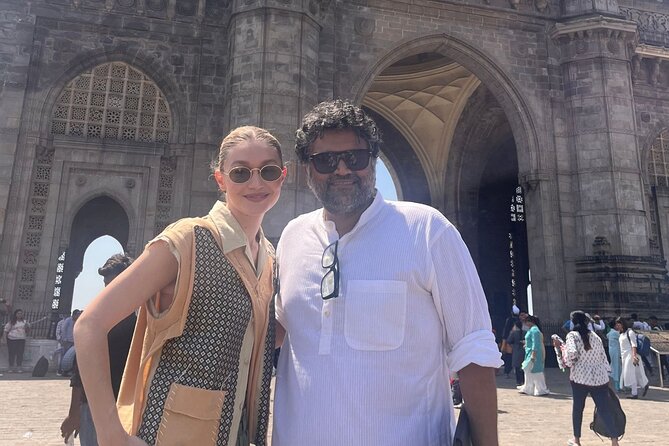
Heritage Walk: Recommended by Gigi Hadid as a must-do in Mumbai
Book on Viator →Operated by No Footprints · Bookable on Viator
South Mumbai has a way of slipping history into your daily route. This private heritage walk strings together landmark streets, art corners, and faith sites with a local guide, plus hotel pickup/drop-off and a Yazdani restaurant quick bite. I like that it’s built for orientation fast, not just photo stops, and that the guide shares small, specific stories like gas lights at the Asiatic Society and a funny Jinnah anecdote.
My favorite part is the mix of styles: colonial-era architecture, Jewish and Parsi heritage, and modern Mumbai’s business pulse, all in a route you can do without planning. One thing to consider: this is primarily a walking and looking tour, so you shouldn’t expect much interior time inside buildings along the way.
In This Review
- Key reasons this walk works
- South Mumbai on foot: what the 3–4 hours really feels like
- Town Hall (Asiatic Society) and the Bombay Fort origin story
- Asiatic Society: gas lights, mid-1800s power, and a Jinnah anecdote
- Horniman Circle Garden: a calm walk toward St. Thomas Cathedral
- Yazdani Restaurant & Bakery: the snack stop that makes the tour feel local
- Flora Fountain and Hutatma Smarak: Mumbai’s expansion marked in stone
- Bombay Stock Exchange: from banyan tree origins to the business heartbeat
- Keneseth Eliyahoo Synagogue: Jewish heritage and the Sassoon family impact
- Kala Ghoda Art Precinct: Sassoon and Jewish stories, plus the Watson Hotel yarn
- Lion Gate and the old docks area: finishing with odd connections
- Price and value: is $44.39 worth it for this private route?
- Guides and pacing: what to look for on the day
- One drawback to plan around: buildings may stay outside
- What to pack and how to prep for South Mumbai walking
- Who should book this Heritage Walk, and who might pass
- Should you book this Mumbai Heritage Walk?
- FAQ
- How long is the Heritage Walk in Mumbai?
- Where does the tour start and end?
- Is hotel pick-up and drop-off included?
- What is included besides the guide?
- Do I need to pay admission fees at the stops?
- Is this tour private or shared?
- Is there a snack stop during the walk?
- Can children join for free?
- Does the tour run on Mumbai Marathon day?
- What if the weather is bad?
- How strict is cancellation?
Key reasons this walk works
- Private guide, personal pacing: It’s designed for only your group, so questions fit the moment.
- Hotel pickup and drop-off: You can start near Fort and return without the hassle, with one exception noted for suburban hotels.
- Snack at Yazdani Restaurant & Bakery: A quick bite breaks up the walking and gives you a real local stop.
- South Mumbai landmarks, explained: The route links Asiatic Society, Horniman Circle, Flora Fountain, and more into one story.
- Art + heritage in Kala Ghoda: You’ll walk into the Kala Ghoda Art Precinct and hear about buildings tied to famous visitors.
- A satisfying wrap at Lion Gate: The tour ends by the old docks area with offbeat clues and connections.
South Mumbai on foot: what the 3–4 hours really feels like
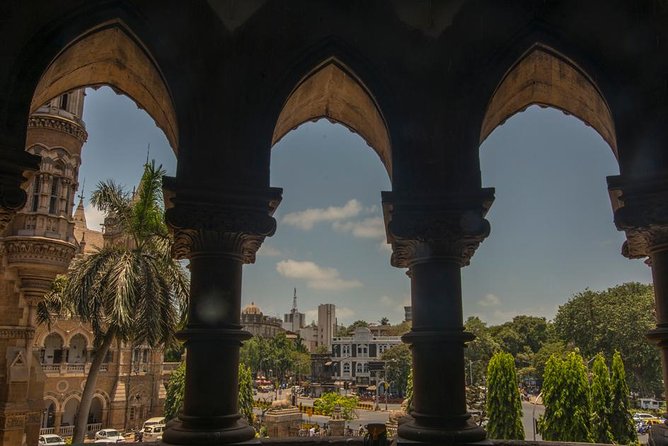
This is a private heritage tour in South Mumbai that runs about 3 to 4 hours. The pace is active enough to need moderate fitness, but it’s not an all-day hike through chaos. It’s also flexible: the order of stops and even the timing can shift based on the guide’s on-the-ground plan and traffic.
For logistics, you get hotel pick-up and drop-off included. If your hotel is in the Mumbai Suburban area, there can be an extra transport cost, so it’s worth checking before you confirm. The meeting point is at The Asiatic Society, Town Hall (near the Bombay Castle area), and the tour finishes in Kala Ghoda at the Ador House area.
You can also read our reviews of more walking tours in Mumbai
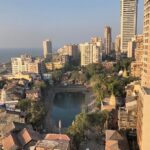
Town Hall (Asiatic Society) and the Bombay Fort origin story
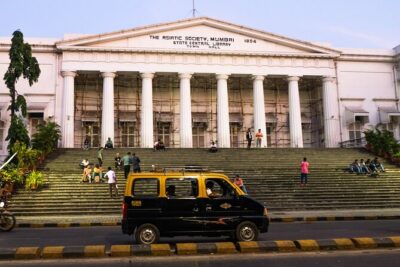
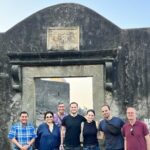
You start outside the old Bombay Castle area, behind the Asiatic Society, at Town Hall. This first stop matters because it frames what you’re about to see: how the earlier Bombay Fort shaped the city’s street logic and power centers.
The focus here isn’t just dates. You’re listening for how the city grew from a fortified presence into a dense, layered metropolis. It’s the kind of opening that makes later stops click, especially when you’re seeing institutions that still carry early Mumbai identity.
Asiatic Society: gas lights, mid-1800s power, and a Jinnah anecdote

Inside the orbit of the Asiatic Society, the tour turns to the mid-1800s and how new technology and prestige showed up in daily life. One detail you’ll hear about is how gas lights were first exhibited here, which gives you a tangible sense of what “modern” meant back then.
You’ll also get a story with humor attached, including a funny anecdote involving Jinnah, father of Pakistan. That’s a good sign of what this guide style tends to do: mix serious context with human-scale moments so the facts don’t feel like a lecture.
Horniman Circle Garden: a calm walk toward St. Thomas Cathedral
Next comes a stroll through Horniman Circle Garden and onward toward St. Thomas Cathedral. Horniman Circle is one of those places where Mumbai slows down visually, even when the city is still moving around it. It’s a nice transition from the big institutional story at the Asiatic Society to more street-level architecture and atmosphere.
This segment is also practical. Gardens and open areas give your legs a breather while still keeping you close enough to the city’s colonial-era layout. It’s a good moment to settle in and start spotting details you’ll later connect to other stops.
Yazdani Restaurant & Bakery: the snack stop that makes the tour feel local
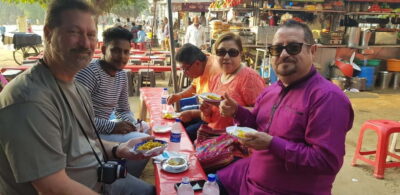
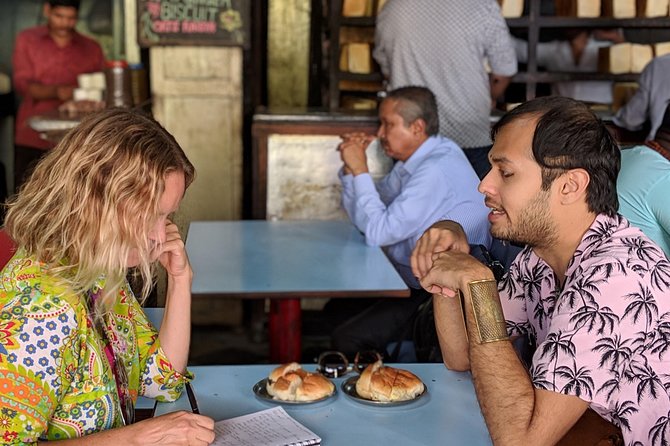
Mid-route, you get a quick bite at Yazdani Restaurant & Bakery. This isn’t a random break; it’s placed so you can refuel without losing the tour flow.
One of the reasons this stop gets remembered is that it’s both recognizable and practical: you can taste something that feels like part of Mumbai rather than a staged tourist meal. Even if your time is tight, the snack stop helps you keep energy up for the final stretch toward Kala Ghoda and the docks area.
If you’re sensitive to heat or hunger swings, treat this as your anchor. After this, you’re walking through denser heritage zones with more stops stacked close together.
You can also read our reviews of more historical tours in Mumbai



Flora Fountain and Hutatma Smarak: Mumbai’s expansion marked in stone
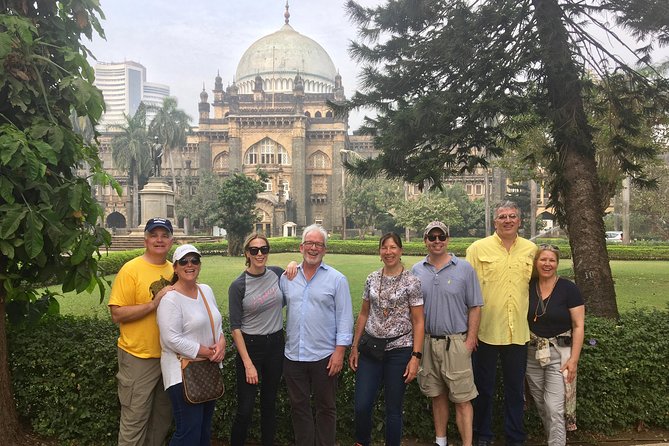
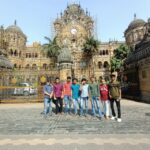
Flora Fountain is the kind of landmark that looks straightforward until you learn why it’s important. Here, you’ll hear the tale of how Bombay expanded beyond Fort limits, which helps explain why South Mumbai feels like it has multiple layers of city planning.
While you’re there, the tour ties it to the division of the state of Maharashtra and points you toward Hutatma Smarak. This is a strong moment for context because it connects physical monuments to political and social change, without requiring you to memorize a timeline.
Bombay Stock Exchange: from banyan tree origins to the business heartbeat
You’ll stop at the Bombay Stock Exchange, and the story connects humble beginnings to scale. The highlight here is that the institution started under a banyan tree, then grew into the structure you see today.
Even if finance isn’t your thing, this works because it shows Mumbai’s identity isn’t only about monuments and churches. It’s also about commerce and momentum, and the tour uses the stock exchange to prove that Mumbai’s evolution can be told through institutions as well as buildings.
Keneseth Eliyahoo Synagogue: Jewish heritage and the Sassoon family impact
Next is Keneseth Eliyahoo Synagogue, a stop built around Mumbai’s Jewish heritage. You’ll hear about the Sassoon family and how they shaped the city’s development and cultural footprint.
This segment is short but purposeful. It gives you a different angle on South Mumbai than the more common colonial-only narrative, and it makes the later Kala Ghoda stories feel connected rather than random.
If you like heritage tours that treat faith communities as part of the city’s backbone, this is one of the stops that tends to land well.
Kala Ghoda Art Precinct: Sassoon and Jewish stories, plus the Watson Hotel yarn
Kala Ghoda is the tour’s art-and-architecture zone. In this Kala Ghoda Art Precinct stop, you’ll hear stories that loop back to the Sassoon and Jewish history you just learned, while also picking up a specific building legend.
One highlight: the Watson Hotel, described as the first iron cast building in the city, and linked to hosting Mark Twain. That kind of story adds sparkle without drifting away from place. It also helps you see why Kala Ghoda is called an art precinct in the real-world sense, not just on a map.
This is also where you’ll likely enjoy the most walking photos. The streets feel made for it: heritage facades, art spaces, and the sense that Mumbai’s creative side has long been in the mix.
Lion Gate and the old docks area: finishing with odd connections
The tour ends at Lion Gate near the old docks area. This last stretch is different from the earlier stops because it leans into mystery and unusual connections rather than only big-name landmarks.
You’ll hear about the Ice King mystery and a connection between the city and the American Civil War. It’s a fun way to close the loop: after all the institutions and architecture, you leave with stories that make Mumbai feel stranger and more human at the same time.
The formal end point is at the Archana & Harish Mittal Art Initiative on Ador House in Kala Ghoda, which is a handy place to stop for coffee or continue exploring nearby.
Price and value: is $44.39 worth it for this private route?
At $44.39 per person, this tour can feel like a deal when you look at what you get packed in: a professional guide, hotel pick-up/drop-off, and a Yazdani snack. Duration is about 3–4 hours, and it runs on foot across major South Mumbai areas where you’d otherwise be piecing together transport and directions.
What boosts value is the private format. You’re not paying the same flat “walk-with-the-crowd” price. Instead, the guide can adjust pacing to your questions and interests, and the route is designed to connect landmarks into a coherent story arc.
A practical note on popularity: it’s booked about 25 days in advance on average, which usually means dates fill or guides get assigned quickly. If you’re traveling in peak season, booking earlier helps you lock in the start time you want.
Guides and pacing: what to look for on the day
Two guide names show up in strong, recent feedback: Meherbeen and Dereck. Meherbeen-style reviews point to flexibility and a warm, comfortable morning meeting, plus a route that can include a short local bus hop alongside walking. Dereck-style reviews highlight reliability, like waiting when you’re late and adjusting the tour based on your interests.
That’s what you want from a heritage walk in a city this fast-moving. A good guide keeps the story clear, uses humor when it fits, and knows how to make the route work even when streets and traffic don’t cooperate.
Your best move: bring a short list of what you care about most—architecture, minority heritage, commerce, or political context. Then you’ll likely get more of the tour tailored to your taste.
One drawback to plan around: buildings may stay outside
One criticism that matters for your expectations: this kind of heritage tour may focus on sights from the street rather than guaranteed entry into interiors. If seeing inside specific buildings is a top priority for you, you might feel slightly limited.
You can still get a lot from the exterior storytelling, especially at stops like the Asiatic Society orbit, Flora Fountain, and the Stock Exchange area. But if you’re the type who needs interior time for every stop, treat this as a walk-and-learn tour more than a museum-door tour.
What to pack and how to prep for South Mumbai walking
Wear comfortable shoes. You’ll be on your feet through multiple landmark zones, plus occasional street crossings. If you’re sensitive to sun, plan for it because South Mumbai can run hot even when the mornings feel pleasant.
Bring water and keep your snack expectations realistic. The included bite at Yazdani helps, but it’s still a short window to refuel before the final heritage stretch.
And keep a weather mindset. The tour runs with the assumption of good weather, and if conditions are poor you’ll be offered another date or a full refund.
Who should book this Heritage Walk, and who might pass
This tour is a great fit if you want:
- A focused walk that covers major South Mumbai anchors without doing the planning yourself.
- A guide who uses stories and humor, not just a list of dates.
- A route that includes faith and community heritage in addition to well-known landmarks.
You might want to consider another option if:
- You need guaranteed interior access at every stop.
- You prefer longer museum-style time rather than moving through multiple areas in one session.
- Your schedule is tight and you dislike walking through dense city blocks.
Should you book this Mumbai Heritage Walk?
I’d book it if you’re heading to South Mumbai and want an efficient, story-driven route with hotel pickup/drop-off and a real snack stop. At $44.39, the value comes from the guide doing the connecting work—linking institutions, monuments, and community stories so the city feels less like a collection of buildings and more like one moving system.
I’d hesitate only if you’re expecting frequent interior visits. This is best taken as a walking heritage orientation that leaves you with smarter context and a few excellent Mumbai stories to carry home.
FAQ
How long is the Heritage Walk in Mumbai?
The tour runs about 3 to 4 hours.
Where does the tour start and end?
It starts at the Asiatic Society, Town Hall area in Fort, and ends at the Archana & Harish Mittal Art Initiative at Ador House in Kala Ghoda.
Is hotel pick-up and drop-off included?
Yes, hotel pick-up and drop-off are included. There may be an additional transport cost if you need pick-up from Mumbai Suburban hotels.
What is included besides the guide?
The tour includes all fees and taxes, plus a quick bite at Yazdani Restaurant & Bakery.
Do I need to pay admission fees at the stops?
The stops listed in the itinerary are marked as free admission, and all fees and taxes are included.
Is this tour private or shared?
It’s a private tour/activity, so only your group participates.
Is there a snack stop during the walk?
Yes. You’ll stop at Yazdani Restaurant & Bakery for a quick bite.
Can children join for free?
Children below 9 years old can do the tour for free of cost.
Does the tour run on Mumbai Marathon day?
No. The tour is not conducted on the day of the Mumbai Marathon.
What if the weather is bad?
The experience requires good weather. If it’s canceled due to poor weather, you’ll be offered a different date or a full refund.
How strict is cancellation?
Free cancellation is available up to 24 hours in advance for a full refund. If you cancel less than 24 hours before the start time, the amount paid is not refunded.