REVIEW · MUMBAI SIGHTSEEING TOURS
Mumbai Private Full-Day Sightseeing Tour
Book on Viator →Operated by Mystical Mumbai · Bookable on Viator
Mumbai can feel like a lot. This tour helps you make sense fast. It’s a private full day with an air-conditioned vehicle and a guide who ties the stops together into a story. I especially liked Mani Bhavan for its grounded look at Gandhi’s work, and Dhobi Ghat for the everyday spectacle of clothes being washed the old way. One thing to consider: even with private wording, the operator lists up to 50 travelers, so the ride and commentary can feel less personal if the group is bigger.
You’ll cover major landmarks across South Mumbai—sea views, colonial-era architecture, religious sites, and a UNESCO World Heritage railway station—without you having to plan routes or sort out transit. Expect a packed day, with short time windows at each stop, plus traffic and road crossings that come with Mumbai.
In This Review
- Key Points You’ll Actually Use
- Banganga and Flora Fountain: a calm start before the city takes over
- Gateway of India and Mani Bhavan Gandhi Museum: where Mumbai’s public face meets Gandhi’s private work
- Jain Temple and Chhatrapati Shivaji Terminus: religion and rail heritage in the same circuit
- Marine Drive, Dhobi Ghat, and Hanging Gardens: sea views, daily labor, and a green reset
- Taj Mahal Palace, David Sassoon Library, and Kala Ghoda: colonial silhouettes and creative streets
- CSMVS and Rajabai Clock Tower: museum time and a Big Ben twin
- Price and logistics: is $96.16 a fair deal for a full-day city sampler?
- Who this tour fits best (and who should look elsewhere)
- Should you book this Mumbai private full-day tour?
- FAQ
- How long is the Mumbai private full-day sightseeing tour?
- What’s included in the tour price?
- Is lunch included?
- What major places will you see during the day?
- Do I need an app or ticket to join?
- Is cancellation possible if plans change?
Key Points You’ll Actually Use
- Mani Bhavan with context: A focused stop on Gandhi’s political activity in Mumbai from 1917 to 1934, with museum time built in.
- Dhobi Ghat on a real schedule: See Mumbai’s 140-year-old open-air laundry operation as a functioning daily routine.
- Iconic sights in one loop: Gateway of India, Marine Drive (Queen’s Necklace), and the UNESCO-listed Chhatrapati Shivaji Terminus.
- Good landmark variety: A Jain temple, Banganga tank area, hanging gardens, and major heritage buildings in the same day.
- Hotel pickup and drop-off: Fewer logistics worries, especially on a full-day route.
- You’ll want clear audio: With a larger group (up to the stated maximum), sitting where you can hear your guide matters.
Banganga and Flora Fountain: a calm start before the city takes over
I like kicking off the day with a place that isn’t trying to be an Instagram backdrop. Banganga is a tank area where the tank was built in 1127 AD by Lakshman Prabhu, a minister in the Silhara dynasty court. It’s described as spring fed, and the water stays sweet even though it’s in the middle of the city’s life. The stop is about 30 minutes, and that length feels right: long enough to walk the edges and take in the idea, not long enough to bore you.
Then you roll to Flora Fountain, a sculpted architectural monument built in 1864. It’s a fusion of water, architecture, and sculpture, and it depicts the Roman goddess Flora. In practice, this stop works best as a photo-and-stare moment. It’s quick, but it helps you notice the different layers of Mumbai—Indian devotional places and also European-influenced public architecture—without needing a separate day for each theme.
If you’re sensitive to walking, this early part is manageable. Most of the physical strain in this tour is not the walking distance; it’s the city crossings and short transitions. So I’d set your mindset as: short breaks, then back on the road.
You can also read our reviews of more private tours in Mumbai

Gateway of India and Mani Bhavan Gandhi Museum: where Mumbai’s public face meets Gandhi’s private work
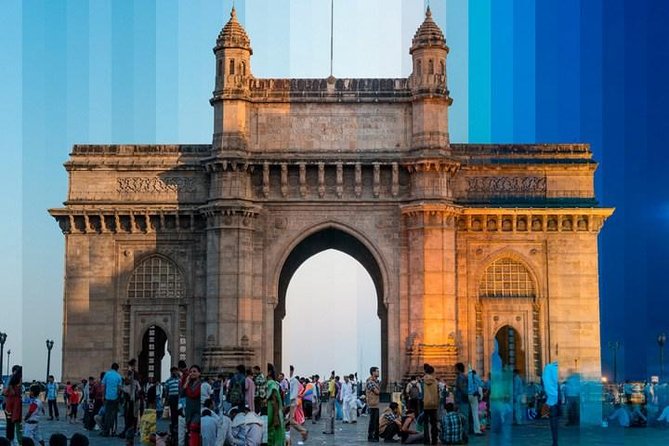
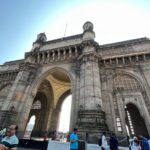
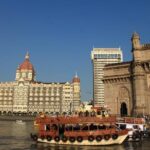
The Gateway of India is hard to miss for a reason. It’s described with regal arches facing the Arabian Sea at Apollo Bunder in Colaba. Even if you’ve seen photos, standing there gives you the scale of the waterfront energy—without you needing to figure out how to get there.
You only get around 30 minutes here, which is the right amount on a full-day schedule. You’ll want to use it for orientation: take a few shots, note the direction of the sea, and let the guide’s framing do its job. When a day is packed, the guide’s job is to make sure each stop is more than a checklist item.
From there, you move into something more reflective: Mani Bhavan Gandhi Museum. Mani Bhavan was the focal point of Gandhi’s political activities in Mumbai between 1917 and 1934, and it’s presented here as a museum and historical building dedicated to him. This stop is about 30 minutes, and it’s also marked as admission included.
What I like about Mani Bhavan on this kind of day tour is that it grounds the landmarks you’ll see later. You’re not just seeing architecture and crowds; you’re connecting Mumbai’s modern identity to the political life that happened here. The museum format also means you can slow down without losing momentum.
One caution: a museum stop can feel faster if you’re rushing. So if you’re the type who likes to read every sign, you may need to focus on the sections your guide highlights. If you skip that, 30 minutes can disappear faster than you expect.
Jain Temple and Chhatrapati Shivaji Terminus: religion and rail heritage in the same circuit

Next is Jain Temple – Mumbai, listed as a historic place of worship with intricate stone carvings and a dome painted with the zodiac. The stop is about 20 minutes, and that’s a good time window because it encourages you to look closely without turning it into a long slog.
If you enjoy architecture details, this is one of the stops where you can actually slow down visually. Those carved details and the painted zodiac dome are the kind of things you only really appreciate when you’re up close. On a day like this, short stops like this are often the best ones: you leave with a clear impression.
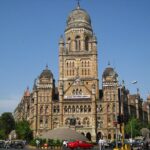
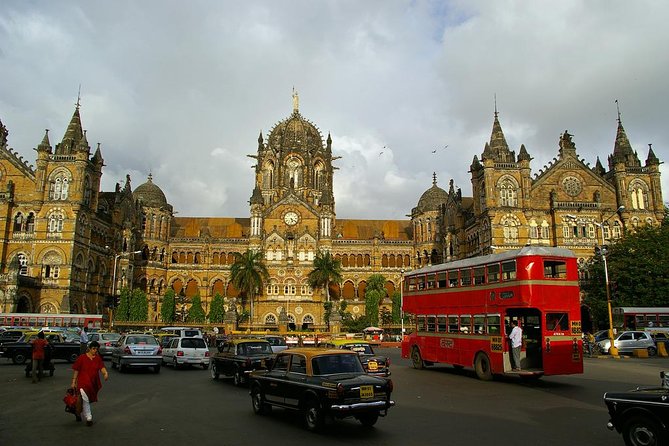
Then comes the grand attention-grabber: Chhatrapati Shivaji Terminus (formerly Victoria Terminus), a UNESCO World Heritage Site and a historic railway station. It’s described as having major heritage value, and the stop is about 30 minutes.
Even if you don’t care about trains, this is a strong checkpoint because it’s both a functioning landmark and a heritage one. It gives you a real sense of how Mumbai’s “everyday” systems—like rail—are part of the city’s historical story. And UNESCO listing is a signal that the site isn’t just old; it’s globally recognized.
A practical note: stations tend to be busy zones. You’ll likely do some quick walking around to see angles. Keep your timing tight here—don’t spend your whole half hour only on one facade.
Marine Drive, Dhobi Ghat, and Hanging Gardens: sea views, daily labor, and a green reset
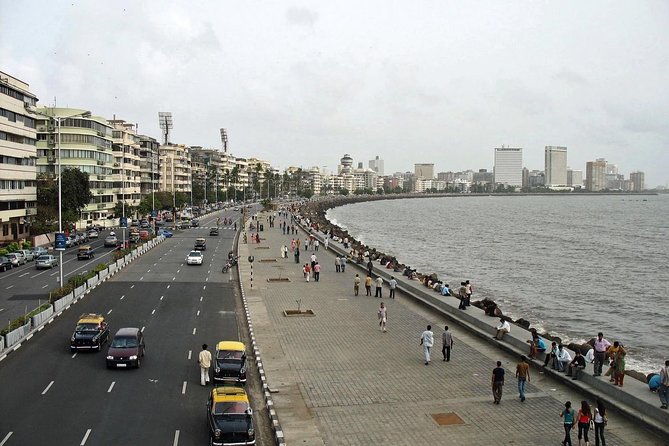
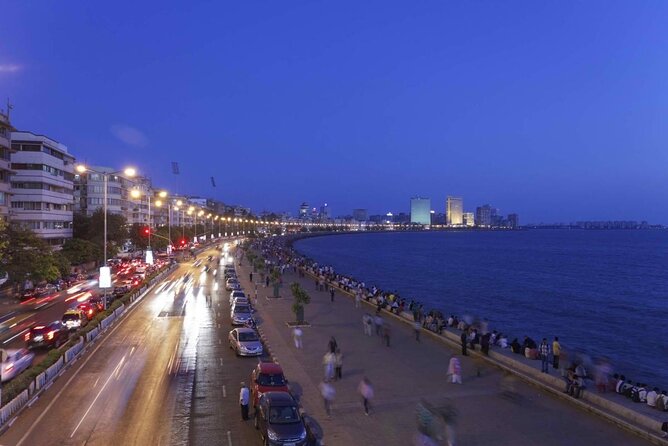
One of the biggest highlights of the day is Marine Drive, also called the Queen’s Necklace. It’s a sea-facing promenade about 3 kilometers, starting at Nariman Point and going to Babulnath, with an uninterrupted view of the Arabian Sea. On this tour, it’s listed as a stop where you get time to enjoy the view, and I think that’s exactly what you should do: pause, look out, and let the sea reset your attention.
Marine Drive works on two levels. First, it’s a classic Mumbai postcard. Second, it’s a place you can stand and understand the city’s geography. When your day includes tanks, temples, and museums, a shoreline promenade helps you mentally map where everything sits.
After that, you get one of the most unusual sights on the schedule: Dhobi Ghat. It’s described as a 140-year-old dhobi ghat, an open-air place where clothes are washed. The tour frames it as Mumbai’s biggest human-powered washing machine, with hundreds of people beating dirt out of thousands of kilograms of soiled clothes each day.
This is the stop I’d call the “real Mumbai” moment. It’s not staged. It’s not pretending to be something else. And it gives you a sense of what life looks like in the city beyond monuments.
Then, you hop to Hanging Gardens, a well-manicured park spread across a large area with pathways, a colorful flower clock, and animal-shaped hedges. The stop is about 30 minutes, and I like that it breaks up the day between street-level activity and heritage buildings.
If you only have one green stop in Mumbai, this is a good one for the quick reset. It’s a change in sound and pace—less traffic pressure, more space to breathe.
Comfort tip: this middle section can be the most mentally intense because it alternates between waterfront, human labor, and landscaped gardens. If you want photos, do them in the gaps, then let the guide talk while you’re standing still.
Taj Mahal Palace, David Sassoon Library, and Kala Ghoda: colonial silhouettes and creative streets
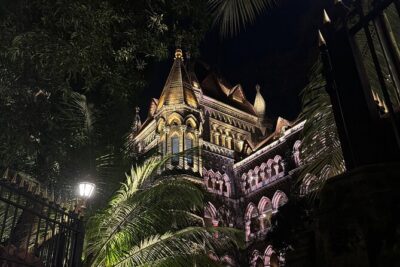
At some point you’ll catch a glimpse of The Taj Mahal Palace, Mumbai, described as a heritage five-star luxury hotel built in the Saracenic Revival style in the Colaba region. On this kind of tour, the point isn’t to tour the hotel; it’s to see how the architecture fits into the wider Mumbai mix of eras.
Right after, the route includes the David Sassoon Library, described as a famous library and heritage structure in Mumbai. The idea for placing a library in the center of the city is attributed here to Albert Sassoon. That’s the kind of specific detail that helps you understand why a building matters beyond its looks.
Then you roll into Kala Ghoda, described as a creative area with designer cafes, indie galleries, and sidewalk art stalls. This stop is useful if you want a little contemporary texture without needing a separate neighborhood day. It’s also a good moment to shop for small souvenirs if that’s your thing, because you’re already in a walking-friendly zone.
One thing to keep in mind: these “street” stops can feel flexible. If you’re the type who hates wandering, ask your guide to point out the key sights to focus on so you don’t spend your time scanning aimlessly.
You can also read our reviews of more tours and experiences in Mumbai




CSMVS and Rajabai Clock Tower: museum time and a Big Ben twin
Back into formal heritage with Chhatrapati Shivaji Maharaj Vastu Sangrahalaya (CSMVS), formerly known as the Prince of Wales Museum of Western India, described as Mumbai’s main museum. The tour includes a stop here as part of the day’s museum pacing. Since no fixed duration is listed in the stops details you provided, think of this as a “guided look, not a full museum day” moment.
This matters because museums can eat hours if you let them. A tour like this is trying to keep you moving. So decide what you care about most—exhibits in the museum are the kind of thing you can lose track of if you’re trying to see everything.
Then you finish with Rajabai Clock Tower, built by Sir Gilbert Scott and modeled on the Big Ben clock tower in London. The stop is about 10 minutes, which is short, but it’s perfect for getting the idea and getting a few photos without turning your last moments into a sprint.
Clock towers are great end points because they give you a literal time check. After a day of switching between religious sites, waterfronts, and museums, seeing the tower model reinforces the architectural “through-line” of Mumbai’s colonial-era influence—at least as it appears in the buildings you’ve been shown.
Price and logistics: is $96.16 a fair deal for a full-day city sampler?
At $96.16 per person for a roughly 6-hour private full-day experience, you’re paying for three big things: hotel pickup and drop-off, transport in a private air-conditioned vehicle, and a private English-speaking guide. You’re also told that entrance fees are included, and at least one key stop—Mani Bhavan—explicitly shows admission included.
So the value question isn’t only about “how many places you see.” It’s about what you’re not doing: you’re not negotiating routes, not trying to solve where to park, and not coordinating transit between far-flung spots in one day.
The one hesitation I’d put in your brain is group size and sound. The tour caps at 50 travelers, and one past experience described a larger group setting where boarding steps and road crossings made things harder. You can’t control traffic or how busy a stop gets, but you can improve your chances by choosing where you sit in the vehicle and making sure you can hear your guide during driving segments.
If you’re traveling in a small group or want a guide-led explanation rather than just wandering, the price starts to make a lot of sense. If you’re the type who loves self-guided exploration and you’re comfortable with chaotic city logistics, you might find cheaper ways to get around. But this is a strong option when your goal is efficiency plus context.
Also note: lunch isn’t included. Plan to either grab food near a stop or handle it on your own outside the tour time, so you’re not stuck making rushed decisions when you’re hungry.
Who this tour fits best (and who should look elsewhere)
This experience is a strong match if you:
- want a guided day that connects Gandhi sites, major landmarks, and daily life in one sweep
- prefer having hotel pickup and drop-off
- like history mixed with real-world street scenes, especially Dhobi Ghat
It might not be ideal if you:
- hate tight time windows (many stops are around 20–30 minutes)
- need lots of quiet reading time in museums
- expect a true one-vehicle, just-your-family kind of private day—since the operator lists up to 50 travelers
Should you book this Mumbai private full-day tour?
I’d book it if you want a guided way to see the best-known Mumbai landmarks plus the more unusual daily-life stop at Dhobi Ghat, without worrying about transport. Mani Bhavan is a standout for anyone who wants Gandhi beyond the textbook version, and Marine Drive gives you the visual pause you need after temples and museums.
I would hesitate only if you’re very sensitive to group size, noise, or fast transitions. In that case, your best move is to confirm how many people will be in your vehicle and plan to sit where you can hear clearly. If you do that, this becomes an efficient, human-scale way to get your bearings in Mumbai.
FAQ
How long is the Mumbai private full-day sightseeing tour?
It runs for about 6 hours.
What’s included in the tour price?
The tour includes hotel pickup and drop-off, private air-conditioned vehicle transport, and a private English-speaking guide. Entrance fees are included, and Mani Bhavan is listed as admission included.
Is lunch included?
No. Lunch is not included.
What major places will you see during the day?
You’ll visit several highlights, including Gateway of India, Mani Bhavan Gandhi Museum, Marine Drive (Queen’s Necklace), Dhobi Ghat, Hanging Gardens, and Chhatrapati Shivaji Terminus, plus stops at Banganga and other heritage and city areas listed on the route.
Do I need an app or ticket to join?
You’ll receive a mobile ticket.
Is cancellation possible if plans change?
Yes, you can cancel for a full refund if you cancel at least 24 hours before the experience start time.