REVIEW · KANHERI CAVES & PAGODA TOURS
Sanjay Gandhi National Park+ Kanheri Caves + Temple +Tigar Safari
Book on Viator →Operated by Mumbai Unlocked Tours And Travels · Bookable on Viator
Caves and safari in one easy half-day. I like the combo of Sanjay Gandhi National Park wildlife time and Kanheri Caves carved into the rock, with air-conditioned pickup and transport. It’s an efficient plan with a private guide who can help you move past long lines, but the temple and Warli art/community stop are brief, so this is best for quick, focused stops—not a slow cultural deep-dive.
If you want value in the middle of a busy Mumbai schedule, this is hard to beat. For about $27.97 per person and roughly 5 to 6 hours, you get park access and Kanheri admissions included, plus bottled water and a guide who helps you connect the dots between nature, faith, and local life. Lunch isn’t included, so plan a meal before or after.
In This Review
- Key things that make this tour work
- Sanjay Gandhi National Park: the Mumbai reset button
- Kanheri Caves: Buddhist prayer halls carved into black basalt
- Trimurti Jain Temple: a quiet forest pause (about 20 minutes)
- Chinchpada and Warli art: meeting the Varli community
- The safari drive and the idea of a tiger safari
- Timing that fits Mumbai: 5 to 6 hours, not a whole day
- Price and what you actually get for $27.97
- Your guide: why the right person changes the whole experience
- What to pack and how to pace yourself
- Who should book this tour (and who might not love it)
- Should you book it?
- FAQ
- What is the duration of the tour?
- Is pickup from my accommodation included?
- Are admission tickets included?
- Is lunch included?
- How long do you spend at each stop?
- Is this tour private?
- Do I need to print anything?
- Is free cancellation available?
- Is the tour suitable for most people?
Key things that make this tour work
- A true four-in-one route that balances wildlife, caves, Jain worship, and Warli art
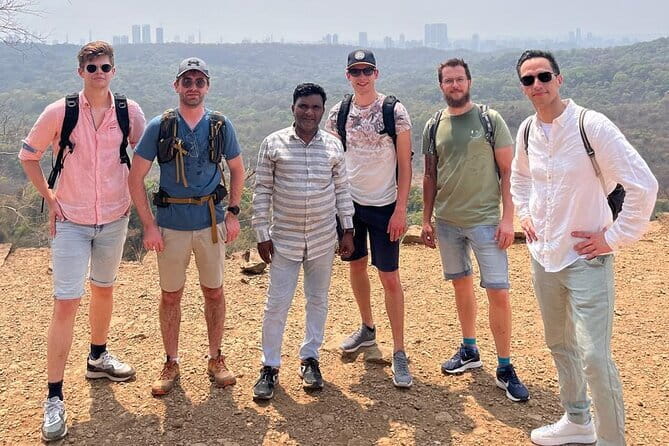
- Skip-the-queue help from guides like Kishore, who keep you moving and explain what you’re seeing
- Air-conditioned roundtrip transport + bottled water so the day stays comfortable
- Kanheri Caves in context right after your nature time in Sanjay Gandhi National Park
- Culture beyond the big-ticket sites with a short visit to the Varli community at Chinchpada
Sanjay Gandhi National Park: the Mumbai reset button
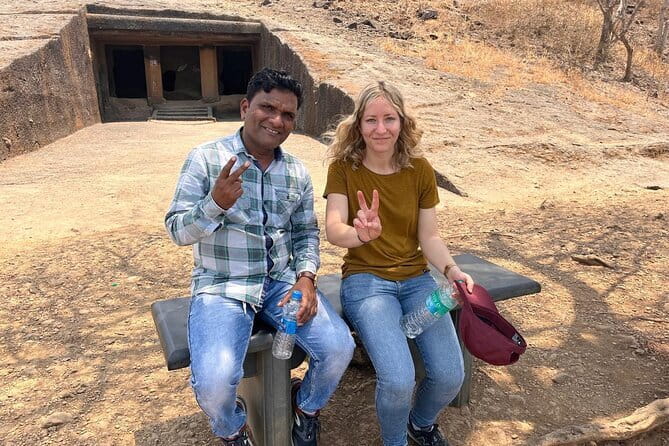
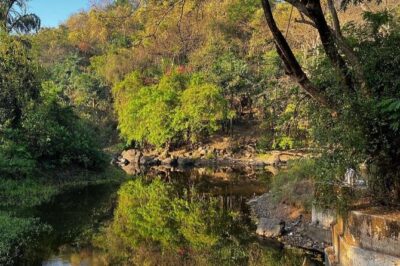
Sanjay Gandhi National Park is one of those places that makes you feel like you stepped out of the city without changing countries. It’s a protected area of about 87 km² (34 sq mi), centered around Borivali, and it opened as a formal national park in 1996. In practical terms, that means you get a real chunk of green, not just a quick roadside view.
On this half-day plan, the park time is built around a safari-style drive and nature wandering. You’re not expected to do a full-day hike. You’re expected to slow down, watch, and let your guide point out what matters—like where animals tend to move, what the landscape looks like from inside the park, and how the caves fit into the same setting later.
What I like: you get nature and animals early enough that the rest of the day doesn’t feel rushed.
What you should consider: it’s still time outdoors in Mumbai-area conditions. If you’re sensitive to heat or humidity, bring sunscreen, a hat, and a bit of patience.
You can also read our reviews of more tours and experiences in Mumbai


Kanheri Caves: Buddhist prayer halls carved into black basalt
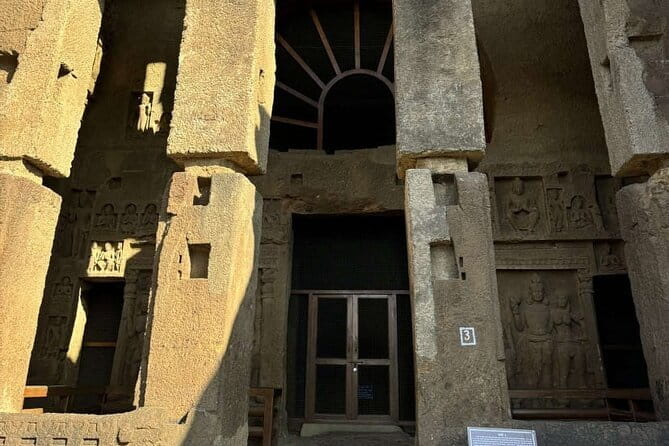
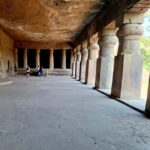
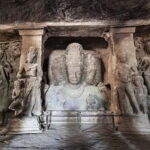
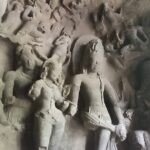
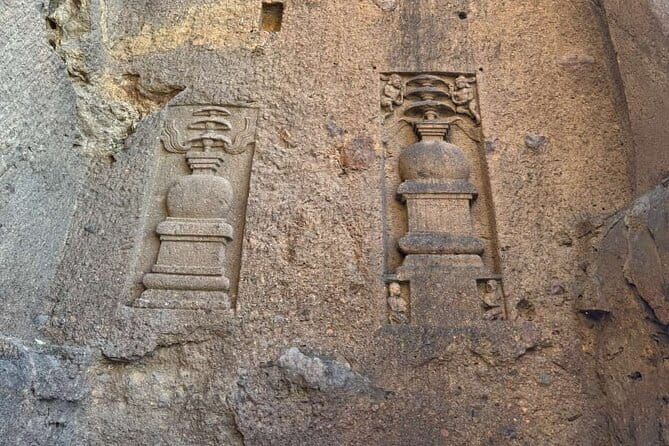
If you’ve ever seen rock-cut architecture and thought it must have been brutal to create, Kanheri is the place to confirm it. The caves sit inside the park and are tied to Buddhist heritage, with carving work linked to monks starting as far back as around the 1st century. What makes the site special is the material and the setting: you’re looking at structures carved directly into the dark volcanic rock, not separate buildings hauled in from somewhere else.
Your visit is paced to fit the half-day format—about an hour for the caves—so you don’t feel lost. A big plus here is how your guide manages the flow. In feedback from the field, guides such as Kishore/Kishor are praised for getting people through long queues and then guiding them through the caves so you don’t just see objects, you understand what you’re looking at.
Here’s what you can expect at Kanheri, in plain terms:
- You’ll move through key cave areas and see ancient carvings and sculpted figures.
- You’ll get explanations that connect features to Buddhist practice, so the caves feel less like random rooms.
- You’ll likely spend time on the parts people remember most—like carved figures, relief work, and the layout of prayer/hall-like spaces.
Tip for your photos: don’t rush your first shots. Spend two minutes to find a stable spot for the entrance views, then go in with a plan for wide shots and detail shots. The caves can be busy, and your best angles depend on where people are standing.
Trimurti Jain Temple: a quiet forest pause (about 20 minutes)
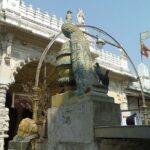
After rock-cut Buddhism, you shift into a calmer, smaller stop: the Trimurti Jain Temple in a forest setting. It’s linked to Jain worship, particularly the Digambar tradition, and the name Trimurti means three idols, connected to the temple’s three major statuary forms.
This stop is short—around 20 minutes—but it works as a breather. You’re not trying to read every inscription or study every symbol. You’re taking a moment to absorb the contrast: after animals and caves, you get a still, devotional space tucked into the greenery.
What I like: the way this stop balances the harder, more visually intense cave time.
What to consider: since the time is limited, go with the mindset of a “clear snapshot.” If you love temples and could spend an hour inside every detail, you may want a longer add-on later.
Chinchpada and Warli art: meeting the Varli community
The final cultural stop takes you away from stone and back into everyday life. Near the park, you’ll visit Chinchpada, where the Varli community is known for farming and animal husbandry and for Warli art—geometric-style depictions of nature, animals, and daily scenes.
This is not a long museum-style experience. It’s more like a short, respectful introduction—about 20 minutes—meant to give you context for what Warli art is, what it depicts, and why it matters to the community.
How to get more out of it: ask simple questions and look at the patterns. Warli art often feels “simple” at first glance, but once you start noticing the recurring shapes and the way animals and nature are treated as part of daily life, it becomes easier to appreciate the rhythm behind the drawings.
What you should know: since the stop is brief, consider it a first contact. If you want to learn deeper, treat this as inspiration for a separate craft-focused visit afterward.
The safari drive and the idea of a tiger safari
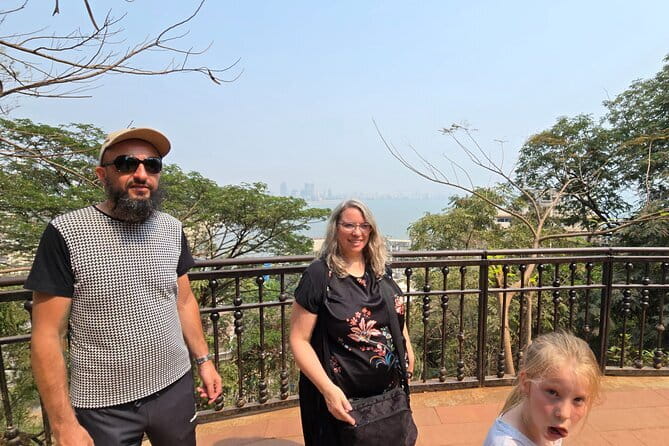
The tour title includes the idea of a safari, and the actual plan centers on a nature-and-animal drive inside Sanjay Gandhi National Park. The most honest expectation is this: you’re going to search for wildlife in a protected green area, with your guide helping you spot what’s around.
Whether you specifically see any large animals is always a “nature conditions” question. What you can control is your preparation. Wear breathable layers, carry water (you’ll have bottled water on board), and keep your eyes open during stops and slow stretches.
A good guide matters here because animals aren’t lined up for photos. They move in their own schedule, and spotting them often comes down to knowing where to look and when to slow down. The same guides who explain the caves tend to do a solid job translating the park’s patterns too.
Practical note: if you’re very hot-weather sensitive, plan for part of your time being outside the vehicle. You’ll get more value if you’re comfortable watching, not only photographing.



Timing that fits Mumbai: 5 to 6 hours, not a whole day
This is designed as a half-day escape. Expect roughly 5 to 6 hours total, which is a sweet spot when you want a break from the city but you don’t want to lose your whole day.
In the field, that time budget means:
- The park stop gives you a decent chunk for the safari-style viewing and nature time (about 2 hours).
- Kanheri Caves get about 1 hour of guided attention.
- The Jain temple and Warli/community stop are short, quick hits (about 20 minutes each).
That structure is efficient. It’s also why the experience is good value. You’re paying for multiple settings, multiple cultural contexts, and a guide who keeps the pace under control.
The drawback of efficiency: you won’t leave with the feeling that you “mastered” any single site. You’ll leave with a working understanding—and likely a desire to return to one place for a longer, slower visit.
Price and what you actually get for $27.97
At $27.97 per person, the key value isn’t just the low number. It’s what’s included:
- Air-conditioned roundtrip transport from your Mumbai pickup point
- Bottled water
- All fees and taxes
- Admission for Sanjay Gandhi National Park
- Admission for Kanheri Caves
Not included: lunch.
That matters because in Mumbai, transport time and ticket queues can eat up budget and energy. Here, you’re not trying to coordinate everything on your own. A guide handles the sequence, and the included admissions make the day smoother.
My take on value: if you would otherwise pay for transport + tickets + a guide to interpret cave carvings, this price starts making sense fast. The best way to think about it is simple: you’re buying a structured half-day with fewer moving parts.
Your guide: why the right person changes the whole experience
This tour leans heavily on your guide. People consistently highlight guides who:
- get you through long queues faster,
- explain cave carvings and statues clearly while you’re still looking at them,
- keep the day relaxed instead of stressful.
One name that comes up often is Kishore/Kishor. That’s a good signal. For cave sites especially, knowing what to look for can turn a “cool place” into a “now I get it” place.
If you care about context—why a figure is where it is, what a carving theme might represent—this kind of guided pacing will feel like the difference between passing through and actually understanding.
What to pack and how to pace yourself
Because this is a nature-and-caves day, you want comfort over style. Bring:
- water bottle habits for after the included water (you get bottled water, but you may still want more during outdoor time),
- sunscreen and a hat,
- comfortable shoes for cave steps and park paths (even short stops can include uneven ground),
- a light layer for indoor cave shade vs outdoor heat.
Also: keep your phone charging strategy simple. Caves and forests can be dim. If you plan lots of photos, a small power bank helps.
Pacing tip: when you arrive at Kanheri, give yourself permission to do the first pass slowly. Once you understand the layout, the second pass is faster and your photos improve.
Who should book this tour (and who might not love it)
This experience is a strong fit if you:
- want a half-day nature + culture combo in Mumbai,
- like guided interpretation at historic sites,
- appreciate a relaxed pace with a private guide,
- enjoy mixing faith sites with local community culture.
It may not be the best fit if you:
- want a very long temple or craft visit (the Jain temple and Warli stop are brief),
- prefer a fully flexible schedule with no set time boxes,
- need an unbroken, all-day outdoor hike.
In other words: it’s built for smart sampling. If that’s your style, you’ll enjoy it.
Should you book it?
Yes—if you want a practical, value-heavy way to see more than one side of the Mumbai area in a single outing. The combination makes sense: nature first, then Kanheri Caves, then short cultural pauses that add variety without turning your day into a marathon.
Book it if you’re looking for:
- included admissions,
- air-conditioned transport,
- a private guide who helps you get through crowds and understand what you’re seeing.
Skip it only if you’re the type who needs long, slow time inside each place. This is fast enough to be exciting, and structured enough to be worth the money. If you want slower, plan a return trip to Kanheri or the park later.
FAQ
What is the duration of the tour?
The tour runs about 5 to 6 hours.
Is pickup from my accommodation included?
Yes. Pickup is offered, and the transport is provided by an air-conditioned vehicle.
Are admission tickets included?
Yes. Entry to Sanjay Gandhi National Park and entry to Kanheri Caves are included.
Is lunch included?
No. Lunch is not included.
How long do you spend at each stop?
You’ll spend about:
- 2 hours in Sanjay Gandhi National Park
- 1 hour at Kanheri Caves
- 20 minutes at the Jain Temple
- 20 minutes at the Chinchpada/Varli art stop
Is this tour private?
Yes. It’s described as a private tour/activity, so only your group participates.
Do I need to print anything?
You get a mobile ticket.
Is free cancellation available?
Yes. You can cancel for a full refund if you cancel up to 24 hours in advance of the experience’s start time.
Is the tour suitable for most people?
It says most travelers can participate, and it’s near public transportation.