REVIEW · HERITAGE WALKING TOURS
Victorian Gothic Heritage Quarter and Art Deco Walking Tour
Book on Viator →Operated by Cityscape Mumbai Tours · Bookable on Viator
Mumbai’s Gothic line is a fun history lesson. This walk connects some of South Mumbai’s most recognizable colonial-era buildings, from the grand Mumbai GPO to the Rajabai Clock Tower at the University of Mumbai, then swings toward Art Deco-era streets around Kala Ghoda and the sea-view Taj Mahal Palace. I love the free entry stops that let you actually look around inside key sites, and I also like the small group size (maximum 15) that makes it easier to ask questions. The only real drawback is that the schedule is tight for a roughly 2-hour format, so you’ll want comfy shoes and a little patience for a brisk pace.
What makes it work well in practice is the guide-style. In previous runs, guides such as Abhi, Abhishek, Ravi, and Yash got praise for friendly, clear English and answering questions without making you feel rushed. You’ll also get a mobile ticket and bottled water, which sounds small until you’re navigating a busy city with less time than you planned.
In This Review
- Key highlights at a glance
- Entering Mumbai’s Victorian Gothic to Art Deco “story line”
- Starting at Regal Cinema and easing into the Mumbai GPO
- Town Hall (Asiatic Society Library) and Horniman Circle: calm contrasts
- St. Thomas Cathedral: the oldest Anglican anchor on the route
- High Court of Bombay and Rajabai Clock Tower: Gothic Revival in full control mode
- Oval Maidan and Kala Ghoda: where architecture meets everyday scenes
- Gateway of India and the Taj Mahal Palace: the showpiece ending
- Timing and group size: how to plan your day around a 2-hour walk
- Price and value: what you get for about $18.88
- What the guide experience can feel like in real life
- Practical tips for enjoying the walk (and not rushing it)
- Who should book this tour?
- Should you book the Victorian Gothic Heritage Quarter and Art Deco Walking Tour?
- FAQ
- How long is the tour?
- Where does the tour start and end?
- How much does it cost?
- Is bottled water included?
- Is admission required for the stops?
- How big is the group?
- Do I need private transportation?
- Do I get a mobile ticket?
- When should I book?
- Can I cancel and get a refund?
Key highlights at a glance

- Every main stop is listed as free admission, so the value is mostly in your time and attention.
- A max-15 group keeps the walking pace manageable and supports real Q&A.
- Gothic Revival to Indo-Saracenic to Art Deco, all in one concentrated route.
- Sunday-friendly moments: if your date overlaps with park cricket, the atmosphere adds context to everyday Mumbai life.
- Real landmarks, not just street photos, with major civic buildings and classic sea views.
- South Mumbai to Churchgate routing means you can continue your day with lots of nearby transport.
Entering Mumbai’s Victorian Gothic to Art Deco “story line”
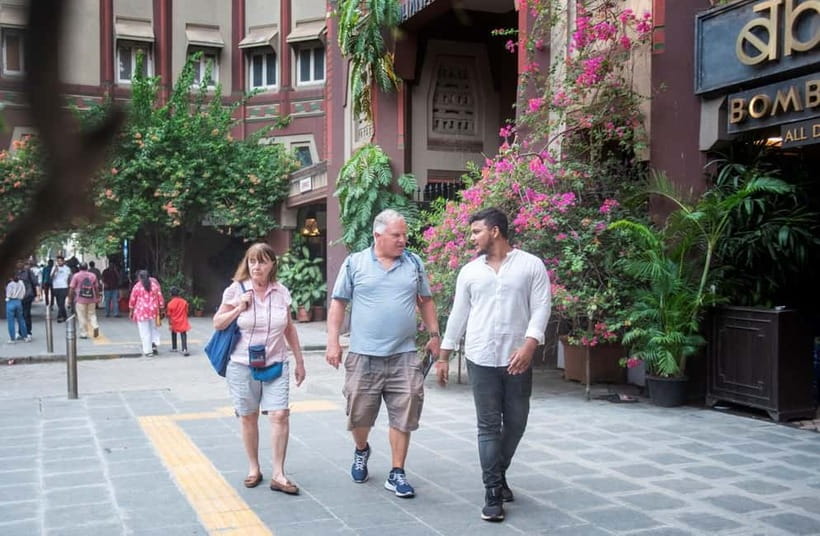
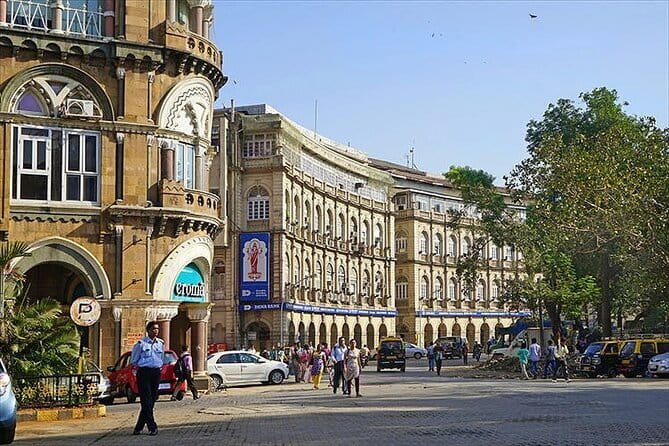
Mumbai has a talent for mixing eras in one view. This tour focuses on the architectural shift you can see as you move through South Mumbai: ornate Victorian Gothic and High Court-style “serious” stonework, then a softer, more street-level feel around Oval Maidan and Kala Ghoda, and finally the big, iconic showpieces near the water.
If you like walking tours that feel like a guided visual lesson, this one fits. You’re not just looking at facades—you’re connecting them to the city’s mail system, libraries, law courts, churches, and education. That’s why the route feels more satisfying than a random “big sights” stroll.
You can also read our reviews of more walking tours in Mumbai

Starting at Regal Cinema and easing into the Mumbai GPO
You meet at Regal Cinema in Colaba (Apollo Bandar area). It’s a practical start point because it puts you right at the edge of the cluster you’ll be exploring, instead of scattering the route across the city.
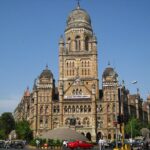
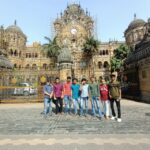
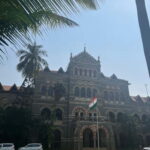
From there, you hit the General Post Office Mumbai, a landmark built in 1913 with Indo-Saracenic grandeur. The tour frames it as an architectural showpiece, but also as a working piece of the city’s mail and communication history. You get about 15 minutes, which is just enough time to notice the style without feeling like you’re stuck waiting.
What I like about starting here: the GPO gives you a baseline for what colonial-era design tried to do—mix big symbolic statements with practical civic function. Even if you’re not an architecture nerd, you’ll get that “this building matters” feeling fast.
Town Hall (Asiatic Society Library) and Horniman Circle: calm contrasts
Next up is the Town Hall area with the Asiatic Society Library, founded in 1804. The focus is on the neoclassical architecture and the fact that the library holds rare manuscripts, ancient texts, and priceless artifacts. With about 15 minutes, you can read the room cues: the stillness, the institutional gravity, and why libraries were treated like prestige projects in that era.
Then you shift to Horniman Circle Garden, built in 1860 and surrounded by prominent colonial-era buildings. It’s named after Benjamin Horniman, a British editor. The garden stop matters because it’s your breathing space on a walk that otherwise stays heavy with civic stonework.
A small practical tip: if the day is warm, use this stop to reset. You’re not spending hours here, but it helps you keep energy for the Gothic Revival stretch that comes next.
St. Thomas Cathedral: the oldest Anglican anchor on the route
You’ll visit St. Thomas Cathedral Mumbai, the city’s oldest Anglican church, consecrated in 1718. The tour presents it as a key British colonial religious site. This is one of those stops where time passes faster than you expect because you naturally slow down just to take in the scale and details.
If you care about how power and faith shaped early colonial architecture, this is a useful anchor. It also gives a different texture compared to courts and clock towers—less “administration,” more “community presence” tied to the church’s long timeline.
High Court of Bombay and Rajabai Clock Tower: Gothic Revival in full control mode
After the cathedral, the route turns more formal and dramatic with two major Gothic Revival-style civic structures.
First is the High Court of Bombay, inaugurated in 1879. The tour calls it a cornerstone of the city’s judicial system, and the architectural pitch is all about the intricate Gothic Revival look. Expect about 15 minutes here, which is enough to appreciate how the design signals authority—everything from vertical lines to the sense of monumentality.
Then you get the Rajabai Clock Tower, completed in 1878 at the University of Mumbai. It’s designed by Sir George Gilbert Scott, and the funding connection to Premchand Roych is part of the story. Again, about 15 minutes, and it’s a stop where your photos will look better than you think they will, because the tower reads well from multiple angles.
Here’s the practical meaning of these two stops: you’ll start to see the pattern of how different institutions used architecture to project stability—courts and universities as symbols of order and permanence. When you later reach Oval Maidan, that context will make the open space feel more connected to what surrounded it.
You can also read our reviews of more historical tours in Mumbai




Oval Maidan and Kala Ghoda: where architecture meets everyday scenes
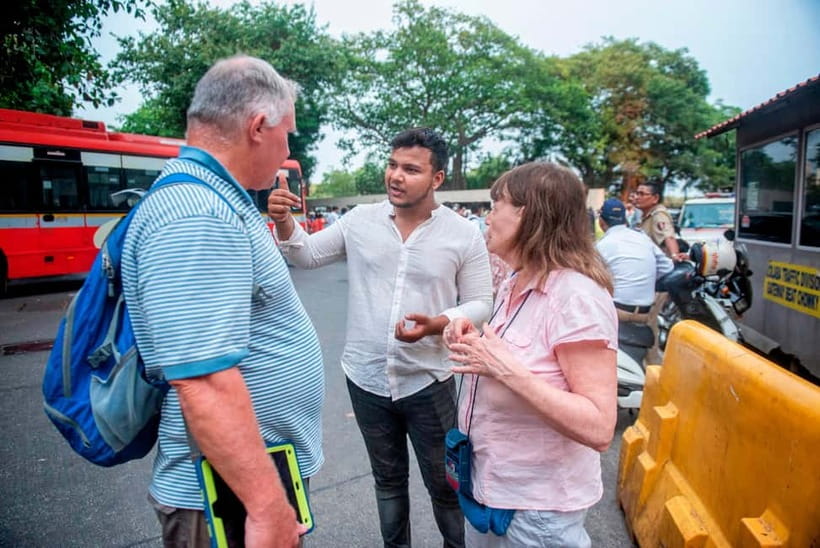
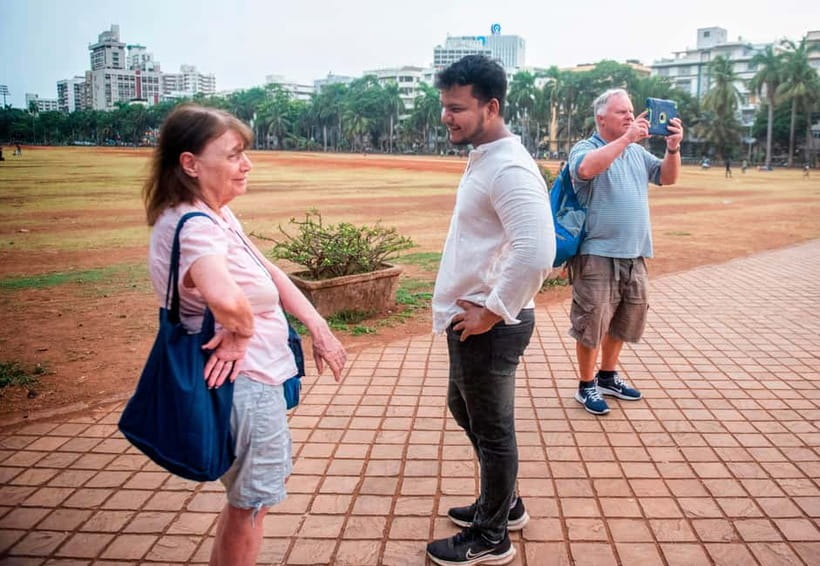
Your tour moves to Oval Maidan, a historic recreational ground established in the 19th century. The route description highlights that it’s flanked by Victorian Gothic and Art Deco architecture, which is exactly what makes this stop valuable. It’s the transition point where you stop thinking only in terms of single landmark buildings and start seeing the area as an ensemble.
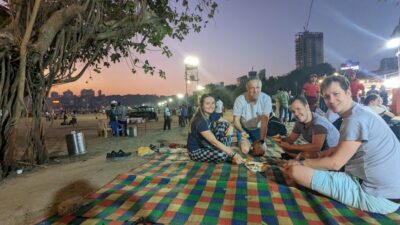
One added perk: if your walk falls on a Sunday, you might catch the park energy locals bring—cricket matches and a lot of cheering. A good guide can weave that moment into the broader “how people actually use these city spaces” lesson, not just how they look.
Next is Kala Ghoda (Black Horse) Statue, a quick stop of about 5 minutes. Kala Ghoda is presented as a cultural precinct with art galleries, museums, and street art. It’s named after a statue of King Edward VII, and it’s associated with the Kala Ghoda Arts festival atmosphere. This brief segment works like a color change after the long architectural stretch.
Gateway of India and the Taj Mahal Palace: the showpiece ending
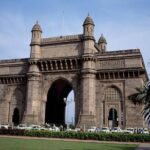
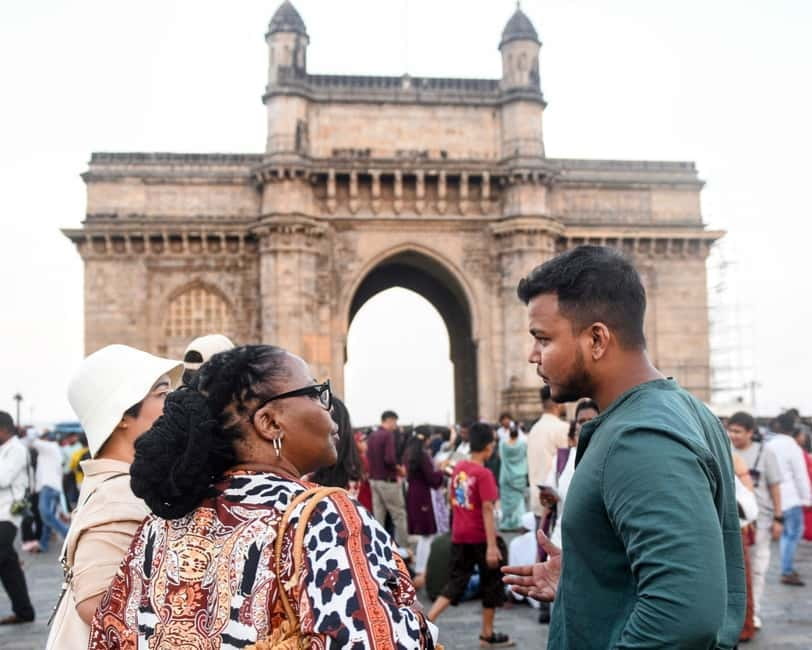
Now you’re near the water. The Gateway of India, built in 1924, commemorates the visit of King George V and Queen Mary to India. It’s another landmark where you’ll feel why this became a must-see—big scale, clear symbolism, and immediate visual impact.
From there, the tour finishes with The Taj Mahal Palace, Mumbai, built in 1903. This stop leans into the hotel’s historic luxury status and its dramatic sea-facing position overlooking the Arabian Sea. It’s listed for about 5 minutes, so treat it as a quick look-and-linger moment.
Even if you don’t plan to go inside, the Taj ending does one smart thing: it ties the route back to Mumbai’s “public face.” You’ve spent the earlier part of the walk learning how institutions and formal architecture shaped the city. Here, the message becomes more about spectacle and identity.
Timing and group size: how to plan your day around a 2-hour walk
The tour is listed as about 2 hours. That’s a realistic timeframe when you remember each stop is around 10–15 minutes, plus time to walk between them. Still, expect your day to be slightly flexible. Some groups have reported longer timing when guides added unscheduled stops or when questions ran a bit longer.
Group size is capped at 15, which matters. Smaller groups typically mean fewer people blocking your sightlines at tower bases and fewer “waiting for someone to find the group” moments near stairs and entrances.
Also note the route starts at Regal Cinema in Colaba and ends at Churchgate Station. That’s handy because Churchgate gives you easy onward transport for the rest of your afternoon.
Price and value: what you get for about $18.88
At $18.88 per person, the value mostly comes from two things: focused guiding and free admission at the main stops.
You get a set route through the biggest civic and institutional buildings tied to Victorian Gothic and related colonial-era styles, plus the chance to interpret what you’re seeing. You’re also not paying extra for entry at the stops listed as free. That keeps your total cost predictable, which is rare for “architecture walks.”
The tour also includes bottled water, and offers group discounts (useful if you’re coordinating with friends). And since it uses a mobile ticket, you’re spending less time handling paperwork and more time just starting.
What the guide experience can feel like in real life
Guides are a make-or-break factor in walking tours, and here the reviews point to a clear pattern of strengths.
Abhi is praised for being friendly and speaking good English, with lots of historical and architectural explanations. Abhishek gets credit for answering every question and creating a smooth first-morning introduction to Mumbai. Ravi is described as passionate and clearly invested in sharing city history and architecture. Yash gets highlighted for explaining history well, including fun lesser-known facts, and even helping with photos during the walk.
That doesn’t mean every departure will feel identical. One review criticized a guide’s presentation and amount of architecture knowledge. So I’d treat this as: you’re buying a guided interpretation, and the best version of the tour happens when you engage. Bring questions, and if you’re especially into architecture, speak up early so the guide can aim their storytelling where you want it.
Practical tips for enjoying the walk (and not rushing it)
You’ll be walking through South Mumbai’s landmark district, which means the biggest comfort factor is your shoes. Plan for standing time at towers and cathedrals, plus quick photo stops.
A few tips that make a difference:
- Wear light layers and bring sun protection if you’re going in hotter months.
- Use the garden stop at Horniman Circle to reset your pace.
- If you enjoy street-level context, pay attention around Oval Maidan and Kala Ghoda; those sections connect the architecture to how people move through the city.
- Keep your phone charged. Since you’ll end near Churchgate, you’ll likely want maps for your next stop.
Also, this is a walking tour without private transportation included. The meeting point is near public transit, but you’ll still want to build in a little buffer for getting there on time.
Who should book this tour?
This tour is a great match if you:
- Want an organized way to see Mumbai’s Victorian Gothic and Gothic Revival architecture in a small area.
- Like your history tied to specific buildings (GPO, library, courts, university tower, cathedral).
- Want a guided walk that ends with two classic “Mumbai faces”: Gateway of India and the Taj Mahal Palace.
It’s less ideal if you’re after a super-deep technical architecture lecture with lots of time at each building. The stops are time-boxed, so you’ll have to accept a “best highlights per stop” approach.
Should you book the Victorian Gothic Heritage Quarter and Art Deco Walking Tour?
If you want a smart first pass through South Mumbai’s colonial-era architecture, I think this tour is easy to recommend. The price is reasonable for a guided route, the route includes free-entry stops, and the group size keeps things from feeling chaotic.
Book it if you value clear explanations, want to connect Gothic Revival structures with how the city used these spaces, and you like walking enough to see how the streets change as you move from Colaba toward Churchgate. Skip it or pair it with other plans if you’re the type who needs long time inside museums or wants an unhurried, slow-paced stroll. For the “2-hour, get your bearings fast” job, this one does it well.
FAQ
How long is the tour?
The tour is listed as about 2 hours (approx.). Some departures may run longer if the guide adds extra stops or if questions take more time.
Where does the tour start and end?
The tour starts at Regal Cinema, Apollo Bandar, Colaba, Mumbai, Maharashtra 400001, India. It ends at Churchgate Station (WRPG+3VW, Maharshi Karve Rd, Churchgate, Mumbai, Maharashtra 400020, India).
How much does it cost?
The price is $18.88 per person.
Is bottled water included?
Yes. Bottled water is included.
Is admission required for the stops?
Admission tickets are listed as free at the stops included on the route, so you typically won’t need to pay entrance fees for these specific locations.
How big is the group?
The tour has a maximum of 15 travelers.
Do I need private transportation?
No. The tour is a walking tour, and private transportation is not included.
Do I get a mobile ticket?
Yes. The tour includes a mobile ticket.
When should I book?
On average, this tour is booked about 13 days in advance.
Can I cancel and get a refund?
Yes. You can cancel for free up to 24 hours before the experience starts for a full refund. If you cancel less than 24 hours before, you won’t get a refund.