REVIEW · HERITAGE WALKING TOURS
Mumbai heritage walk- Story of Gothic and Art Deco buildings
Book on Viator →Operated by 5 Senses Walks, Mumbai · Bookable on Viator
Gothic and Art Deco, one short walk. This Mumbai heritage walk traces the city’s growth through its buildings, from Victorian Gothic Revival to Art Deco, with real-world stories about trade, power, and daily life. You’ll hit famous landmarks around Fort, and it’s paced for a small group, about 15 people, so you’re not just staring at stone from the back of the pack.
Two things I really like here are the way the architecture becomes the story, not the other way around, and the energy of the guide. With Pankaj leading, the explanations feel like someone is giving you the key to each façade, down to what to notice and why it matters. You also get snacks during the walk, which helps keep the pace steady without turning the tour into a sprint.
One consideration: this is mostly an outside-looking experience. You’ll see several buildings from the street, and inside access is limited—like the David Sassoon Library, where you’ll only be able to view it from the lobby because of membership rules. Also, only the Chhatrapati Shivaji Terminus entry ticket is listed as included, so don’t expect admissions covered everywhere.
In This Review
- Key highlights worth your attention
- Why Gothic and Art Deco work so well in Mumbai
- The pace, group size, and what 3 hours really covers
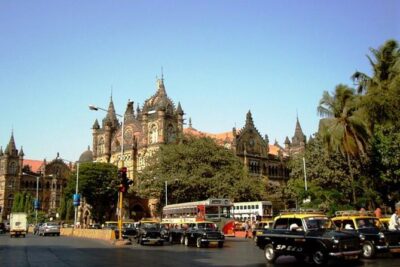
- Chhatrapati Shivaji Maharaj Terminus and Victorian Gothic Revival with Indian themes
- Eros Cinema’s Art Deco tiers and that wedding-cake look
- Empress Court and Art Deco living as status
- Bombay High Court and the statues of Justice and Mercy
- Rajabai Clock Tower: the Big Ben of Mumbai and a personal funding story
- David Sassoon Library and reading room: lobby-only access with real restrictions
- Elphinstone College: Gothic architecture plus famous alumni
- The Prince of Wales Museum building: from hospital past to museum present
- Snacking through the story and why the guide energy matters
- Price and value: what $35 buys you (and what it doesn’t)
- Should you book this Mumbai Gothic and Art Deco walk?
- FAQ
- FAQ
- What is the duration of the Mumbai heritage walk?
- How much does the tour cost?
- How large is the group?
- Is the tour mostly inside buildings or outside views?
- Is admission included for all stops?
- Are snacks provided?
- Where does the tour start and end?
- Do I need to bring the ticket, or is it digital?
- Is the tour dependent on weather?
- Can I cancel for a full refund?
Key highlights worth your attention
- UNESCO Chhatrapati Shivaji Maharaj Terminus (CST): Victorian Gothic Revival with Indian design themes
- Eros Cinema’s Art Deco “wedding cake” silhouette: tiered form topped with a semi-circular tower
- Bombay High Court exterior details: including statues of Justice and Mercy
- Rajabai Clock Tower’s funding story: built around a very human reason involving chimes and fasts
- David Sassoon Library viewing style: lobby access only, so plan for outside-focused photos
- Tight group size: max 15 people for questions and conversation, not just sightseeing
Why Gothic and Art Deco work so well in Mumbai

Mumbai’s architecture is not just pretty. It’s a timeline written in stone, brick, and ornament. This walk is built around two styles that show up across the city in different waves, and you learn how each wave tied into Mumbai’s rise as a major trading and civic center.
I like that you’re not asked to memorize dates. Instead, you start noticing patterns. Gothic architecture teaches you to “read” vertical lines, pointed forms, and symbolic sculpture. Art Deco trains your eyes for geometry, tiers, and clean shapes that feel modern even when the buildings are now old.
The bonus is that many of these landmarks sit close together. You can cover a lot of ground without needing a complicated plan. And because you’ll be walking in the Fort area, you get that sense of moving through a historic core where commerce, government, education, and culture all share the same stage.
You can also read our reviews of more walking tours in Mumbai


The pace, group size, and what 3 hours really covers
The tour runs about 3 hours, and the group is kept to a maximum of 15. That size matters more than you’d think. With fewer people, you actually get time to ask questions and get specific answers about what you’re looking at, instead of hearing a quick summary while the group moves on.
Expect a comfortable walking rhythm with short stops. Several locations are exterior only, so the time isn’t wasted on lines or slow moving entry checks. Also, mobile ticket is part of the experience, and confirmation comes at booking—handy if you’re juggling other plans in Mumbai.
Timing tip: wear shoes you can move in for a few hours, and dress for weather. The operator notes the experience depends on good weather, so if forecasts look messy, be ready to adjust.
Chhatrapati Shivaji Maharaj Terminus and Victorian Gothic Revival with Indian themes
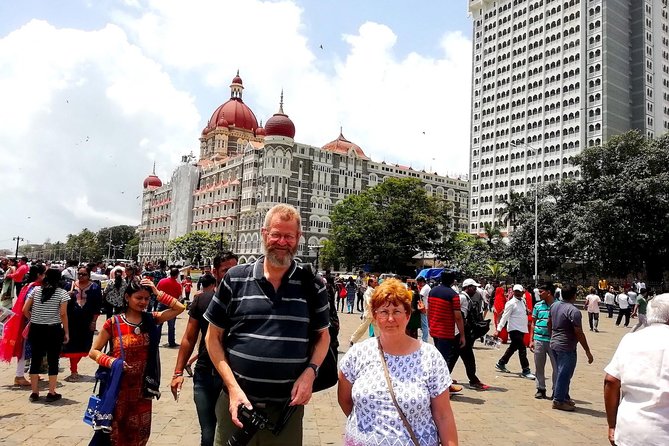
Your first major stop is Chhatrapati Shivaji Maharaj Terminus (CST), a UNESCO heritage building and widely considered one of the finest examples of Victorian Gothic Revival in India. This is where the “style reading” starts to click.
What makes CST especially fascinating is the mix of influences. Gothic Revival is the backbone—think pointed forms and dramatic vertical emphasis—but the building also brings in themes drawn from Indian tradition. That blend is exactly the kind of architectural storytelling you want on a short walk: it helps you understand how Mumbai’s identity formed by combining global ideas with local cultural logic.
You also get about 30 minutes here, and the admission ticket is included at this stop. That’s a meaningful value difference compared to the later exterior-only views.
What to focus on while you’re there: the overall silhouette, the way details cluster around key points, and any sculptural features that look like they’re meant to carry meaning, not just decoration. If you like architecture, this is the place you’ll want to slow down even if the group keeps moving.
Eros Cinema’s Art Deco tiers and that wedding-cake look
Next you’ll see Eros Cinema from outside. It’s an Art Deco cinema hall with a distinctive rise in tiers, topped with a semi-circular tower—so yes, people compare it to a wedding cake, and the comparison makes sense. The building feels like it was designed to be noticed, even at street level.
You’ll have about 30 minutes, and there’s no admission ticket listed here, since the plan is exterior viewing. That actually works in your favor: Eros is the kind of building where the façade tells the story quickly. You don’t need to spend time inside to understand why it mattered as a landmark.
What I’d look for: the tiered composition and how the Art Deco style turns everyday building materials into something that looks crisp and theatrical. Art Deco often reads as confident and “forward-looking,” so seeing it in a public entertainment setting helps you connect style with lifestyle, not just with official buildings.
Empress Court and Art Deco living as status
You then walk to Empress Court, another Art Deco building, this time a residential one. From the outside, you’ll discuss how living in Art Deco apartments used to signal status and wealth—a reminder that architectural style wasn’t only about governments and banks.
This stop is shorter, about 15 minutes, with exterior viewing only. That’s fine because Empress Court is more about recognizable style cues than about discovering hidden details.
If you’re an architecture fan, Empress Court is a useful contrast to the civic Gothic buildings. Gothic is often tied to institutions—law, education, transport. Art Deco here gets tied to private life and social identity, which makes the walk feel more complete. It’s not just “big buildings,” it’s also how people wanted to live.
You can also read our reviews of more historical tours in Mumbai






Bombay High Court and the statues of Justice and Mercy
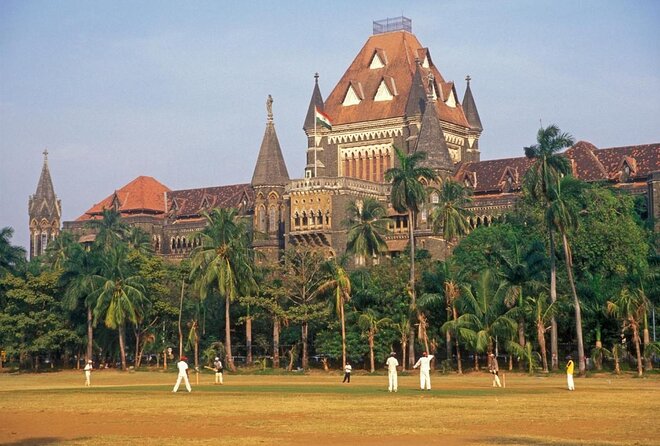
Your next Gothic stop is the High Court Principal Bench. From the outside, it’s described as a splendid example of Gothic architecture, and there’s a specific detail to watch for: statues of Justice and Mercy on top of the building.
This matters because Gothic design in institutional architecture often goes beyond style. The structure is meant to communicate ideals—law, morality, and social order. When you’re on the street and can point out the sculptural message, the architecture turns into something you can interpret, not just something you pass by.
You’ll get around 30 minutes here, still mostly exterior, and no admission ticket is listed. That means you’ll spend your time scanning the building’s form and checking for symbolic elements rather than waiting for entry.
Small practical note: if you’re taking photos, aim for angles that let you capture both the building’s vertical emphasis and the area where those statues sit. If the sky is bright, try shifting your position to avoid harsh glare.
Rajabai Clock Tower: the Big Ben of Mumbai and a personal funding story

Then comes the Rajabai Clock Tower, often called the Big Ben of Mumbai. It’s one of those landmarks where the story is part of the appeal. The tour includes the tale of how the clock tower’s financing connected to a patron’s mother—specifically, a reason involving the visually challenged mother being able to hear the chimes and keep her fasts punctually.
That human detail makes the building feel less like a distant monument and more like a practical, family-centered project. It’s a great example of how architecture can reflect care, not just power.
You’ll spend about 30 minutes here, again with exterior viewing. No admission ticket is listed. So focus on the tower itself and on how the scale dominates the street.
If you’re trying to get photos quickly, this is a good stop for it because towers give you strong lines and clear focal points. If you like architecture photography, arrive with at least one plan: capture the tower straight-on, then step back for a wider view that shows it in relation to the surrounding buildings.
David Sassoon Library and reading room: lobby-only access with real restrictions
Next is David Sassoon Library and Reading Room. The tour frames it around David Sassoon, a Jewish banker who built a magnificent Gothic structure meant for reading and learning. However, there’s an important limitation: only members are allowed inside, so you’ll see the building from the lobby.
That setup changes what you should expect. You’re not going to get a full interior experience, and it would be unfair to come expecting grand hall access. But you can still get value from the exterior-to-lobby perspective, because the building’s purpose—public access to knowledge versus private membership—becomes part of the story.
You’ll have about 20 minutes here, and no admission ticket is listed. Plan your time for what you can actually see: the entrance area, lobby views, and any architectural features visible from that space.
If you love design, this stop is a reminder that restrictions can shape how a space is experienced. The tour doesn’t hide that. It uses it to help you understand how institutions worked at the time.
Elphinstone College: Gothic architecture plus famous alumni
Elphinstone College is the next Gothic stop. It’s described as a remarkable Gothic structure, and the tour adds a hook that makes architecture feel connected to people: the institution has notable alumni including Bal Gangadhar Tilak, Dr. B. R. Ambedkar, and Jamshedji Tata.
You’ll have about 15 minutes here, and again you’ll appreciate the architecture largely from outside. With a short window, you should focus on big elements: the overall Gothic form, window rhythm, and any areas where stonework suggests careful planning rather than random decoration.
Why this works: it shows how architecture served as a foundation for education and civic leadership. Instead of treating buildings as isolated objects, the walk threads them into Mumbai’s evolving role as a center of thought and influence.
The Prince of Wales Museum building: from hospital past to museum present
The walk ends at Chhatrapati Shivaji Maharaj Vastu Sangrahalaya (the Prince of Wales Museum). The heritage building once served as a military hospital for the Children’s Welfare Exhibitions, which adds a layered sense of purpose to the final stop.
You’ll get about 10 minutes here, and no admission ticket is listed. Still, the closing stop matters because it ties the architectural story back to how public spaces in Mumbai shifted from one civic role to another.
Even without a long visit, you can look for how the building’s heritage status influences today’s identity. Ending here also makes planning easier if you want to continue exploring museums or the Fort area afterward.
Meeting point and finish are both in central Fort:
- Start: Chhatrapati Shivaji Maharaj Terminus area, Fort, Mumbai
- End: 159-161 Mahatma Gandhi Road, Lion Gate, Fort, Mumbai
Snacking through the story and why the guide energy matters
A key detail is that snacks are included during the walk. That sounds small until you’re standing outside for a few hours in Mumbai. It helps keep the tour from turning into a long “just walk and listen” session, especially if you’re mixing this into a busy travel day.
The other big factor is the guide’s delivery. With Pankaj, the historical and architectural stories stay entertaining while staying grounded in what you can actually see. The most useful part is that he can answer questions and connect building details to broader themes like how Mumbai grew and why certain styles showed up when they did.
In practice, that means you leave with more than photos. You leave knowing what to look for next time you spot Gothic windows or Art Deco geometry in the city.
Price and value: what $35 buys you (and what it doesn’t)
At $35 per person for about 3 hours, this can be good value if you care about architecture and want a guided way to understand it. You’re getting:
- a small group size (max 15)
- snacks included
- a storytelling approach that connects buildings to Mumbai’s development
- at least one admission ticket included at CST
What you aren’t getting is full museum-style access at every stop. Many stops are exterior views, and some indoor access is restricted. If you’re the type who wants deep interior visits everywhere, you might find you want to pair this with other museum time on a separate ticket.
For the right traveler, though, the structure makes sense. It’s built for efficiency: you get multiple iconic landmarks in a short stretch, and you learn to see patterns instead of just collecting stops.
Should you book this Mumbai Gothic and Art Deco walk?
If you like buildings with meaning—if you can enjoy a façade as much as a museum hall—this is a smart buy. The small group size, the guided focus on Gothic and Art Deco, and the strong storytelling delivered by Pankaj make it especially worth it if you’ve got limited time in Mumbai.
Book it if:
- you want an easy way to orient yourself in Fort Mumbai
- you enjoy comparing architectural styles street-by-street
- you’d rather learn why details exist than just see the big names
Skip or rethink it if:
- you want heavy interior access at every stop (several are exterior-focused)
- you’re sensitive to walking in outdoor conditions, since the tour depends on good weather
FAQ
FAQ
What is the duration of the Mumbai heritage walk?
It lasts about 3 hours.
How much does the tour cost?
The price is $35.00 per person.
How large is the group?
The group size is capped at a maximum of 15 travelers.
Is the tour mostly inside buildings or outside views?
Most stops are viewed from outside. David Sassoon Library is seen from the lobby because only members are allowed inside.
Is admission included for all stops?
Only the Chhatrapati Shivaji Maharaj Terminus stop includes an admission ticket. The other stops are listed as not including admission.
Are snacks provided?
Yes, snacks are provided during the walk.
Where does the tour start and end?
It starts at Chhatrapati Shivaji Maharaj Terminus area, Fort, Mumbai, and ends at 159-161 Mahatma Gandhi Road, Lion Gate, Fort, Mumbai (the Chhatrapati Shivaji Maharaj Vastu Sangrahalaya area).
Do I need to bring the ticket, or is it digital?
You’ll have a mobile ticket.
Is the tour dependent on weather?
Yes. The experience requires good weather, and you’ll be offered a different date or a full refund if it’s canceled due to poor weather.
Can I cancel for a full refund?
Yes, you can cancel up to 24 hours in advance for a full refund.